

At the Tarkwa gold mine, one of Africa's largest mines operated by Gold Fields, drones equipped with high-resolution cameras and terrain scanning systems have become the primary monitoring tool. Spanning an area of 210 km², the site was previously almost impossible to control manually due to dense vegetation and rugged terrain.
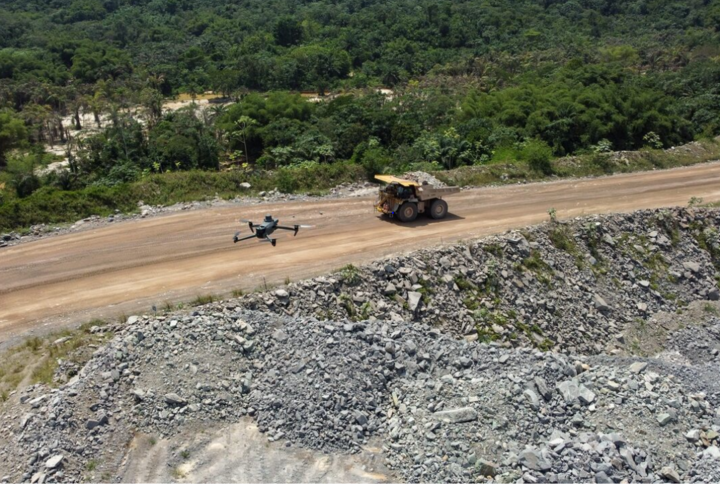
Unmanned surveillance aircraft are deployed in the Gold Fields gold mine area in Tarkwa, Ghana. (Source: Reuters)
Drones help security forces detect signs of intrusion. Aerial photographs show a surveillance drone being deployed over an area of the Gold Fields gold mine, pinpointing a suspicious location and directing a rapid response team to the scene within minutes. As a result, illegal gold mining operations, often operating deep in forests or along rivers, are being detected much earlier than before.
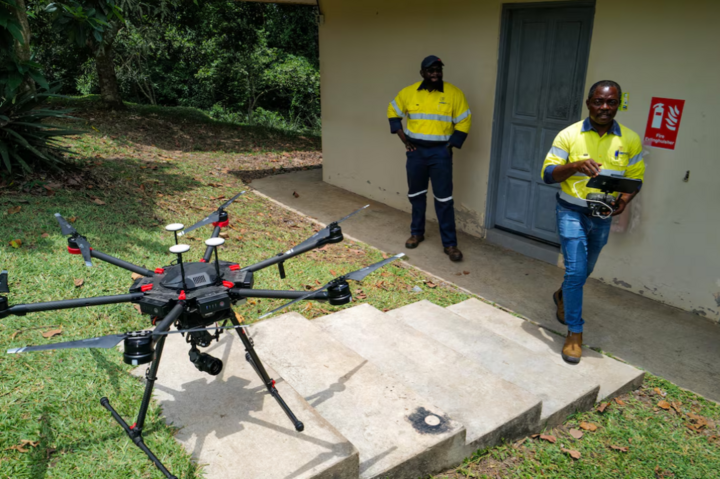
Security personnel inspect a surveillance drone at the Gold Fields gold mine in Tarkwa, Ghana. (Source: Reuters)
In recent operations, Ghanaian authorities have seized a range of illegal mining equipment, including diesel-powered water pumps, "chanfan" processing machines used to extract gold from riverbeds, and various toxic chemicals such as mercury and cyanide. These heavily polluted waterways in the African Amazon are one of Ghana's most serious environmental problems.
Technology is changing the fight against gold smuggling.
The use of drones is not only aimed at apprehending criminals but also at monitoring the extent of environmental damage at illegal mining sites. Aerial imagery allows authorities to quickly identify landslide areas, contaminated water sources, and detect newly established mining operations.
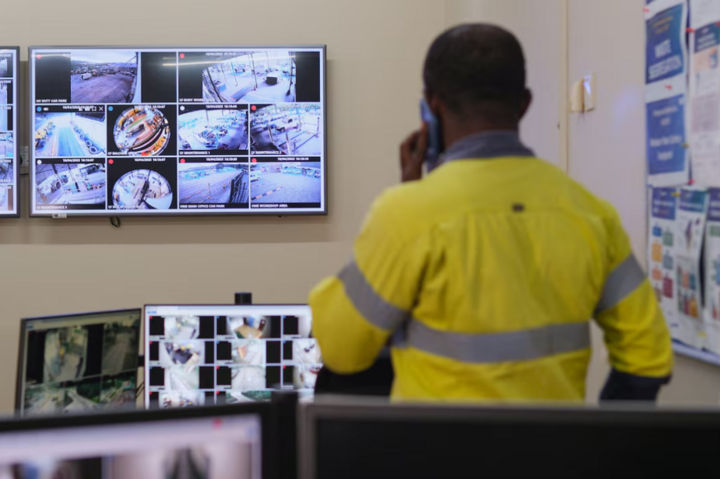
Security personnel monitor live footage from surveillance cameras inside the central control room. (Source: Reuters)
According to Ghana's Ministry of Natural Resources, this monitoring technology is being expanded to other areas, including Obuasi, Bibiani, and Ahafo, where illegal gold mining has been rampant for many years. Authorities are also coordinating with Interpol and Ameripol to share data and methods for tracking cross-border illegal mining.
Simultaneously, the Ghanaian government is implementing a "gold trace" database system, using morphological analysis and artificial intelligence to identify the origin of confiscated gold samples – similar to the "gold DNA" technology used in Brazil. This is seen as a major step forward, helping investigative agencies link seized gold to specific mining areas, thereby holding illegal mining groups criminally accountable.
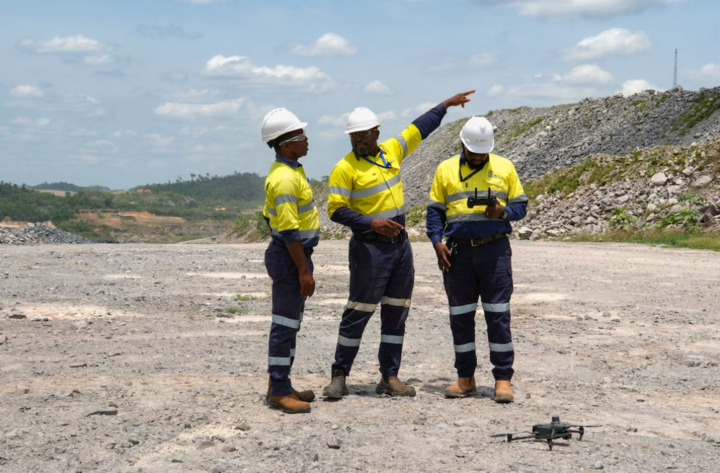
Security personnel are preparing to operate a surveillance drone at the Gold Fields gold mine. (Source: Reuters)
According to a United Nations report published in May 2025, more than 10 million people in sub-Saharan Africa depend on artisanal gold mining for their livelihood. West Africa alone has approximately 3–5 million unregulated gold miners, contributing 30% of the region's total gold production.
However, the boom in unregulated gold mining has caused severe environmental damage and pushed many communities into conflict with legal mining companies. Since late 2024, nearly 20 illegal miners have been killed in clashes with security forces at major mines in Ghana, Guinea, and Burkina Faso.
Experts warn that although technology helps control resources more effectively, without alternative livelihood policies and local economic support, the return of people to illegal gold mining will continue.
Source: https://vtcnews.vn/dung-drone-ngan-chan-khai-thac-vang-trai-phep-ar971867.html

![[Image] Central Party Office summarizes work in 2025](/_next/image?url=https%3A%2F%2Fvphoto.vietnam.vn%2Fthumb%2F1200x675%2Fvietnam%2Fresource%2FIMAGE%2F2025%2F12%2F18%2F1766065572073_vptw-hoi-nghi-tong-ket-89-1204-jpg.webp&w=3840&q=75)

















































































Comment (0)