

Transform low-lying rice paddies into fish ponds.
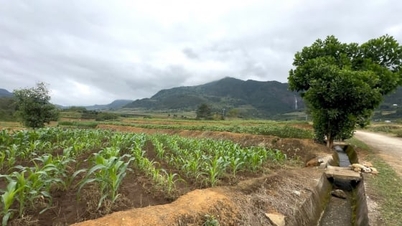
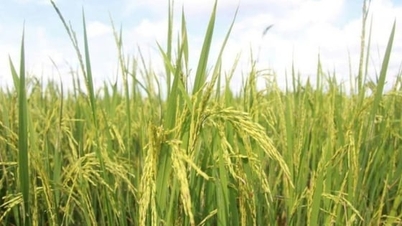
Vinh Hoa Hung commune (An Giang province) is a low-lying area located along National Highway 61 and bordering Can Tho City. The commune has over 9,530 hectares of agricultural land, but due to its low-lying terrain, most of the fields are flooded for 3-4 months during the rainy season, forcing many farmers to leave their land fallow. Besides producing two rice crops per year, the people here also rely on intercropping sugarcane, pineapples, vegetables, and fruit trees, but the results are poor and income is unstable.
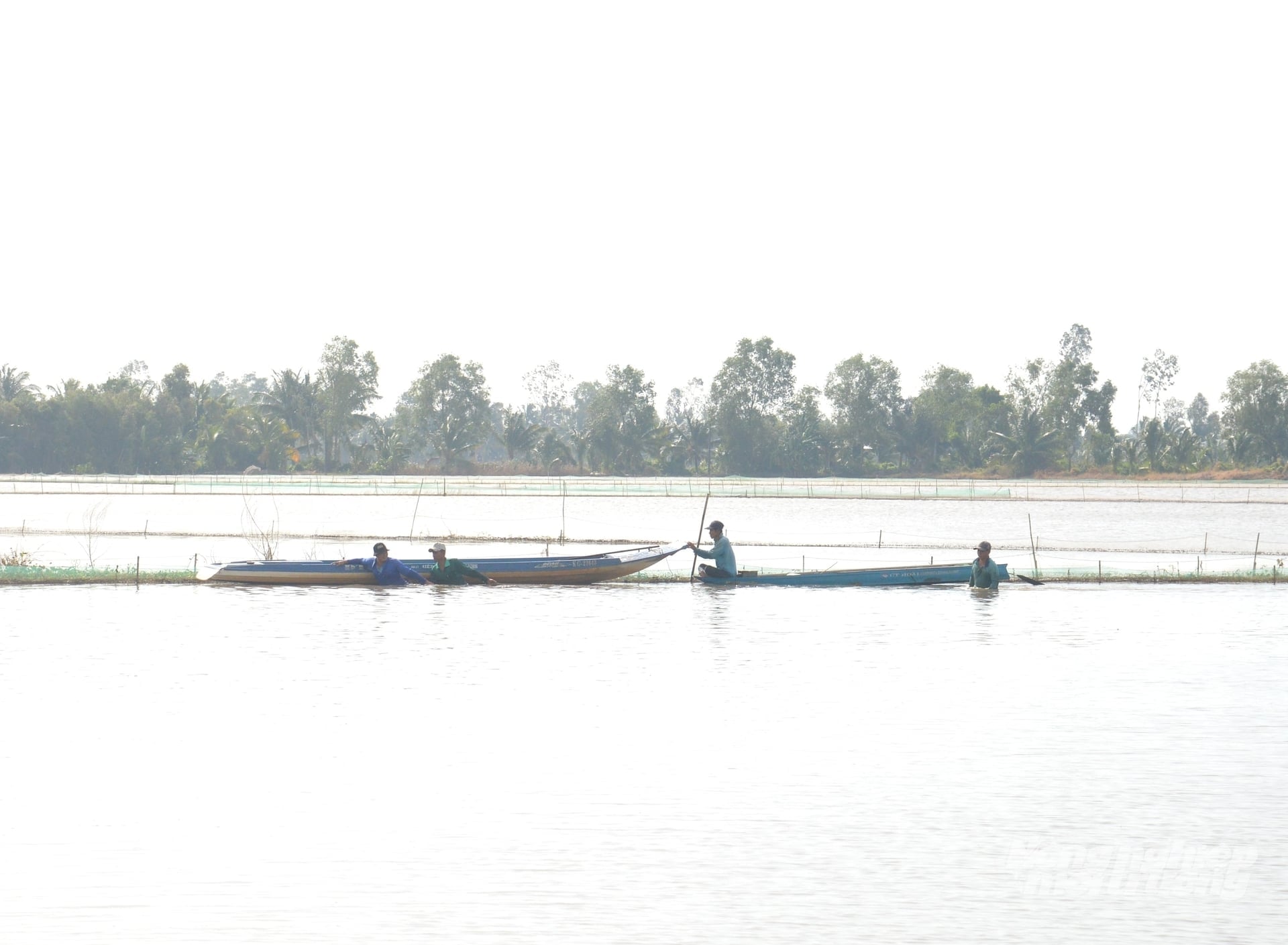
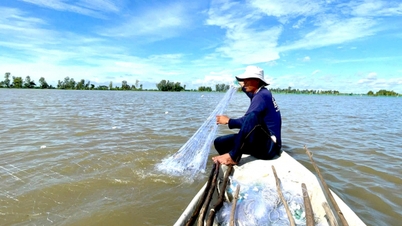
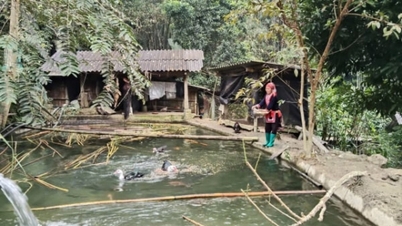
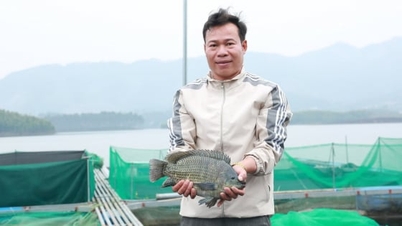
The model of using nets to raise fish in rice paddies creates a livelihood during the flood season, helping many farmers in Vinh Hoa Hung commune to earn extra income and escape poverty. Photo: Trung Chanh.
From this reality, the model of raising fish in enclosed ponds in rice fields emerged as an initiative of farmers. When floodwaters combine with high tides to inundate the fields, abundant natural aquatic resources appear. Some households boldly fenced off their fields with nets (enclosed ponds), stocked them with fish fry to utilize the water surface area and natural food sources, creating jobs and earning extra income during the off-season.
According to Mr. Nguyen Van Thiem, Chairman of the People's Committee of Vinh Hoa Hung commune, after a few successful farming seasons, the model developed spontaneously but proved to be highly effective economically . The commune government, in collaboration with specialized agencies, has organized numerous training courses on freshwater fish farming, vocational training, and technology transfer for farmers. To date, four training courses have been organized, with nearly 120 farmers participating. As a result, the model has gradually stabilized, been re-planned, and expanded.
In Hamlet 6A, the model of raising fish in cages on rice fields has developed into a concentrated area with a scale of up to 85 hectares. The people also cooperate in production within a cooperative, with 29 households participating. Besides raising fish for commercial purposes, the people have also developed processing industries using farmed fish, creating specialty carp and silver carp fish sauce, helping to increase value right in the locality.
Ms. Tran Thi Be Tu, a farmer from Hamlet 6A, shared: “The floods have submerged the rice fields, and previously, leaving them idle was wasteful. Now, raising fish provides income and allows the silt to enrich the soil.” According to Ms. Be Tu, people mainly raise carp and silver carp. Fish raised in rice fields grow quickly, reaching a weight of about 1 kg/fish in just 2-3 months. Importantly, there are no feed costs; the fish grow naturally on silt, rice sprouts, aquatic plants, larvae, and bottom-dwelling animals. As a result, each hectare yields an average profit of about 10 million VND per crop. Fish also help keep the fields cleaner, reduce weeds, increase organic matter in the soil, and reduce investment costs for the next rice crop.
Creating sustainable livelihoods from rice-field fishing.
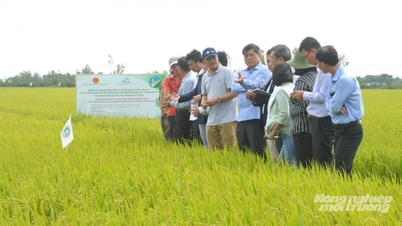
Recently, the An Giang Agricultural Extension Center, in coordination with the People's Committee of Vinh Hoa Hung commune, organized a workshop to share techniques for raising fish in rice paddies, creating conditions for replicating the model. According to experienced farmers, the rice pad fish farming model requires an area of 1 hectare or more to be effective. After harvesting the summer-autumn rice crop, nets are erected around the rice paddies, with a stocking density of about 20 kg of fish fry per hectare, raising two species together: carp and silver carp. Silver carp feed on the surface layer, while carp feed on the bottom layer, helping to stratify food sources, reduce competition, and maximize biomass utilization in the flooded rice paddies.
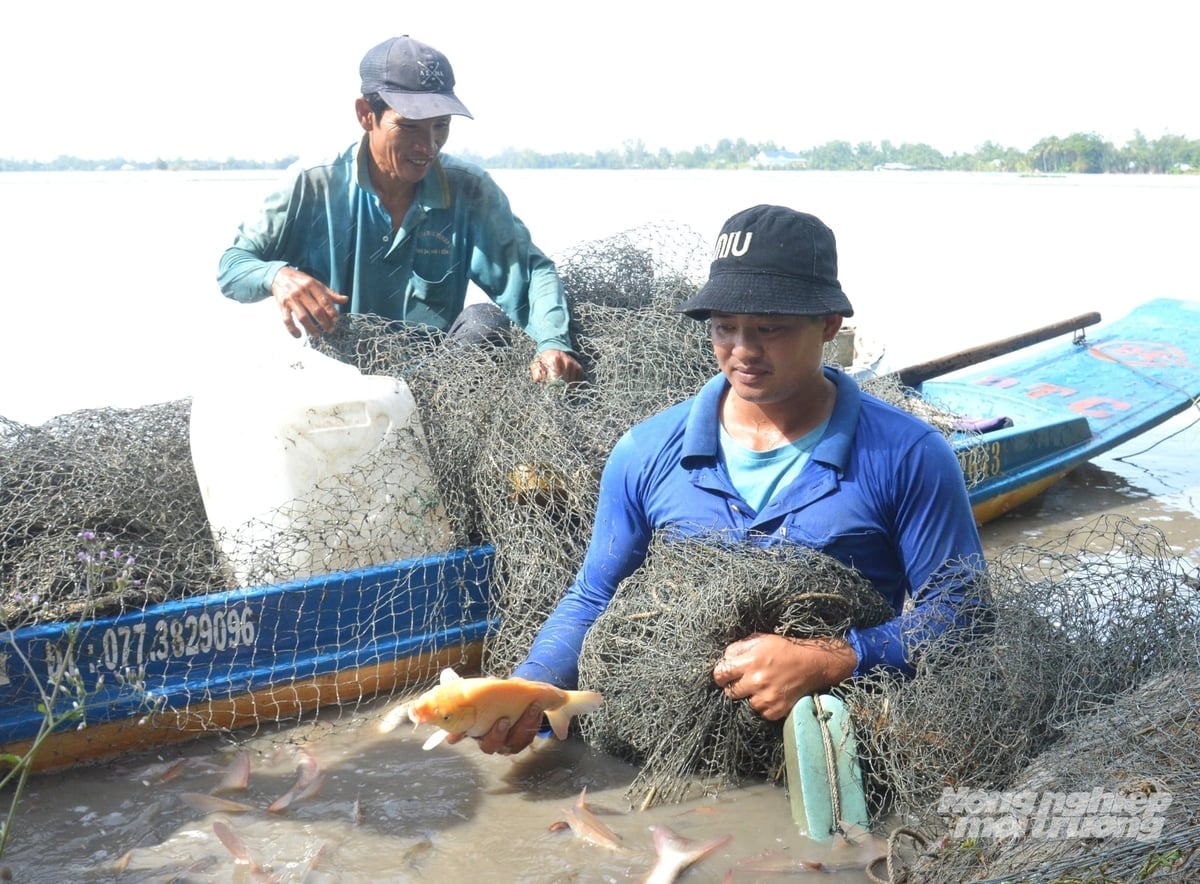
The rice paddy fish farming model has low investment costs and is easy to implement. Vinh Hoa Hung commune aims to expand the farming area to at least 400 hectares, creating livelihoods and generating additional income for people during the off-season. Photo: Trung Chanh.
According to Nguyen Van Thiem, Chairman of the People's Committee of Vinh Hoa Hung commune, the area is rarely affected by saltwater intrusion, with freshwater available year-round, making it very favorable for the development of freshwater aquaculture. The trend of converting from a three-crop rice system to a two-crop rice-one-crop fish system is strongly underway. Therefore, the commune aims to expand the area for rice-field fish farming to at least 400 hectares. This model is easy to implement, requires relatively low investment costs (mostly netting), and can be used for multiple seasons. During the farming process, farmers only need to regularly check the netting, monitor water levels, and identify any leaks to prevent fish loss.
Dr. Le Van Dung, Deputy Director of the An Giang Agricultural Extension Center, assessed that the model has a clear impact on socio-economic development in the locality. When farmers raise fish together in large fields, the use of electric shock fishing has significantly decreased. Cooperatives have been formed, fostering community cohesion, mutual support in consumption, field protection, and technical exchange. The processing of carp and catfish fish sauce opens up a direction for non-agricultural economic development, helping to solve unemployment and increase income during off-peak seasons.
Regarding development orientation, Vinh Hoa Hung commune proposes that the relevant departments support the commune in registering for certification of freshwater fish farming areas and establishing a fisheries cooperative to manage the farming area, link production, and facilitate consumption. They also request increased training and preferential capital support to encourage people to expand their models. Furthermore, they propose support in perfecting the production process of carp and silver carp fish sauce, creating packaging, and ultimately developing OCOP (One Commune One Product) products. This will be the driving force for fish farming in rice paddies to become a sustainable livelihood, helping people in the low-lying areas of Vinh Hoa Hung commune stabilize their lives and achieve sustainable poverty alleviation.
Source: https://nongnghiepmoitruong.vn/duoc-tap-huan-nong-dan-vung-trung-doi-doi-tu-nghe-nuoi-ca-ruong-lua-d788760.html
![[Image] Central Party Office summarizes work in 2025](/_next/image?url=https%3A%2F%2Fvphoto.vietnam.vn%2Fthumb%2F1200x675%2Fvietnam%2Fresource%2FIMAGE%2F2025%2F12%2F18%2F1766065572073_vptw-hoi-nghi-tong-ket-89-1204-jpg.webp&w=3840&q=75)






















































Comment (0)