

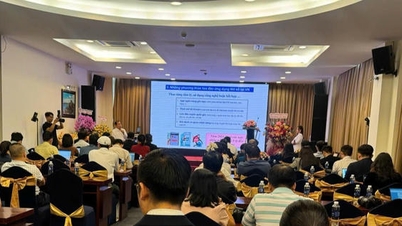
On December 17th, in Hanoi, the Vietnam Union of Science and Technology Associations, in collaboration with the Vietnam Construction Association, organized the seminar "Urban Flooding - Challenges and Mitigation Measures".
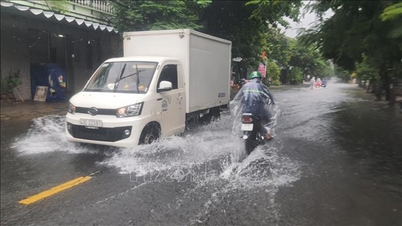
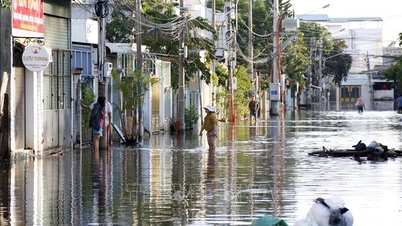
According to information from the workshop, the rapid urbanization process in recent years has revealed many challenges to Vietnam's sustainable urban development. Currently, the country has about 900 urban areas, with an urbanization rate exceeding 44% and projected to be over 50% by 2030. However, the concretization, filling in of ponds and lakes, and narrowing of canals are seriously degrading the natural drainage capacity. Statistics up to 2024 show that urban areas recorded about 397 flooded points, affecting an area of over 900 hectares; flooding not only occurs in large cities but also spreads to medium and small cities, causing estimated economic losses of 1-1.5% of urban GDP each year.
The increasingly severe, prolonged, and unpredictable flooding is not only a result of climate change but also reflects limitations in urbanization, infrastructure, urban management, and planning thinking. Furthermore, the legal framework for drainage and water supply is not yet synchronized, forecasting capabilities and calculation models are limited, while the adaptability of cities to increasing climate risks still falls short of practical requirements.
During the workshop, experts discussed in depth the current state of urban drainage systems, the causes of flooding, especially in large cities; international experiences in urban drainage and lessons that can be applied to Vietnam; as well as solutions to mitigate flooding in the context of climate change and rapid urbanization.
According to Mr. Tran Hoai Anh, Deputy Director of the Department of Construction Infrastructure ( Ministry of Construction ), the drainage systems of most Vietnamese cities are currently mainly combined systems, collecting both rainwater and wastewater in the same sewer network. These systems have been in existence for a long time, with many being over 40-60 years old, small in scale, degraded, and no longer able to meet operational requirements under heavy rain and high tides. They have not been upgraded or expanded in line with the urbanization process.
Discussing solutions to urban flooding, Mr. Le Tung Lam, Head of the Urban Affairs Committee of the Da Nang City People's Council, stated that the question is not just "How to reduce flooding?", but more fundamentally, "How can cities survive, develop, and adapt when water becomes a highly unpredictable and increasingly powerful factor?".
MSc. Tran Quoc Thai (Hanoi University of Civil Engineering) also believes that temporary solutions often focus only on drainage capacity. However, if we only view flooding from a technical drainage perspective, we are only addressing the symptoms of the problem. Therefore, we need to shift to a mindset of "living with and giving space to water."
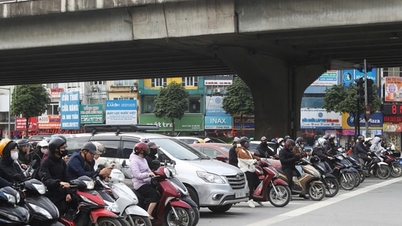
Experience from other countries also indicates that only integrated planning, linking transportation, drainage, green spaces, and smart management technologies, can ensure sustainable urban development. To break free from the vicious cycle of "traffic congestion and flooding," Vietnamese cities need to quickly change their thinking towards integrated and inclusive planning (UN-Habitat), while flexibly applying models such as green and smart cities, compact cities, sponge cities, and resilient and sustainable cities.
To address urban flooding in the Red River Delta, comprehensive solutions are needed, combining technical measures, management mechanisms, raising community awareness, and strengthening human resources. Technical solutions include infrastructure projects such as improving drainage capacity, adjusting drainage planning to suit urban development and the impacts of climate change, and establishing a data center and management system for urban drainage.
Source: https://baophapluat.vn/giai-bai-toan-ngap-ung-do-thi.html
![[Photo] Enchanting ancient rose garden on the mountainside in Nghe An](/_next/image?url=https%3A%2F%2Fvphoto.vietnam.vn%2Fthumb%2F1200x675%2Fvietnam%2Fresource%2FIMAGE%2F2025%2F12%2F19%2F1766109900916_vuon-hong-chin-do-thu-hut-du-khach-toi-check-in-o-ha-noi-3-20162778-1671624890024-1671624890104198100259.jpeg&w=3840&q=75)


![[Photo] General Secretary To Lam visits the exhibition space showcasing books, photo exhibitions, and achievements of digital transformation in journalism.](/_next/image?url=https%3A%2F%2Fvphoto.vietnam.vn%2Fthumb%2F1200x675%2Fvietnam%2Fresource%2FIMAGE%2F2025%2F12%2F19%2F1766110879215_1766110240024-jpg.webp&w=3840&q=75)








































































Comment (0)