

Yen Tu, a thousand years old
The Yen Tu, Bach Dang, and Tran Dynasty historical and scenic complex comprises hundreds of temples, pagodas, shrines, and mausoleums, spread across many communes and wards in the western region of Quang Ninh province. Each site has its own unique values, but they all share a common connection to the Tran Dynasty – the most glorious dynasty in Vietnamese history in terms of both civil administration and military achievements.
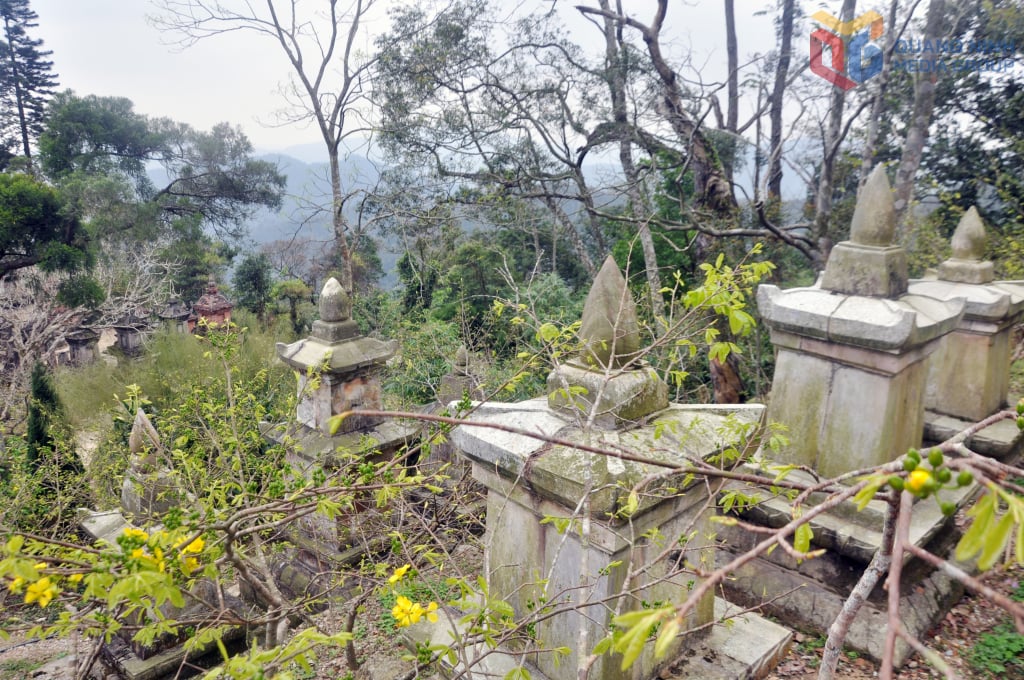
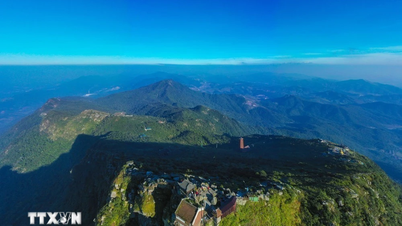
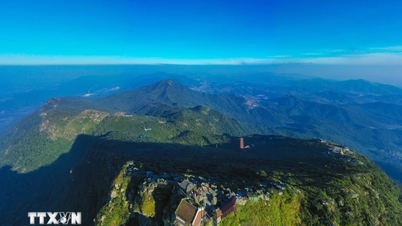
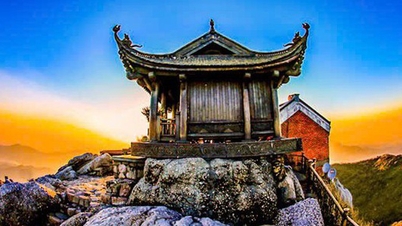
Yen Tu is a complex of temples, hermitages, and pagodas stretching from Trinh Pagoda to Dong Pagoda, reaching an altitude of 1,068 meters. Many highly accomplished Zen masters came here to practice asceticism during the Ly Dynasty and achieved great success. Particularly during the Tran Dynasty, King Tran Nhan Tong, while practicing asceticism at Yen Tu, founded the purely Vietnamese Truc Lam Yen Tu Zen sect with the philosophy of "connecting religion with life." The development of the Truc Lam Zen sect in general, and at Yen Tu in particular, has experienced many ups and downs. Over time, the complex of relics here has sometimes been damaged or degraded.
In order to preserve the heritage of our ancestors and spread the enduring historical values of Yen Tu, over the years, many historical sites here have received investment from central and local authorities for preservation, restoration, and promotion. According to statistics from the Yen Tu Heritage Conservation Center, during the period 2012-2015, Yen Tu received a total investment of approximately 150 billion VND for the restoration and preservation of historical sites and a number of infrastructure projects and service systems to promptly meet the needs of tourists. This capital mainly came from social contributions.
Specifically, from 2009 to 2013, the project to build a statue of Emperor Tran Nhan Tong and a square in the An Ky Sinh area was implemented by the Executive Board of the Quang Ninh Provincial Buddhist Association, with a budget of approximately 100 billion VND. In December 2013, the project was inaugurated and the statue was completed, with the remaining items gradually being completed. During the 2013-2014 period, the Executive Board of the Quang Ninh Provincial Buddhist Association invested over 20 billion VND in the restoration and renovation of the One-Roof Pagoda; and approximately 25 billion VND in the restoration and renovation of the hermitage and the Dragon's Eye at the Ancestor's Tower area of Hoa Yen Pagoda.

Particularly from 2015 to the present, Yen Tu has attracted significant investment totaling nearly 3,000 billion VND for numerous projects and construction works aimed at enhancing the value of the heritage site. Among these, the inner courtyard of Hoa Yen Pagoda, funded through social contributions worth approximately 28 billion VND, has been in operation since July 2016; the Truc Lam Yen Tu Palace project, constructed between 2017 and 2023, is managed by the Provincial Buddhist Association, with a total social contribution of approximately 200 billion VND, covering an area of over 6,000 m² and a capacity of over 5,000 people.
From corporate capital, the Yen Tu Festival and Tourism Service Center Project (2016-2018) received nearly 2,000 billion VND in investment; the project to expand the Ha Kieu 1 bus station (7.8 hectares) and the Ha Kieu 2 bus station (4.6 hectares) had a total cost of nearly 200 billion VND; the project to upgrade two cable car lines of Tung Lam Development Joint Stock Company had a total cost of nearly 500 billion VND; and the project for a system of signboards within the historical site…
This has contributed to enhancing the heritage status and increasing the attraction of Yen Tu to millions of visitors, along with many cultural, sports , and tourism events organized annually. The area is also gradually transforming into a year-round destination with diverse services including sightseeing, accommodation, relaxation, meditation, and experiences, serving a wide range of domestic and international tourist markets.
"Reviving" the heritage of the Tran Dynasty
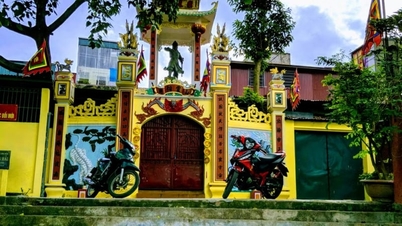
Located in the ancestral homeland of the Tran Dynasty, the ancient Dong Trieu region, the Tran Dynasty historical site preserves the glorious temples, pagodas, shrines, and tombs of the Tran kings. These include Quynh Lam Pagoda – the birthplace of Buddhism, dating back to the Ly Dynasty; An Sinh Temple – dedicated to the Tran Dynasty kings; Thai Mieu – the ancestral temple of the Tran royal family; Ho Thien Pagoda – where eminent monks practiced their faith; and Ngoa Van Pagoda – the hermitage where Emperor Tran Nhan Tong entered Nirvana…

Unlike Yen Tu, where many historical sites remain relatively intact over time, the sites within the Tran Dynasty historical complex have been almost completely destroyed by time and war, with only traces of foundations remaining. The relics are also mainly concentrated in the northern mountainous areas, where the rugged terrain makes research, restoration, and preservation challenging. Investment in these sites from 2011 to the present has reached nearly 615 billion VND, mostly from social mobilization, demonstrating the significant efforts of the local authorities, the Provincial Buddhist Association, and related units.
Accordingly, the Thai Lang relic was restored with a total budget of over 23 billion VND from the provincial budget in 2011. Ngoa Van Pagoda (Trung Pagoda) was renovated in 2016 with a budget of over 83 billion VND, mainly from social contributions of the Provincial Buddhist Association; Thai Mieu was renovated with social contributions from businesses in 2018 with a budget of 103.9 billion VND. The Vingroup Charitable Foundation has allocated nearly 405 billion VND to the restoration of a series of projects in the period 2018-2025, including: Trung Tiet Pagoda, Nguyen Lang, Quynh Lam Pagoda, Ngoa Van Pagoda (Thuong Pagoda), Ho Thien Pagoda, Tu Phuc Mausoleum, Phu Son Mausoleum, Ngoa Van Pagoda's stupa garden, and Ngoc Thanh Pagoda and temple garden.

The Bạch Đằng River shines brightly forever, a legacy of the past.
Located along the historic Bach Dang River, Bach Dang is associated with the glorious battle fought by the Tran Dynasty's army and people against the Mongol invaders who had trampled across Asia and Europe in the 13th century. The Bach Dang Victory 1288 historical site, along with the stake fields, bears witness to this victory and also includes a system of temples, shrines, and pagodas built by later generations to commemorate and honor the merits of their ancestors in repelling foreign invaders and protecting the peace and independence of the nation.
The relics here are distributed across both the Ha Bac and Ha Nam areas of the former Quang Yen town. Bach Dang has the advantage that most of the relics have been restored and renovated using funds from the National Target Program on Culture, the provincial budget, and social mobilization, with a total investment of over 110 billion VND from 2009 to the present. Specifically: Trung Ban communal house was built and renovated with a total cost of over 9 billion VND in the 2009-2010 period; Trung Coc temple was restored with a total cost of over 14 billion VND in the 2011-2012 period; Yen Giang communal house was restored and renovated with a total cost of approximately 7 billion VND in 2011-2012. Most recently, the infrastructure of the 7.8-hectare central relic area was restored with over 80 billion VND from the provincial budget and has been operational since 2020.

Thus, after a long process of determined efforts to "revive" and spread the value of these heritage sites, not only have the sites become more spacious and durable against the ravages of time, but the Yen Tu, Bach Dang, and Tran Dynasty National Special Historical Sites have also become attractive cultural and spiritual tourism destinations for visitors. The 12 sites/clusters of relics here are also part of the Yen Tu - Vinh Nghiem - Con Son - Kiet Bac complex, which was recently recognized as a World Heritage Site in July 2025, further spreading the reputation of these heritage sites to friends and tourists from all over the world.
Sharing his vision for the future, Mr. Pham Dinh Huynh, Deputy Head of the Ha Long Bay - Yen Tu World Heritage Management Board, said: "We will implement regular preservation, minor repairs, and urgent renovations of the relics according to the annual plan. Currently, the Board is developing investment policies for several projects in the fields of culture, sports, and tourism as directed by the province, with public investment projects such as the construction of an archaeological park in the Thai Mieu area , the Yen Tu Museum, etc."

In the long term, the Ha Long Bay - Yen Tu World Heritage Management Board will focus on implementing the task of developing a conservation, restoration, and rehabilitation plan for the Yen Tu - Vinh Nghiem - Con Son - Kiet Bac complex of historical sites and scenic spots, as directed by the Provincial People's Committee. After the plan is approved, the restoration, preservation, and enhancement of cultural works in the area will be carried out in accordance with regulations. Currently, the conservation, restoration, and rehabilitation plans for the three special national historical sites of Yen Tu, the Tran Dynasty, and Bach Dang have completed their investment phases. Therefore, the Provincial People's Committee recently assigned the Department of Culture, Sports and Tourism to develop a plan for Bach Dang and is considering implementing and assigning relevant units to develop plans for the remaining two sites in the near future.
Source: https://baoquangninh.vn/gin-giu-nhung-vung-di-san-linh-thieng-3409133.html
![[Photo] Admire the coral "masterpiece" amidst the million-year-old heritage of Dak Lak province.](https://vphoto.vietnam.vn/thumb/1200x675/vietnam/resource/IMAGE/2026/05/30/1780107638639_y25-jpg.webp)


































































Comment (0)