

In response to the severe cold weather in recent days, authorities and people in Ha Tinh have implemented many measures to protect livestock, poultry, and farmed aquatic animals.
Since January 22nd, temperatures in Ha Tinh have dropped sharply, at many times reaching dangerously low levels below 13 degrees Celsius. This sudden drop in temperature has affected livestock.
As soon as he heard the village's loudspeaker announcing the severe cold spell, Mr. Tran Nhu Nguyet (My Son village, Cam My commune, Cam Xuyen district) promptly brought his three buffaloes, which were grazing in the forest, back to their barn. To protect them from the wind, he used corrugated iron and wood to cover the barn; he also supplemented the buffaloes' food reserves.
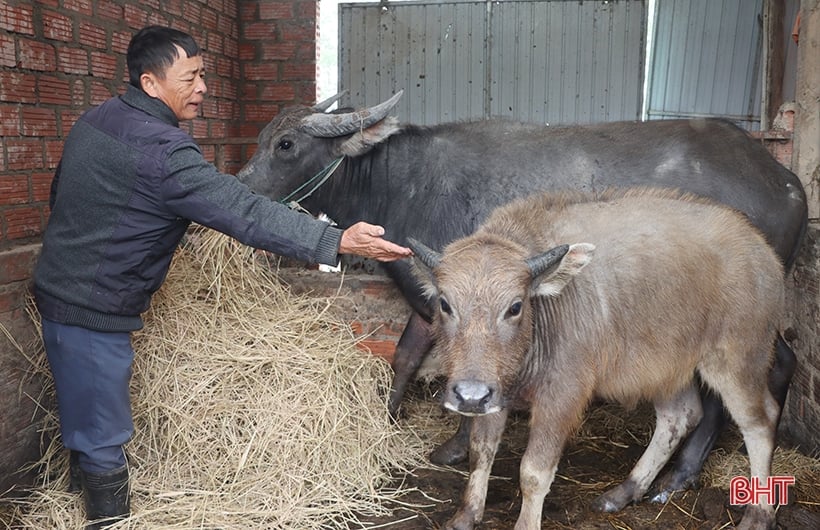
Mr. Tran Nhu Nguyet in Cam My commune (Cam Xuyen district) managed to herd his free-ranging buffaloes back into enclosures to protect them from the cold.
Mr. Tran Nhu Nguyet shared: “For the past two days, the temperature has sometimes dropped below 12 degrees Celsius, so I no longer let the buffaloes roam freely but keep them confined in the barn. During these days of low temperatures and severe cold, in addition to supplementing with plenty of dry straw, I also mix dried vegetables, rice bran, and salt to supplement the buffaloes' nutrition. If the weather drops below 10 degrees Celsius, I will burn firewood to warm the barn area, helping the animals avoid the cold.”
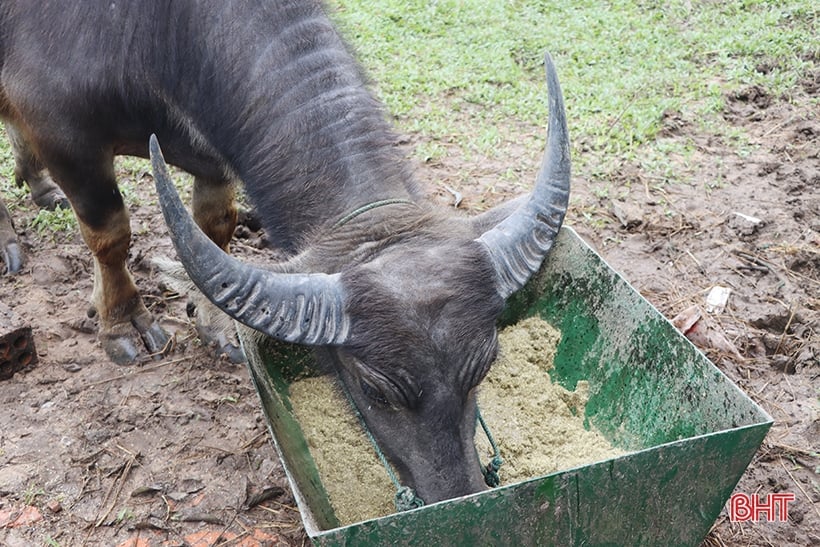
During cold weather, it is necessary to increase the supplemental intake of concentrated feed for buffaloes and cattle.
As one of the localities with the largest livestock population in Ha Tinh province, Cam Xuyen district has proactively implemented solutions to prevent and combat hunger, cold, and disease outbreaks. The district has also directed communes and towns to assign specialized staff to regularly inspect; disseminate information and guide people on proper care and protection of crops and livestock during cold weather; and the Department of Agriculture and Rural Development is closely monitoring weather conditions to provide timely guidance on preventing and combating cold-related damage to crops and livestock.
In Huong Khe district, the local government has focused on urging and directing the People's Committees of communes and towns, and relevant departments and units to effectively implement measures to prevent severe cold weather damage to crops and livestock in the spring of 2024. The biggest advantage is the large area of corn cultivation, spread across all localities, allowing the district to be completely self-sufficient in feed, ensuring that livestock do not suffer from hunger or cold.
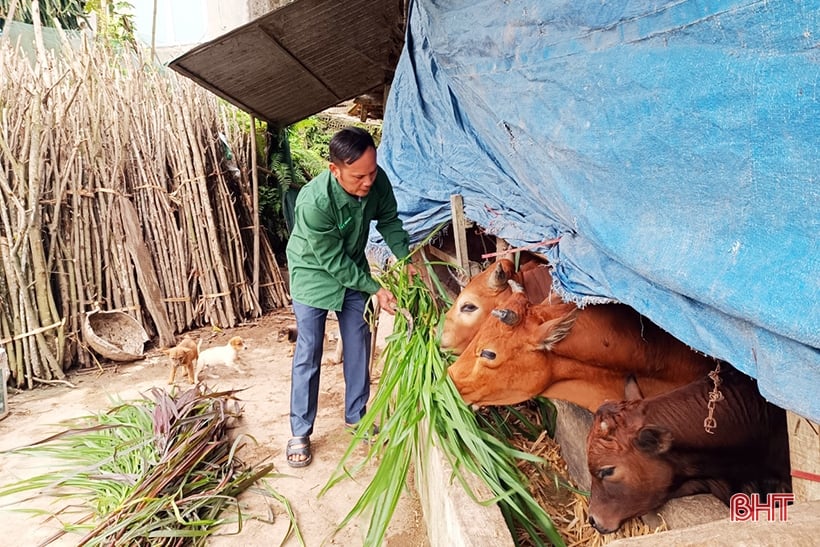
Mr. Ho Thanh Son (Hamlet 4, Ha Linh Commune, Huong Khe District) provides shelter for his cattle sheds and ensures they receive sufficient food.
Mr. Ho Thanh Son (Hamlet 4, Ha Linh Commune, Huong Khe District) shared: “Our 5 cows are a significant asset to our family, so when we received information about the impending cold weather, we proactively took measures to protect the barns and also prepared corn silage for feed reserves. When the temperature dropped as low as yesterday (January 23), we kept the herd indoors and provided them with plenty of drinking water, concentrated feed, and fresh grass, thus minimizing the impact of the cold.”
Currently, localities throughout the province are implementing cold weather prevention and control measures in a coordinated and effective manner, in accordance with Directive No. 01/CĐ-UBND dated January 20, 2024, from the Provincial People's Committee. These measures focus on immediate solutions such as: livestock and aquaculture farmers need to cover and keep their barns, ponds, and tanks warm, ensuring hygiene in the barns and farming areas; and implementing heating measures for livestock when temperatures drop. For aquaculture ponds, farmers need to ensure a water depth of 1.5m or more, and can use tarpaulins or water hyacinth to cover 1/2 - 1/3 of the pond surface, and use heating devices for small ponds and tanks.
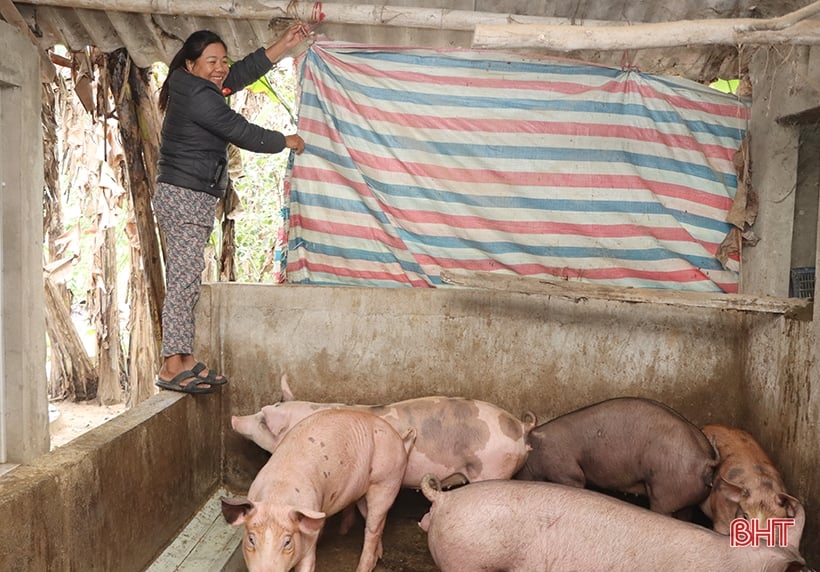
People in Ha Tinh province are covering their pigpens to protect them from the cold.
Livestock and aquaculture farmers need to proactively secure feed sources and supplement with vitamins and minerals to strengthen the immune system of their livestock, poultry, and farmed aquatic animals; they should also encourage and guide farmers to bring buffalo and cattle that roam freely in the forest back to enclosed, controlled areas.
During periods when the outdoor temperature is below 13 degrees Celsius, absolutely no work or grazing should be allowed for buffaloes and cattle; regularly inspect and closely monitor the disease situation of livestock, poultry, and farmed aquatic animals; and prepare well for the implementation of the first vaccination campaign of 2024 for livestock and poultry.
Mr. Phan Quy Duong
Head of Livestock Management Department (Ha Tinh Provincial Department of Livestock and Veterinary Medicine)
Phan Tram - Duong Chien
Source
![[Photo] Enchanting ancient rose garden on the mountainside in Nghe An](/_next/image?url=https%3A%2F%2Fvphoto.vietnam.vn%2Fthumb%2F1200x675%2Fvietnam%2Fresource%2FIMAGE%2F2025%2F12%2F19%2F1766109900916_vuon-hong-chin-do-thu-hut-du-khach-toi-check-in-o-ha-noi-3-20162778-1671624890024-1671624890104198100259.jpeg&w=3840&q=75)


![[Photo] General Secretary To Lam visits the exhibition space showcasing books, photo exhibitions, and achievements of digital transformation in journalism.](/_next/image?url=https%3A%2F%2Fvphoto.vietnam.vn%2Fthumb%2F1200x675%2Fvietnam%2Fresource%2FIMAGE%2F2025%2F12%2F19%2F1766110879215_1766110240024-jpg.webp&w=3840&q=75)































































































Comment (0)