

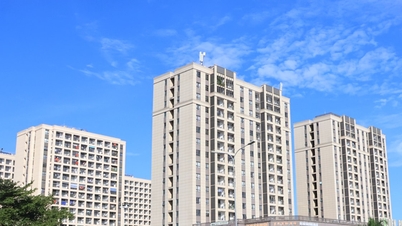
Social housing is an issue that has always received special attention from the Party and the State. It is both a matter of social welfare and a driving force for socio-economic development. Over the past period, the National Assembly has amended many laws and issued resolutions related to this issue. In particular, at the Ninth Session of the 15th National Assembly, a resolution was issued to pilot some specific mechanisms and policies for the development of social housing.
Accordingly, the resolution allows for the establishment of a National Housing Fund. The National Housing Fund will invest in the construction of social housing, the construction of technical and social infrastructure for social housing projects, and the creation of social housing for rent, as well as housing for officials, civil servants, and workers. The resolution assigns the investor, approves the investment policy, and also allows the investor to proceed without bidding for social housing projects and housing for the armed forces that do not use public investment capital… With many specific policies, the National Assembly 's resolution opens up a breakthrough legal framework for the development of social housing to meet the housing needs of the people, especially low-income workers.
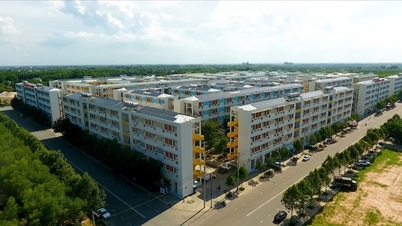
As of the end of December 2025, the whole country has 698 social housing projects under implementation with a scale of 657,441 units. The number of projects completed, commenced, or approved for investment by 2025 reached 62% of the target set in the Plan. This is a very commendable effort by the Government , relevant ministries and agencies, and localities.
However, achieving the goal of completing the construction of at least 1 million social housing units by 2030 still requires much work. To implement this, the Government has assigned specific tasks to the Ministry of Construction to guide, supervise, and compile the implementation results of localities, and periodically report to the Prime Minister. Provincial People's Committees are to incorporate the assigned annual social housing development targets into their annual socio-economic development plans for implementation; and to allocate sufficient land for social housing construction in convenient locations with integrated technical and social infrastructure.
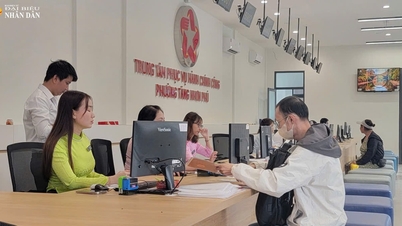
Furthermore, administrative procedures should be streamlined to include social housing projects in the "green lane" and "priority lane." Simultaneously implement processes related to investment, land, planning, construction, and environment; minimize the time for project appraisal and approval, land allocation, construction permits, and related procedures, ensuring a minimum 50% reduction in administrative procedure time and 50% reduction in compliance costs compared to current regulations.
Depending on the conditions and practical needs of each locality, the Government has specifically assigned housing development targets for the period 2026-2030 to 34 provinces and cities nationwide. However, achieving these targets on time requires decisive direction from the Government and the Prime Minister, the joint efforts of relevant ministries and agencies, and especially the active and proactive role of localities, given the strong delegation of authority from the Government. To attract businesses to invest in social housing development, one of the key requirements is to remove administrative procedural barriers. This demands a high level of determination from localities in implementing social housing projects under the "green channel" and "priority channel" mechanisms. The determination to develop social housing is also reflected in the reduction of administrative procedures and compliance costs.
The National Assembly's resolution on piloting specific mechanisms and policies for social housing development has been issued, as has the Government's resolution assigning targets for social housing development. The crucial issue is the determination of relevant ministries, sectors, and localities in implementing these measures. Furthermore, businesses, organizations, and individuals involved in investing in and developing social housing must proactively ensure timely completion, quality, and compliance with legal regulations.
In particular, strict inspection and supervision by competent authorities, as well as community oversight, are necessary to ensure that there is no profiteering, corruption, negative practices, or waste and losses when implementing this humane policy. Only then can the aspirations of workers, especially low-income earners, for secure housing be realized sooner.
Source: https://daibieunhandan.vn/hien-thuc-hoa-uoc-vong-an-cu-10403771.html












![[Infographic] How to register to buy social housing in the Thanh Sen ward project?](https://vphoto.vietnam.vn/thumb/402x226/vietnam/resource/IMAGE/2026/04/16/1776306626899_fb_tren-dia-ban-tinh-ha-tinh-png.webp)




















































































Comment (0)