

Caring for the elderly is not easy...
“That time, I caught a glimpse of an elderly woman wearing clothes and a scarf exactly like my mother’s riding a motorbike on the road, and I instinctively ran after her, even though it certainly wasn’t my mother. My mother passed away more than a year ago. I kept running after her, tears streaming down my face…,” Ms. Vo Thi Thuy No (43 years old, residing in Di An ward, Ho Chi Minh City) recounted emotionally.
Thúy Nở's mother passed away after nearly three years of illness and being bedridden. Initially, while her mother was in the hospital, the siblings took turns caring for her. Later, when her mother was transferred to home treatment, Nở dedicated most of her time and income to caring for her. Nở recalled: “The journey with my mother during her final days was arduous and filled with heavy sadness. But for me, that time was very important; it felt like each day I had with her was getting shorter. On the day she died, even though I had prepared myself mentally, I was still stunned and speechless.”
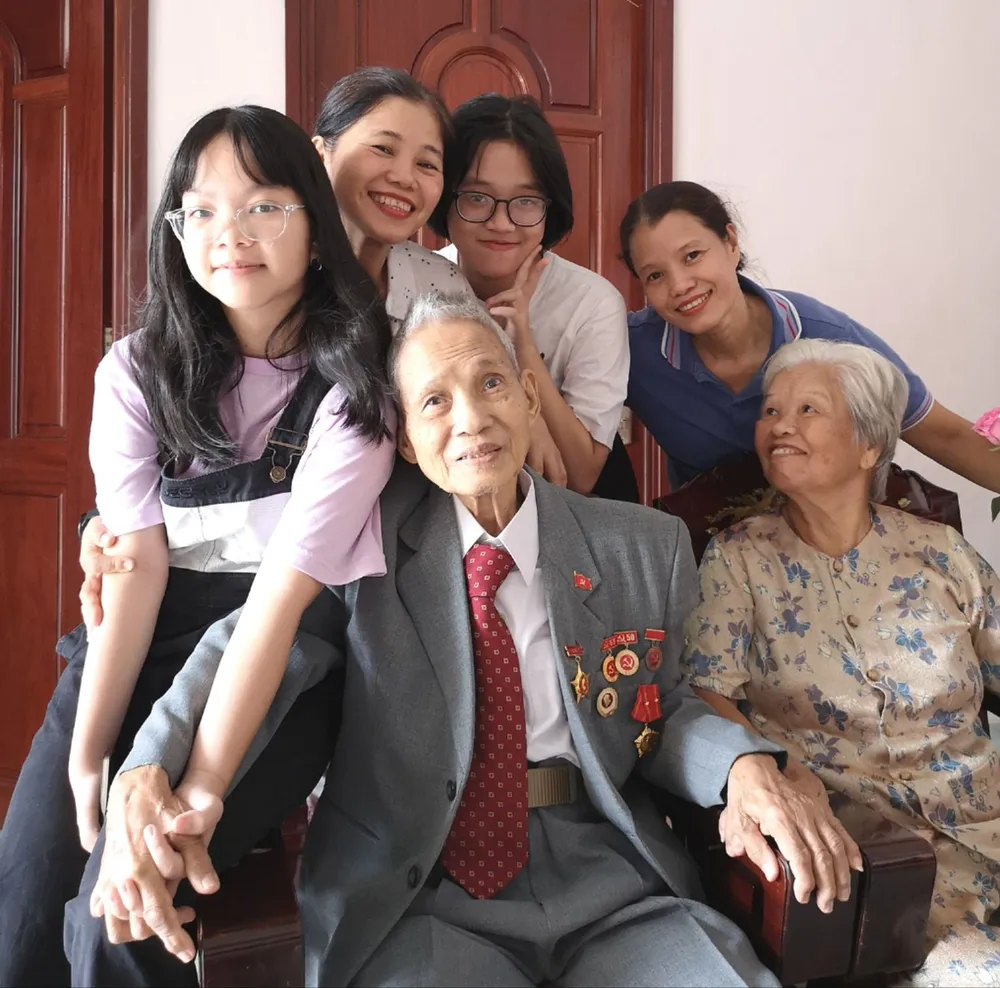
Caring for elderly and ailing parents is by no means easy; it's a battle where children fight for their parents' lives against death, a struggle to balance food, clothing, and money. Sometimes, it even involves heated debates about the responsibilities of family members, because not every family is harmonious, and not every child is wholeheartedly devoted to fulfilling their filial duties.
Mr. Tran Van Thanh (39 years old, residing in Gia Dinh ward, Ho Chi Minh City) recounted that his family has four siblings, and their mother passed away early. When his father suffered a stroke, the children divided the responsibility of caring for him. “For almost two years, my siblings and I struggled to take care of him. It wasn't about money, but the work was incredibly difficult, requiring skills in caring for the elderly; we couldn't do it ourselves, and if we hired someone, they would quit after a few days, leaving everyone in a panic…”
According to the report "Vietnam Population Forecast 2024-2074," compiled by the General Statistics Office in collaboration with the United Nations Population Fund (UNFPA), Vietnam is facing a major turning point in population aging. This poses significant challenges for the elderly care system in Vietnam. And given the unique cultural characteristics of the nation, no matter how advanced the healthcare system becomes, family bonding remains a crucial factor in caring for the mental well-being of the elderly.
Filial piety comes first.
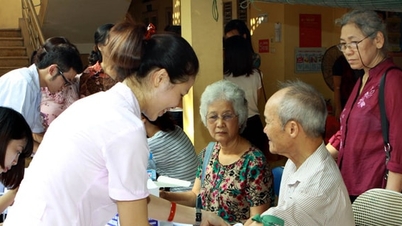
In late March, images circulated on social media showing six children, both sons and daughters, discussing and arranging tasks to care for their seriously ill father in a hospital room. While this might seem like an ordinary story, the way these children enthusiastically and cheerfully divided up the caregiving responsibilities garnered widespread attention and sympathy.
Ms. Phuong Thao (a retired official residing in Hiep Binh ward, Ho Chi Minh City) recounted that her elderly father, due to poor health, was frequently hospitalized. Her parents had five children, all of whom were also elderly, making childcare very difficult, especially for the elderly whose temperaments change frequently. Once, she was angry with both her siblings and her father, and stormed out of the hospital room. Her father's ward was near the pediatric ward, and she saw a young father comforting his child, who was still attached to numerous IV tubes. She suddenly remembered the time her own father cared for his children. She and her siblings were born during wartime; her father was a war invalid and unable to work, so the burden of the family fell entirely on her mother, who worked all day. Her father became the primary caregiver for the children. Not only did he handle their meals and daily needs, but during bombing raids, he would carry the oldest child on his back, hold the youngest in one arm, and use a cane to lead them into the shelter. But now, when it comes to taking care of their father in his final days, they're pushing the responsibility onto each other; if their father is tired and unwell, the children get angry... Afterwards, she and her siblings sat down together, called the children and grandchildren over, not only reminiscing about the past but also sharing experiences of caring for their parents, so that the children and grandchildren could bond with their grandparents.
Sharing her thoughts on this issue, Dr. Pham Thi Thuy, a sociologist and psychotherapist (Regional Political Academy II), said: “The story of caring for the elderly is not just a matter of social welfare; it's also a matter of filial piety within each family. The family is where cultural values are passed down. When caring for parents no longer takes place within the family, not only are the elderly hurt, but the younger generation also loses the opportunity to learn how to love and show responsibility. With family members by their side, elderly parents feel a sense of belonging, love, and connection with their children and grandchildren. This helps reduce feelings of loneliness, depression, and anxiety in the elderly.”
After all, caring for elderly parents is not just a duty, but a way for each child to show their filial piety. When love is abundant, hardships become less burdensome, and sacrifices become meaningful. Parents don't need anything grand; sometimes, just a hand to hold, a word of inquiry, or presence is enough to bring peace of mind during their weary days. Sincere care not only helps parents feel less tired, but also helps the child find peace of mind. Because in the end, what matters is not how much has been given, but whether the love has been complete.
Source: https://www.sggp.org.vn/hoc-cach-yeu-thuong-post847592.html
![[Photo] General Secretary and President To Lam visits and delivers a policy speech at Tsinghua University.](https://vphoto.vietnam.vn/thumb/1200x675/vietnam/resource/IMAGE/2026/04/14/1776164592318_vna-potal-tong-bi-thu-chu-tich-nuoc-tham-va-phat-bieu-chinh-sach-tai-dai-hoc-thanh-hoa-trung-quoc-8700658-5437-jpg.webp)
![[Photo] General Secretary and President To Lam and his wife begin their state visit to China.](https://vphoto.vietnam.vn/thumb/1200x675/vietnam/resource/IMAGE/2026/04/14/1776133794926_z7723148772587-ffefa3c4b1e54e100de1554593a862c6-jpg.webp)
![[Image] Expediting land clearance at Alley 310 Nghi Tam to facilitate the construction of Tu Lien Bridge](https://vphoto.vietnam.vn/thumb/1200x675/vietnam/resource/IMAGE/2026/04/14/1776160406551_ndo_br_z7724148990408-9e5d4777e3c4504998b4286178b2e66e-jpg.webp)
![[E-Magazine]: The Warmth of the Changing Seasons](https://vphoto.vietnam.vn/thumb/402x226/vietnam/resource/IMAGE/2026/03/27/1774616373750_e-magazine-hoi-w1200t0-di2612d199d5171010t11920l1-hagm-027.webp)











![[Photo] General Secretary and President To Lam receives Slovak Prime Minister Robert Fico](https://vphoto.vietnam.vn/thumb/1200x675/vietnam/resource/IMAGE/2026/04/13/1776080592076_a1-bnd-8227-6002-jpg.webp)




































Comment (0)