

Iran is stepping up efforts to restore its network of underground missile bases after weeks of attacks by the US and Israel, demonstrating its ability to maintain missile deterrence despite large-scale airstrikes.
For weeks, US and Israeli airstrikes destroyed roads and buried tunnel entrances, disrupting access to Iran's underground missile launch facility.
However, satellite imagery analyzed by CNN shows that Iran used simple construction equipment such as bulldozers and trucks to repair the damage. According to experts, this indicates that Tehran's missile capabilities cannot be completely neutralized simply by collapsing the tunnel entrances.
Although Iran and the US have reached a preliminary agreement on reopening the Strait of Hormuz, months of negotiations are still needed to finalize the details. In the event of further escalation of the conflict, Iran could sustain missile launches for an extended period.
Throughout the conflict, Iran has been working to excavate tunnel entrances under dangerous conditions, with construction equipment frequently becoming targets of attacks by the US and Israel. Despite these efforts, Tehran has been able to maintain missile launches, albeit at a significantly reduced intensity. Since the ceasefire came into effect more than seven weeks ago, progress in restoring the underground facilities has accelerated considerably.
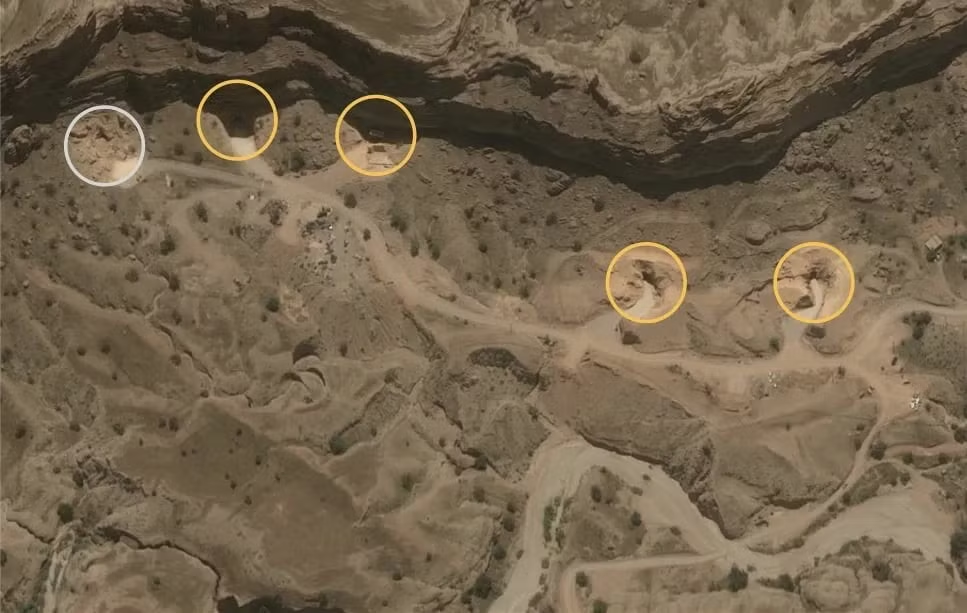
According to CNN, Iran has reopened 50 of the 69 tunnel entrances at 18 underground missile sites that were previously attacked by the US and Israel.
In addition, Tehran has also repaired many other items within the bases, including roads that had been damaged to hinder the operation of missile launchers. Satellite imagery shows that most of the bomb craters have been filled, while some roads have even been repaved.
The objective of the war
President Donald Trump has repeatedly emphasized that destroying Iran's missile stockpile is a central objective of his military campaign. In a March post on Truth Social, he declared his intention to "completely cripple Iran's missile capabilities, launchers, and everything related to them."
Iran's network of underground missile bases, built over more than two decades, provides significant protection for its missile stockpiles and launchers. Many facilities lie hundreds of meters beneath rock, severely limiting the attack options for the U.S. and Israel.
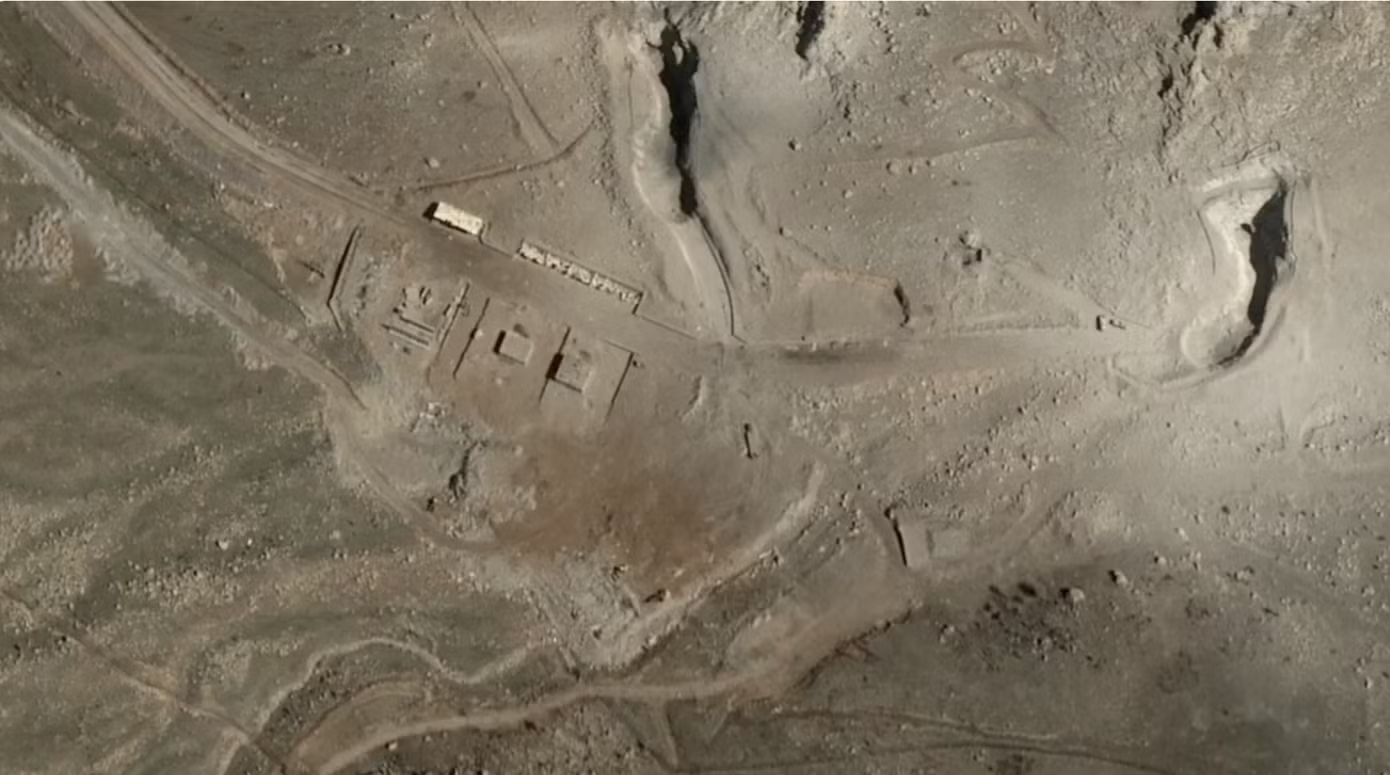
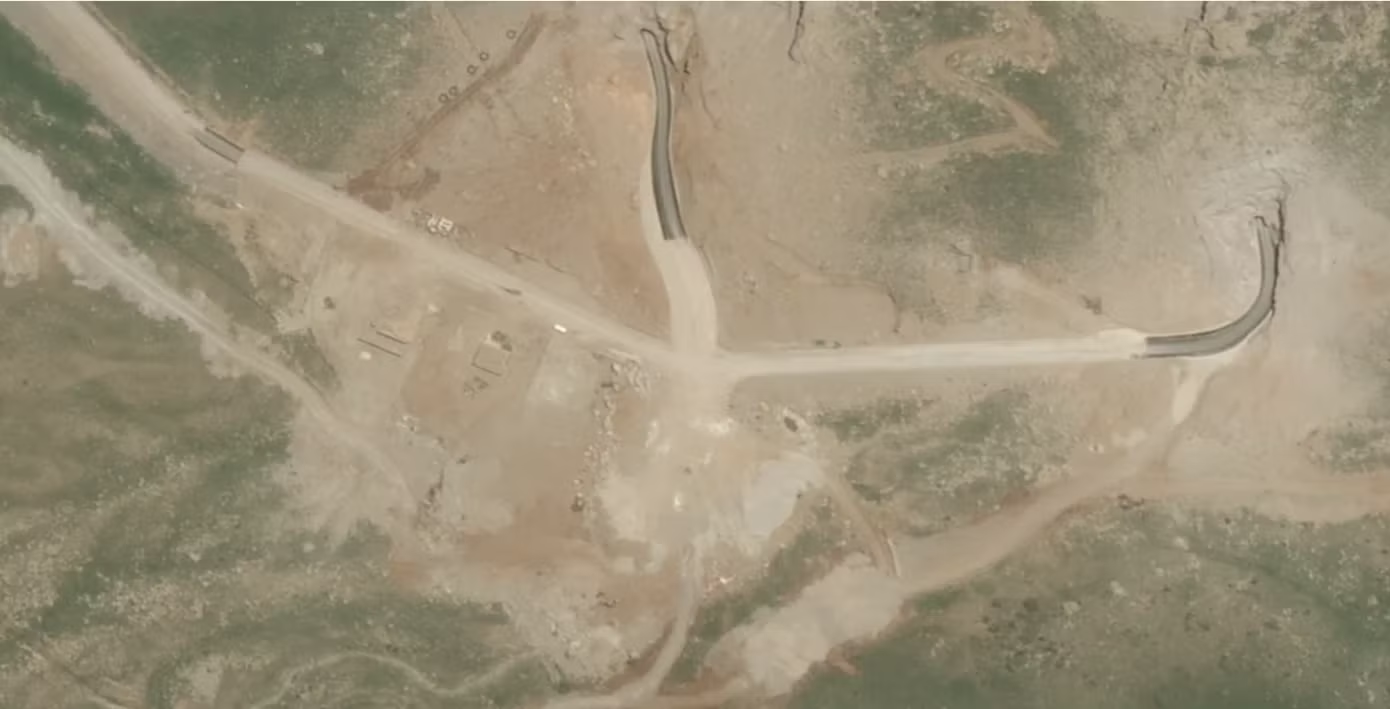
Therefore, in the early stages of the conflict, the US and Israeli militaries focused on attacking tunnel entrances, combined with locating and destroying mobile launch platforms to weaken Iran's missile firepower.
Those attacks inflicted heavy damage on the bases, burying most of the tunnel entrances under rubble and destroying the roads leading to these locations.
Satellite images released by CNN at the time showed facilities such as the North Isfahan missile base heavily damaged, with many tunnels sealed and outer launch platforms destroyed.
The US and Israel also launched a large-scale campaign to cripple Iran's missile supply chain, from electronic component manufacturing facilities to factories producing propellant and missile bodies.
Following the ceasefire agreement between the US and Iran on April 8, US Secretary of War Pete Hegseth stated that Iran would excavate remaining missile launchers and missiles but would be unable to replace them due to damage to its defense industry.
However, experts believe Iran still possesses around 1,000 missiles stored in fortified underground bunkers. These stockpiles are estimated to be deep underground and unlikely to be significantly affected by air attacks.
Iran attempts to restore its 'underground missile city'.
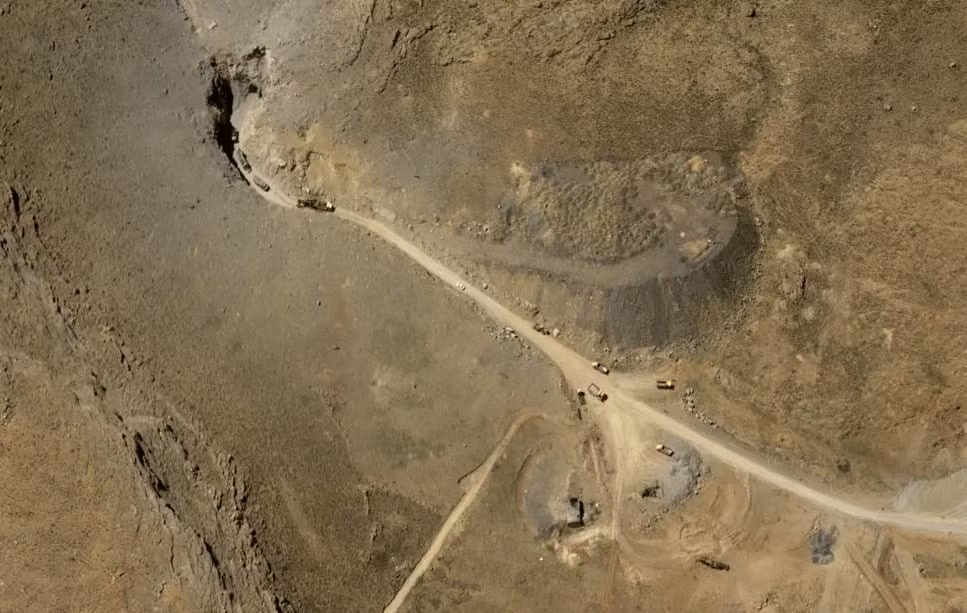
To restore the bases, Iran has mobilized a large amount of construction and leveling equipment. Satellite imagery shows excavators clearing rubble, while trucks continuously transport materials to fill bomb craters.
At a base near Isfahan, where the U.S. and Israel have conducted numerous airstrikes aimed at blocking four tunnel entrances, satellite imagery shows that at least 18 bomb craters have been created to obstruct access routes.
By early May, new photos showed that extensive remediation work had been underway. Two tunnel entrances had been reopened, while previously damaged roads were repaired and repaved.
At another base near Khomyn in mid-April, at least 10 vehicles were involved in restoring a blocked access point.
Amid Iran's gradual restoration of missile bases and capabilities, many analysts warn that the threat from this arsenal may be underestimated, especially as the supply of interceptor missiles from the US and its allies continues to decline.
Furthermore, attacks on Iran's defense industry may not be enough to prevent Tehran from rebuilding its missile production capabilities in the long term. Satellite imagery shows that some facilities attacked last year have now been restored to operation.
U.S. intelligence assessments also indicate that Iran is rebuilding several key military capabilities, including resuming drone production, replacing destroyed launchers, and restoring missile production capacity.
A U.S. official told CNN that Iran's reconstruction pace has far exceeded any timeline the U.S. intelligence community had ever predicted.
Source: https://tienphong.vn/iran-tang-toc-khoi-phuc-thanh-pho-ten-lua-ngam-post1847900.tpo






































































































Comment (0)