

 |
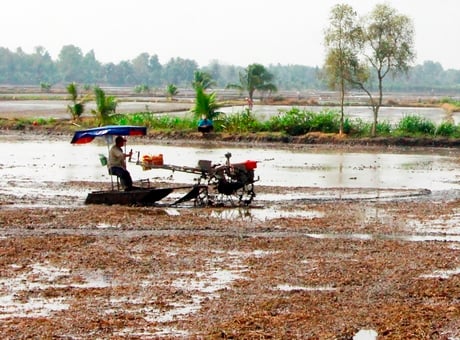
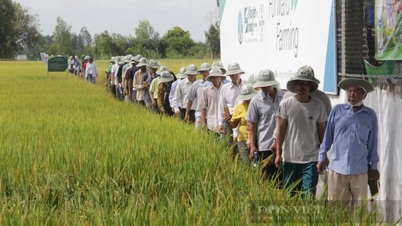
| Farmers need to properly dispose of rice straw before the next rice crop. |
(VLO) According to relevant authorities, the risk of organic poisoning in rice fields from rushing the planting season can lead to an increased rate of disease infection. To ensure good rice growth, increased yield, and to avoid acid and organic poisoning, farmers need to adhere to timely prevention and treatment measures.
Some farmers say that organic poisoning is a major problem affecting rice growth. If not addressed promptly, it can destroy entire rice crops. They believe the main cause of this is the farmers' poor cultivation techniques.
Firstly, due to seasonal factors, after harvesting rice, farmers rush to prepare the land and sow the next rice crop. The straw and organic matter residues haven't had time to decompose, leading to the straw being plowed under flooded conditions, and the land being prepared and rice planted immediately.
The decomposition of straw from the previous crop produces organic toxins, negatively affecting the respiration and nutrient absorption of plants. It is particularly damaging to the root system.
According to the agricultural sector, this is often due to farmers continuously cultivating the same plot of land. The straw from the previous crop is buried in the soil and decomposes in anaerobic conditions, releasing toxic substances that harm the next rice crop (these organic toxins include phenolic compounds, hydrogen sulfide, methane gas, and organic acids that increase soil acidity). In acidic, low-lying fields, farmers rarely apply lime to improve the soil.
Or it could be due to unbalanced NPK fertilization, especially excessive nitrogen application. In acidic soils, organic toxicity is more severe.
Mr. Nguyen Van Vu (Cai Nhum Town, Mang Thit District) said: “Because I sowed too quickly last season, I didn't properly handle the straw, leading to organic poisoning of the rice plants. The rice plants had few tillers, and the roots rotted and turned black. Even with sufficient fertilizer, the rice still didn't grow well. Therefore, the yield at the end of the season decreased significantly.”
According to the agricultural sector, organic poisoning in rice usually appears 15-30 days after sowing or transplanting. Initially, when it first appears, the tips of the leaves turn yellow-red, drying out from the tip downwards, and the stem weakens. In severe cases, the number of yellow-red leaves increases.
When up to one-third of the leaves turn yellow-red, the rice plants grow poorly, are stunted, and produce few tillers. When the plant is pulled up, the roots are seen to have changed color from white to yellow to black.
The roots have a foul, fishy smell, lack white rootlets, and no new roots develop. During this time, even with fertilization, the rice plants absorb nutrients poorly, and the leaves remain green. If no remedial measures are taken, the rice plants will gradually wither and die.
According to the Department of Crop Production and Plant Protection, the risk of organic poisoning in rice fields due to rushing the planting season can lead to an increased rate of disease infection.
To limit and remedy organic poisoning during the autumn-winter rice crop, according to Mr. Nguyen Vinh Phuc, Head of the Crop Production and Plant Protection Sub-Department, measures to prevent organic poisoning must be implemented after harvesting the rice.
For areas preparing for planting, after harvesting the summer-autumn rice crop, the fields need to be thoroughly cleaned of weeds, rice stubble, and wild grass around the field edges. The fields should be plowed and harrowed thoroughly, and a minimum 14-day quarantine period must be ensured.
In particular, areas where autumn-winter rice is planted without ensuring the required quarantine period should be sprayed with Trichoderma fungi and fertilized with phosphorus fertilizer immediately after the final land preparation to limit organic toxicity. Lime treatment, pumping and draining water to wash the soil should be applied to areas at high risk of organic toxicity.
In flooded rice paddies with the ability to drain water deeply, organic poisoning occurs less frequently. However, in higher fields, after years of repeated plowing, a layer of plow pans forms underneath, preventing water from draining away.
For these fields, pumping water in to drain the water is ineffective. Instead, surface water should be drained by creating trenches; the faster the water drains, the better.
Draining the water helps remove toxins; dry soil with cracks allows air to penetrate, and toxins evaporate. This simultaneously flushes out toxins and facilitates their evaporation.
For rice fields affected by organic poisoning, farmers should stop applying nitrogen or NPK fertilizers, flood the fields with water to a depth of 5-7cm, and combine this with weeding and stirring the mud to help the roots aerate.
After draining the water from the field for 5-7 hours, let it dry for 2-3 days, then reintroduce water to wash away toxins produced during the decomposition of straw. Afterward, apply phosphorus fertilizer and well-rotted manure.
It is necessary to use substances that help rice plants recover quickly and increase their ability to absorb nutrients. Apply adequate base fertilizer and topdress early.
It is recommended to use specialized fertilizers for rice plants to provide complete and balanced nutrition, helping rice plants recover quickly, produce strong and concentrated tillers, increase resistance, and improve rice yield and quality.
After observing that the rice plants have developed new roots (white roots) and new leaves, and the rice field is green, apply a rooting stimulant to promote recovery and the growth of new roots. Only when the rice plants are developing normally should you resume fertilization and normal care.
Text and photos: NGUYEN KHANG
Source link
![[Photo] General Secretary and President To Lam presides over the meeting to approve the draft report on the results of the second inspection by the Politburo of the Standing Committee of the Hanoi City Party Committee.](https://vphoto.vietnam.vn/thumb/1200x675/vietnam/resource/IMAGE/2026/05/26/1779789811432_a2-bnd-4430-9620-jpg.webp)











































































Comment (0)