After several years of use, these smartwatches still maintain up to 80% of their charge capacity, an astonishing figure compared to many other smartwatches, especially Wear OS products. Battery life can vary depending on usage and charging methods, but overall, Garmin has established itself as a leader in this field. So what's the reason for this?
Garmin's secret to optimizing battery life.
One of the main reasons Garmin smartwatches have such long battery life is thanks to optimized software and specialized hardware. Unlike smartwatches that use resource-intensive operating systems, Garmin designs its products with energy efficiency in mind. The watch's software provides error protection measures and allows for customizable settings to extend battery life, such as turning off Always-on Display, reducing screen brightness, and using Battery Saver mode.
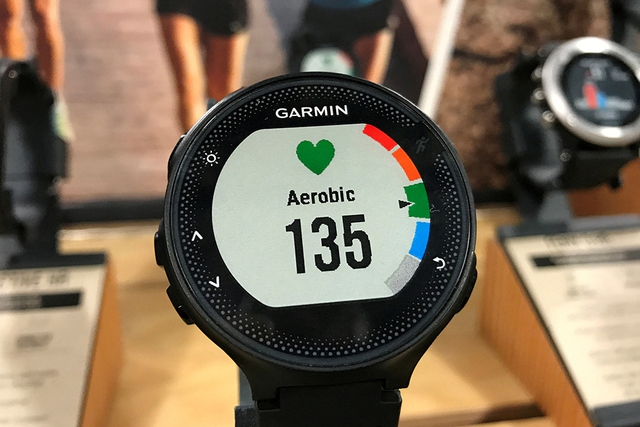
Garmin smartwatches are highly rated for battery life compared to their competitors.
PHOTO: REUTERS
Additionally, many Garmin smartwatch models utilize a light-reflecting display (MIP) that allows for clear visibility in both bright and low-light conditions. This display can switch between reflecting ambient light and using a backlight when needed, effectively saving battery power.
Notably, Garmin has pioneered the integration of solar charging technology into its products. The Fenix 6X Pro Solar, launched in 2019, is a prime example, increasing battery life by 10-20% depending on usage thanks to its semi-transparent solar panel. This technology has now been applied to many other Garmin smartwatch models.
Meanwhile, product lines like Venu, Forerunner, and Fenix utilize AMOLED displays, offering better color and contrast. AMOLED screens reduce the need for backlighting in low-light conditions, resulting in more efficient battery saving.
Choose the appropriate features.
Although Garmin smartwatches have a more limited app selection compared to Wear OS, they still offer a curated collection of apps, primarily focused on health and fitness tracking. Apps like Garmin Connect can track fitness data, while Garmin Messenger supports communication. Additionally, users can install music apps such as YouTube Music and Spotify.
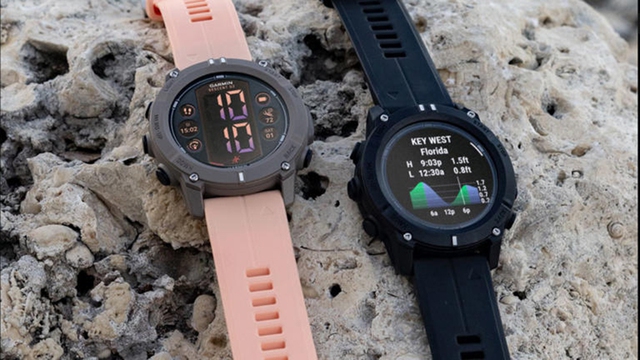
Garmin products don't have too many unnecessary features.
PHOTO: GARMIN
In contrast, Wear OS offers a rich array of apps from Google, Samsung, and numerous third-party apps on the Play Store. However, the optimization of these apps may not be consistent depending on the Wear OS version. Furthermore, managing multiple apps can lead to increased battery drain due to background processes.
Furthermore, Garmin uses low-power GPS chips and an UltraTrac feature that periodically turns off GPS to save battery while maintaining the necessary accuracy. These are all battery-draining features on Wear OS smartwatches.
Finally, the cost of maintaining the operating system and updating the chip is also crucial. Smartwatch manufacturers often don't want to change chips every year when looking for chips that can be scaled up over many years. With Garmin, thanks to its more limited software compared to Wear OS, its smartwatches use low-power chips while still ensuring performance.











































































































Comment (0)