

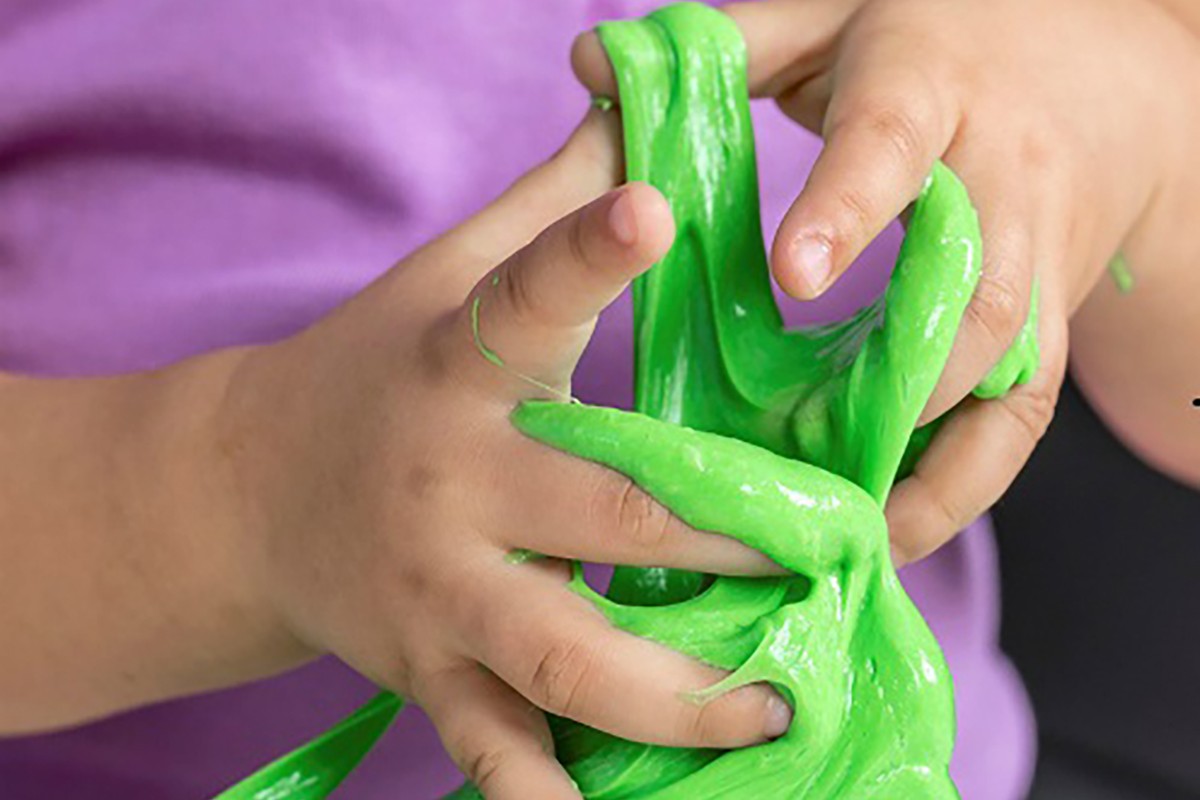
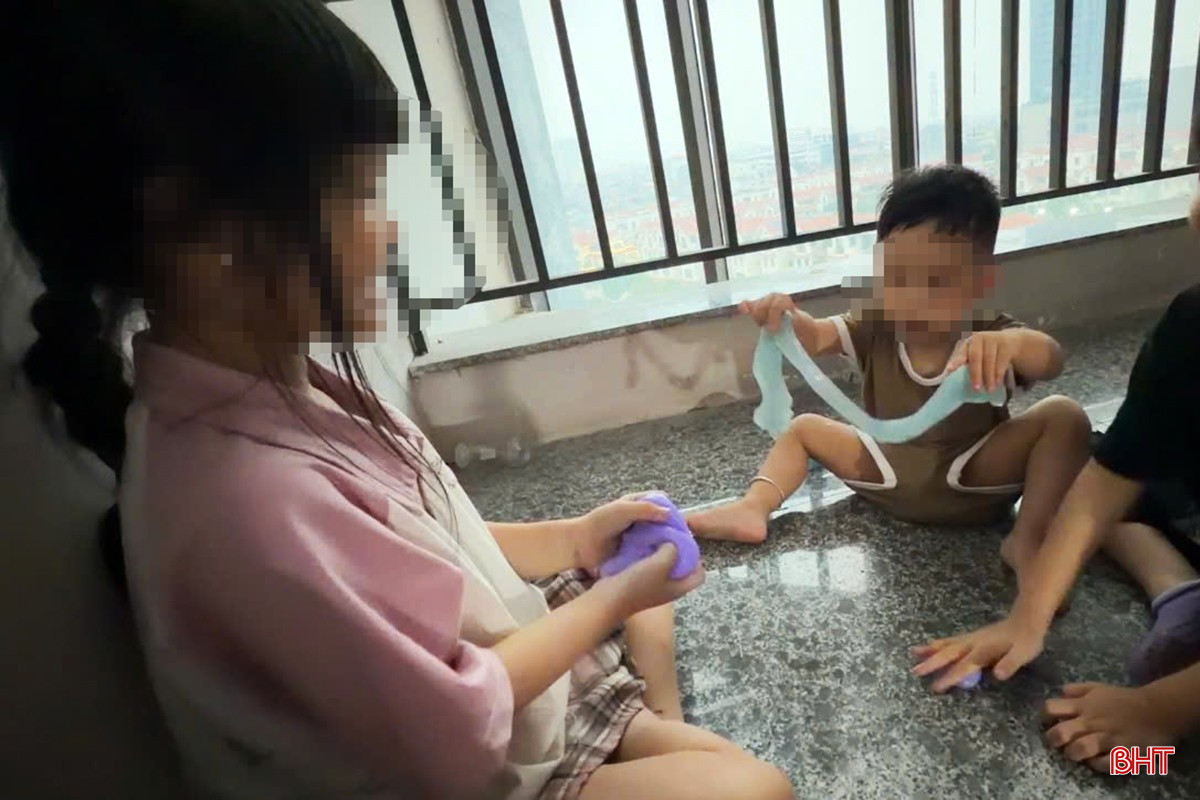
Slime – also known as "magical goo" by young people – is currently a highly sought-after toy due to its pliable, soft, and rubbery texture, its ability to transform flexibly, and its diverse colors.
Walking around the shops in front of many schools in Thanh Sen ward, it's easy to spot jars of slime in various colors, sparkling with glitter, from liquid to gel form... being sold everywhere. For just 5,000 to 30,000 VND, students can easily own a jar of slime.
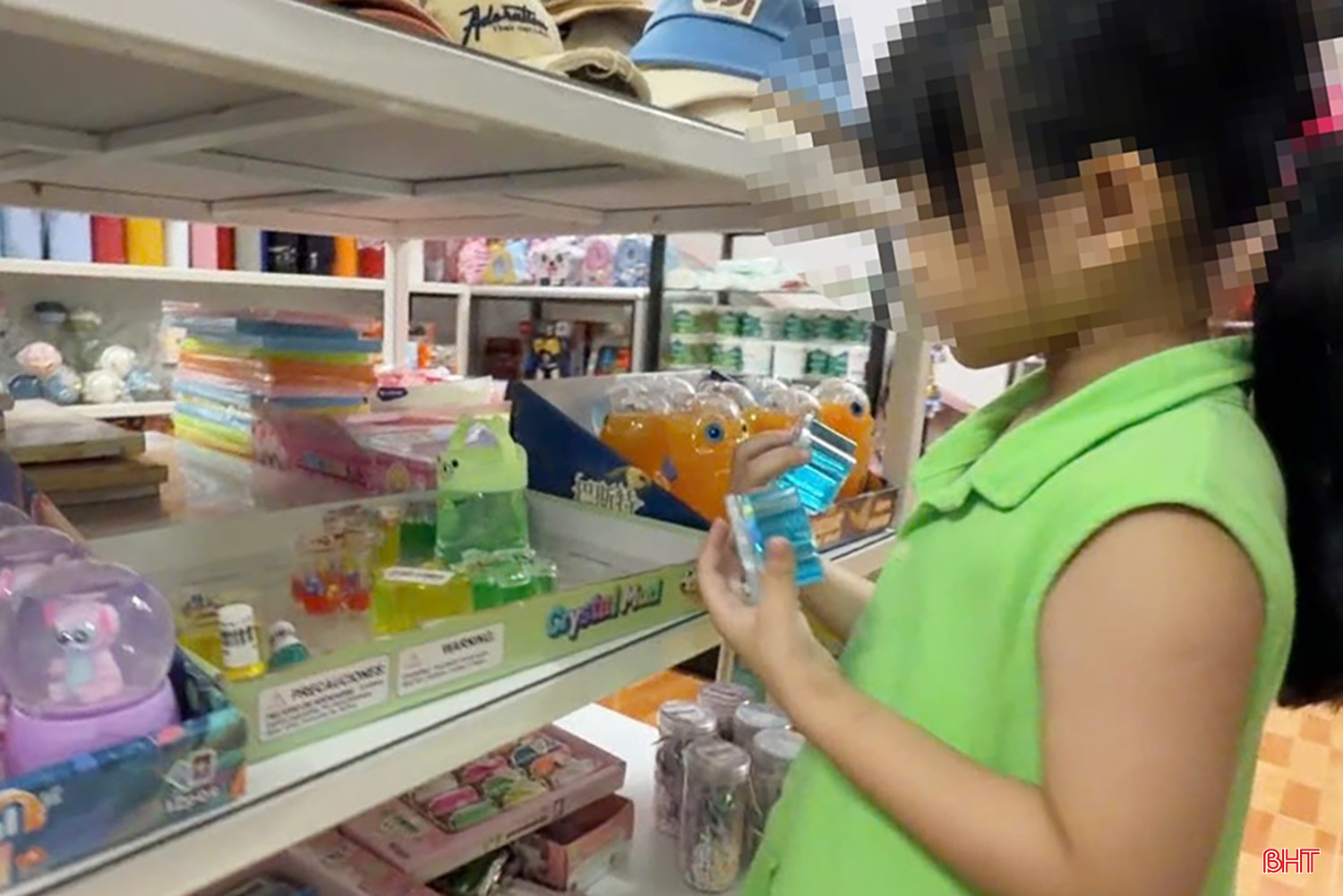
Students can easily acquire this "slime" toy because it's inexpensive.
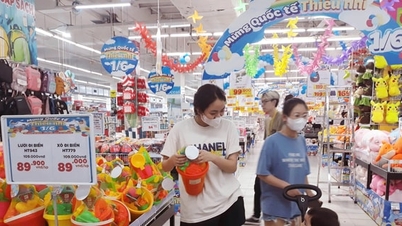
Slime isn't just found at small stalls; it's also widely available in many stationery and school supply stores. With its eye-catching appearance, rich colors, and adorable designs in various forms, this product easily attracts the attention of young children.
However, what is concerning is that the majority of these products are packaged in unlabeled plastic jars without Vietnamese labels, expiration dates, or warnings about chemical ingredients, posing many risks to consumers.
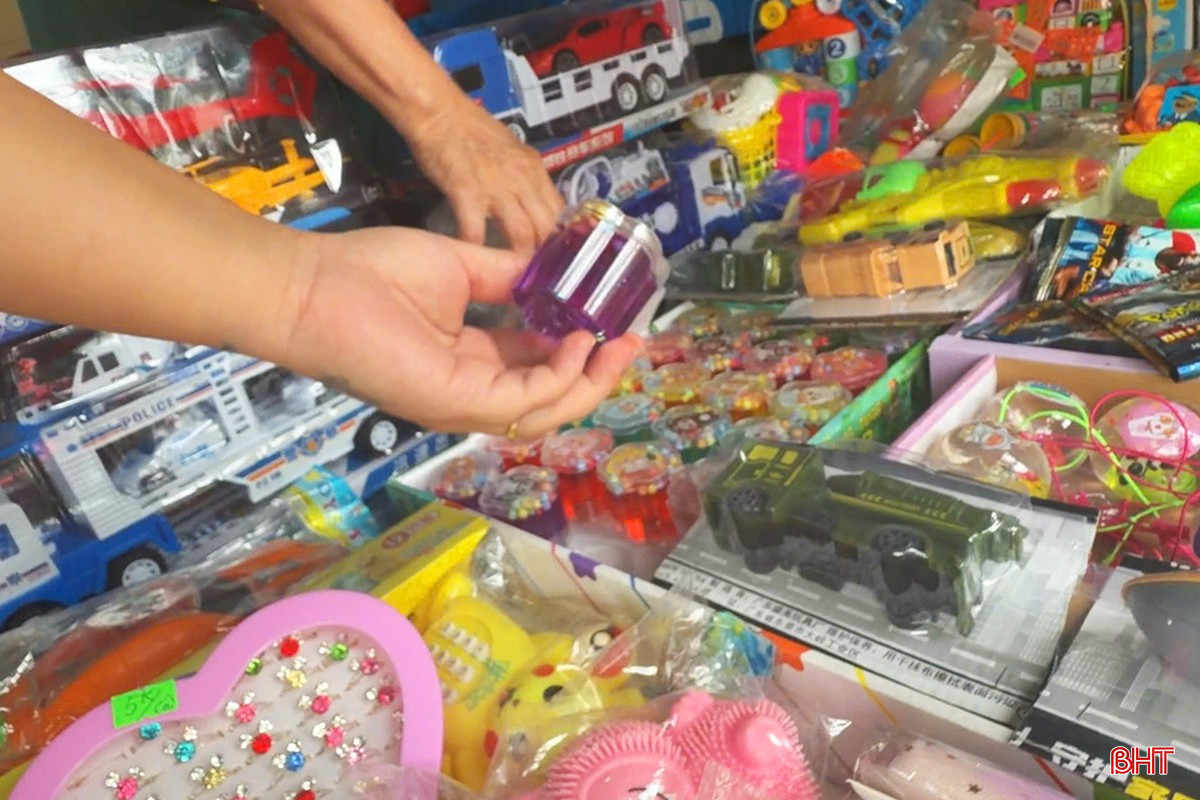
Slime is being sold widely in Thanh Sen ward, Ha Tinh province.
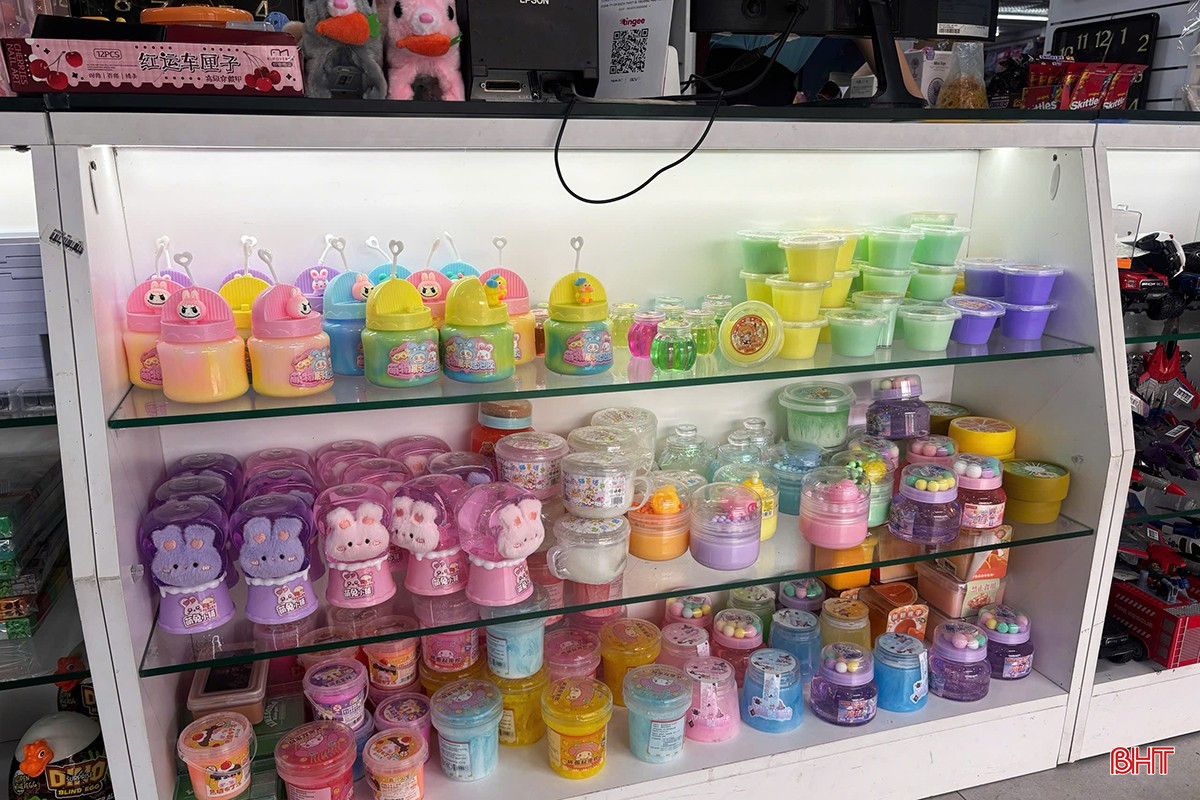
Many businesses even dedicate a separate corner to display slime.
Posing as customers looking to buy slime, we visited a small convenience store on Nguyen Bieu Street. Upon observation, the plastic container of slime lacked any information about its origin. When asked about the source of the slime, the salesperson vaguely replied, "It's probably from China; most children's toys these days are made in China."
At a slime shop on Phan Dinh Phung Street, the seller seemed quite vague about the product's origin: "I don't know where it's made. The labels are just pasted on, I don't know for sure."
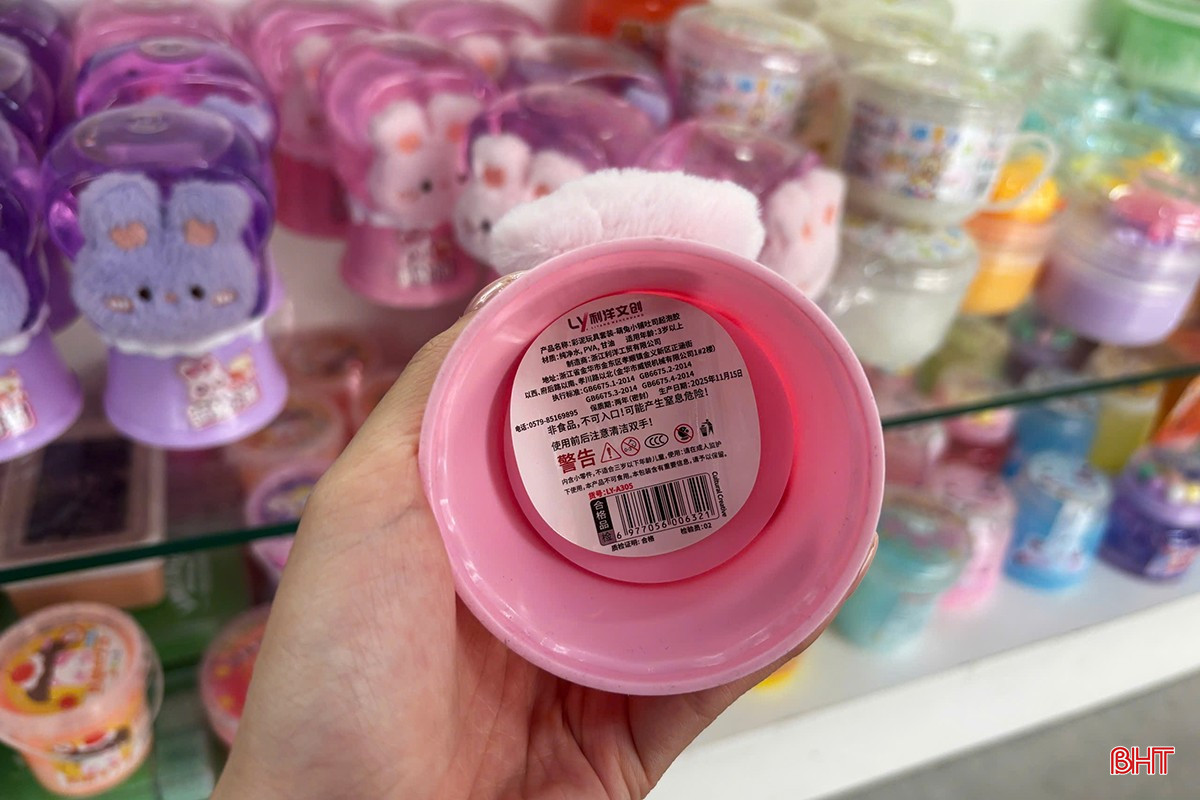
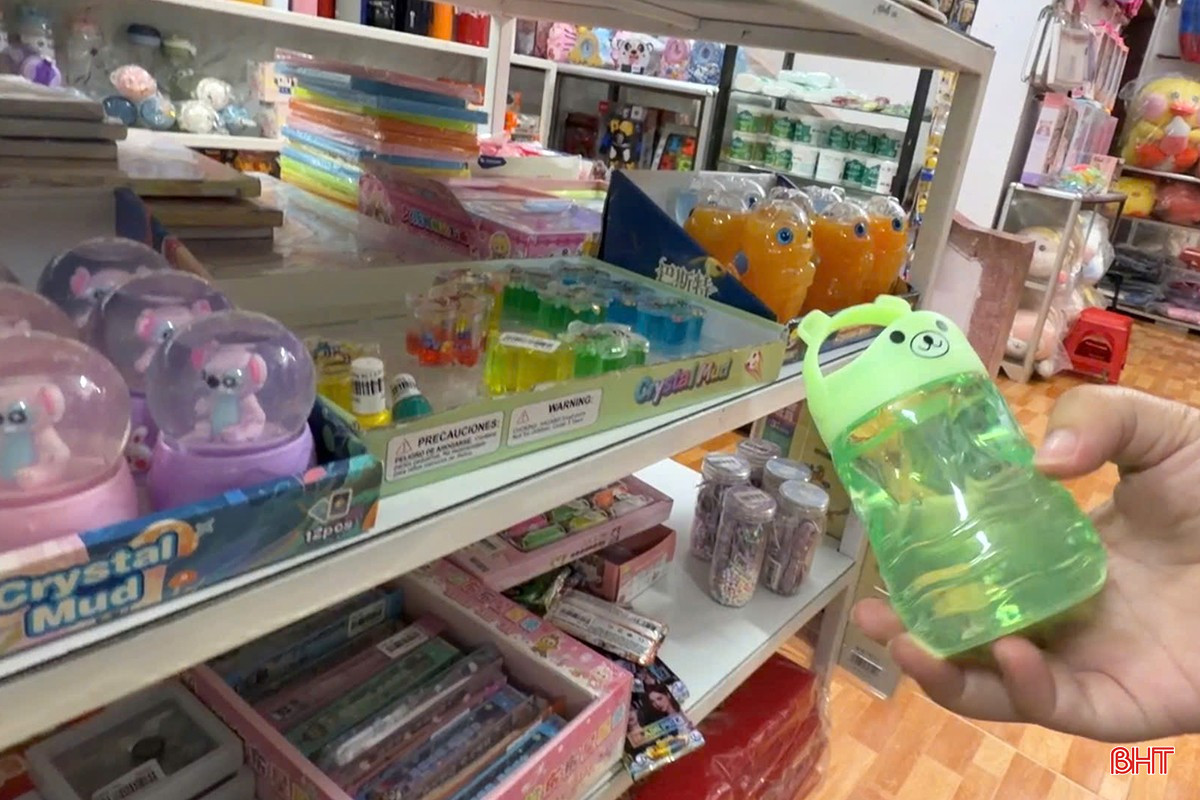
In reality, many parents are willing to buy slime for their children simply because their children like it, without fully understanding what kind of toy it is, how to use it, and whether it is safe. This lack of information leads many people to inadvertently contribute to the use of products that pose potential risks to young children.
Ms. Nguyen Phan Mai, a resident of Thanh Sen ward, shared: "Seeing my child asking for it because her classmates were also playing with it, I bought it. I didn't really know what slime was made of or if it had any harmful effects; I simply thought it was just a normal toy like any other."
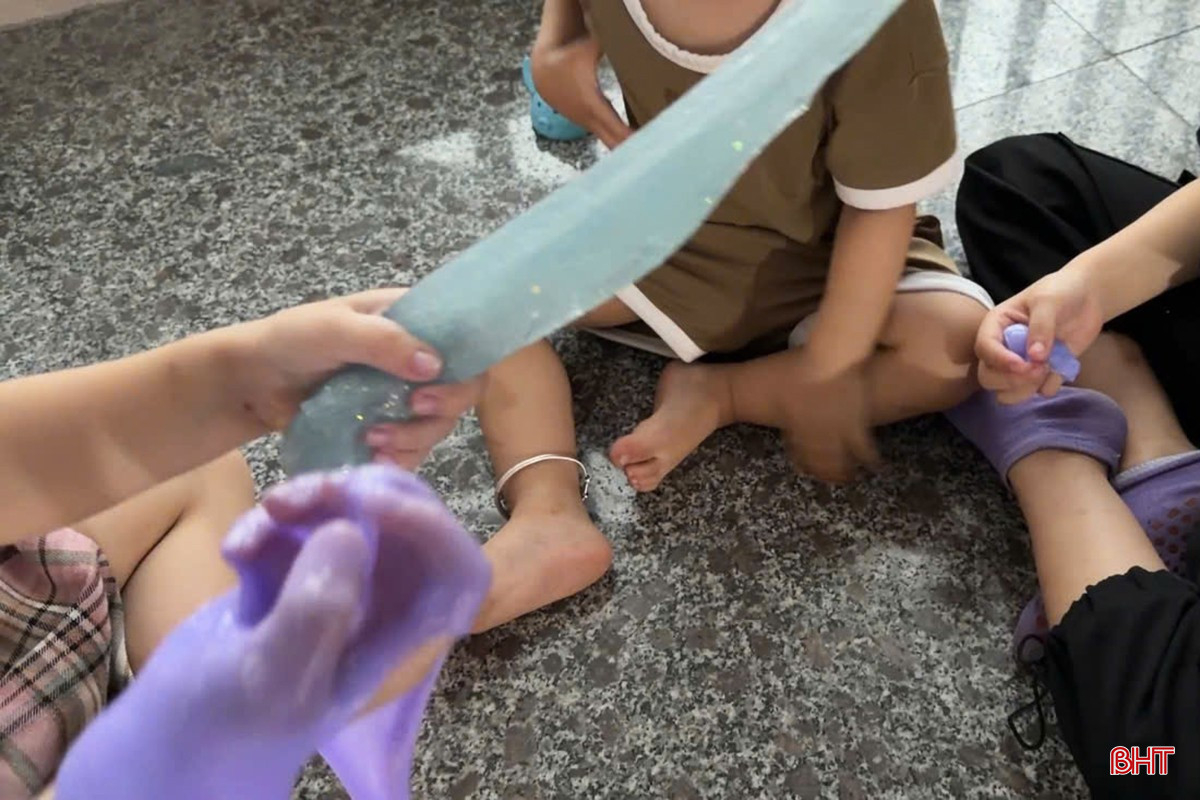
Many parents are still unaware of the harmful effects of this type of toy.
Recently, numerous cases of children requiring emergency hospitalization related to playing with slime have been recorded nationwide. These include the incident in Da Nang in 2021 where 35 elementary school students were hospitalized with symptoms of poisoning and difficulty breathing after playing with slime purchased at the school gate; and the case in Hanoi in 2025 where a 5-year-old boy suffered acute angioedema, facial swelling, and vomiting after playing with slime for 30 minutes, requiring emergency hospitalization. This raises an alarm about the complacency of both adults and children towards seemingly harmless toys.
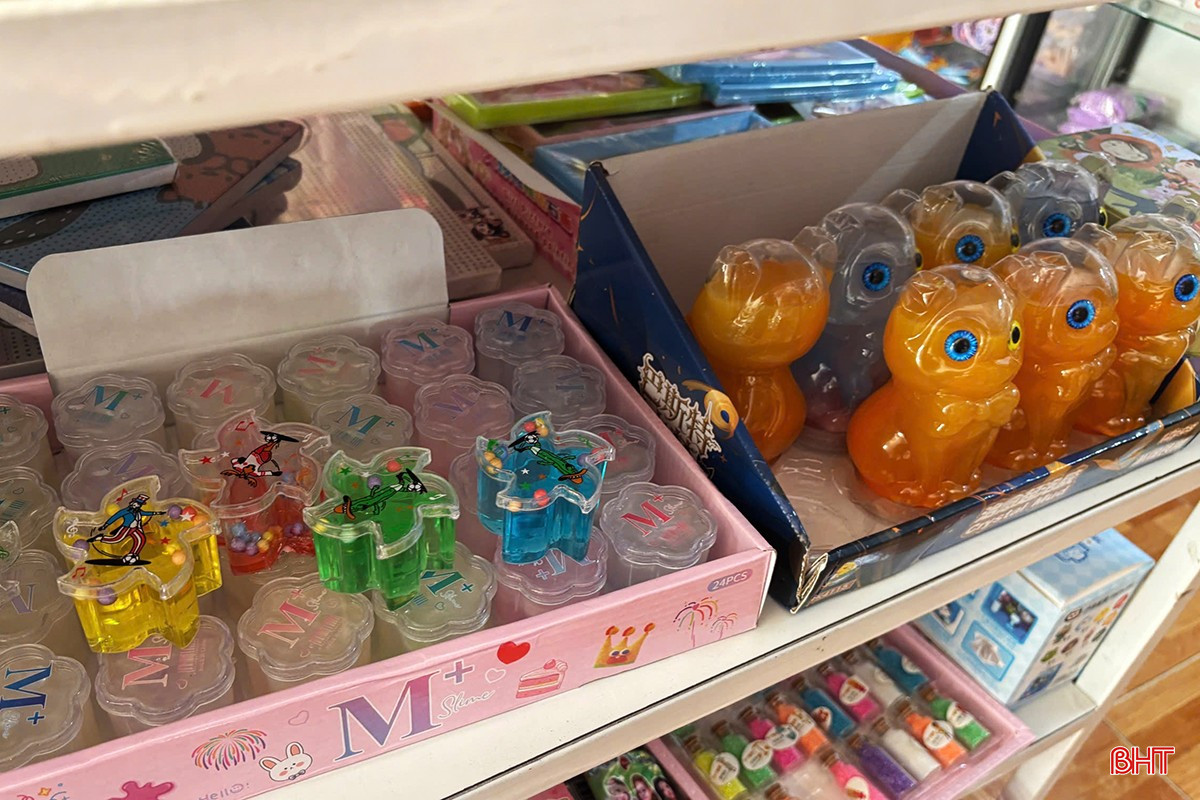
Behind the vibrant colors and fun of slime lie health risks for users.
Dr. Nguyen Duc Hoan, a specialist in Emergency and Toxicology at Ha Tinh Provincial General Hospital, stated: “Young children are often curious and active, so they are easily attracted by the colors and fun of slime toys, and may swallow them. The sticky substance in slime contains many harmful chemicals, including borax. If the amount exceeds the permissible limit, direct contact with the skin or accidental ingestion can cause serious consequences such as contact dermatitis, irritation, and even poisoning with symptoms like vomiting, abdominal pain, and diarrhea. In the long term, these substances also pose a risk to the nervous system of young children.”
It's worth noting that slime products are now being sold openly, yet the inspection and supervision by authorities seem to be lax. Many products of unknown origin and without labels are still easily circulating in the market, exposing consumers, especially children, to numerous risks.
In this context, parental responsibility is particularly important. Parents need to proactively learn about and control their children's toy purchases and usage, and should not indulge fleeting preferences while neglecting safety.
In addition, close cooperation between families and schools is also a necessary solution. Schools need to strengthen propaganda and education for students about the harmful effects of potentially dangerous toys, and at the same time promptly remind and prevent the bringing and use of slime in the school environment.
Source: https://baohatinh.vn/khi-do-choi-hoa-thanh-moi-nguy-post309183.html
























![[Photo] Reception to welcome General Secretary and President To Lam and his wife on their State visit to the Philippines](https://vphoto.vietnam.vn/thumb/1200x675/vietnam/resource/IMAGE/2026/06/01/1780295488620_vna-potal-chieu-dai-chao-mung-tong-bi-thu-chu-tich-nuoc-to-lam-va-phu-nhan-tham-cap-nha-nuoc-toi-philippines-8798060-7855-jpg.webp)




















































Comment (0)