

People are waiting.
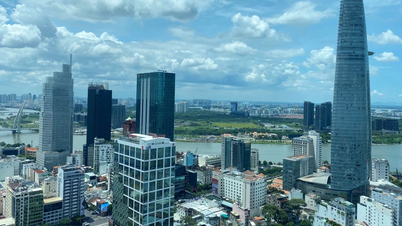
In recent days, while traveling along Vo Nguyen Giap Street (formerly Hanoi Highway), people in Ho Chi Minh City occasionally spot the trains of Metro Line 1 Ben Thanh - Suoi Tien running back and forth on the elevated section from Thu Duc to District 1 and vice versa. Everyone is excited and eagerly awaiting the official operation of this metro line.
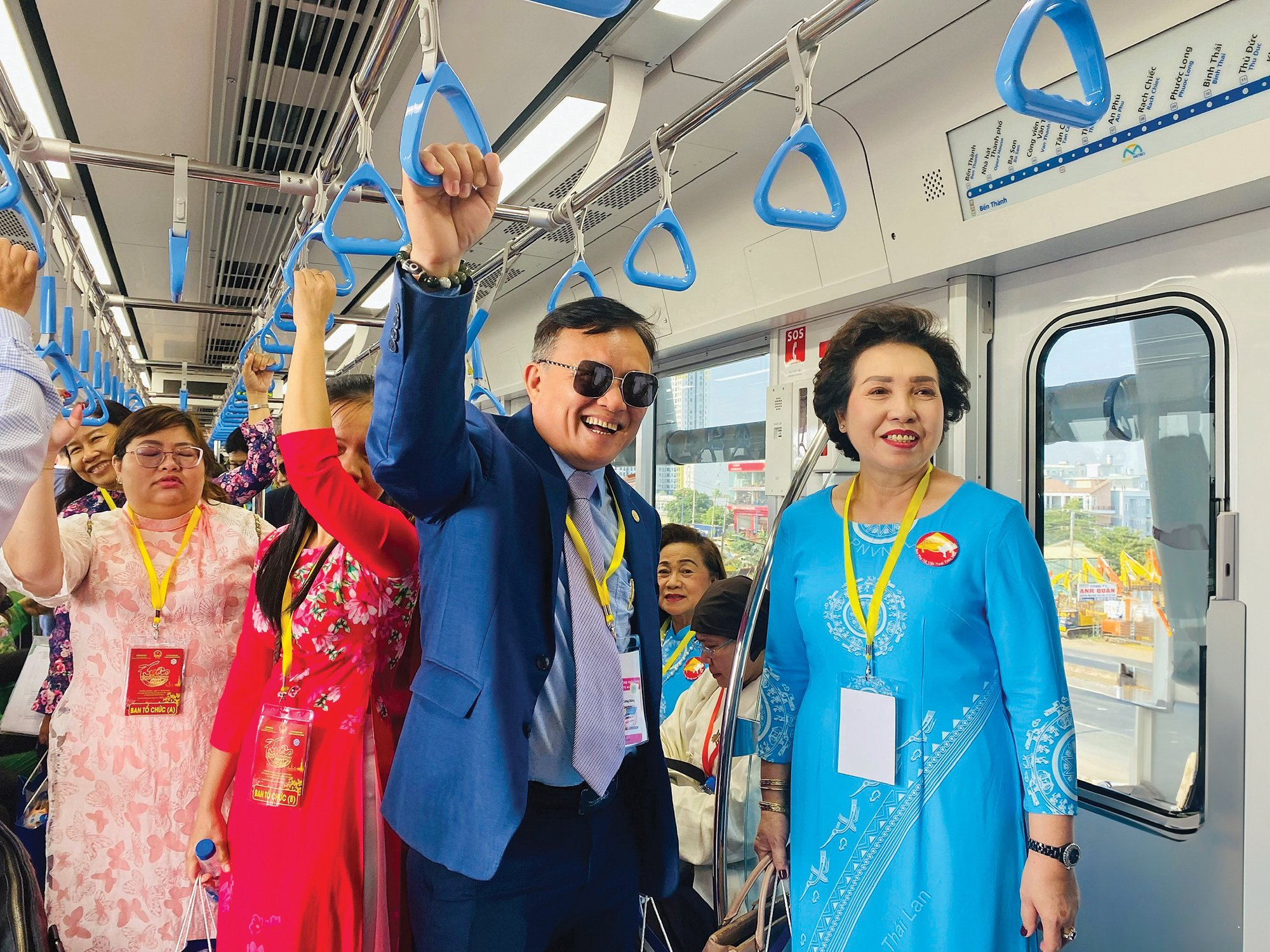
On June 8, 2024, the Vietnam Fatherland Front Committee of Ho Chi Minh City organized a tour and trial run of the Ben Thanh - Suoi Tien metro line for 200 delegates, aiming to listen to opinions and feedback from all sectors of the population. Photo: Chi Hung.
"Seeing the news reports about Metro Line 1's trial operation, I'm very excited. Hanoi already has two lines, and I just hope Ho Chi Minh City will put them into operation soon so that people can commute to work more conveniently," said Mai Lan (29 years old, residing in Thu Duc City).
Also sharing his anticipation for Metro Line 1, Minh Quan, a student living in the dormitory of the Vietnam National University Ho Chi Minh City, said he is very much looking forward to experiencing the first metro train. As a student, Quan frequently travels from the dormitory to the city center by bus or motorbike, but always faces traffic jams during rush hour.
"When Metro Line 1 becomes operational, I'll save a lot of time and won't have to worry about traffic jams or bad weather anymore. Just thinking about sitting in a cool, air-conditioned carriage and arriving at my destination in no time... makes me happy. I also hope that bus services will be conveniently connected so I won't have to use my private vehicle anymore," Quân expressed.
What is needed to be operational by the end of 2024?
Metro Line 1 (Ben Thanh - Suoi Tien) is one of Ho Chi Minh City's key transportation projects, commenced in August 2012. After numerous delays, the entire metro line is expected to be put into commercial operation in the fourth quarter of 2024.
The lowest fare is 12,000 VND per trip.
The Ho Chi Minh City Department of Transport is seeking feedback from several organizations regarding fares on Metro Line 1. The proposal suggests three types of fares: single-trip tickets, daily tickets, and monthly tickets.
Specifically, for single-trip tickets, passengers traveling shorter distances up to 5km pay 12,000 VND/trip; from 5-10km, the price is 14,000 VND/trip; from 10-15km, the price is 16,000 VND; and for distances of nearly 20km (15km or more), the ticket price is 18,000 VND.
The price for a day pass is 40,000 VND, and a 3-day pass is 90,000 VND (both types of passes have unlimited rides). The proposed monthly pass price is 260,000 VND (unlimited rides).
In addition, the Department of Transportation proposed that the city budget subsidize 100% of the ticket price for social policy beneficiaries and children under 6 years old; and subsidize ticket prices for students.
According to our reporter's observations, after 12 years of construction, only about 2% of the work remains unfinished. One of the reasons for the delay is the disagreements and differing interpretations of the contract between the investor, the consultant NJPT, and the contractor Hitachi.
Dr. Nguyen Huu Nguyen, from the Ho Chi Minh City Urban Planning and Development Association, stated: "Even though only 2% of the work remains, the fact that it has dragged on for a whole year shows that this 2% is very important and needs to be implemented systematically and without haste."
"If we liken the project to a balloon, the remaining 2% is like a hole in that balloon. Even though the hole is small, if it's not fixed, it can't be inflated. Similarly, 98% of the project is complete, but without a technical team to operate it, nothing can be accomplished," Mr. Nguyen said.
According to Mr. Nguyen, in the remaining time, Ho Chi Minh City needs to focus intensely on addressing bottlenecks and utilizing special mechanisms to resolve obstacles. Regarding human resource training, it needs to be done systematically and not hastily for the sake of deadlines. If the workforce is not adequately trained, it will lead to technical and software problems, affecting the entire operation process.
"Once a commitment is made, everything must be implemented effectively, instead of repeatedly breaking promises to the people," Mr. Nguyen said.
Speed up completion
According to the leaders of the Ho Chi Minh City Urban Railway Management Board, after a period of diligent exchange and negotiation between the parties, the obstacles regarding the use of equipment from contractors for practical training have been largely resolved.
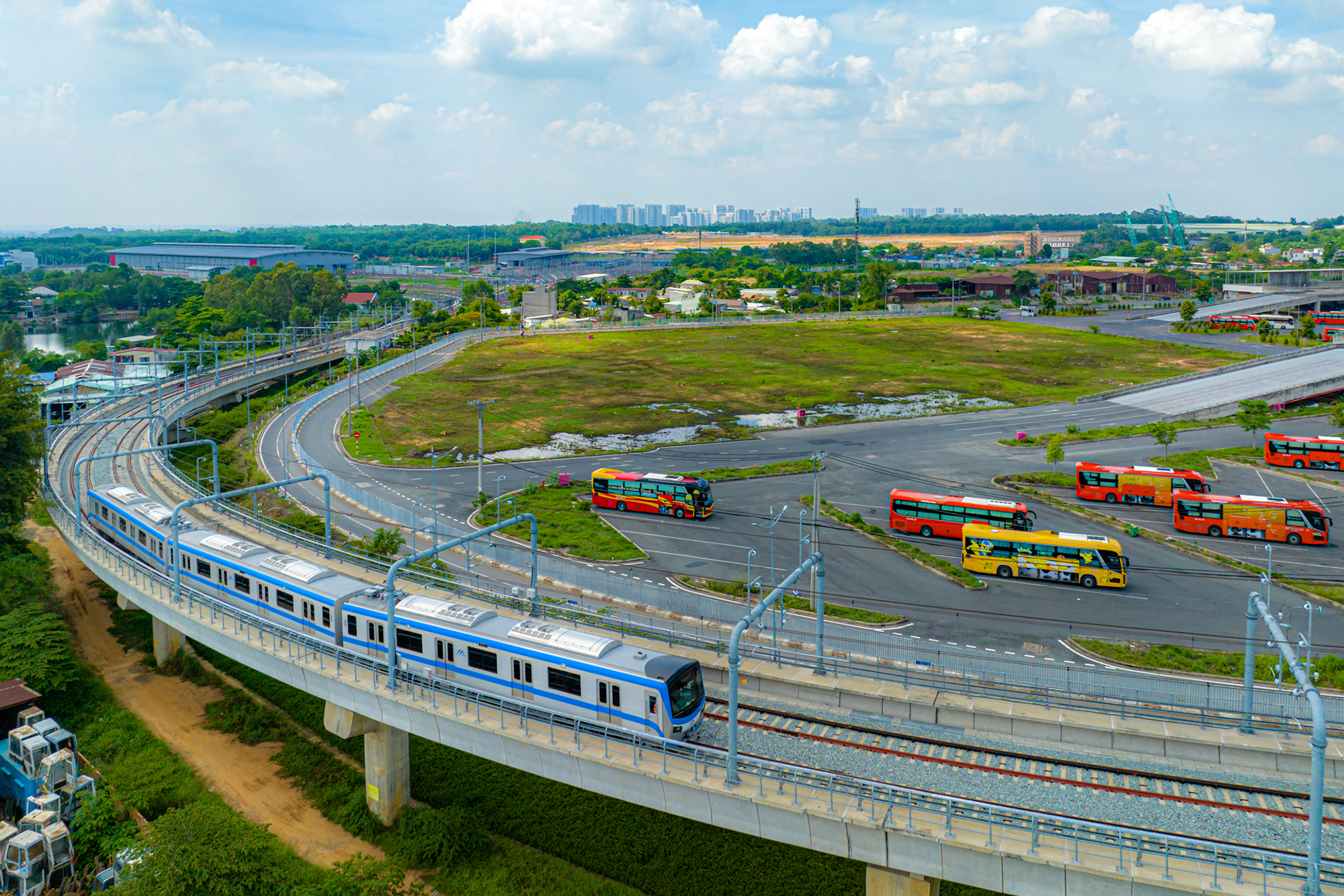
Metro Line 1 is nearing completion and is expected to begin commercial operation in the fourth quarter of 2024.
Accordingly, Hitachi has handed over the entire electromechanical system of package CP3 to the NJPT Joint Consulting Consortium to serve the practical training of employees of the Urban Railway Company No. 1 (HURC1). This is an important milestone, helping the project to be completed as planned.
Currently, the entire electromechanical system, including 11 trains, tracks, ticketing, information, signals, signage, depot equipment, workshops, and platform gates, has been handed over. After a long period of theoretical training for HURC1 employees, they will now get hands-on practice.
After completing practical training at the end of September, HURC1 staff will participate in trial operations in October and November under the independent supervision and evaluation of a French system safety consultant.
Based on the results of the trial operation evaluation and the system safety assessment report, the investor will submit the dossier to the Vietnam Railway Authority and the State Acceptance Council, complete the acceptance process, and put the project into operation.
"With the obstacles removed, the project is being accelerated by the relevant units, entering the final stage to be completed and put into commercial operation in the fourth quarter of 2024," the leader of the Ho Chi Minh City Urban Railway Management Board affirmed.
Preparation for Metro Line 2
Following the positive developments from Metro Line 1, Metro Line 2 (Ben Thanh – Tham Luong), after numerous land acquisition issues, has also basically completed the necessary procedures. To date, the relevant authorities have issued compensation decisions for 584 out of 586 cases, reaching 99.6%. Districts 1, 10, 12, Tan Binh, and Tan Phu have achieved 100% land handover. Only two households in District 3 have not yet handed over their land, and the relevant units are actively working to persuade them.
Over the past few days, along Truong Chinh and Cach Mang Thang Tam roads in districts 3, Tan Binh, and Binh Tan, contractors have begun dismantling the existing infrastructure including power lines, water pipes, signs, lighting, and traffic signals. The Urban Railway Management Board is also continuing to implement procedures to prepare for bidding on other packages.
According to the Ho Chi Minh City Department of Transport, during the period 2021-2025, Ho Chi Minh City will continue to build metro line 2, while also carrying out work to prepare for investment in the remaining lines. By 2035, the city expects to complete approximately 183km of metro, including lines 1, 2, 3, 4, 5, and 6. By 2045, an additional 168.36km of metro will be built, bringing the total length of the lines to approximately 351km (including line 7).
By 2060, the city is expected to complete the construction of lines 8 (42.8km), 9 (28.32km), and 10 (87.84km), bringing the total length to 510km.
Reporting to Prime Minister Pham Minh Chinh at a conference held in Ho Chi Minh City on August 10th, Chairman of the Ho Chi Minh City People's Committee Phan Van Mai stated that the city is coordinating with Hanoi City and the Ministry of Transport to finalize the dossier for the urban railway development project, which is expected to be submitted to the National Assembly for approval at the end of this year's session.
To implement the project, Ho Chi Minh City has determined that by 2035, it will need $36 billion in capital; by 2045, $33 billion; and by 2060, $48 billion, to be mobilized through sources such as public investment by the city; from exploiting land around the train station; borrowing local bonds, etc. The city plans to submit 25 policy mechanisms to the competent authorities for promulgation. Because without superior mechanisms, building 510km would take centuries.
Broken promises
The Metro Line 1 urban railway project was approved in 2007 with a total investment of 17,387 billion VND.
By 2008, the project's consulting unit, NJPT of Japan, recalculated the investment amount, proposing an investment of 47,325 billion VND. Of this, Japanese ODA loans accounted for 88.4%, equivalent to 41,834 billion VND, with the remainder being counterpart funding from Ho Chi Minh City. This investment increased by more than 2.7 times compared to the initial estimate, causing difficulties in the project's implementation.
In August 2012, the project commenced, with expected completion in 2017 and operation commencing in 2018. However, in 2019, the total investment was further adjusted, decreasing from VND 47,325 billion to VND 43,757 billion. Simultaneously, the completion and commissioning date was postponed to the fourth quarter of 2022.
In April 2022, the Prime Minister issued Decision 65, approving the adjustment of the investment policy for the project, postponing the completion time to the end of the fourth quarter of 2023.
However, in October 2023, the investor, MAUR, requested an extension of the construction period to 2024, aiming for commercial operation in July 2024. Even so, this deadline was not met.
The Nhon - Hanoi Station Metro line attracts passengers immediately after operation.
In Hanoi, after several delays, the elevated section of the Nhon - Hanoi Station metro line was finally put into commercial operation on August 8th.
The project commenced in 2009 with a total investment of VND 18,408 billion, and was expected to be implemented from 2009 to 2015. By December 2018, the project's capital had increased to VND 32,910 billion, and the construction period was extended to 2022.
The final deadline for operating the elevated section is set for the end of June/beginning of July 2024, and the underground section for 2027. The total investment has increased to VND 34,532 billion. However, the project will not have its commercial operation date finalized until August 2024.
Immediately after its official launch, this metro line welcomed tens of thousands of passengers daily (approximately 35,000 on August 8th, over 42,000 on August 9th, and as many as 66,087 on August 10th, with even more on weekends). Although it wasn't the first metro line, people were still very enthusiastic.
Previously, in 2021, the Cat Linh - Ha Dong metro line was put into operation after 10 years of construction. This is the first urban railway line in the capital and the country. The project's implementation faced many difficulties and missed several completion deadlines. However, to date, the number of passengers using the train is stable, and many people choose it as an alternative to private vehicles.
PV
Source: https://www.baogiaothong.vn/khi-nao-nguoi-dan-tphcm-duoc-di-metro-192240812222304934.htm

















































































Comment (0)