

.jpg)
New livelihoods in the village
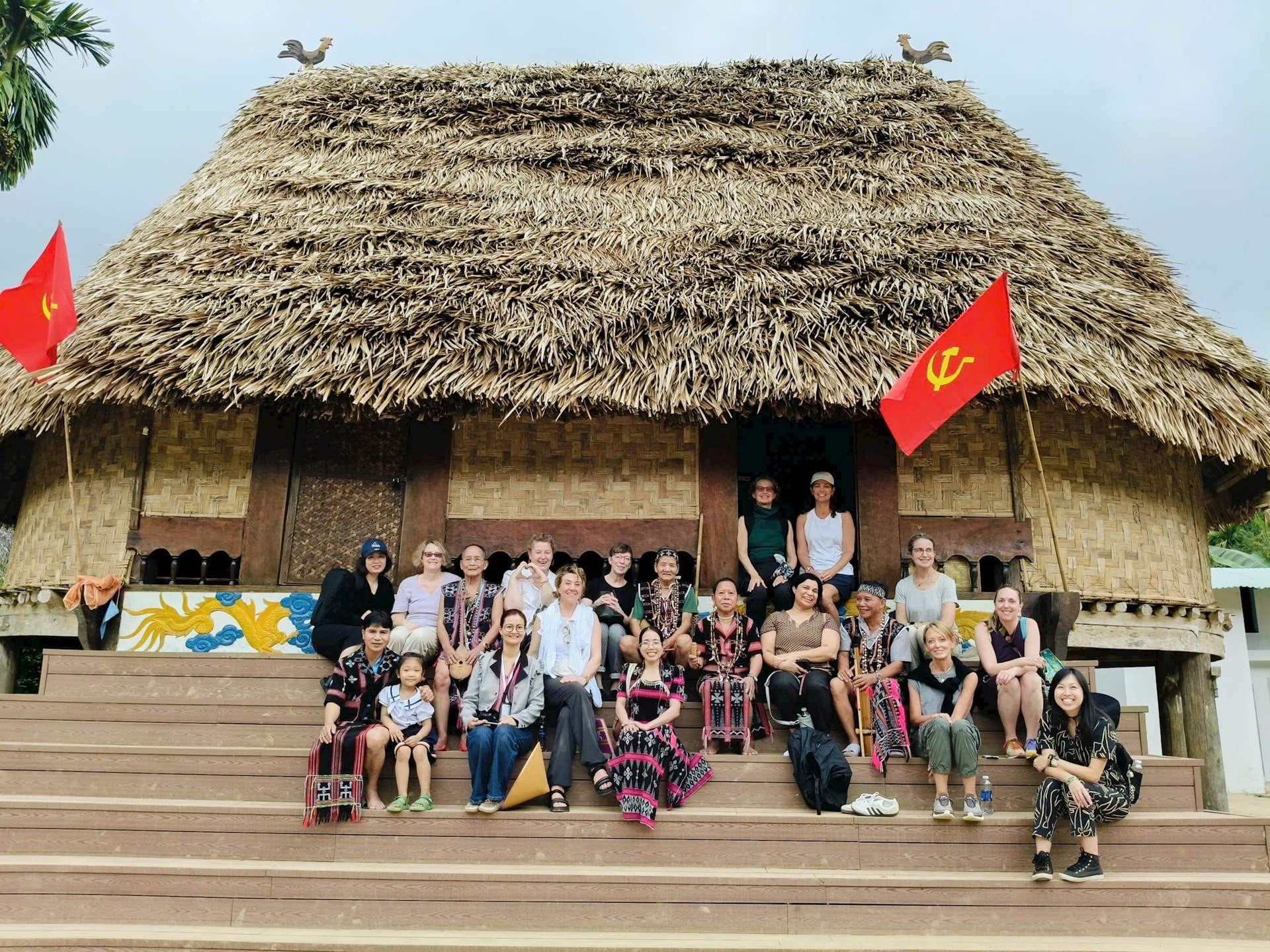
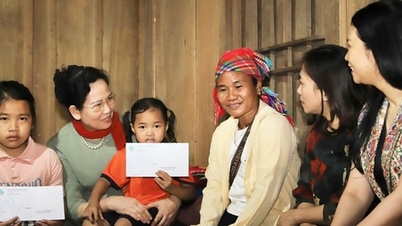
Since joining the community-based tourism model in Phu Mua village (Ra Lang hamlet, Song Kon commune), Ms. Alang Thi Tuan, a daughter of the Co Tu ethnic group, has found opportunities to improve her livelihood through her daily work. Instead of purely farming , her cooking skills, preparation of local specialties, and agricultural cultivation have now become services offered to tourists, providing a stable income.
"Currently, I still work in agriculture, but when we have guests, I participate in cooking and performing traditional arts. The income is shared according to revenue, which helps improve my family's life, and the agricultural products I produce also have a local market," said Alang Thi Tuan happily.
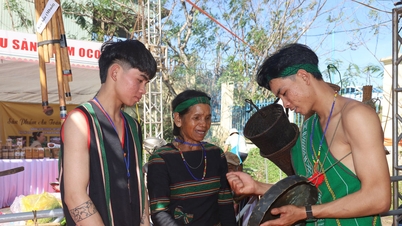
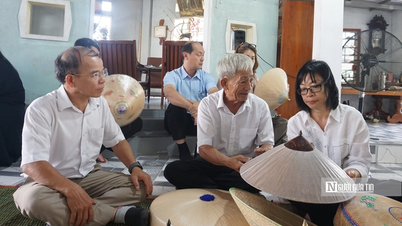
The spread of community-based tourism extends beyond Song Kon commune, opening up new livelihood opportunities at the Co Tu - Nam Giang Community-Based Tourism Cooperative (A Lieng village, Ben Giang commune). Hands previously accustomed to weaving for daily life are now skillfully creating handicrafts that reflect the local culture, becoming popular souvenirs for tourists.
Mr. Briu Thuong, Director of the Co Tu - Nam Giang Community-Based Tourism Cooperative, said that thanks to the support from the project, the people have learned how to identify potential, build experiential tours, and promote destinations systematically. This approach not only creates direct economic value but also contributes to preserving the lush greenery of the mountains and conserving precious traditional cultural values.
The highlight of this model is the mechanism for fairly distributing benefits among the seven participating villages. Acting as the central coordinating body, the cooperative manages the rotating visitor schedule, ensuring that development opportunities are shared equally among all communities. In 2025 alone, the model attracted over 600 visitors with approximately 50 tours.
“This result not only affirms the effectiveness in creating sustainable livelihoods for ethnic minorities but also contributes to awakening cultural values. From here, the sounds of gongs, traditional dances, and unique local lifestyles will continue to be preserved and strongly spread within the socio-economic development of the city,” Briu Thuong shared.
Sustainable path
The project “Building a Sustainable Development Mechanism for Small-Scale Handicrafts in Rural and Mountainous Areas of Da Nang - EMMi Project” (formerly the “Building a Sustainable Development Mechanism for Small-Scale Handicrafts in Rural and Mountainous Areas of Quang Nam Province” - EMMi Project) is funded by the Japan International Cooperation Agency (JICA) through the International Relief/Development Organization (FIDR) with a total grant of US$900,000, equivalent to approximately VND 21.6 billion. To date, the project has disbursed US$898,000, equivalent to approximately VND 22.04 billion (due to exchange rate differences); the disbursement rate has reached approximately 99.7% of the total grant.
Mr. Nguyen The Hung, Head of the Rural Development Sub-Department, said that the EMMi project has been implemented since 2021 in the mountainous area of the former Quang Nam province, now Da Nang city. The project aims to support sustainable livelihood development for local people through the development of local products, handicrafts, and community-based tourism. It also contributes to preserving and promoting the traditional cultural values of ethnic minorities in the city.
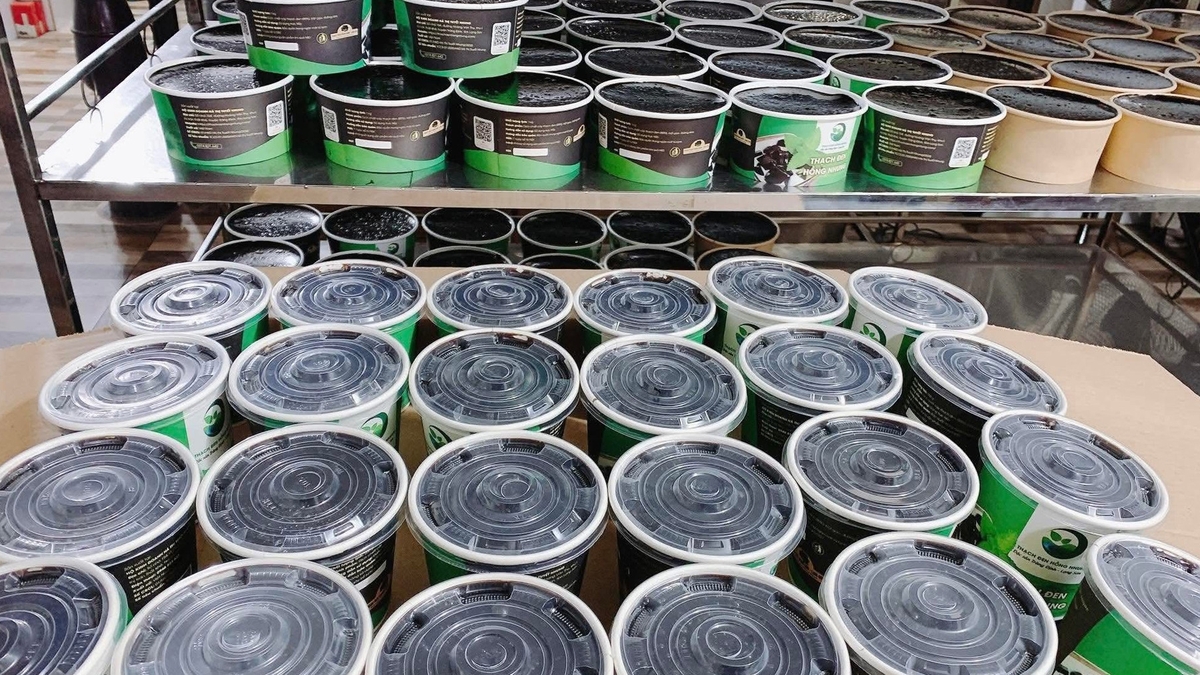
To date, approximately 750 local products have been recorded, belonging to the textile, beadwork, basket weaving, agricultural product, and processed goods categories. Using indigenous materials such as brocade, bamboo, and agricultural products, the people have created a variety of products such as bags, scarves, wallets, and jewelry; and have further developed processed products from ginger, grains, peanut oil, sesame, and black pepper. These products are increasingly being improved to suit the modern tourism and consumer market, especially for consumption through tours, hotels, resorts, souvenir shops, organic agricultural product stores, and events and festivals.
Many products from the project are also distributed at international airports in Japan and some organic food stores in Hanoi and Ho Chi Minh City. In 2025 alone, revenue from local products is estimated to reach approximately 1.5 billion VND, demonstrating the clear effectiveness of connecting production with the market.
Furthermore, the project has also helped the mountainous communes in the west and southwest of Da Nang city to rediscover and identify many potential local products and resources. Capacity building activities were widely implemented with 89 community initiative groups, whose members received training in business knowledge and skills; 68 local tour guides were trained in interpreting and providing tourism services. Based on this foundation, 10 community tourism destinations have been established and put into operation.
Mr. Tran Ut, Deputy Director of the Department of Agriculture and Environment and Deputy Head of the Project Management Board, said that the project has achieved many important and practical results after its implementation. Many local specialty products have received support to improve quality, build brands, and expand their markets. Community-based tourism models are gradually proving effective, creating more jobs and increasing income for people in mountainous areas.
“The project not only brings economic benefits but also contributes to preserving traditional cultural identity and enhancing the promotion of the mountainous region of Da Nang to domestic and international tourists. Through this, it affirms the correct direction in economic development linked to cultural preservation and sustainable development,” Mr. Ut assessed.
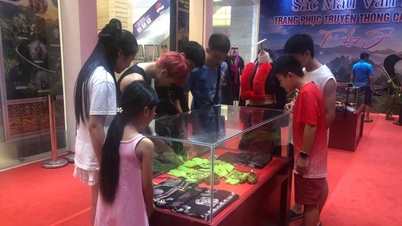
The City People's Committee has agreed to extend the project's implementation until March 2027 and has also agreed to organize an exhibition showcasing typical products, OCOP products, and EMMi project products in the near future.
Source: https://baodanang.vn/khoi-day-noi-luc-kinh-te-vung-cao-3338070.html


![[Image] Hanoi's urban life under the challenge of a "scorching hot" environment](https://vphoto.vietnam.vn/thumb/1200x675/vietnam/resource/IMAGE/2026/05/25/1779706979265_nang-nong-t5-2026-minh-duy-7-4636-jpg.webp)



























































Comment (0)