

Since 2021, the area planted with bananas – one of the province's key crops according to Resolution 10 of the Provincial Party Committee on the Strategy for the Development of Commercial Agriculture to 2030, with a vision to 2050 – has decreased sharply due to various reasons.
In light of this situation, the Chairman of the Provincial People's Committee signed Document No. 1562, requesting provincial departments and agencies, and the People's Committees of districts, towns, and cities to intensify the implementation of solutions to maintain and develop the raw material areas for bananas, pineapples, and temperate fruit trees, with the spirit of ensuring that the goal of developing the banana growing area does not "fall behind schedule".
Over the years, the area dedicated to commercial banana cultivation has been concentrated mainly in the districts of Bat Xat, Muong Khuong, and Bao Thang. This is a crop with high economic value, contributing to economic development and increasing income for the people.

According to the agricultural sector's assessment, in 2020, the total banana cultivation area in the province reached 3,800 hectares, with a production of 85,000 tons and a production value of 500 billion VND (an average of over 156 million VND/ha). By the end of 2023, the province's banana cultivation area was 2,355 hectares, with a production of over 60,000 tons and a value of over 400 billion VND (an average of 170 million VND/ha).
“ Lao Cai 's banana products are officially exported to the Chinese market (accounting for 90% of production), forming concentrated production areas to meet domestic and export requirements; gradually shifting from a small-scale production mindset to a commodity production mindset according to market demands; forming production groups and teams; producing under linked contracts; creating jobs for thousands of workers, accelerating the process of poverty eradication and rural development,” said Nguyen Quang Vinh, Deputy Director of the Department of Agriculture and Rural Development.
Despite the significant value derived from banana cultivation, the area under banana cultivation in the province has decreased sharply in recent years. Specifically, from 3,800 hectares in 2020 to only 2,355 hectares by the end of 2023 (a decrease of 1,445 hectares). In the first quarter of 2024 alone, the banana cultivation area in the province decreased by 438 hectares compared to 2023. According to Mr. Nguyen Quang Vinh, there are four basic reasons leading to the sharp decline in banana cultivation area in the province: some areas have reached the end of their productive cycle (4-5 years) and need to be replaced. To date, people have planted 232 out of 700 hectares of new banana trees, reaching 33% of the 2024 plan. According to the plan, by the end of 2024, the entire province will plant 700 hectares of new banana trees, bringing the total banana cultivation area for the year to 2,285 hectares.

Some banana-growing regions have multiple cultivation cycles, while Panama wilt disease remains a complex issue in long-established banana-growing areas due to the lack of a specific cure. Therefore, farmers are currently replacing bananas with other crops. Regarding the banana export market, Lao Cai currently faces competition from bananas exported to China by Laos, Cambodia, and the Philippines (at times, the export price of Lao Cai bananas has dropped to 1,500-2,000 VND/kg), causing farmers to feel insecure about production. Lao Cai province lacks post-harvest processing enterprises to increase value and shelf life; it only sells fresh produce. These are also reasons for the decrease in banana acreage in the province in recent times.
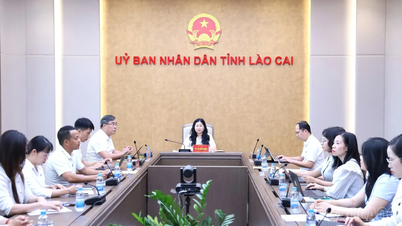
Given the significant decline in banana cultivation area in the province, at a recent meeting, the Provincial Steering Committee for the Development of Commercial Agricultural Production requested relevant departments and localities to intensify propaganda efforts and steadfastly pursue the goal of developing banana growing areas. Following the province's directive, the Department of Agriculture and Rural Development organized a conference to discuss solutions for developing banana, pineapple, and temperate fruit growing areas, linked to production and consumption in Lao Cai province for the period 2024-2025. Based on this, the department submitted Document No. 1562 to the Provincial People's Committee on promoting solutions to maintain and develop banana, pineapple, and temperate fruit growing areas in Lao Cai province for the period 2024-2025, focusing on four groups of solutions.

Regarding land solutions, localities should review all existing land resources to plan planting areas and allocate land for banana cultivation in accordance with the province's overall orientation, ensuring the maintenance and expansion of the planted area. They should develop plans to convert land used for low-value crops to commercial banana cultivation, ensuring the maintenance and expansion of the planted area in the region. For banana growing areas severely affected by Panama disease, conversion to other crops such as corn, peanuts, or legumes should be implemented for 2-3 years to improve soil quality and eliminate disease sources, after which commercial banana cultivation can resume.
Regarding seed solutions, it is necessary to strengthen state management of seeds, focusing on research and selection of high-quality, disease-resistant varieties suitable for the soil, climate, and farming practices of the people of Lao Cai. A system for producing and supplying high-quality, disease-free banana seedlings with clear origins should be established.
The solution involves organizing production, processing, and consumption, establishing production linkages along the value chain between businesses, cooperatives, and individual producers, with businesses, processors, and consumers acting as the central hub; creating opportunities for businesses, cooperatives, and purchasing agents inside and outside the province to form regional linkages. Production must be linked to market demand for stable and sustainable production; establishing cooperatives and production groups to link production and consumption sustainably; guiding businesses, organizations, and individuals to produce according to standards and certified planting area codes. Integrating and mobilizing funding from programs and projects to develop banana growing areas that meet standards for domestic consumption and export...
Scientific and technical solutions include promoting the transfer of scientific and technological advancements to improve productivity and product quality, focusing on guiding businesses, cooperatives, and farmers to use Panama disease-resistant banana varieties and planting at the right time. For banana-growing areas with mild damage from Panama disease (yellow leaf disease), continue to guide the application of technical measures according to the procedures of the Plant Protection Department; for areas severely affected by Panama disease, resolutely convert to other crops.
"By effectively implementing these four groups of solutions, the banana growing area of Lao Cai will certainly be maintained and expanded, contributing to increasing the production value of the agricultural sector and bringing high income to the people," affirmed Nguyen Quang Vinh, Deputy Director of the Department of Agriculture and Rural Development.
Source

![[Image] Pleasant weather helps students enter the 10th grade entrance exam with confidence.](https://vphoto.vietnam.vn/thumb/1200x675/vietnam/resource/IMAGE/2026/05/29/1780034401612_ngay-1-thi-lop-10-minh-duy-8-5009-jpg.webp)


![[Photo] Ba Lang An Lighthouse - the "eye of the sea" amidst the "rock museum" of Quang Ngai province.](https://vphoto.vietnam.vn/thumb/1200x675/vietnam/resource/IMAGE/2026/05/29/1780038698840_anh-man-hinh-2026-05-29-luc-14-10-42.png)












































































Comment (0)