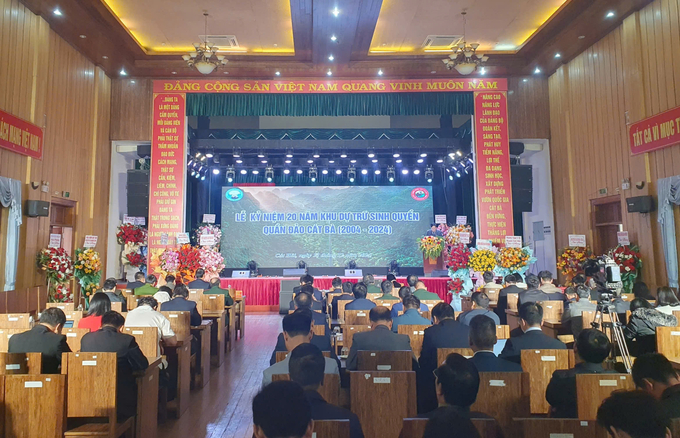
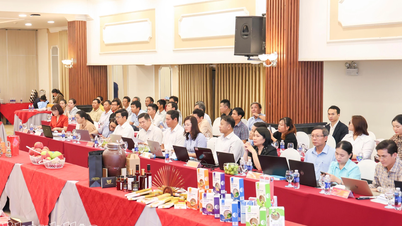
 Many leaders, organizations, and individuals from both within and outside the country attended the commemoration ceremony. Photo: Dinh Muoi.
On December 13th, Cat Ba National Park celebrated the 20th anniversary of the Cat Ba archipelago being officially recognized as a World Biosphere Reserve by the United Nations Educational , Scientific and Cultural Organization (UNESCO).
Mr. Nguyen Duc Tho, Vice Chairman of the Hai Phong City People's Committee, assessed that the flora and fauna of Cat Ba Island possess characteristics typical of the limestone mountain flora and fauna of Northeast Vietnam and are rich in endemic elements.
Besides its high biodiversity value, Cat Ba also boasts many unique and majestic natural landscapes and caves, contributing to making it one of the few places that strongly develop conservation activities, ecotourism, and scientific research.
Notably, in September 2023, along with Ha Long Bay, the Cat Ba Archipelago World Biosphere Reserve was recognized by UNESCO as a World Natural Heritage Site – making it the first inter-provincial/city-level World Natural Heritage Site in Vietnam.
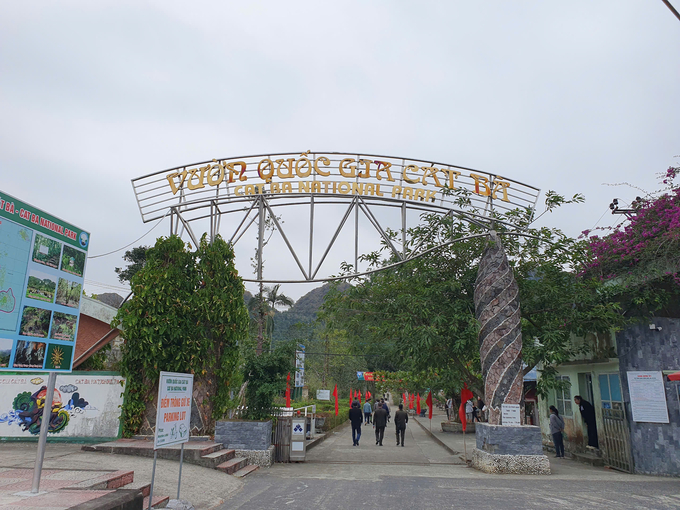 The central area of Cat Ba National Park. Photo: Dinh Muoi.
The Cat Ba Archipelago World Biosphere Reserve has always received attention and encouragement from the Party and State leaders, central ministries and agencies, international organizations, and city leaders, making a significant contribution to environmental protection, biodiversity conservation, and socio-economic development of Hai Phong city.
Besides the achievements already made, Mr. Nguyen Duc Tho also pointed out the challenges and difficulties that the Cat Ba Archipelago Biosphere Reserve is facing and suggested that Party committees, government agencies, the business community, and all the people of the city should join hands and proactively protect the environment; preserve and conserve the rare and endemic genetic resources of the Biosphere Reserve.
Specifically for Cat Ba National Park, it is necessary to focus on effectively implementing three key areas. Of particular note is the need to further promote the two prestigious titles of the Cat Ba archipelago following the merger of the Ha Long Bay - Cat Ba World Natural Heritage Management Board and the Cat Ba Archipelago World Biosphere Reserve Management Board into Cat Ba National Park.
Furthermore, it is necessary to effectively conserve the ecosystem throughout the entire managed area, while simultaneously increasing biodiversity within the World Biosphere Reserve. Research should focus on discovering new species, urgently conserving the genetic resources of rare and endemic species, and strictly controlling activities to limit factors that negatively impact the natural and cultural environment.
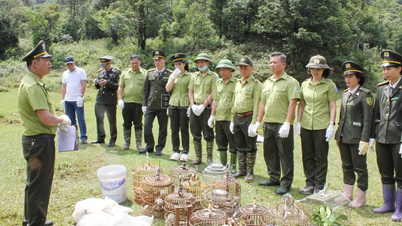
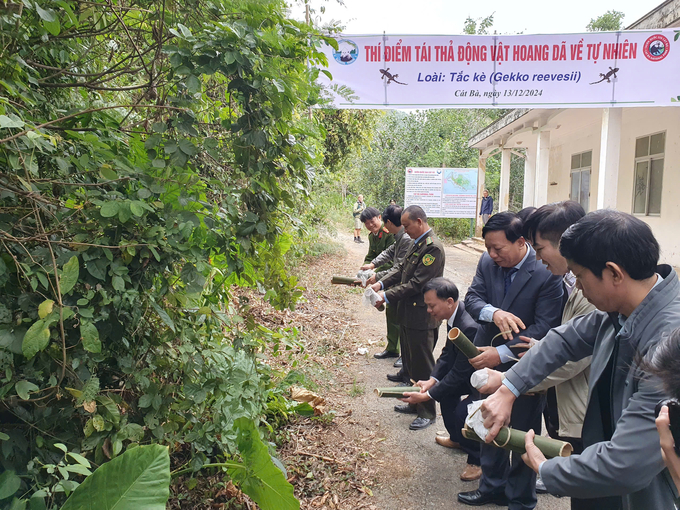 Delegates release wild animals back into their natural environment. Photo: Dinh Muoi.
The Cat Ba Archipelago Biosphere Reserve was recognized by UNESCO on December 2, 2004. It is the third of 11 biosphere reserves recognized in Vietnam, and is a prominent example representing the ongoing ecological and biological processes in the evolution and development of marine and island ecosystems, with a high diversity of animal and plant communities on the islands and in the sea.
After 20 years of recognition, the biodiversity values of the Biosphere Reserve have been effectively conserved, in accordance with the regulations of the Vietnamese Government and ensuring the conservation functions of genetic diversity, species diversity, ecosystem diversity, and landscape diversity of the Biosphere Reserve.
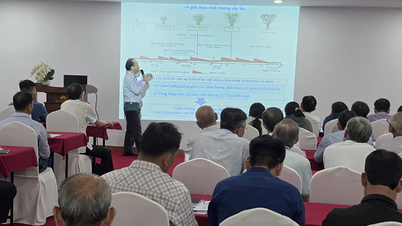
Previously, a scientific workshop on green growth – 20 years of management and sustainable development of the Cat Ba Archipelago Biosphere Reserve – was held at Cat Ba National Park. The workshop aimed to highlight significant changes after 20 years of operation, learn from the experiences of other biosphere reserves, consult with stakeholders to find specific and appropriate solutions for the next phase, and contribute to communication and education activities, enhancing responsibility for conservation and sustainable development.
The Cat Ba archipelago has developed 10 typical subtropical ecosystems. To date, 4,066 species of animals and plants have been cataloged here, including: 1,595 plant species, 72 fungus species, 63 mammal species, 209 bird species, 58 reptile species, 32 amphibian species, 11 freshwater fish species, 1 terrestrial crustacean species, 401 insect species, 36 mangrove plant species, 102 seaweed species, 5 seagrass species, 400 phytoplankton species, 131 zooplankton species, 658 benthic animal species, 96 coral species, and 196 marine fish species. Among them, the most well-known species is the Cat Ba langur, recognized as one of the 25 most endangered primate species in the world.


![[Photo] National Assembly Chairman Tran Thanh Man attends the groundbreaking ceremony for the National Highway 1A spatial axis project.](https://vphoto.vietnam.vn/thumb/1200x675/vietnam/resource/IMAGE/2026/05/19/1779161360398_ndo_br_bnd-1412-jpg.webp)
![[Photo] Capturing the moment the tide recedes at Yen Binh Son rapids - a million-year-old scenic spot in Quang Ngai.](https://vphoto.vietnam.vn/thumb/1200x675/vietnam/resource/IMAGE/2026/05/19/1779175463885_yen9-1199-jpg.webp)
















![OCOP during Tet season: [Article 4] Elevating local products](https://vphoto.vietnam.vn/thumb/402x226/vietnam/resource/IMAGE/2026/01/29/1769652810578_2935-z6982071462129_649e82db06fb2f2ea701388b1f5f5b0b-173322_176-185229-202804_457.jpeg)
























![[Photo] General Secretary and President To Lam receives Indian Defense Minister Rajnath Singh](https://vphoto.vietnam.vn/thumb/402x226/vietnam/resource/IMAGE/2026/05/19/1779184046302_anh-man-hinh-2026-05-19-luc-16-46-58.png)




























Comment (0)