

The current state of agricultural value chain development in the province shows that this activity is still lacking and weak, not commensurate with the reality of agricultural production; however, there is still room for development. This is a positive sign, allowing us to have high expectations for the formation and development of agricultural value chains in the future.
The province's support policies have contributed to the formation of concentrated production areas, facilitating the development of production linkages.
In the context of complex weather, climate, and disease outbreaks, and rising feed prices, organizing value chain linkages from production to consumption of agricultural products is one of the important solutions that the agricultural sector, localities, and people are aiming for to develop sustainable agricultural production. To ensure effective implementation and maximize the resources from mechanisms and policies supporting agriculture and rural areas, with a focus on supporting the development of cooperation and linkages in the production and consumption of agricultural products according to Government Decree No. 98/2018/ND-CP dated July 5, 2018, on policies to encourage the development of cooperation and linkages in the production and consumption of agricultural products, the province has recently implemented many mechanisms and policies to support and promote businesses, cooperatives, and farmers to participate in the production and consumption of agricultural products. A direct and comprehensive example is Resolution No. 40/2020/NQ-HĐND dated December 9, 2020, of the Provincial People's Council approving the policy to support the linkage of production and consumption of agricultural products in Thai Binh province for the period 2021-2025. Accordingly, farmers, individuals, cooperatives, and businesses meeting the prescribed conditions will receive support from consulting costs. Issues include building linkages, infrastructure supporting these linkages, training, seeds, supplies, product labeling; costs for obtaining VietGAP and VietGAHP certifications, and codes for growing and raising areas...
One of the difficulties in building and developing the number of value chains in the province is the fact that agricultural production is still largely small-scale, involving many households. To overcome this situation, mechanisms and policies supporting land consolidation and concentration are also emphasized: Resolution No. 29/2021/NQ-HĐND, dated December 10, 2021, of the Provincial People's Council promulgates regulations on mechanisms and policies supporting land consolidation and concentration; purchasing rice transplanters and drying equipment systems to serve agricultural production in the province during the 2021-2025 period; Resolution No. 08/2023/NQ-HĐND, dated July 12, 2023, of the Provincial People's Council promulgates regulations on mechanisms and policies to support land consolidation and concentration for the development of agricultural economy in Thai Binh province until 2028. Throughout the implementation process, the Provincial People's Committee has integrated activities related to linking agricultural production and consumption into plans, projects, and programs... to strengthen and develop linkage chains, expand markets not only within the region but also to boost exports. In addition, the agricultural sector has also integrated support policies from the OCOP program and support for collective economic organizations and cooperatives to promote the formation of value chains associated with key local agricultural products.
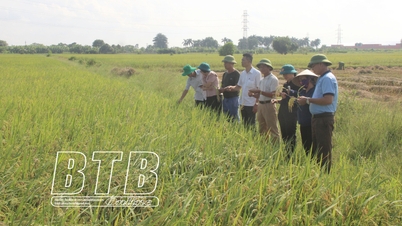
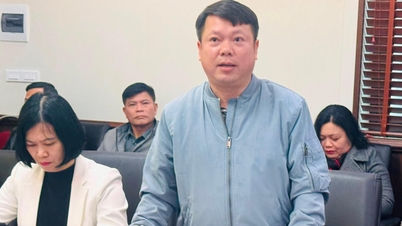
Mr. Nguyen Van Phat, Vice Chairman of the People's Committee of Quynh Phu District, said: In recent times, benefiting from the province's support policies, over 300 households in the district have consolidated and concentrated farmland on a scale of 2 hectares or more, reaching nearly 1,400 hectares, and simultaneously purchased an additional 67 rice transplanters of various types. This large-scale land consolidation and concentration has contributed to gradually eliminating dikes, creating large plots, facilitating field improvement and the introduction of mechanization into production, reducing pest outbreaks, increasing labor productivity, improving land use efficiency, reducing costs, and increasing economic efficiency by 20-30%. Several production linkage models have emerged in the district, yielding high and sustainable results, creating large and stable raw material areas, such as the model for enhancing the value of rice seed and commercial rice production in An My commune; and the model of fieldless rice cultivation (TBR225) in An Trang commune. Models include the Tam Xuan glutinous rice production model in An Thanh commune; the Japanese rice production linkage model in Quynh Tho commune; and the integrated mechanization application model in agricultural production in An Ninh commune...
To ensure that production chains remain intact and operate effectively, the proactive participation of both farmers and businesses is essential. Local authorities should actively disseminate information to raise awareness among farmers about the importance of adhering to the terms of linkage contracts; regularly assess and forecast the supply and demand of agricultural products in the market to help the chains adjust their production and business strategies accordingly. Businesses, cooperatives, and producers participating in the chain must adhere to the principle of ensuring a harmonious balance of interests among all parties, strictly comply with the terms of the contract, and share both benefits and risks and difficulties in the production and consumption process. Local authorities should focus on land consolidation to meet the requirements of large-scale agricultural production, attracting businesses to invest in production linkages and product distribution. Furthermore, it is necessary to improve management capacity, develop production plans, and connect cooperatives to markets to act as intermediaries linking farmers with businesses, thereby contributing to the continued sustainable development of the province's agricultural sector.

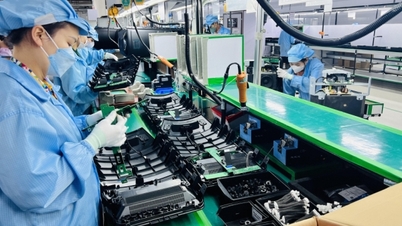
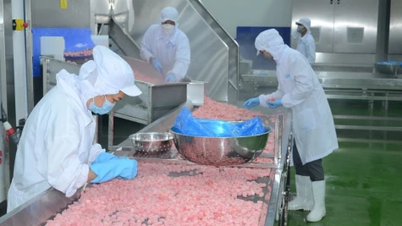
Onion processing at Thanh Nhan Agricultural Products - Trade and Service Joint Stock Company (Quynh Phu).
Ngan Huyen
Source














![[Photo] Reception to welcome General Secretary and President To Lam and his wife on their State visit to the Philippines](https://vphoto.vietnam.vn/thumb/1200x675/vietnam/resource/IMAGE/2026/06/01/1780295488620_vna-potal-chieu-dai-chao-mung-tong-bi-thu-chu-tich-nuoc-to-lam-va-phu-nhan-tham-cap-nha-nuoc-toi-philippines-8798060-7855-jpg.webp)

















































Comment (0)