


Forest Guardians
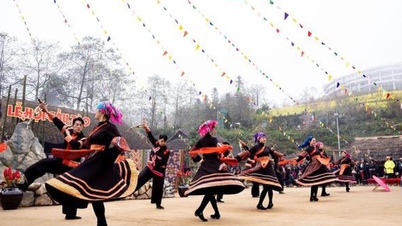
In recent years, the story of the Hmong people in Hang Kia and Pa Co communes of Mai Chau district (Hoa Binh province) strengthening forest protection, combined with the development of ecotourism , has become a model for forest management in other localities.
The Mai Chau District section ( Hoa Binh Newspaper) has published many articles portraying the "forest guardian hero" Kha A Lu - who has contributed to nurturing and transforming hundreds of hectares of pristine forest in the Hang Kia - Pa Co Nature Reserve into an attractive ecotourism destination.
Living at the foot of Dragon Mountain (on the road to Hang Kia), Mr. Kha A Lu shared that his family was the first household in Hang Kia commune to be assigned by the Nature Reserve Management Board to manage and protect hundreds of hectares of pristine forest right behind their house. Previously, although not assigned any responsibility, A Lu thought the forest belonged to the State and protected it himself. Later, when officially entrusted with the responsibility of management, Kha A Lu proactively protected his "asset" by going to each house, meeting each person to explain to them that they must not cut down trees. Not only did he spread the word and persuade his relatives in the village, Kha A Lu and his wife, Vang Y Mai, also went to the villages of Pa Co Con, Pa Hang Con, Pa Hang Lon... in Pa Co commune to educate and persuade people not to go into the forest to cut down trees, collect wood, or firewood.
According to Mr. Lu's account, the Hmong people originally lived in the high mountains, depending on the forest for their livelihood. The forest provided trees for timber to build houses, make cupboards, and chairs. When winter came, if the stove didn't have glowing embers or firewood, the elderly and children wouldn't have firewood to keep warm, so for generations, the Hmong people have had to depend on the forest. Initially, everyone disliked and avoided Lu and his wife. Because, "Lu's family only said things that displeased us." At that time, only Lu and his wife stood on one side, advocating for a more responsible approach to the forest. On the opposite side was the entire community. Fortunately, the elders and respected figures among the Hmong people in the two communes understood and agreed with Lu and his wife's way of thinking.
Driven by that empathy, and with a suggestion from the Hang Kia - Pà Cò Nature Reserve Management Board, Khà A Lứ and his wife decided to develop tourism, transforming the pristine forest with its many valuable trees and flowers such as orchids, ancient rhododendrons, and Pà Cò pines into an ecotourism destination and trekking route. Only when people hear about it and see it for themselves will they believe that the Lứ couple are doing the right thing.
As a result, on average, the tourist spot owned by Kha A Lu and his wife welcomes hundreds of domestic and international visitors each month. Among the visitors are also local people. They come to see, hear, and experience the story of how A Lu and his wife have kept the forest green and healthy in their own hometown.
"To preserve the pristine landscape, we have a rule for visitors that littering is absolutely prohibited. Whatever you bring up the mountain, you must take it back with you. All trash will be collected at the foot of the mountain. We encourage everyone to be mindful of preserving the environment. Anyone who violates the rules, even if it's just taking a flower branch or an orchid plant from the mountain, will be severely punished according to the regulations of the tourist area. We also only allow a limited number of visitors up the mountain, and we will not let the pursuit of profit lead to the tourism business negatively impacting the forest," shared Kha A Lu.
Inspired by the model of forest conservation for sustainable tourism developed by the Mong ethnic man Kha A Lu, many governments and people in other areas, not only in Hoa Binh but also in other highland provinces, have adopted this formula to follow suit.
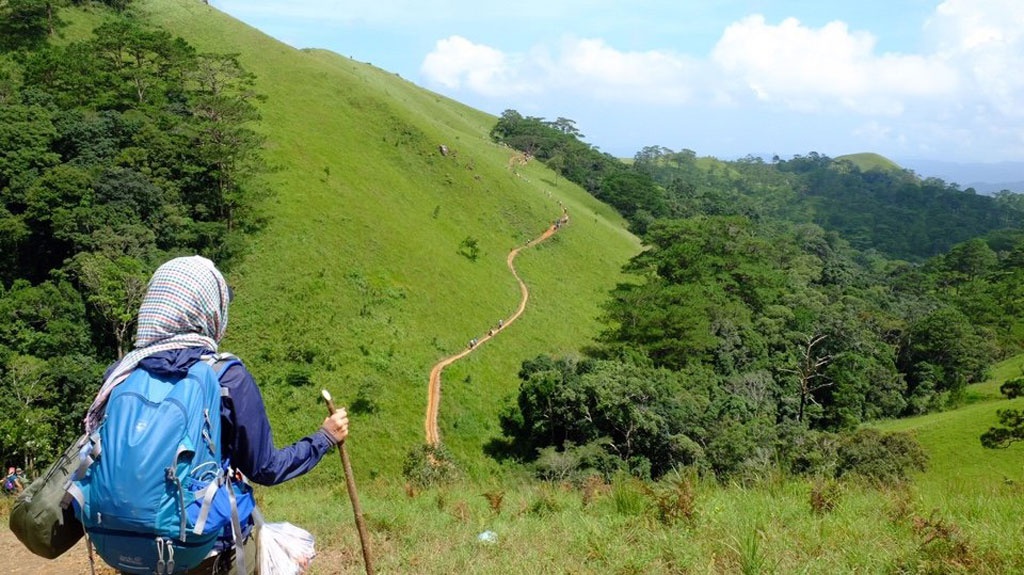 Nature-based tourism is becoming an increasingly popular trend among young people. |
Falling in love with trekking tourism.
The idea of preserving forests for tourism is no longer just theory, because in reality, experiential tourism, nature-based tourism, and trekking are increasingly becoming a new trend for travel enthusiasts.
On the Facebook page "Born to Wild," nearly 30,000 members, every hour and every day, are "competing" to share their trekking destinations and experiences with intense passion and enthusiasm.
Constantly posting numerous photos of her trekking trips, wading through streams, and conquering forests from the Central Highlands to the Northwest highlands, LMH (30 years old) says she has been passionate about "backpacking" for a long time, but only recently discovered this group on Facebook to share her experiences and love of nature with others. According to H, it's not just nature lovers who seek out trekking; it's through these trekking trips that people realize the beauty of nature, of the mountains and forests, and fall in love with it without even realizing it.
"Living a life free from the smog and noise of city streets, I've come to appreciate so much. A love for nature, people, society, traditional clothing... So much. Many people ask why I don't go on relaxing vacations or easy tours instead of choosing a more physically demanding type of trip. I silently smile and reply: This isn't self-torture. This is how I can get closer to nature and experience it in the most intimate way possible," the 30-year-old man shared.
Having spent nearly half his life in the tourism industry, Mr. Huynh Van Son, General Director of Saigon Sea Star Joint Stock Company, admits that he is "obsessed" with 5-star hotels, "obsessed" with high-class services, and "obsessed" with luxury travel, but it was only after "trying it once" that he also "fell in love" with trekking.
Becoming a partner with TropiAd – a company specializing in trekking and camping tours in both forest and coastal environments – Mr. Son has witnessed a significant shift in people's awareness and trends regarding nature. Launched three years ago, TropiAd initially saw a relatively small number of customers due to its novelty for Vietnamese people. The target market was primarily niche, consisting of nature enthusiasts or foreign tourists already accustomed to experiential travel. However, just one year later, the number of customers seeking TropiAd's services doubled and continues to grow, especially among young people. Even children are enthusiastically participating.
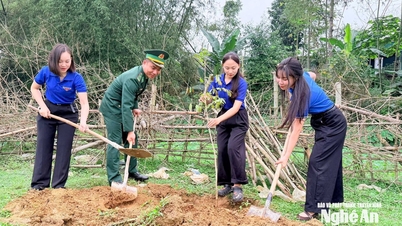
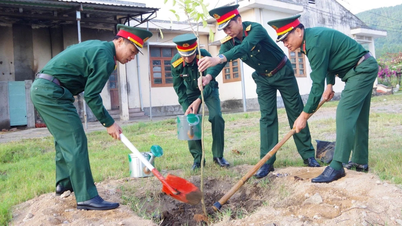
In particular, with the motto of promoting responsible tourism, each customer participating in this company's tours will plant a tree for themselves. This is both a way to help people cultivate a love for forests and understand their responsibility towards nature, while also contributing to the government 's "One Billion Trees" program.
When developing beach tourism, don't forget forest tourism.
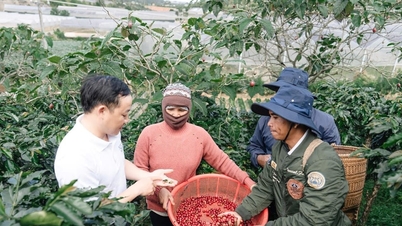
According to Mr. Son, although the profit margin for businesses exploiting this type of tourism is not high, it brings great benefits to society. Not only does it contribute to spreading love for nature, but building these tourist routes is also a very good way to protect the forest. Businesses and tourists will act as "eyes and ears" assisting the authorities in managing the forest. Local people also participate directly in the process of creating tourism products. Local people themselves will act as guides, chefs, and provide products such as regional spices, helping tourists delve deeper into the culture. They can also provide motorbike taxi services, guide services, etc. Stable work and a steady income will help local people love the forest more, be more responsible, and protect and preserve it.
"We say Vietnam has golden forests and silver seas, meaning that if managed, preserved, and exploited well, natural resources will bring very high economic efficiency. For a long time, people have only focused on developing beach tourism while neglecting the forests. Part of the reason is also due to the lack of a complete legal framework for forest exploitation and insufficient forest management capacity. Along with the awareness of many people about their love for nature and responsibility towards their surrounding environment, a systematic plan for the effective conservation, exploitation, and development of forests is needed to preserve forests, plant trees, and truly turn forests into gold," this person proposed.
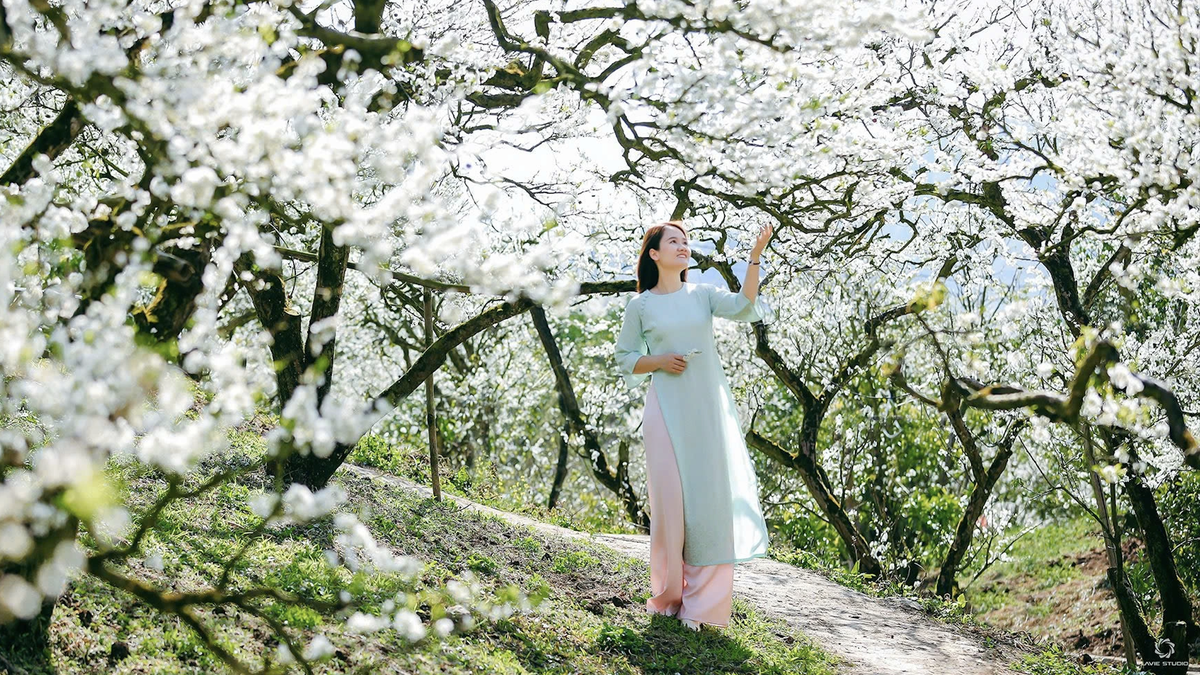
In recent years, Dien Bien province has seen the development of many garden tourism destinations and scenic, ecological tourism sites associated with forests, such as: Pa Khoang Lake Tourist Area (Muong Phang commune, Dien Bien Phu city), covering over 600 hectares with ancient forests and prosperous villages; Dao Vien Son Ecological Tourist Area (Bua 1 village, Ang To commune, Muong Ang district), with an area of about 7 hectares, featuring natural grassy hills, artificial waterfalls, and especially over 1,000 ancient peach trees, creating a unique spring forest atmosphere; the windy Pha Din Peak in Toa Tinh commune, Tuan Giao district; and several other garden tourism destinations in Thanh Luong, Thanh Hung, and Thanh Nua communes (Dien Bien district)... Along with the Dien Bien Phu battlefield historical relic complex, these tourist areas have created new highlights, adding to the list of attractive destinations for tourists on their journey to Dien Bien.
Along with the conservation, care, and protection of natural forests, Dien Bien province has now planted more than 5,000 hectares of forest, contributing to creating landscapes, ecological environments, and developing green tourism.
The Prime Minister has approved the "Planting One Billion Trees Program for the period 2021-2025". Most recently, the People's Committee of Lam Dong province was the first locality to respond to this program by launching a plan to plant 50 million trees in the province, with the support of Novaland through the "Green Up Vietnam - Millions of Trees for a Brighter Life" program. The next "green living destinations" in Novaland's plan are Binh Thuan and Ba Ria-Vung Tau. In addition to monetary sponsorship, Novaland is also coordinating with relevant departments and agencies in the three provinces to organize tree planting and care, combined with team-building activities, family days, and fundraising campaigns to raise awareness and spread a green lifestyle throughout society. |
Source: https://thanhnien.vn/len-rung-xem-nguoi-mong-lam-du-lich-1851079150.htm


![[Photo] National Assembly Chairman Tran Thanh Man visits and works with the National Assembly Committees and the State Audit Office.](https://vphoto.vietnam.vn/thumb/1200x675/vietnam/resource/IMAGE/2026/02/23/1771848141941_ndo_br_bnd-6798-jpg.webp)





































































Comment (0)