

The training model is not keeping up with the market.
The phenomenon of lip-syncing and vocal layering is seen by many in the industry as a long-standing "blemish" in the Vietnamese music market, especially with the rise of technology, which is often used to mask weaker, authentic vocal performances.
Musician Nguyen Quang Long frankly pointed out that viewing lip-syncing as a technical solution or a "last resort" is insufficient. The prevalence of this phenomenon shows that more and more artists are taking to the stage when their performance skills do not match the demands of the profession.
From there, questions about the artist training process arise in the context of a rapidly expanding music and performance market, with dozens of shows attracting thousands of viewers each year. This also raises issues regarding the training of Vietnamese artists, where the current training model does not focus on the holistic development of an artist.
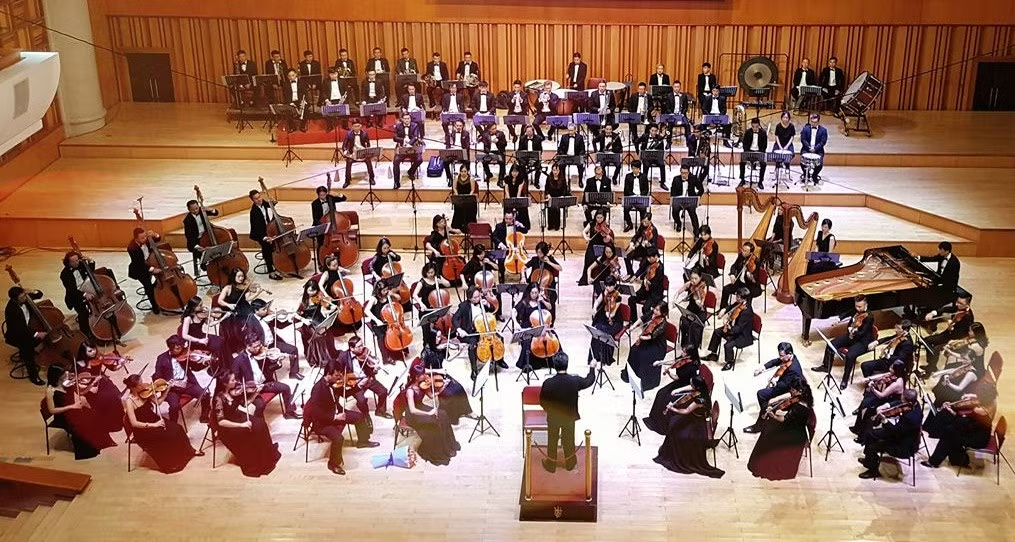
In fact, the system of art schools in Vietnam, from vocational schools and colleges to universities, is quite well-structured and has a tradition of over 70 years. However, there is still a gap between the training objectives and the actual needs of the market.
"While music schools focus on classical music or technically demanding genres like opera, revolutionary music, and artistic lyrical music, the market is highly volatile, and the largest segment is entertainment music. Therefore, the training provided by these schools only partially meets the overall demand," musician Quang Long observed.
It's undeniable that many famous singers haven't received formal training, however, exceptional cases are rare. According to musician Nguyen Quang Long, for genres requiring high technical skills, artists must undergo rigorous study and training. In contrast, for entertainment music, having received training at a professional art school is a significant advantage.
"Our art training is not yet perfect. We need to look at societal needs to adjust and supplement it accordingly. But training must still maintain the standards of professional art; we cannot, for any reason, lower the requirements for vocal ability or musical competence," stated musician Nguyen Quang Long.
A journey of decades of training.
Finding a model that harmonizes these elements is a difficult problem, but not an insurmountable one. In many countries with developed music industries, such as South Korea, the United States, or even Thailand, artist training doesn't just take place in schools, but is integrated into a complete ecosystem. In this ecosystem, entertainment companies play a central role, building a closed training process from selection and training to production and artist management.
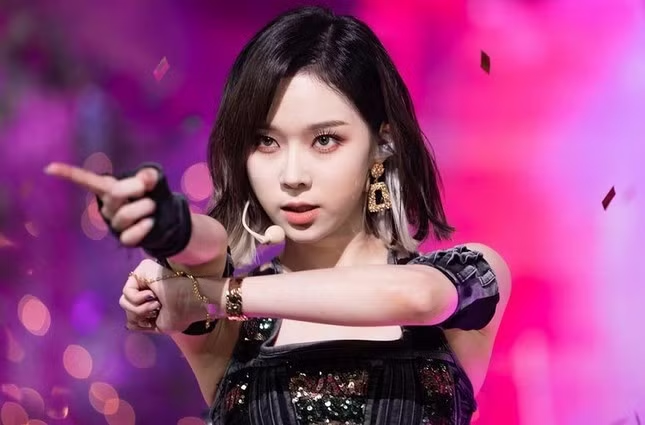
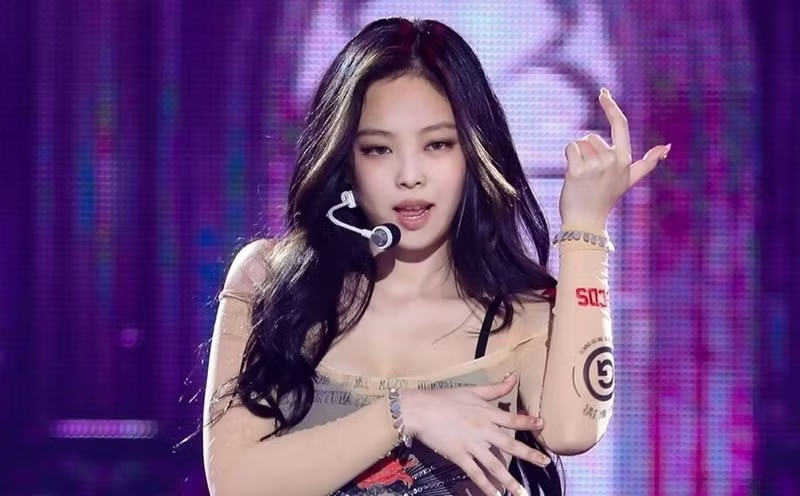
In South Korea, before becoming artists and performing on stage, many young people undergo a training process that lasts for years, even decades. This is characteristic of trainee training – a rigorous and systematic training process where young artists are simultaneously trained in vocal music, dance, performance, public speaking skills, and media communication.
Only those who fully meet the criteria get a chance to debut, and in reality, this journey is often very long: G-Dragon (BigBang) went through 11 years of training, including 5 years at SM Entertainment and 6 years at YG, and many other idols also have extended training periods such as Jihyo (TWICE, 10 years), Jennie (Blackpink, 6 years) or Suho (EXO, 6 years).
Accordingly, many people embark on the path to becoming idols from the age of 10, sacrificing their youth for a long and arduous training journey. The first step is to pass the casting process. According to Koreaboo, many children participate in an average of 30 casting sessions before being offered a trainee contract.
However, getting accepted is just the beginning. During their approximately 7-year training period, they endure a grueling schedule from morning until 2-3 am the following day, simultaneously studying vocal music, dance, foreign languages, communication skills, image control, and weight management.
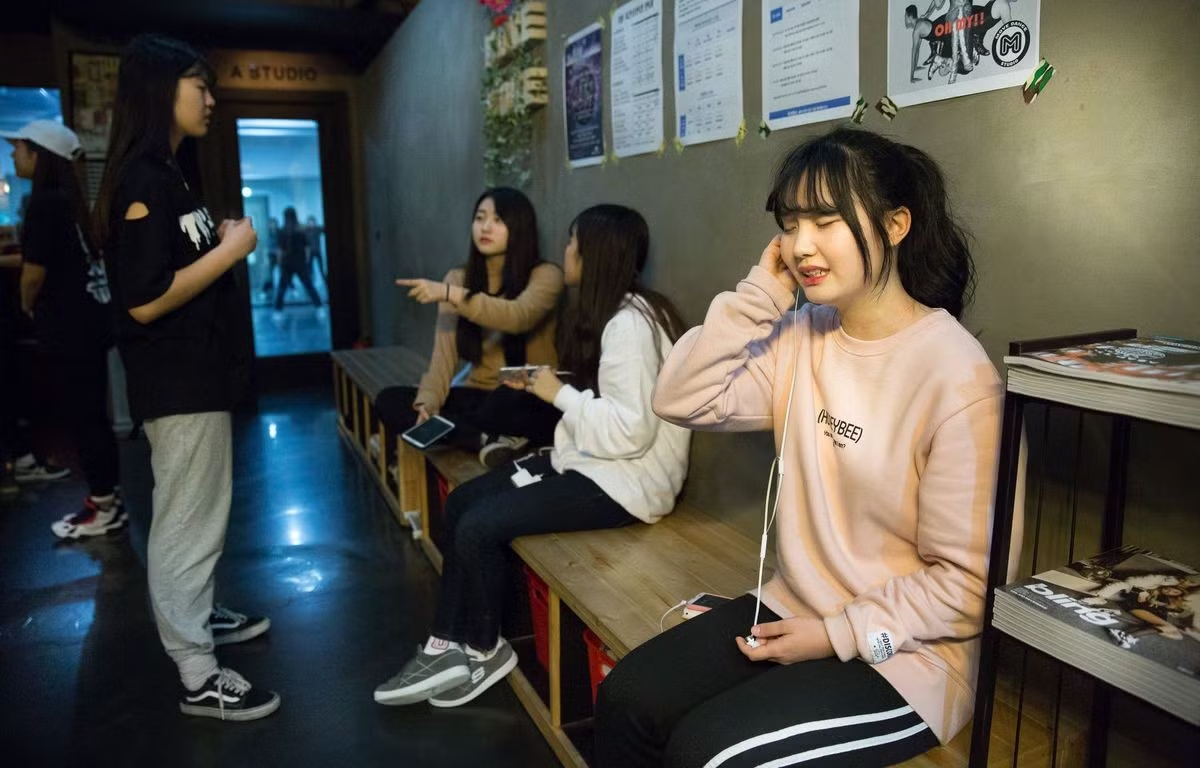
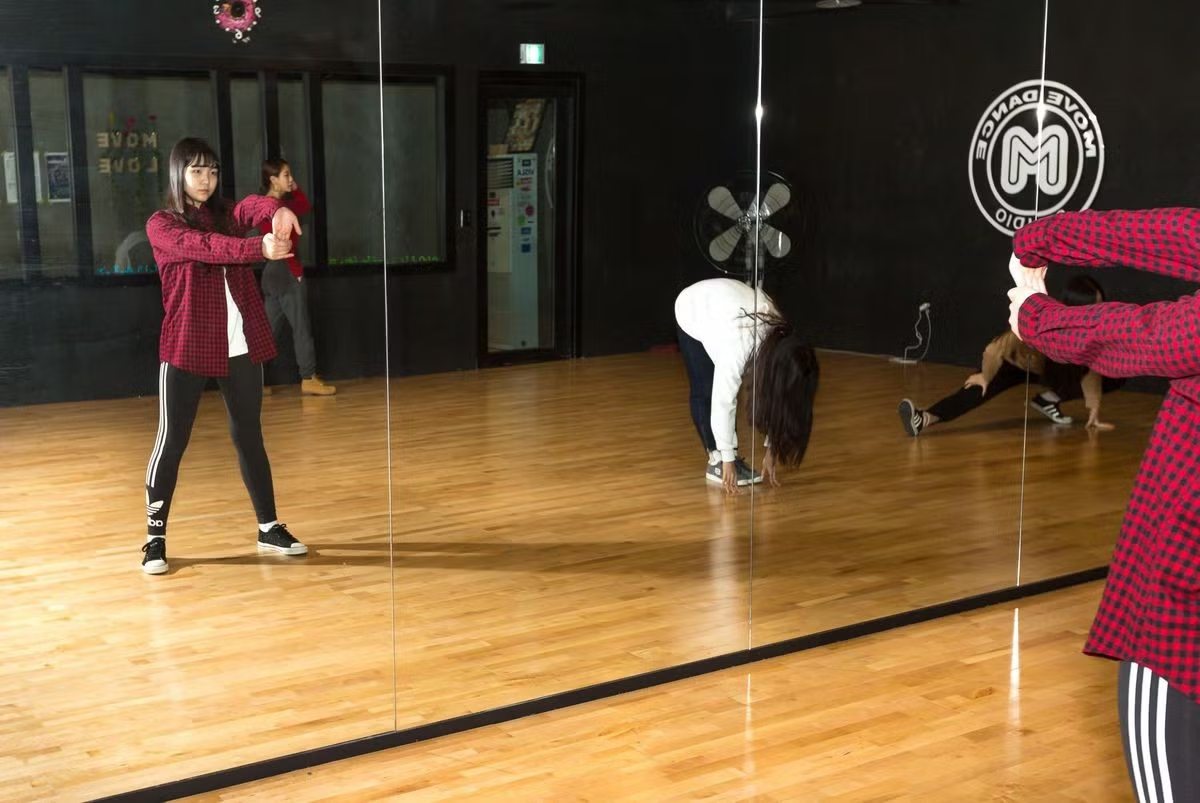
Journalist Euny Hong commented, "Kpop star training is a holistic human education ." This model also brings immense pressure to eliminate trainees. According to In Jin Woong, one of the famous idol training instructors, only about 10% of trainees have the opportunity to debut.
Even with talent, the chance to debut still depends on the company's direction. "You might sing well and dance well, but if you don't fit the concept, you'll still be eliminated," said In Jin Woong. Many people have to wait 4-5 years for a new project, or leave the industry when they're too old.
Compared to this model, Vietnam is currently still in a transitional phase. In fact, some schools that train in arts and performing arts have begun to add performance-supporting skills such as dance, body language, communication skills, and artist etiquette…
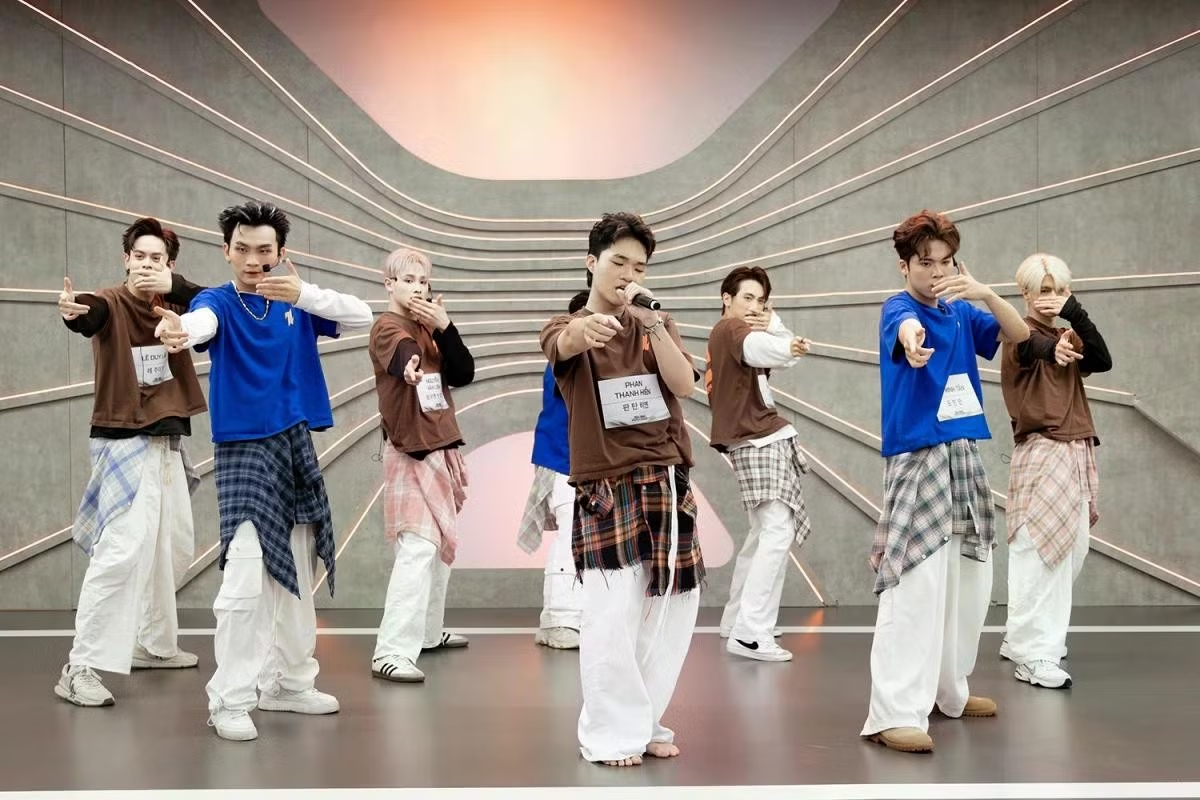
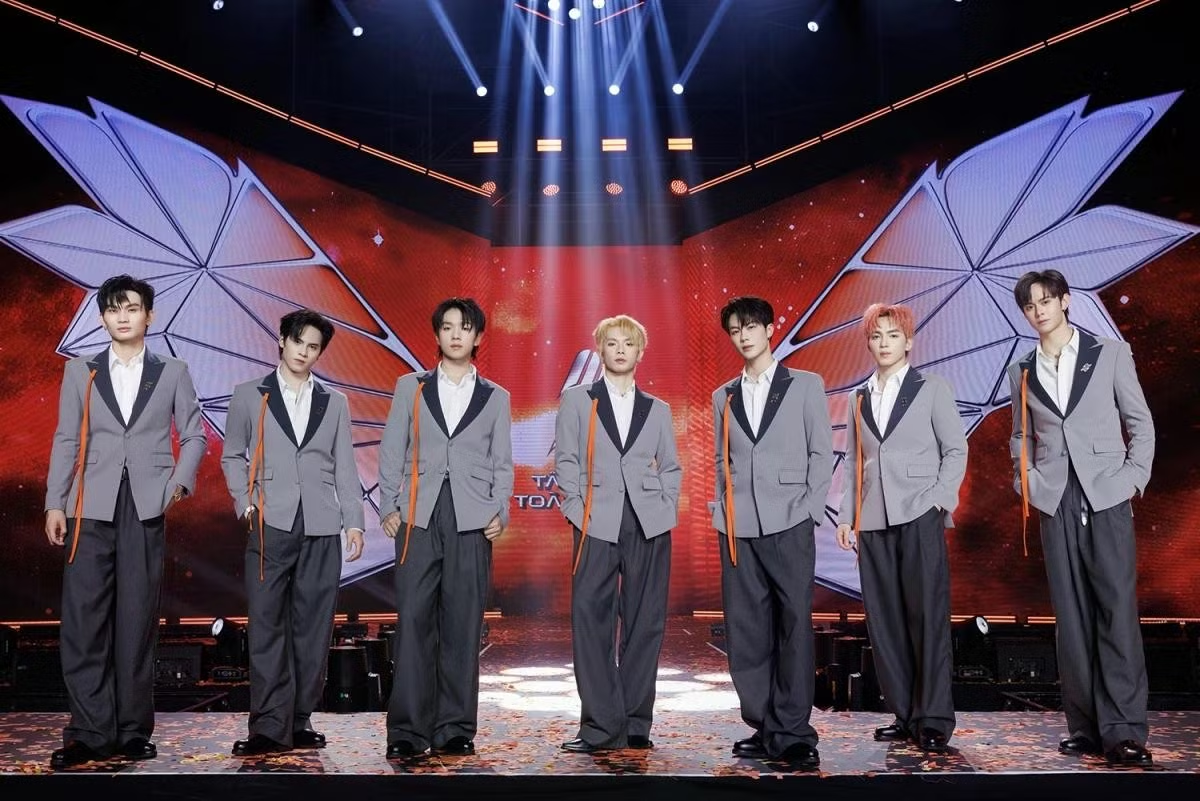
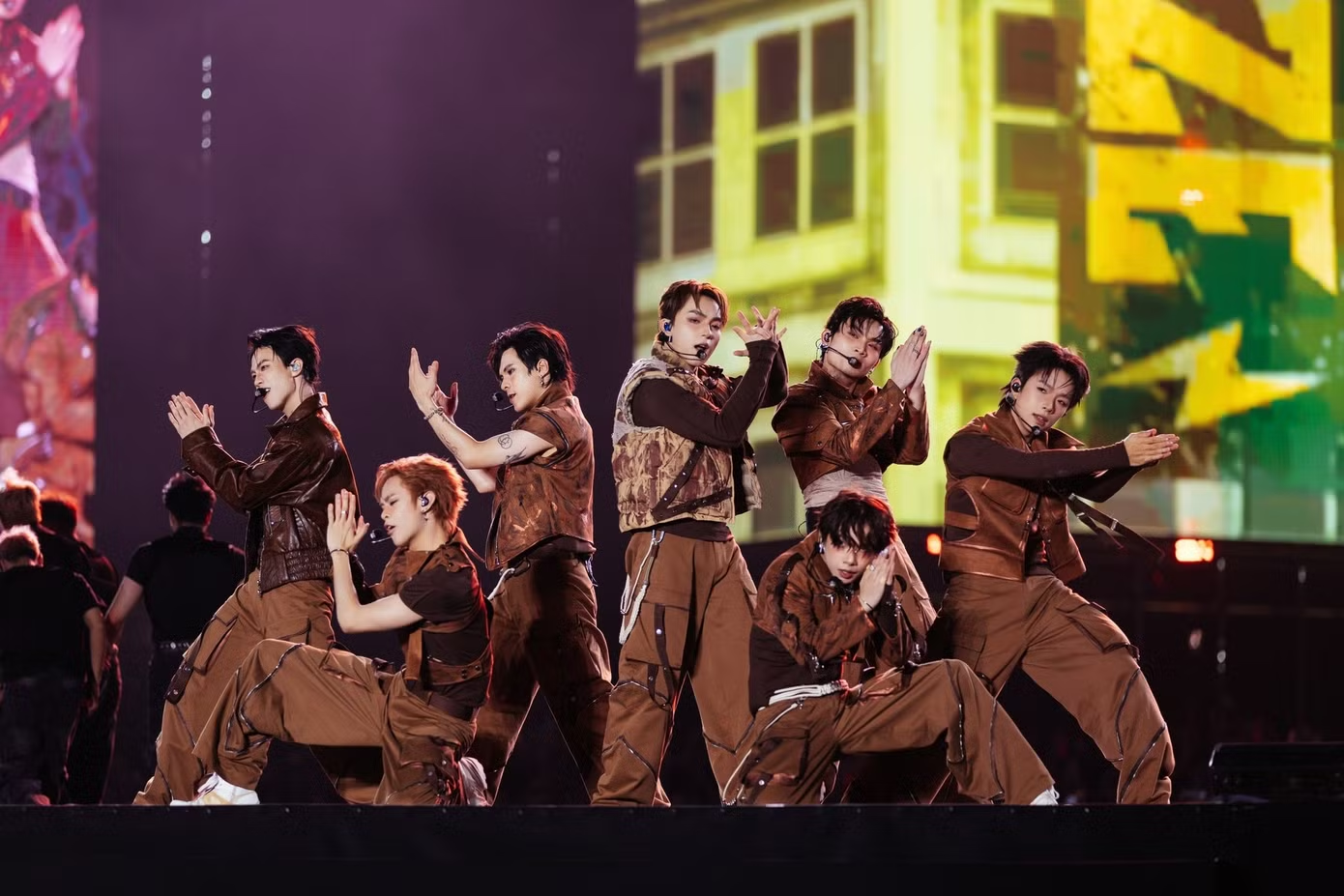
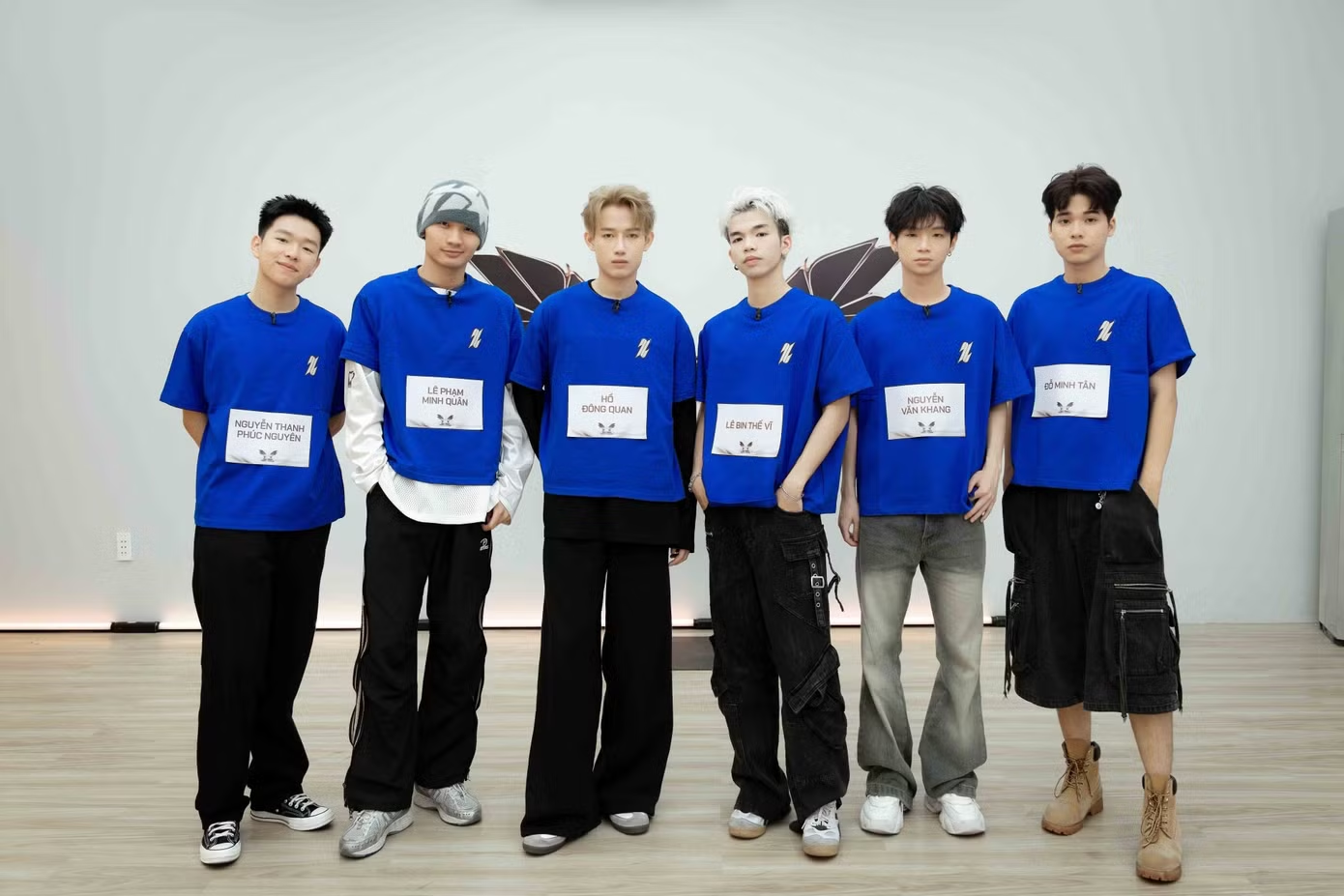
Meanwhile, the role of entertainment companies in artist training in Vietnam is still not clearly defined. In developed markets, they are a core force, operating under a professional cultural enterprise model.
"Looking at neighboring countries that have successfully built similar models, we can see a general trend: the closed-loop company model, encompassing training, production, and artist management, is becoming increasingly important. If we want to develop the music industry, this is almost an inevitable model. In this model, the State plays a guiding role, building the legal framework and creating favorable conditions through policies such as tax incentives and support for creative activities, to enable cultural enterprises to develop," musician Quang Long stated.
Clearly, if we want to develop the music industry, forming a training model linked to the market is essential. However, that doesn't mean simply copying foreign models. Vietnam needs a model that is adapted to its own cultural, social, and market realities.
"Besides vocal and performance skills, young artists need to be equipped with many other elements such as communication skills, personal image building, understanding of the public, and especially professional ethics. In the context of the strong development of social media, artists are not only performers but also influencers. Therefore, maintaining a positive image, behaving appropriately, and being mindful of the public are crucial factors for sustainable development," said musician Quang Long.
In the long run, this isn't just about management policies or stricter performance regulations, but also about building a sustainable training ecosystem. When schools and the market find common ground, when businesses become more deeply involved in the training process, and when artists clearly understand the value of integrity, the music market can develop in a healthy direction.
Source: https://tienphong.vn/lo-hong-dao-tao-nghe-si-o-viet-nam-post1834159.tpo


![[Photo] Ba Lang An Lighthouse - the "eye of the sea" amidst the "rock museum" of Quang Ngai province.](https://vphoto.vietnam.vn/thumb/1200x675/vietnam/resource/IMAGE/2026/05/29/1780038698840_anh-man-hinh-2026-05-29-luc-14-10-42.png)
















![[Image] Pleasant weather helps students enter the 10th grade entrance exam with confidence.](https://vphoto.vietnam.vn/thumb/1200x675/vietnam/resource/IMAGE/2026/05/29/1780034401612_ngay-1-thi-lop-10-minh-duy-8-5009-jpg.webp)

















































Comment (0)