


Numerous seashells can be found at the Vành village rock shelter site.
According to archaeological documents, the Vành Village Rock Shelter was discovered and excavated in 1929 by the French archaeologist M. Colani. This is a residential and burial site of Stone Age inhabitants, belonging to the Hòa Bình culture, dating from approximately 17,000 to 8,000 years ago. Through numerous excavations, researchers have discovered hundreds of stone artifacts, bones, mollusk shells, and a cultural layer nearly 4 meters thick, clearly reflecting the life of the ancient inhabitants.
Locals still commonly refer to the rock shelter as the "snail cave" because the floor of the rock shelter is covered with countless snail shells accumulated over thousands of years. For the people of Vành hamlet, the site is not simply an archaeological site but also a place deeply connected to the memories, lives, and pride of the Muong community.
Mr. Bui Van Hoa, a resident of Vanh hamlet, shared: “Since childhood, our grandparents have told us about this rock shelter. The people in the hamlet have always been conscious of preserving it, not grazing livestock or doing anything that would affect the historical site. Everyone hopes that this place will be preserved for a long time so that future generations will understand more about their homeland's origins.”

Beneath the rocky slopes of Vành village, there are many mountain snail shells that have accumulated over thousands of years.
In recent years, along with the conservation efforts of the cultural sector, the Yen Phu commune government has regularly coordinated with local authorities to raise awareness among the people about the value of the historical site. The roads leading to the site have been gradually improved, and environmental sanitation has been maintained to preserve the natural landscape of the area.
Yen Phu commune is implementing a project to expand the road leading to the historical site with a total budget of approximately 2 billion VND from public investment funds. The project is expected to facilitate travel, improve transportation connectivity, and attract tourists to visit and learn about the historical and archaeological value of the Vanh Village Rock Shelter.
In particular, the locality is focusing on effectively exploiting the value of the Vành Village Rock Shelter archaeological site in conjunction with the development of ecotourism around the Cánh Tạng Reservoir. This is considered an important direction to create momentum for the development of tourism and services, contributing to the sustainable transformation of the local economy .
With its pristine natural landscape, distinctive Muong cultural identity, and unique archaeological value, the Vành Village Rock Shelter is expected to become an attractive destination in the cultural and ecological exploration journey of tourists visiting the Cánh Tạng Lake area.
According to Bui Van Thien, Secretary of the Party Committee of Yen Phu commune: “The rock shelter of Vanh village is a valuable heritage not only of the locality but also of the nation. The commune always considers the protection and preservation of the relic's original state as an important task. We are strengthening propaganda to encourage people to participate in protecting the heritage, and at the same time coordinating with relevant agencies to propose investment in infrastructure and promote the value of the relic in conjunction with community tourism development.”
Beyond its exceptional archaeological value, the Vành Village rock shelter also embodies the cultural depth of the Muong people of Hoa Binh province. The layers of sediment preserved on the rock face, the rudimentary stone artifacts, and the traces of ancient hearths tell the story of the survival and labor of prehistoric inhabitants on this land.
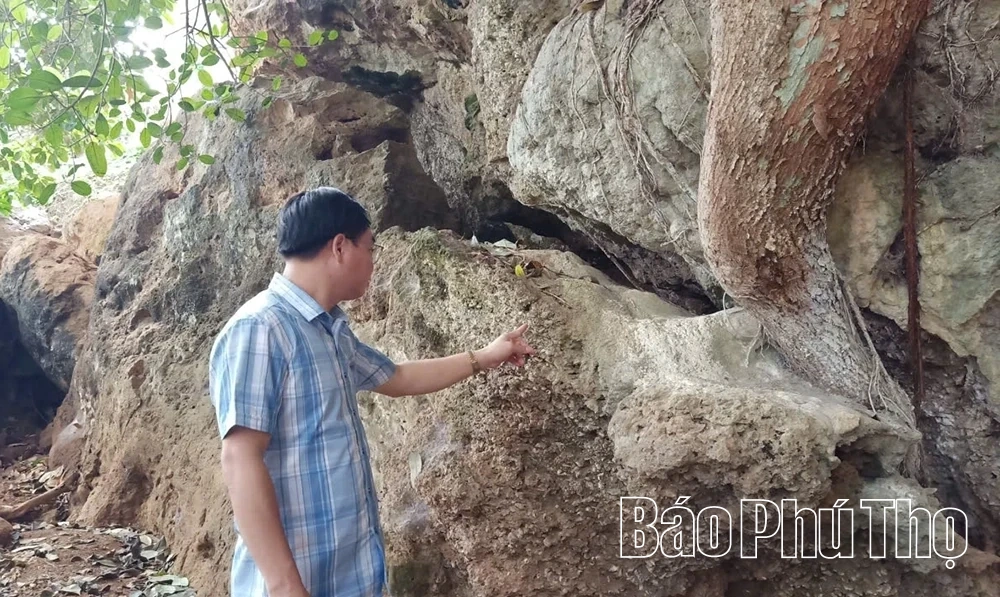
Over thousands of years, the seashells preserved on the cliffs serve as evidence of archaeological remains.
Amidst the hustle and bustle of modern life, preserving the Vành Village Stone Shelter is not only about conserving an archaeological site, but also about safeguarding cultural memories and preserving the soul of the homeland. From the awareness of the people to the involvement of the local government, all are contributing to ensuring that this thousand-year-old heritage continues to be protected and its historical and cultural values are spread for today and tomorrow.
Dinh Thang
Source: https://baophutho.vn/luu-giu-mai-da-lang-vanh-255137.htm



![[Image] Nearly 125,000 Hanoi students completed the Literature exam for the 10th grade entrance exam.](https://vphoto.vietnam.vn/thumb/1200x675/vietnam/resource/IMAGE/2026/05/30/1780117233041_ndo_br_thiet-ke-chua-co-ten-2-png.webp)





















































































Comment (0)