

Providing sufficient nutrients will help the body regenerate muscle tissue effectively, reduce inflammation, and increase performance in the next workout, according to the health website Medical News Today (UK).

Squats are one of the most effective exercises for building thigh muscles.
PHOTO: AI
To maximize thigh muscle development, exercisers need to consume sufficient amounts of the following nutrients:
Starch
Carbohydrates are the body's primary energy source during high-intensity exercises like squats. During exercise, the body uses glycogen, the stored form of carbohydrates in the muscles, to fuel muscle activity. Low glycogen levels lead to decreased workout performance and slower muscle growth.
Strength trainees should consume approximately 4-7 grams of carbohydrates per kilogram of body weight per day for optimal performance and recovery. Carbohydrates help replenish glycogen and promote muscle protein synthesis.
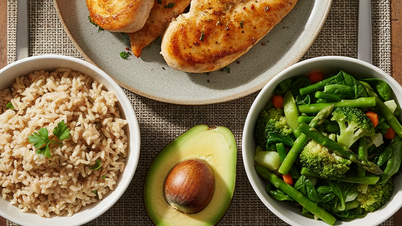
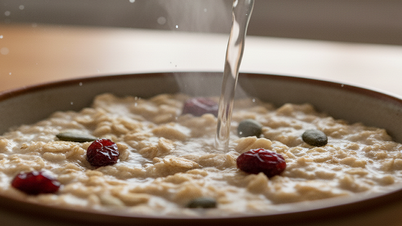
To limit excess calories and prevent weight gain, people should prioritize consuming complex carbohydrates, which contain both starch and fiber, such as oatmeal, sweet potatoes, brown rice, and fruits. Foods high in refined white starch should be limited.
Magnesium
Magnesium plays a crucial role in nerve and muscle function, protein synthesis, and ATP production—the molecule that provides energy for life processes. A magnesium deficiency can easily lead to muscle weakness, cramps, and reduced recovery after strenuous exercise.
Women should supplement their diet with approximately 310-320 mg of magnesium per day, while men need 400-420 mg per day. Foods rich in magnesium include pumpkin seeds, black beans, spinach, and bananas.
Omega-3 fatty acids
Omega-3 fatty acids, particularly DHA and EPA, can reduce muscle inflammation and stimulate muscle protein synthesis after exercise. During strenuous squats, muscle fibers in the thighs are damaged. In this case, omega-3s help shorten recovery time and reduce muscle soreness.
The recommended daily intake of omega-3s is 2,000–3,000 mg. Foods rich in omega-3s include salmon, sardines, chia seeds, and flaxseed oil.
Creatine
Creatine is one of the most extensively studied supplements. Numerous scientific studies suggest that creatine helps increase strength, endurance, and muscle size, particularly in large muscle groups like the thighs.
A meta-analysis published in the Journal of Strength and Conditioning Research suggests that creatine may help strength trainees gain 1-2 kg of lean muscle mass in 4-12 weeks by performing exercises like squats. The recommended dose for creatine supplementation is 3-5 grams per day, taken regularly after workouts, according to Medical News Today.
Source: https://thanhnien.vn/muon-bap-dui-nhanh-tang-co-can-nap-nhung-duong-chat-nao-185250720124122482.htm

![[Photo] Prime Minister Pham Minh Chinh holds a phone call with the CEO of Russia's Rosatom Corporation.](/_next/image?url=https%3A%2F%2Fvphoto.vietnam.vn%2Fthumb%2F1200x675%2Fvietnam%2Fresource%2FIMAGE%2F2025%2F12%2F11%2F1765464552365_dsc-5295-jpg.webp&w=3840&q=75)


![[Photo] Closing Ceremony of the 10th Session of the 15th National Assembly](/_next/image?url=https%3A%2F%2Fvphoto.vietnam.vn%2Fthumb%2F1200x675%2Fvietnam%2Fresource%2FIMAGE%2F2025%2F12%2F11%2F1765448959967_image-1437-jpg.webp&w=3840&q=75)














































![[OFFICIAL] MISA GROUP ANNOUNCES ITS PIONEERING BRAND POSITIONING IN BUILDING AGENTIC AI FOR BUSINESSES, HOUSEHOLDS, AND THE GOVERNMENT](https://vphoto.vietnam.vn/thumb/402x226/vietnam/resource/IMAGE/2025/12/11/1765444754256_agentic-ai_postfb-scaled.png)


















































Comment (0)