

Deputy Prime Minister Le Thanh Long signed Decision No. 247/QD-TTg dated February 6, 2025, promulgating the Plan for implementing Directive No. 21-CT/TW dated May 4, 2023, of the Central Party Secretariat on reforming, developing, and improving the quality of vocational education until 2030, with a vision to 2045.
The plan outlines 11 key tasks and solutions for innovating, developing, and improving the quality of vocational education by 2030, with a vision to 2045. Specifically:
1. Intensify propaganda and education to create a profound shift in awareness regarding the role, position, and importance of vocational education by 2030, with a vision to 2045:
Ministries, sectors, localities, and vocational education institutions should closely coordinate with Party organizations and Party committees at the same level to study, understand, and implement Directive 21-CT/TW; promote propaganda, education, and dissemination of laws on vocational education; innovate methods and forms, and improve the effectiveness of propaganda activities. Raising awareness and responsibility among cadres and Party members, especially leading and managing cadres, heads of agencies and organizations, and employers, regarding the innovation, development, and improvement of the quality of vocational education is a major and consistent policy of the Party and the State; building, forming, and developing a media ecosystem for vocational education; innovating and diversifying communication activities; creating dedicated pages, sections, channels, and radio and television broadcasts on vocational education; and developing a national communication program sharing exemplary models of innovation, creativity, and successful entrepreneurship in vocational education...
2. Improve the legal system, mechanisms, and policies for innovation and development of vocational education:
- Supplement and improve mechanisms and policies for recruiting, employing, rewarding, and honoring teachers, artisans, experts, and vocational instructors; attract and recruit state management officials in vocational education and management officials in vocational education institutions, focusing on developing a team of teachers and management officials in vocational education in particularly difficult areas, ethnic minority areas, border regions, and islands, while ensuring gender equality; have policies and open, flexible mechanisms to attract, train, and cultivate scientists , technical staff, artisans, and people with high vocational skills and practical professional experience to participate in vocational training.
Continue reviewing and improving mechanisms and policies to promote career guidance in high schools; channel students into vocational education after high school; implement a combination of vocational and general education at vocational education institutions; have policies to encourage academically strong students to enter the vocational education system; implement universal vocational training for young people; develop mechanisms and policies to attract learners in key fields, industries, and professions, as well as those that are arduous, hazardous, cultural, artistic, physical education, sports , and health-related fields.
3. Enhancing the effectiveness and efficiency of state management; evaluating and accrediting the quality of vocational education:
Strengthen inspection and supervision work, promptly detect and strictly handle organizations and individuals violating laws on vocational education; enhance the autonomy of vocational education institutions, strengthen inspection and supervision work, build a self-inspection and supervision mechanism for vocational education institutions; develop a system for evaluating and accrediting the quality of vocational education.
4. Review, reorganize, and restructure the vocational education system:
The restructuring and reorganization of the public vocational education system should ensure efficiency and effectiveness, guaranteeing appropriate scale, structure, and rationality in terms of fields, occupations, and training levels; standardization and modernization; quality stratification; and alignment with the labor market's workforce needs and the vocational education network plan.
The Ministry of Labour, Invalids and Social Affairs, in coordination with the Ministry of Interior and other relevant ministries and agencies, will streamline the state management apparatus towards greater efficiency and effectiveness; reorganize vocational education institutions under ministries and agencies to ensure efficiency and improve the quality of education; and select key industries and occupations, and schools designated for these key industries and occupations, in accordance with each period.
Establishing a system of high-quality vocational education institutions, including high-quality schools, schools functioning as regional centers, and national centers for high-quality vocational training and practice, adapted to each period, serving as a core, leading, and disseminating information, implementing regional linkages, and organizing the training of high-quality human resources, new professions, new skills, and future skills; organizing training and replicating training programs transferred from developed countries.
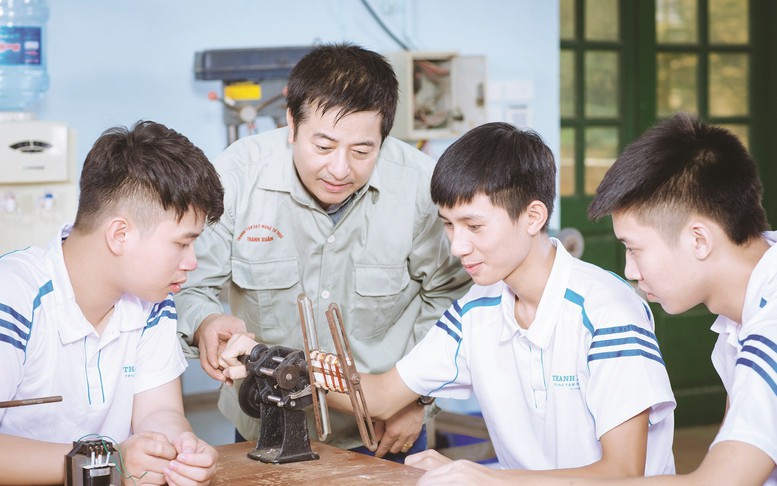
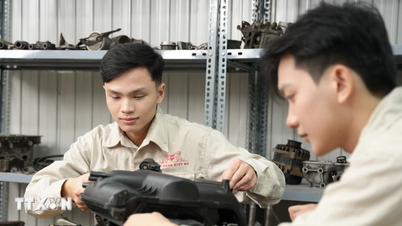
Illustrative image
5. Accelerate the roadmap for vocational training for young people, workers, farmers, and laborers:
Research and propose the issuance and amendment of policies on vocational training support for various target groups; implement policies to support vocational training through Vocational Training Cards for workers; regulate professional standards and conditions to ensure the effective implementation of vocational training activities in enterprises; diversify training types, focusing on retraining and continuous training for the workforce, especially for new professions and skills, in order to create a transformation in building a learning society; encourage and provide incentives for the development of private and foreign-invested vocational education institutions...
6. Innovate the content, curriculum, training methods, and training management organization:
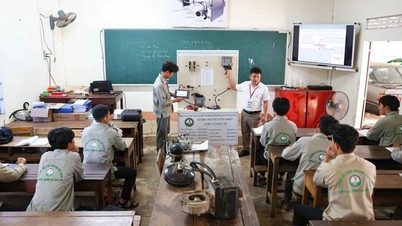
Developing, standardizing, and promptly updating vocational education standards to align with those of developed countries in the ASEAN region and the world; modernizing the facilities and training equipment of vocational education institutions to match the production technology of enterprises, orienting towards quality stratification and the specific characteristics of training industries and occupations; strengthening ties with enterprises to exploit and utilize training equipment in enterprises to ensure "learning goes hand in hand with practice"; developing "smart, modern school" and "green school" models; investing in upgrading laboratories, virtual workshops, virtual equipment, and enhancement equipment in relevant industries and occupations; innovating training content and programs towards an open, flexible, and interconnected approach based on modules and credits, meeting output standards...
7. Developing a team of teachers, experts, vocational instructors, and administrators in vocational education:
Organize and arrange the system of teacher training and professional development facilities in a rationally distributed manner across regions, meeting the needs of teacher development; innovate, improve the quality, and diversify training and professional development programs and methods; provide training and professional development for teachers to teach key industries and professions at the ASEAN and international levels abroad. Recognize the skills and qualifications of professionals from other industries who transition to teaching and lecturing; strongly develop a team of artisans, experts, and vocational instructors with sufficient capacity to participate in training at all levels of vocational education; effectively implement communities and networks connecting teachers, artisans, experts, and vocational instructors in vocational education; enhance foreign language proficiency, technology application skills, and innovation capabilities, creating superior qualities and abilities for teachers, management staff at all levels, and students in high-quality training programs...
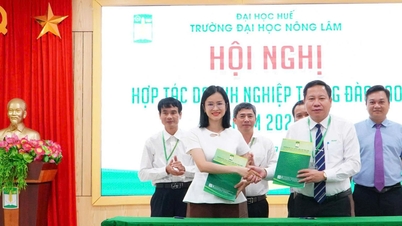
8. Enhancing the effectiveness of linkages and cooperation in vocational education between the State, schools, and businesses:
Develop models that link vocational education with businesses, cooperatives, production and business establishments, and the labor market in each region and locality, tailored to each target group, with a focus on specific groups, workers from the informal sector, and unemployed or at risk of unemployment.
Strengthening the connection between vocational education institutions and employment service centers, job exchanges, job fairs, and innovation and entrepreneurship centers; supporting students in finding employment after graduation; linking training with sending workers abroad under contract. Focusing on removing difficulties and obstacles in connecting vocational education with businesses; piloting training models at businesses and in industrial parks to ensure suitability to the characteristics, nature, and production and business conditions of enterprises, especially FDI enterprises, and the model of vocational skills councils at all levels...
9. Strengthening resources and improving the effectiveness of investment in vocational education:
Prioritize allocating state budget expenditures to vocational education within the total state budget expenditure for education, training, and vocational training, commensurate with the position and role of vocational education, especially for training high-quality human resources and key, cutting-edge industries and professions; promote socialization and public-private partnerships to mobilize and effectively utilize various resources for the development of vocational education, especially in sectors, fields, and geographical areas where the non-public sector can participate. Diversify investment resources for vocational education, encourage private sector participation; ensure equal policies for public and non-public vocational education institutions; prioritize comprehensive investment in high-quality vocational education institutions, especially those performing regional and national training and practice functions; specialized vocational education institutions; and vocational education institutions in particularly difficult areas, ethnic minority regions, border areas, and islands. Key industries and high-tech occupations; "green" occupations; new training fields and future skills; specialized training fields...
10. Proactively and effectively enhance international integration in vocational education:
Expand and enhance the effectiveness of comprehensive cooperation between Vietnam and other countries and international organizations in the field of vocational education; promote negotiations, signing, and implementation of agreements and cooperation programs with international partners and foreign-invested enterprises operating in Vietnam to support vocational education institutions and students in improving their professional skills.
Establishing a network of international experts in the field of vocational education; strengthening cooperation between Vietnamese vocational education institutions and foreign vocational education institutions, especially in receiving and transferring programs, curricula, learning materials, teaching and learning methods; exchanging teachers, lecturers, students, and international experts...
11. Scientific research, technological application and innovation; career guidance, innovative entrepreneurship:
Enhance the capacity of management staff and teachers in scientific research, career counseling, and entrepreneurship; establish innovation and entrepreneurship centers at high-quality vocational education institutions.
Strengthening scientific research, updating and applying new technologies in vocational education in a way that focuses on application and technology transfer with the participation of learners, teachers, experts, artisans, and employers; linking training activities with technology transfer and commercialization of scientific research results and technology transfer; promoting the implementation of scientific research through commissioned projects; and connecting scientific research organizations with schools and businesses.
Promoting entrepreneurship and innovation among learners and supporting activities to help learners start businesses and create their own jobs; building entrepreneurial and innovative spaces in vocational education institutions and vocational education entrepreneurship ecosystems in various regions...
Source: https://phunuvietnam.vn/11-nhiem-vu-giai-phap-trong-tam-de-doi-moi-phat-trien-va-nang-cao-chat-luong-giao-duc-nghe-nghiep-20250207210040648.htm
![[Photo] Ba Lang An Lighthouse - the "eye of the sea" amidst the "rock museum" of Quang Ngai province.](https://vphoto.vietnam.vn/thumb/1200x675/vietnam/resource/IMAGE/2026/05/29/1780038698840_anh-man-hinh-2026-05-29-luc-14-10-42.png)

![[Image] Pleasant weather helps students enter the 10th grade entrance exam with confidence.](https://vphoto.vietnam.vn/thumb/1200x675/vietnam/resource/IMAGE/2026/05/29/1780034401612_ngay-1-thi-lop-10-minh-duy-8-5009-jpg.webp)






















![[Photo] Admire the coral "masterpiece" amidst the million-year-old heritage of Dak Lak province.](https://vphoto.vietnam.vn/thumb/1200x675/vietnam/resource/IMAGE/2026/05/30/1780107638639_y25-jpg.webp)



























































Comment (0)