

Retail gasoline prices should be determined by the market, with the State only monitoring quality, according to the Vietnam Center for Economic and Strategic Studies (VESS).
In a research report titled "Key Characteristics of the Petroleum Market and its Impact on Household Welfare," published today by VESS, it is revealed that the method of calculating the base price has many weaknesses, causing petroleum products to not accurately reflect reality and to fail to keep pace with changes in the international market.
Mr. Nguyen Duc Thanh, Director of VESS, commented that over 80% of the petroleum market share belongs to large enterprises, indicating a very high degree of monopoly in this market.
"Controlling and regulating gasoline and diesel prices aims to help the government ensure energy security, but it leads to retail businesses incurring losses, closing down, or withdrawing from the market because profits are insufficient to cover business costs," he said.
The current method of calculating gasoline and diesel prices, which is not in line with market conditions, was also raised by the Economic Committee in May during its review of the Government's supplementary report on socio-economic development in 2022 and the first months of 2023. According to the committee, the method of calculating retail gasoline and diesel prices is not in line with market fluctuations, lacks competitiveness, and does not adequately cover the business costs of retail enterprises.
To increase competitiveness, Mr. Nguyen Duc Thanh suggested that the market should determine gasoline and diesel prices, with the State only supervising the quality of the product, or that a gasoline and diesel trading exchange should be established to address the pricing issue.
"The base price of petroleum products needs to be calculated accurately and comprehensively, ensuring a harmonious balance of interests between consumers and businesses," the VESS Director stated.
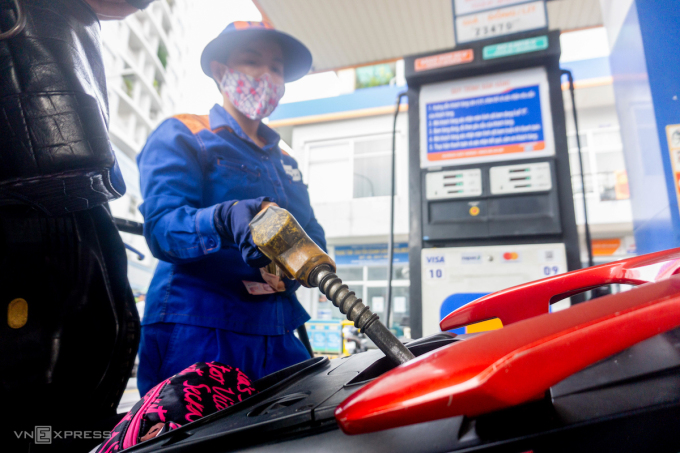
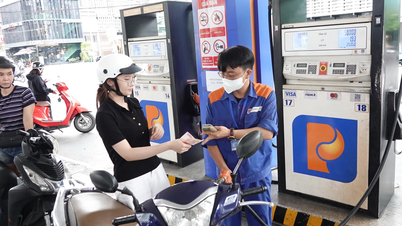
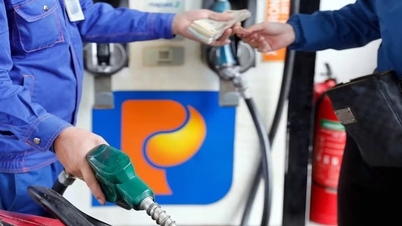
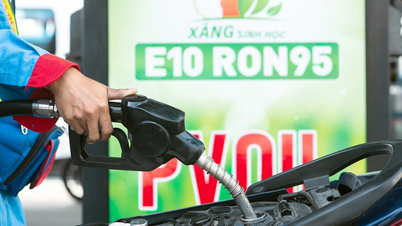
A gas station attendant on Phan Xich Long Street (Phu Nhuan District, Ho Chi Minh City) pumps fuel for a customer, November 2022. Photo: Thanh Loc
Mr. Bui Ngoc Bao, Chairman of the Vietnam Petroleum Association (VINPA), agrees and believes that retail gasoline prices should be determined by the market. According to him, this is a price-stabilized commodity, as stipulated by the Price Law. That is, when the market fluctuates and negatively impacts the economy, the government will intervene with stabilization tools and measures. Otherwise, under normal conditions, prices should be left to the market.
Moreover, domestic prices are heavily influenced by global prices, even though 70% of the supply comes from two domestic refineries. "Because the input materials for these two refineries are also priced according to world prices," Mr. Bao said.
Meanwhile, Mr. Nguyen Van Phung, former Director of the Department of Large Enterprise Tax Management, expressed a contrasting view. According to him, gasoline and diesel are essential goods, and their business is subject to conditions, so the State should control prices and not leave them entirely to market forces.
Gasoline and diesel are essential commodities for consumers. Therefore, taxes on these products directly affect the lives and spending of households. Currently, each liter of gasoline and diesel sold is subject to various taxes, such as value-added tax (10%), import tax (10%), special consumption tax (8%-10%), and environmental protection tax (2,000 VND per liter for gasoline, 1,000 VND for diesel, and 600 VND per liter for kerosene).
However, VESS research points out a difference in Vietnam's approach to fuel taxation compared to some countries in the region and the world. Specifically, the method of calculating taxes based on percentages (import tax, special consumption tax, VAT) can make budget revenue vulnerable to sudden drops or sharp increases in world prices.
Furthermore, the weighted average tax calculation method is indirectly reducing the diversity of import markets, as businesses tend to concentrate their purchases from countries that have signed FTA agreements, such as South Korea, Singapore, and Malaysia. This is done in order to benefit from lower import taxes than the average tax rate.
"Vietnam is one of the few countries that mostly uses relatively small taxes to apply to gasoline and diesel. And it is also one of the rare countries that directly applies both excise tax and environmental protection tax on this commodity simultaneously," Mr. Thanh assessed.
In addition, retail gasoline prices in Vietnam are relatively low compared to many countries around the world, but compared to per capita income, they are higher than some developed countries or those with similar conditions, such as Indonesia, Malaysia, Russia, and the United States.
Therefore, VESS argues that only one of the two types of excise tax or environmental protection tax should be applied in the structure of calculating the base price of gasoline and diesel. For example, a tax of 2,000 VND per liter could be applied, adjusted according to specific situations, and a ceiling could be set (3,000 VND per liter) if a relative tax were applied.
"The government needs to create a market that allows gasoline prices to be at a reasonable level relative to people's incomes, especially those of poor households, in order to positively impact the welfare of families," the VESS Director concluded.
Source link
![[Photo] Ba Lang An Lighthouse - the "eye of the sea" amidst the "rock museum" of Quang Ngai province.](https://vphoto.vietnam.vn/thumb/1200x675/vietnam/resource/IMAGE/2026/05/29/1780038698840_anh-man-hinh-2026-05-29-luc-14-10-42.png)



![[Image] Pleasant weather helps students enter the 10th grade entrance exam with confidence.](https://vphoto.vietnam.vn/thumb/1200x675/vietnam/resource/IMAGE/2026/05/29/1780034401612_ngay-1-thi-lop-10-minh-duy-8-5009-jpg.webp)

































































































Comment (0)