

(To Quoc) - Although traditional markets have changed compared to the past, there are still markets in the suburbs that have preserved many beautiful cultural features. However, in the face of urbanization, how to preserve these traditional markets is a concern for many people.
Traditional markets will not disappear from social life.
With the development of social media and technology, the conveniences of the digital age and the internet have created enormous marketplaces, blurring all spatial boundaries and increasing the number of online sellers. Some people, even those with stable jobs, find it easy to become online sellers on social media platforms to supplement their income and gain experience. However, despite the increase in the number of sellers, the number of sellers in traditional markets has not increased, and may even be decreasing. To invest in selling in a traditional market, sellers need capital to pay for space, goods, and selling time… In online marketplaces, these conditions are much more flexible. Sellers only need an account on the social media platform and accept the platform's regulations. They don't even need a large amount of capital or a long selling presence. So, with these undeniable benefits, could this lead to concerns that one day, traditional markets will shrink and potentially "disappear" from our lives?
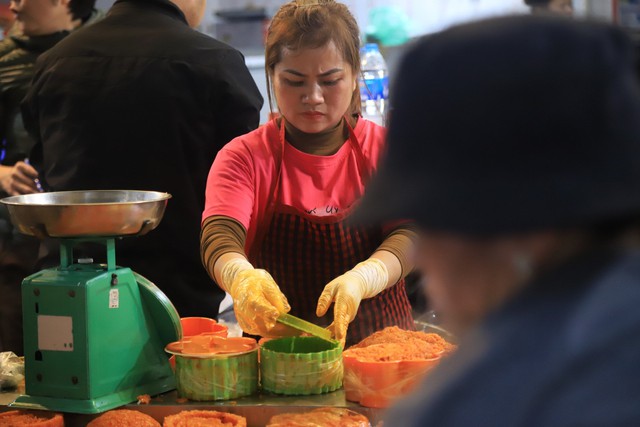
The answer is probably no. Traditional markets, while they may have changed to adapt to the modern life of a city like Hanoi , will certainly not disappear. This is because of the needs and habits of consumers. Consumers still need to go to the market to buy small, miscellaneous items or essential goods. Furthermore, the habit of needing to verify the authenticity of goods by seeing and touching them directly, and the importance of trustworthiness, clearly demonstrates the advantages of traditional markets.
Moreover, in Hanoi, many markets are not only places for buying and selling goods but also tourist attractions, places to create memories and take photos. Examples include the Mid-Autumn Festival market, the Tet flower market, and the weekly markets. People go to these markets without rushing, often dressed nicely for photos and to enjoy the scenery. For these markets, the concept of "going to the market" is broadened considerably and is not limited to buying and selling. Going to the market doesn't necessarily mean buying material goods; it's a way to enrich one's spiritual life, fostering affection and attachment to the market itself, its scenery, and its people.
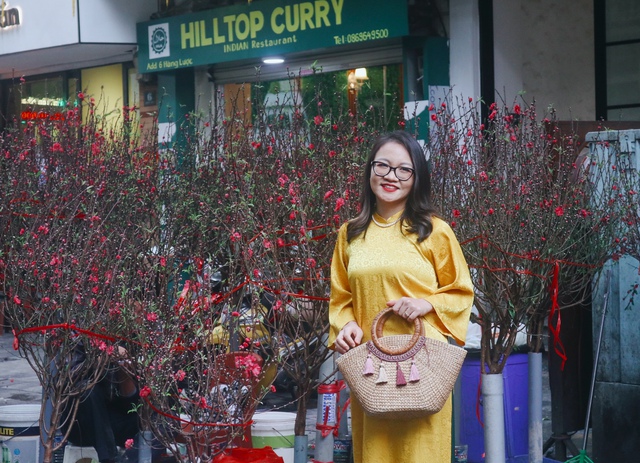
In the outskirts of Hanoi, many traditional markets are still maintained, and each person finds their own unique charm and beauty. Mr. Quang (50 years old, from Hai Boi, Dong Anh, Hanoi) shared that his house is near traditional markets such as Boi Market, Xa Market, and Dau Market… Although he doesn't always go to the market because he's running out of things or needs to buy something, he visits these markets quite frequently. The reason is that going to the market is a habit, a way to relax his mind. At the market, he gets to admire the colorful goods on display and the bustling crowds, which makes him happy. Traditional markets are also very interesting; there are items you can only find at these markets, items not available at regular markets. There are also items that seemed "extinct" but then suddenly reappeared at a traditional market. At that moment, he feels both joy and a sense of nostalgia, as if reliving old memories.
Hopefully the market fair will always be maintained.
Ms. Huong (40 years old, from Gia Lam) shared that going to the weekly market allows her to buy more and at cheaper prices compared to regular markets. Besides, going to the market brings back childhood memories of going with her mother to sell goods. If she sold everything, her mother would always buy her treats. Especially during the Tet holiday, going to the market with her mother to buy many things for Tet, along with a few toys or cheap candies, was a joy that stayed with her throughout her childhood. Even now, although her children have a more comfortable life than she did in the past, she still takes them to the market every Tet so they can experience the atmosphere of the Tet market and buy a few items that are only available there. And whether then or now, children are always happy and excited to buy gifts at the market. She also wants these beautiful images to become meaningful memories for her children in the future.
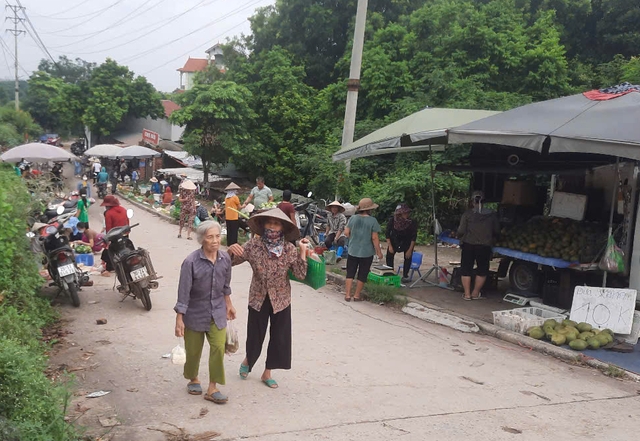
However, many people remain concerned about the decline of market culture, especially in the suburban districts of Hanoi, which are experiencing rapid urbanization and are poised to become urban districts in the future. The proliferation of construction projects will significantly reduce the area available for farming and market space. Without land for cultivation and livestock, people will lack the traditional goods found at traditional markets. Furthermore, urbanization will force people to seek other jobs, leading to busier schedules and diminishing the importance of traditional markets. Many traditional markets may be redeveloped into shopping malls or have their operating methods altered. Suburban markets risk shrinking, shrinking, or even disappearing. While everyone hopes for the development of their hometown, economic growth, and a wider variety of goods to meet people's needs, with the rise of online markets and the expansion of e-commerce platforms, traditional markets face the risk of shrinking or disappearing. This is a story similar to how village gates and sloping brick paths disappeared when urbanization arrived. Therefore, the challenge of simultaneously urbanizing and preserving the beauty of traditional markets is a matter of concern for many.
"I also have concerns if one day urbanization leads to the disappearance of traditional markets," shared Quang, expressing his worry that future markets in the suburbs might be just like those in the city center.
"It would be a shame if the traditional market were just a memory," Ms. Huong said sadly. But she also hoped: "I hope the leaders and local people will find a reasonable solution to preserve the traditional market if urbanization ever happens."
Source: https://toquoc.vn/nguoi-ha-noi-va-van-hoa-cho-bai-3-de-cho-la-noi-luu-giu-ky-uc-va-hinh-anh-dep-20241124102226727.htm















































































Comment (0)