

Inaugurated in 1900, the Grand Theatre (designed by French architect Eugène Ferret) was named the Opera House to serve the French. In 1918, the Opera House opened its doors to the Vietnamese as well. After 1954, under the Republic of Vietnam regime, the theatre was converted into the National Assembly building, then the Lower House. After 1975, the theatre returned to being a venue for performing arts.
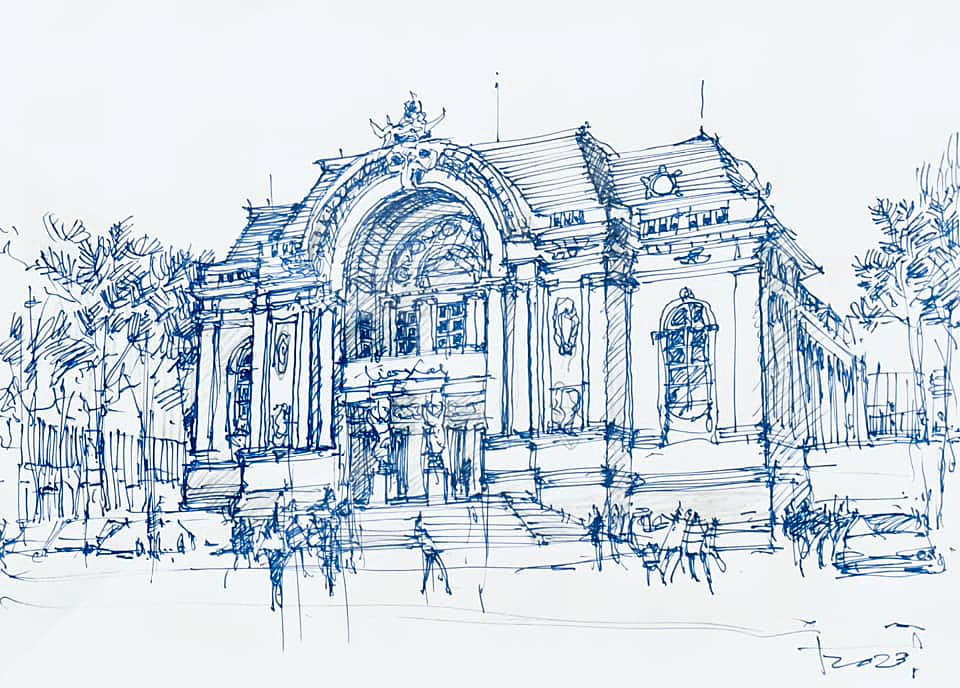
Sketch by architect Tran Xuan Hong
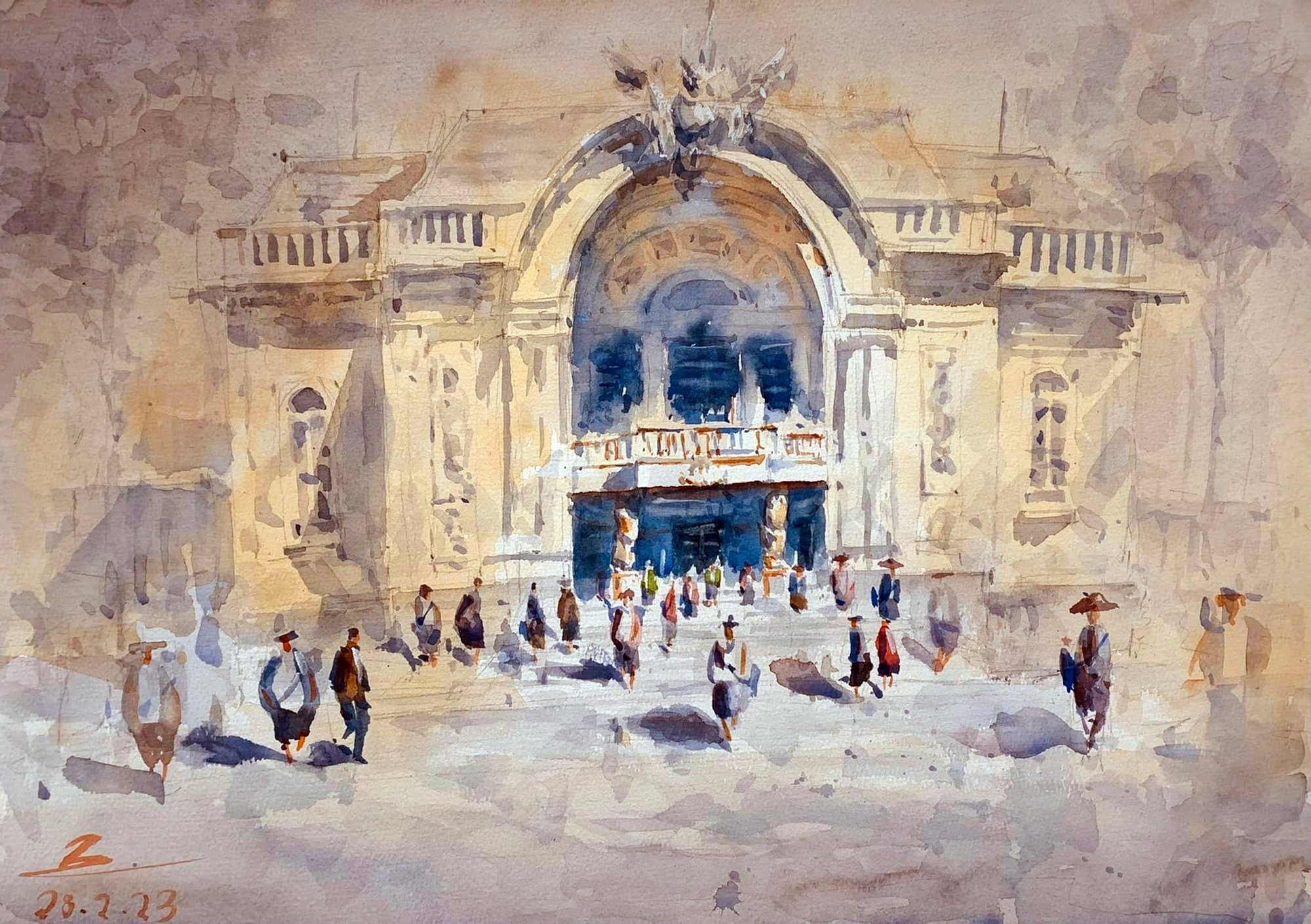
Sketches by artist Nguyen Tan Nhat
According to historian Tim Doling, the architecture of the Opera House is in the Beaux-Arts style (*) and is a copy of the Petit Palais in Paris (which won the Rome Prize in 1880 and later became an art museum).
With its dominant decorative art of relief sculpture, the main hall's arch features a fresco of five goddesses: France (in the center), flanked by Printemps (Spring), Ete (Summer), Automne (Autumn), and Hiver (Winter), similar to the four seasons paintings of the artist Alphonse Mucha (1860-1939), typical of the Art Nouveau movement (inspired by the curves of plants but not reproducing objects in 3D, instead drawing them as decorative lines in a flat, 2D style).
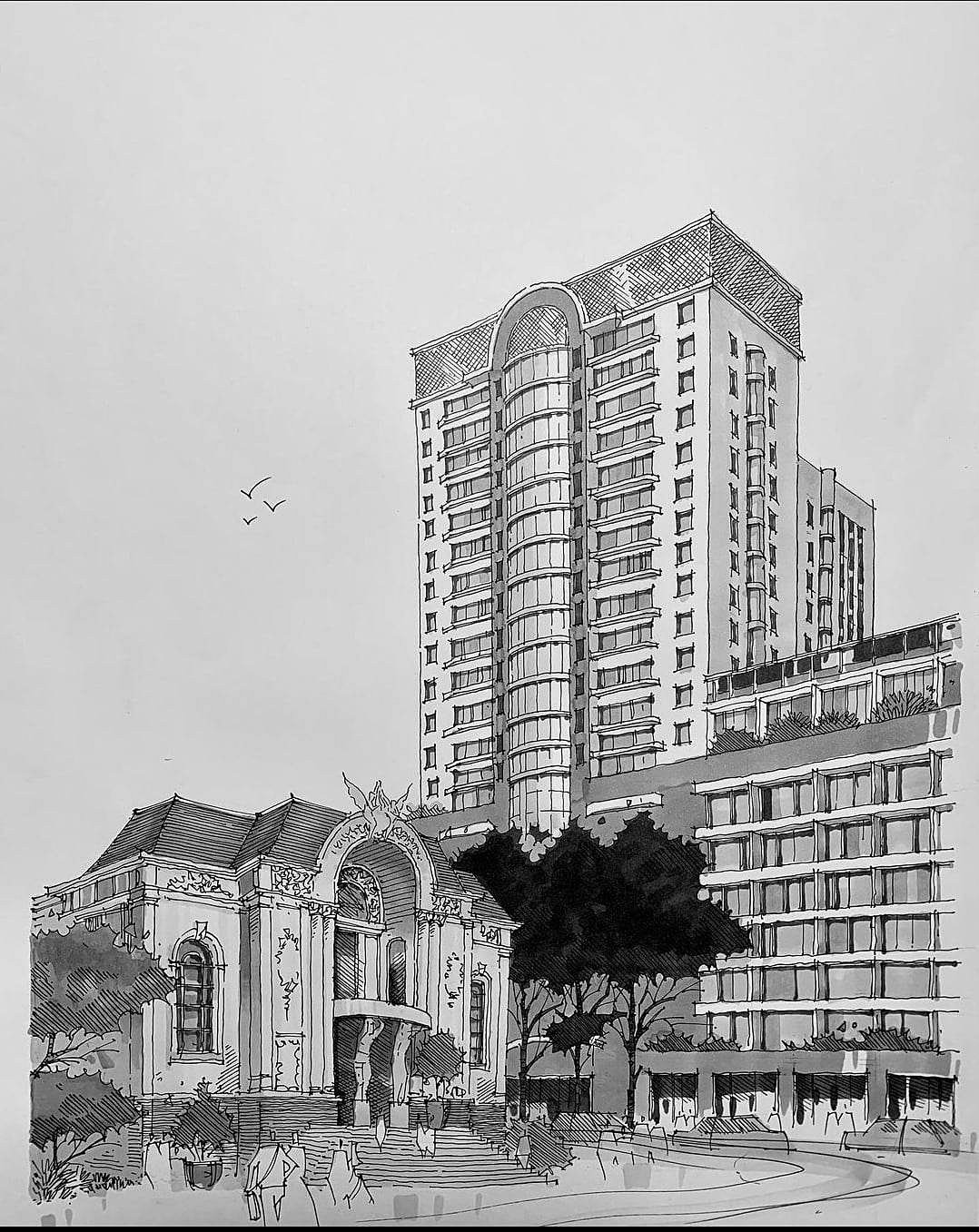
Sketch by architect Tran Vo Lam Dien
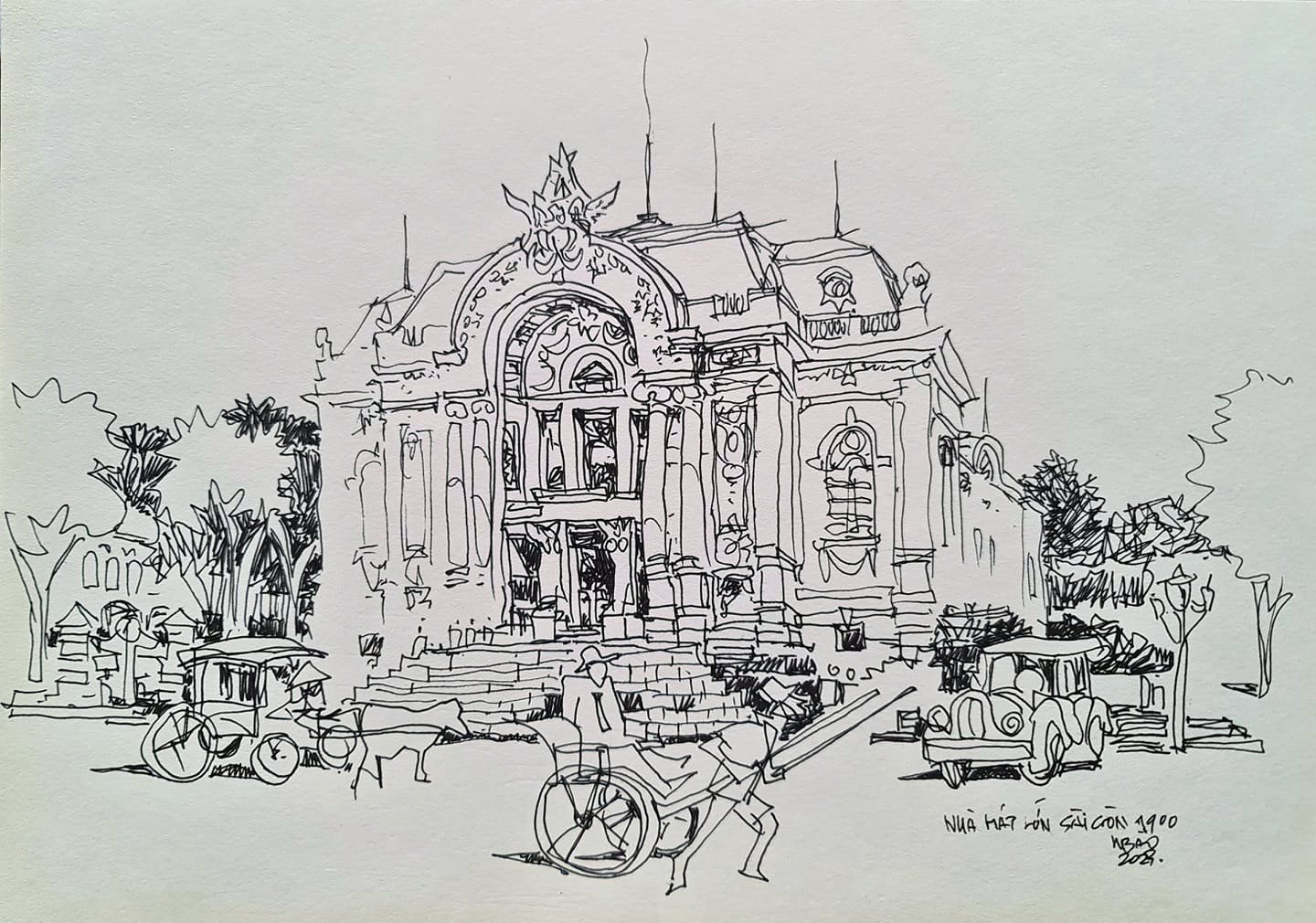
Sketch by architect Bui Hoang Bao
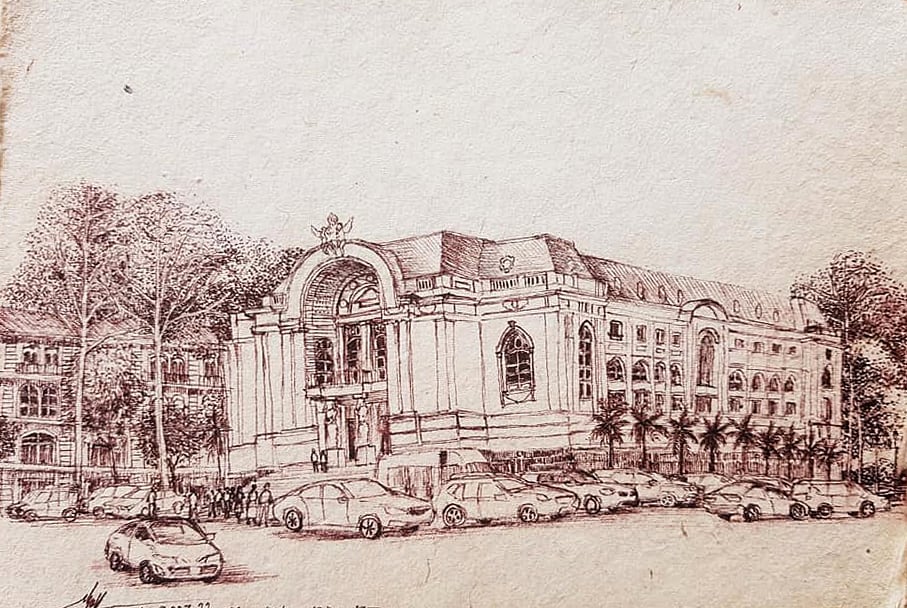
Sketch by architect Nguyen Van Thien Quan
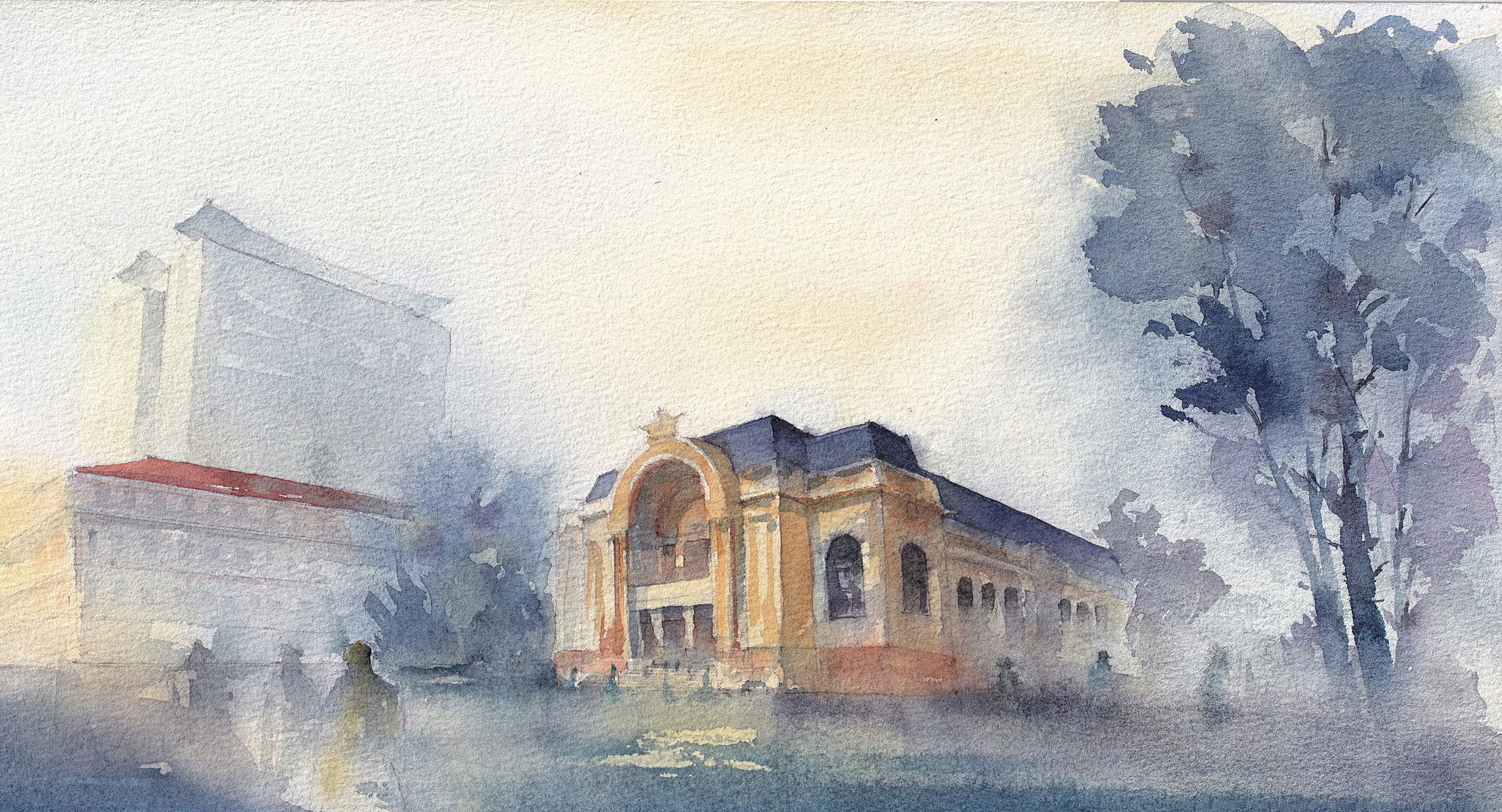
Sketch by architect Pham Minh Duc
The top of the theater features statues of two angels, with a lyre, a characteristic instrument of Greek mythology, in between. Slightly below is the head of a statue of Pan, the god of country music .
Currently, the underground station of the Ben Thanh - Suoi Tien metro line is located beneath the theater.
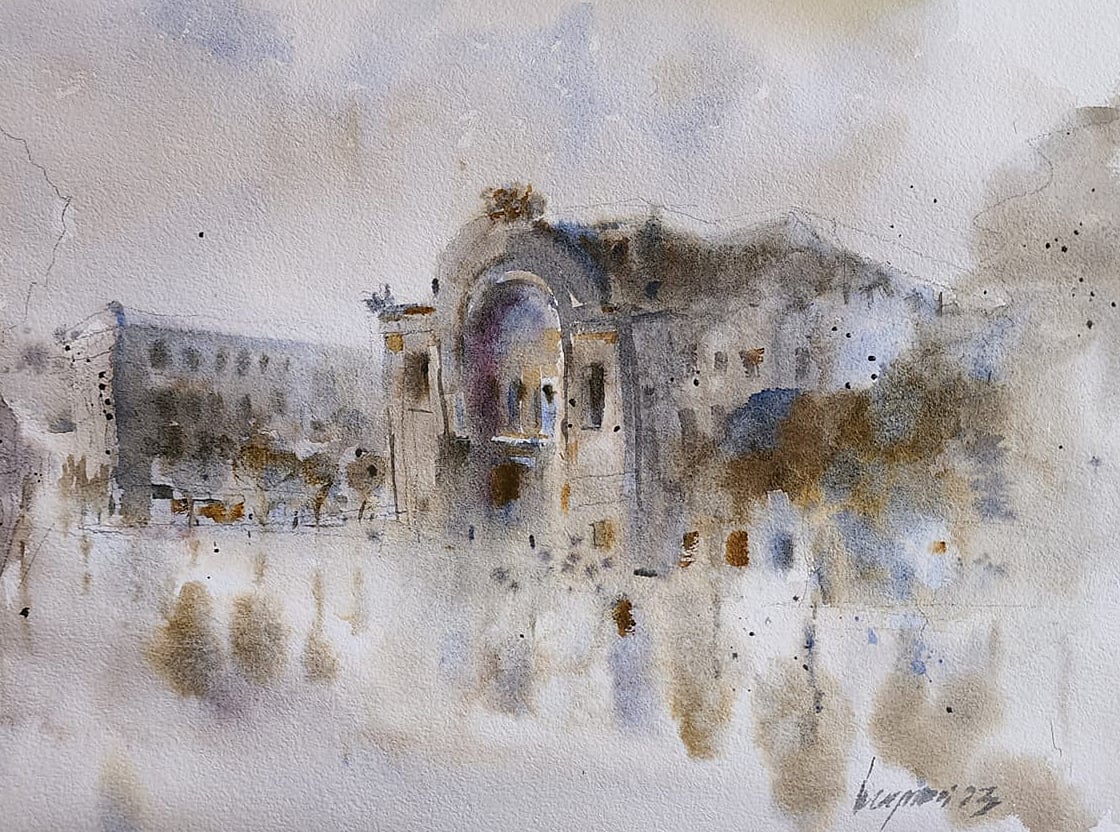
Sketch by architect Phung The Huy
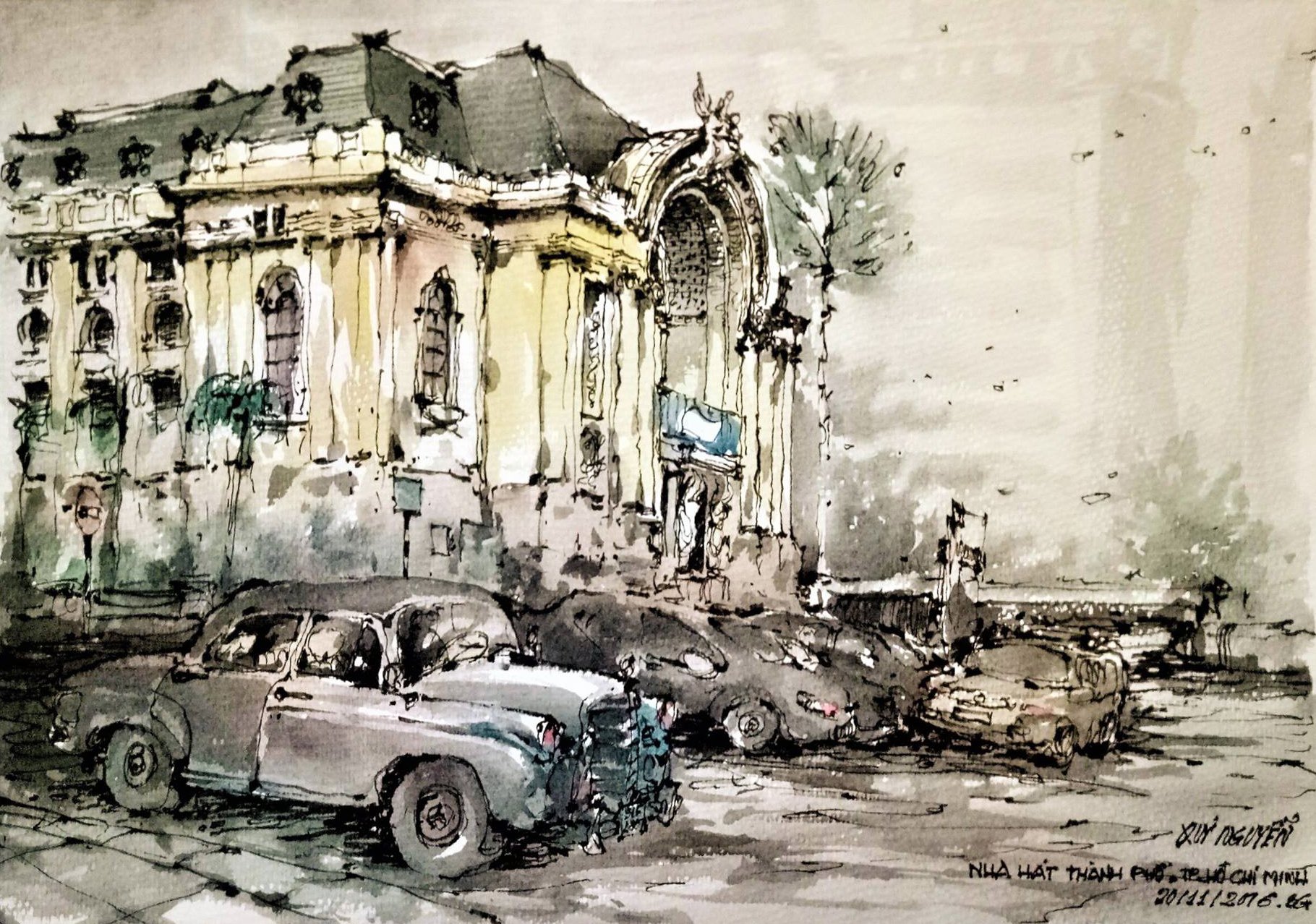
Sketch by architect Quy Nguyen
(*) The defining characteristic of the Beaux-Arts style is "symmetry - proportion - balance," with three main elements being "columns - arches - rounded roofs."
Source link
![[Photo] Prime Minister Pham Minh Chinh receives the Chinese Ambassador to Vietnam](https://vphoto.vietnam.vn/thumb/1200x675/vietnam/resource/IMAGE/2026/04/05/1775397481797_ndo_br_dsc-5512-jpg.webp)



















































Comment (0)