

There is a need for a radical shift in housing development thinking, with rental housing becoming a strategic, long-term segment, especially in localities with large migrant workforces.
On the afternoon of June 1st, in Hai Phong, Prime Minister Le Minh Hung held a working session with Hai Phong City and the provinces of Quang Ninh, Bac Ninh , Ninh Binh, and Hung Yen to implement the directives of General Secretary and President To Lam regarding the development of rental housing.
The supply of rental housing is limited.
At the meeting, delegates focused on assessing the actual demand for rental housing in each locality according to different segments and target groups; clarifying the gap between current demand and supply capacity; and identifying the causes and bottlenecks in mechanisms, policies, and implementation.
Based on the practical experience of developing rental housing in various localities, especially the experience of Hai Phong , delegates discussed models and approaches suitable to the specific characteristics of each locality; identified solutions regarding procedures and mechanisms for mobilizing resources. At the same time, they clarified the roles of the National Housing Fund, local housing funds, and preferential credit instruments; and proposed contents to be included in amendments and additions to relevant laws to create a synchronized and stable legal framework...
Concluding the meeting, Prime Minister Le Minh Hung emphasized that developing rental housing is a major policy clearly defined by the Party and the State. Therefore, ministries, sectors, and localities must have a unified understanding, considering this a crucial, urgent, and long-term political task. The Prime Minister stressed that this is not just a matter of housing but also a matter of social welfare, human resource quality, competitiveness, investment attraction, and sustainable development of localities in the Northern key economic region.

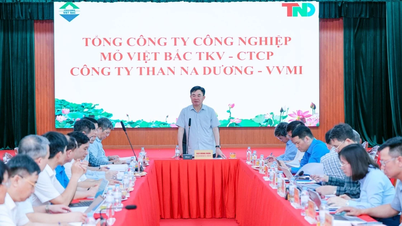
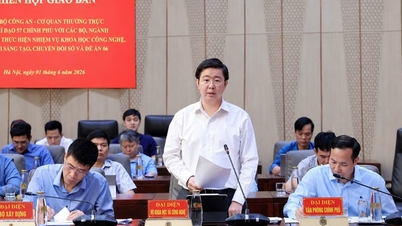
Prime Minister Le Minh Hung works with leaders of Hai Phong City and the provinces of Quang Ninh, Bac Ninh, Ninh Binh, and Hung Yen on social housing and rental housing. Photo: VNA.
The Prime Minister highly appreciated Hai Phong's pioneering role in consolidating the local housing fund and achieving many outstanding results in social housing development; he also acknowledged the proactive efforts of Quang Ninh, Bac Ninh, Ninh Binh, and Hung Yen in researching and preparing the conditions for implementing the policy of developing rental housing.
However, the Prime Minister assessed that the current supply of rental housing is still very limited compared to actual needs. The majority of workers and laborers are still renting informal accommodations with limited living conditions, fire safety, and social infrastructure. Meanwhile, many public housing assets have not been effectively utilized; the financial and credit incentives are not attractive enough to encourage businesses to invest in rental housing development; and the operation of local housing funds is slow and inconsistent.
Each locality will start construction on at least one project in June.
Emphasizing the need for a radical shift in housing development thinking, the Prime Minister stated that while previously the focus was primarily on developing housing for sale, now it is necessary to develop both commercial and rental housing simultaneously. Rental housing, in particular, must become a strategic, long-term segment, especially in localities with many industrial zones, economic zones, and large migrant workforces.
The head of government affirmed that the State does not subsidize housing but also cannot completely leave it to the market to regulate itself. The State plays a facilitating role through planning, institutions, policies, and financial tools to guide the market towards healthy development. In this, businesses are given the opportunity to participate in investment with reasonable profits, while people have access to stable, long-term, and safe housing. Furthermore, the development of rental housing must be closely linked to the planning of industrial zones, economic zones, transportation corridors, and population management.
The Prime Minister noted that localities should not have a mindset of waiting or expecting guidance from higher levels. For issues within their jurisdiction, they must proactively make decisions and organize implementation, while for issues within the jurisdiction of ministries and agencies, they must receive timely guidance and solutions.
Local authorities are urged to promptly review and adjust the planning for rental housing development in their areas; specifically identify the location and scale of rental housing areas associated with key industrial zones and strategic development regions. They should assess rental housing needs for each industrial zone and target group, and develop a rental housing development plan with specific goals, targets, priority project lists, investment resources, and a clear implementation roadmap; this should be completed by June 2026.
The Government leaders requested that each locality strive to start construction on at least one rental housing project in June 2026 and continue to implement large-scale projects in the third or fourth quarter of 2026. Based on practical implementation, specific mechanisms and policies for developing rental housing should be proposed; these should be submitted to the Ministry of Construction for compilation and reporting to the Prime Minister, and further incorporated into the amended Housing Law and the amended Real Estate Business Law; completion by July 2026.
The Ministry of Construction, in coordination with five localities, will create a map of rental housing demand by segment, especially housing for industrial zone workers, as a basis for planning and resource allocation; this will be completed by July 2026. The Ministry of Finance will study preferential mechanisms regarding finance, taxes, and capital to create sufficient incentives to attract businesses, investment funds, and long-term capital to participate in the development of rental housing. The State Bank of Vietnam will study preferential credit policies and interest rates suitable for projects with long-term payback periods.
Hai Phong must take the lead in innovating its growth model.
Later that afternoon, Inspection and Supervision Team No. 4 of the Politburo and the Secretariat, led by Politburo member and Prime Minister Le Minh Hung, chaired a meeting to approve the draft report on the results of the inspection and supervision (second phase) of the Standing Committee of the Hai Phong City Party Committee.
The Prime Minister assessed Hai Phong as one of the localities with many new and creative approaches in organizing and implementing the two-tiered local government system. The city has proactively applied technology in management, supervision, and operation; developed software to track work progress; and promoted administrative procedure reform.
According to the Prime Minister, practical experiences from Hai Phong need to be thoroughly summarized and evaluated in order to be replicated; effective models and mechanisms need to be studied and institutionalized to create a unified legal basis for other localities to implement.
The head of government requested Hai Phong to conduct a more in-depth assessment of the quality of growth, especially the structure of budget revenue sources and the sustainability of those sources. The city needs to proactively research and propose new growth models, taking the lead in innovating growth models based on science and technology, innovation, and digital transformation.
Source: https://nld.com.vn/nha-o-cho-thue-thanh-phan-khuc-chien-luoc-196260601214904811.htm





























































































Comment (0)