

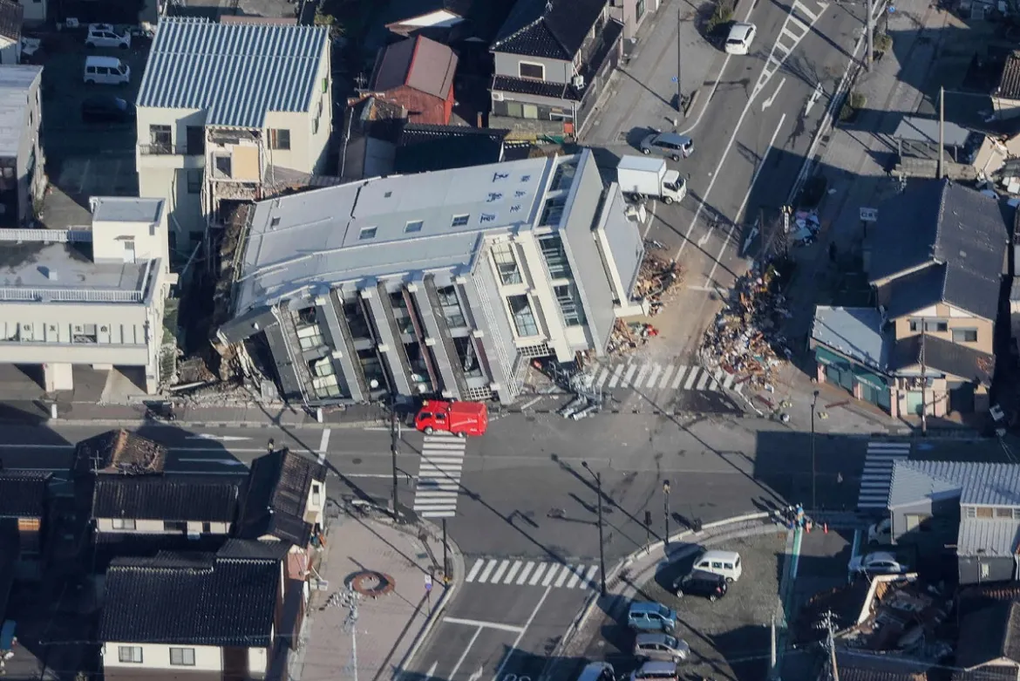
A building tilts after the earthquake in Ishikawa on January 1 (Photo: AFP).
According to NHK, among the more than 1,200 aftershocks that struck the Noto Peninsula last week, at least one measured 7 magnitude.
The Japan Meteorological Agency had previously warned that strong aftershocks could occur in the week following the earthquake.
On the afternoon of January 1st, a 7.6 magnitude earthquake struck Ishikawa Prefecture, affecting several prefectures in central Japan. This was the strongest earthquake to hit the Noto Peninsula since data collection began in 1885.
As of this morning, the death toll from the earthquake has risen to 161, while more than 100 people remain missing. Some sources even claim that the number of missing people could exceed 300.
The earthquake and aftershocks caused many houses to collapse, leaving tens of thousands of people without electricity.
Rescue efforts were hampered by destroyed roads and harsh weather. In Suzu and Wajima, the two hardest-hit cities, snowfall reached up to 20cm, and temperatures ranged from 0-4 degrees Celsius.
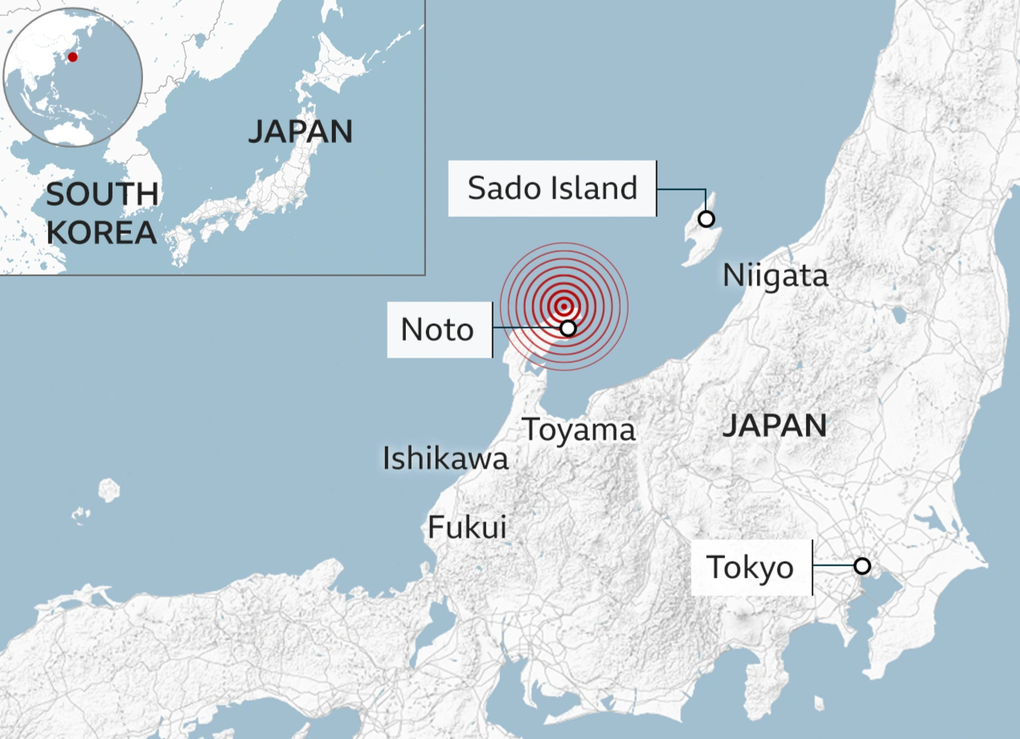
An earthquake occurred in Ishikawa, Japan (Photo: BBC).
Source

![[Video] Sunset at Lap An Lagoon – Where the sun sets over the fishing nets](https://vphoto.vietnam.vn/thumb/1200x675/vietnam/resource/IMAGE/2026/05/31/1780192137701_beach-landscape-sea-water-nature-grass-745871-pxhere-com.jpeg)
















![[Video] Sunset at Lap An Lagoon – Where the sun sets over the fishing nets](https://vphoto.vietnam.vn/thumb/800x450/vietnam/resource/IMAGE/2026/05/31/1780192137701_beach-landscape-sea-water-nature-grass-745871-pxhere-com.jpeg)












































![[Video] Sunset at Lap An Lagoon – Where the sun sets over the fishing nets](https://vphoto.vietnam.vn/thumb/402x226/vietnam/resource/IMAGE/2026/05/31/1780192137701_beach-landscape-sea-water-nature-grass-745871-pxhere-com.jpeg)
































Comment (0)