

Weak purchasing power, falling input costs, and the fact that many goods, especially food, are currently seeing price drops of tens of percent compared to the same period last year.
Ms. Oanh, the team leader of a shoe and sandal sewing line in Tan Binh district (Ho Chi Minh City), said that recently she feels less stressed when going to the market to buy food every morning. "Eggs, meat, and vegetables are currently down 10-30% compared to the same period last year, and some items are even down 50%," she said.
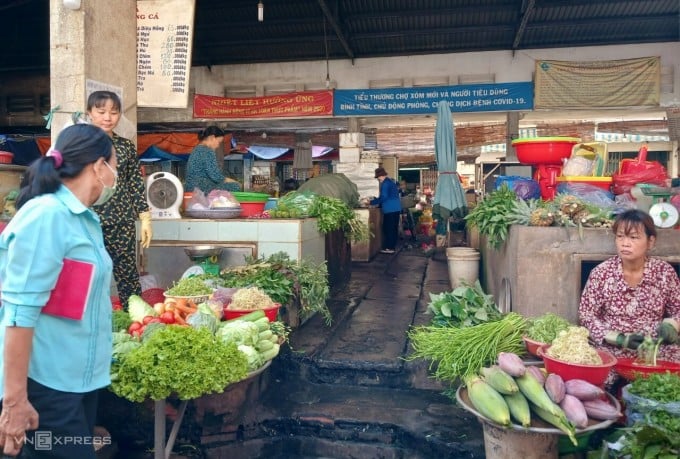
Vegetable stalls at Xom Moi Market (Go Vap). Photo: Thi Ha
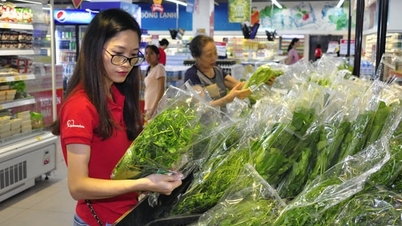
Observations at traditional markets and modern supermarket chains also show that leafy green vegetables have experienced the sharpest price drop. Specifically, vegetables such as lettuce, watercress, and mustard greens range from 25,000 to 35,000 VND per kilogram, a decrease of 30%. Spices and herbs have also seen a 50% price reduction, with tomatoes, cucumbers, and scallions now costing between 10,000 and 30,000 VND per kilogram (depending on the type).
Prices of fresh food such as pork, beef, and chicken have dropped by 10-30%. Currently, pork belly at traditional markets has decreased from 180,000 VND per kilogram to 150,000-160,000 VND; industrial chicken wings and thighs have fallen from 80,000 VND per kilogram to 45,000-60,000 VND.
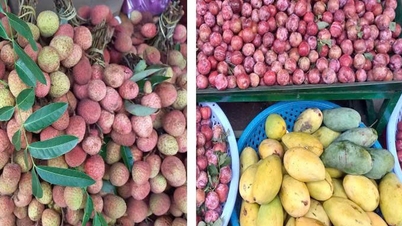
Free-range chicken eggs, which peaked at 45,000 VND (10 eggs) last year, are now only 32,000 VND. Large industrial chicken eggs have dropped by 10,000 VND per dozen to 30,000 VND. Fruits such as plums, lychees, and Hoa Loc mangoes have also fallen by 10-20%...
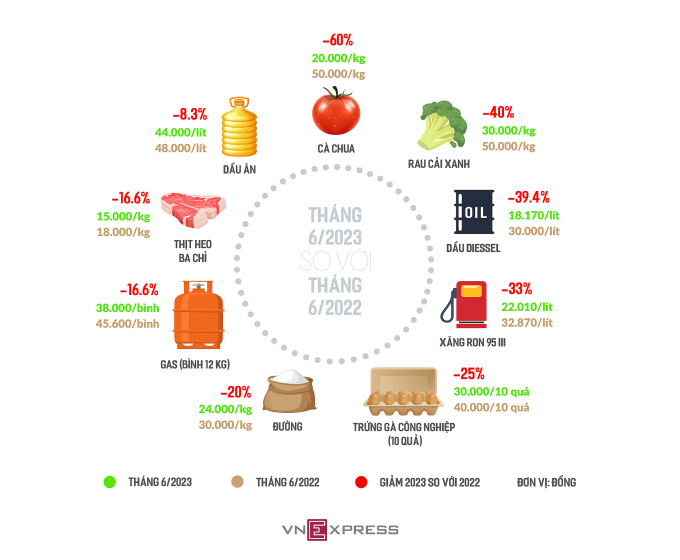
Comparison of prices of some essential fuels and food items in June 2023 with the same period last year. Graphic: Dang Hieu
According to small traders , prices have plummeted due to decreased market demand and abundant supply. "This year, there hasn't been as much rain as in previous years, so vegetable production has increased significantly. Meanwhile, purchasing power has decreased by 20-30% compared to the same period last year, causing prices of many goods to fall," said Ms. Hien, a vegetable trader at Xom Moi Market (Go Vap District).
According to a report by the Ministry of Agriculture and Rural Development , the supply of livestock, poultry, and vegetables increased by 3-5% in the first five months of the year compared to the same period last year. As a result, the prices of many goods have tended to fall sharply.
Transportation costs have cooled down by 5-7% thanks to a 30% drop in gasoline and diesel prices in the first six months of the year compared to the same period last year, which has also helped lower commodity prices. While the price of RON 95 III gasoline peaked at 32,870 VND per liter during the adjustment period on June 21, 2022, it is now at 22,010 VND per liter. Similarly, the price of diesel has decreased from 30,000 VND to 18,000 VND per liter.
In Ho Chi Minh City, freight transport companies have announced adjustments to freight rates, reducing them by 10-25%. Accordingly, instead of 2,000 VND per kilogram for long-distance transport over 500 km, the rate is now 1,500 VND per kilogram. For goods transported by volume, the price has decreased by 50,000-150,000 VND per trip.
Speaking to VnExpress , the director of a cooking oil and spice manufacturing company in Ho Chi Minh City said that in the first five months of this year, his company faced less pressure to raise prices as transportation and raw material costs began to decrease.
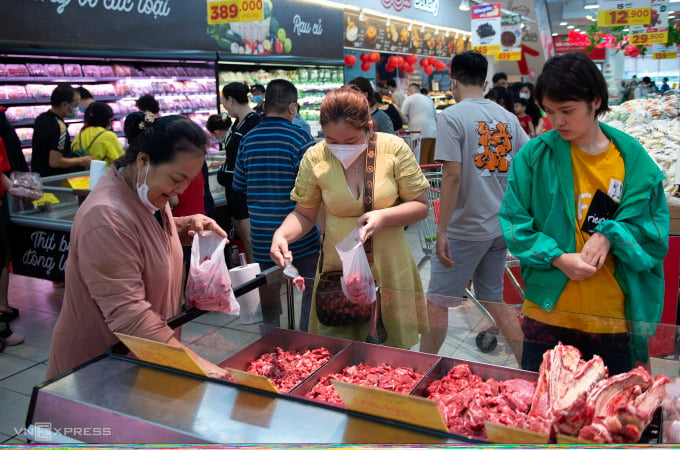
People shop at Go supermarket on the afternoon of June 18th. Photo: Thanh Tung
In addition, the decline in global raw material costs has helped make many products cheaper. The International Monetary Fund (IMF) reported that global food prices fell by 21% in the first five months of this year compared to the same period last year.
The Food and Agriculture Organization (FAO) Food Price Index also shows that the world's most traded staple foods, such as cereals, dairy, and cooking oils, have fallen by 22% over the past year. Vegetable oil prices saw the biggest drop, with a 48% adjustment, reflecting a simultaneous decline in palm oil, soybean oil, grapeseed oil, and sunflower oil.
Ayhan Kose, Deputy Chief Economist of the World Bank, noted that global commodity prices are trending downwards. This is due to the slowdown in global economic growth and the impact of wars and pandemics, which have reduced purchasing power. However, he believes the economy will improve by 2024 if central banks adjust their monetary policies appropriately to market conditions.
Domestically, manufacturing businesses report signs of a slight market recovery. Modern retailers in Ho Chi Minh City observe a 1-2% increase in purchasing power in May and June compared to the early months of the year. Therefore, they expect the goods market to become more vibrant again from the third quarter onwards as the festive season becomes more active.
Thi Ha
Source link


![[Photo] General Secretary and President To Lam presides over the meeting to approve the draft report on the results of the second inspection by the Politburo of the Standing Committee of the Hanoi City Party Committee.](https://vphoto.vietnam.vn/thumb/1200x675/vietnam/resource/IMAGE/2026/05/26/1779789811432_a2-bnd-4430-9620-jpg.webp)


























































































Comment (0)