

There have been numerous complaints from mobile phone users about spam calls and text messages demanding payment, credit services, travel and real estate advertisements, and even impersonations of government agencies to commit fraud.
In the first 10 months of 2024, the Ministry of Information and Communications ' hotline for reporting spam messages, spam calls, and scam calls (Hotline 156/5656) recorded nearly 850,000 user complaints.
Specifically, out of 850,000 user complaints, approximately 185,000 were related to spam messages (22%), 441,000 to spam calls (52%), and 222,000 to scam calls (26%).
According to the Information Security Department (Ministry of Information and Communications), 25% of these are annoying missed calls, 20% are related to debt collection and credit, and 20% are advertisements for tourism services, real estate, etc.
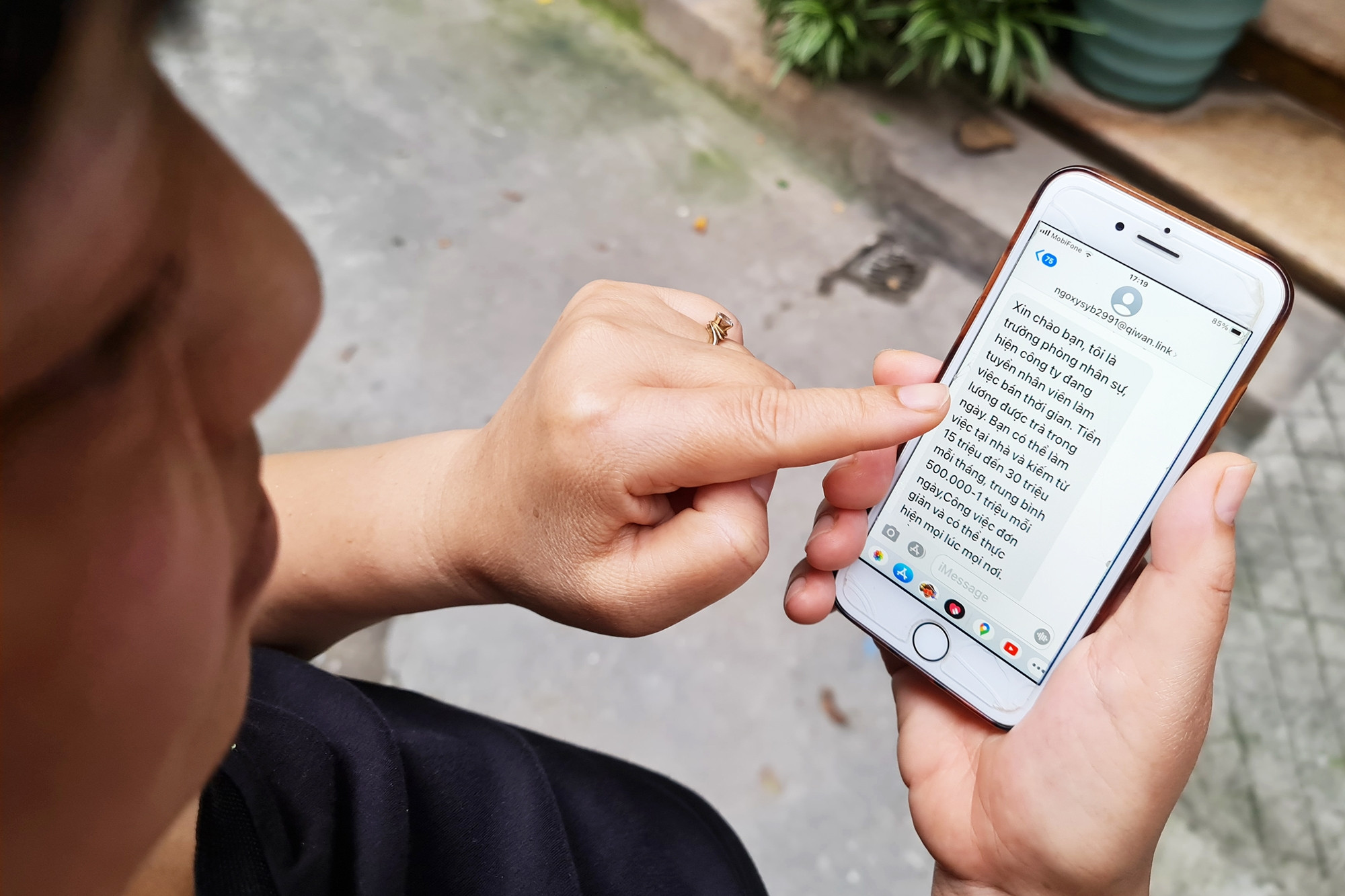
Notably, approximately 15% of the complaints stemmed from scams in various forms such as online job support, attendance-based rewards, stock market investments, and impersonation of government agencies like the police, courts, banks, and power companies. 5% of the complaints involved invitations to participate in online gambling, betting, and lottery schemes.
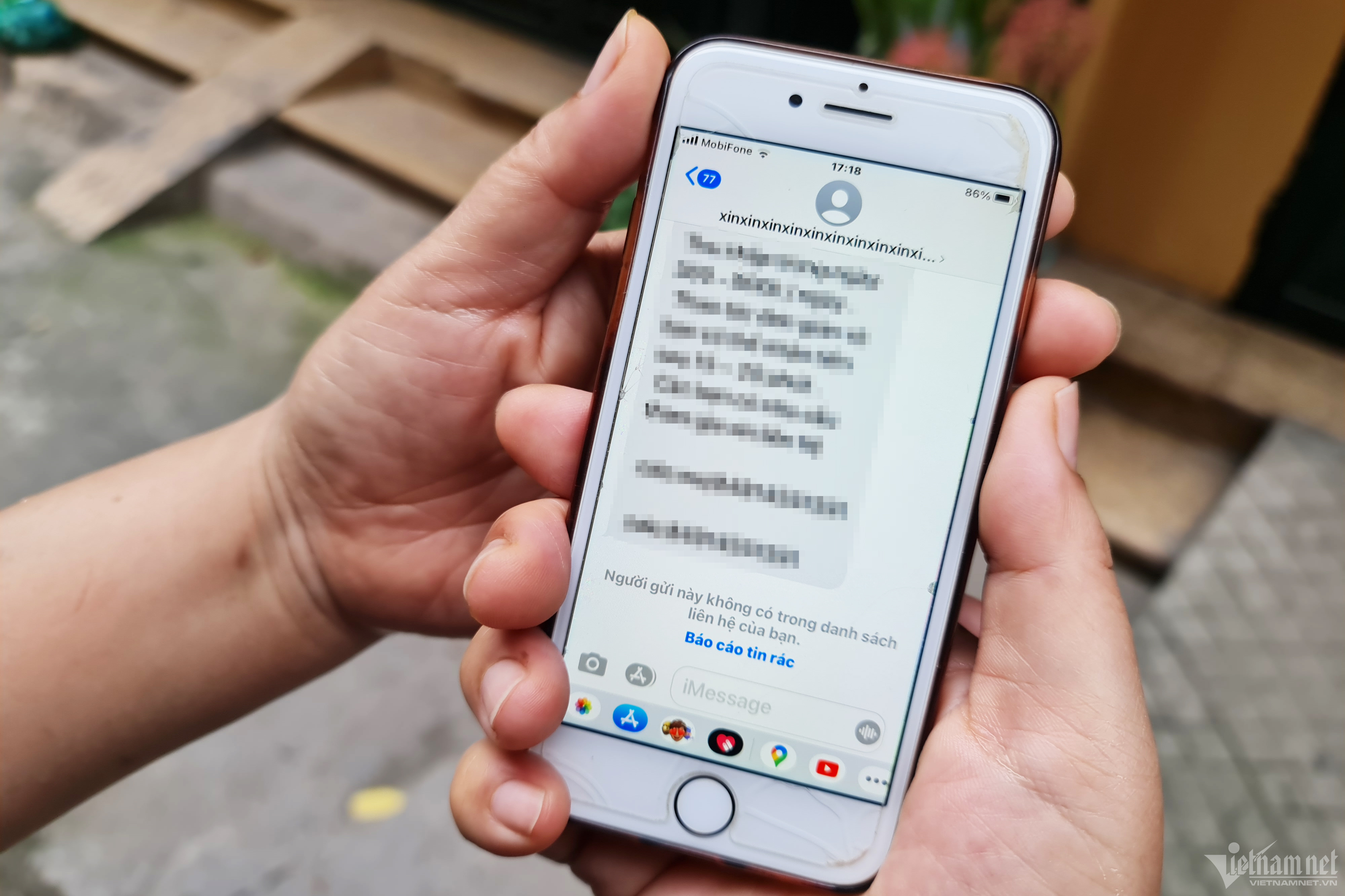
All of these complaints are forwarded directly to the network operators for processing. 100% of telecommunications companies have been and are currently handling user complaints.
Currently, the rate of handling feedback from businesses is relatively high, reflecting good compliance with the coordination of the Ministry of Information and Communications.
According to Mr. Dang Huy Hoang, Deputy Director in charge of the Vietnam National Cyber Emergency Response Center (VNCERT/CC), statistics show that spam messages, calls, and scam calls still exist.
This situation stems from several causes, such as the problem of unregistered SIM cards and the leakage of users' personal information.
According to the Deputy Director of VNCERT/CC, users still don't know how to protect their personal information. With the explosion of the Internet and social networks, many people spend more time online than in real life.
There are people who share very little in real life, but become a completely different person online. They share everything they do and eat on social media.
This content can be inadvertently exploited by social media platforms, thereby allowing them to gain insight into user behavior.
" Our personal information is being sold extensively in private groups. If you want to obtain information about a customer base, you can simply go online and buy it for a small fee. Therefore, users need to know how to protect their personal information on social media platforms ," Mr. Hoang stated.
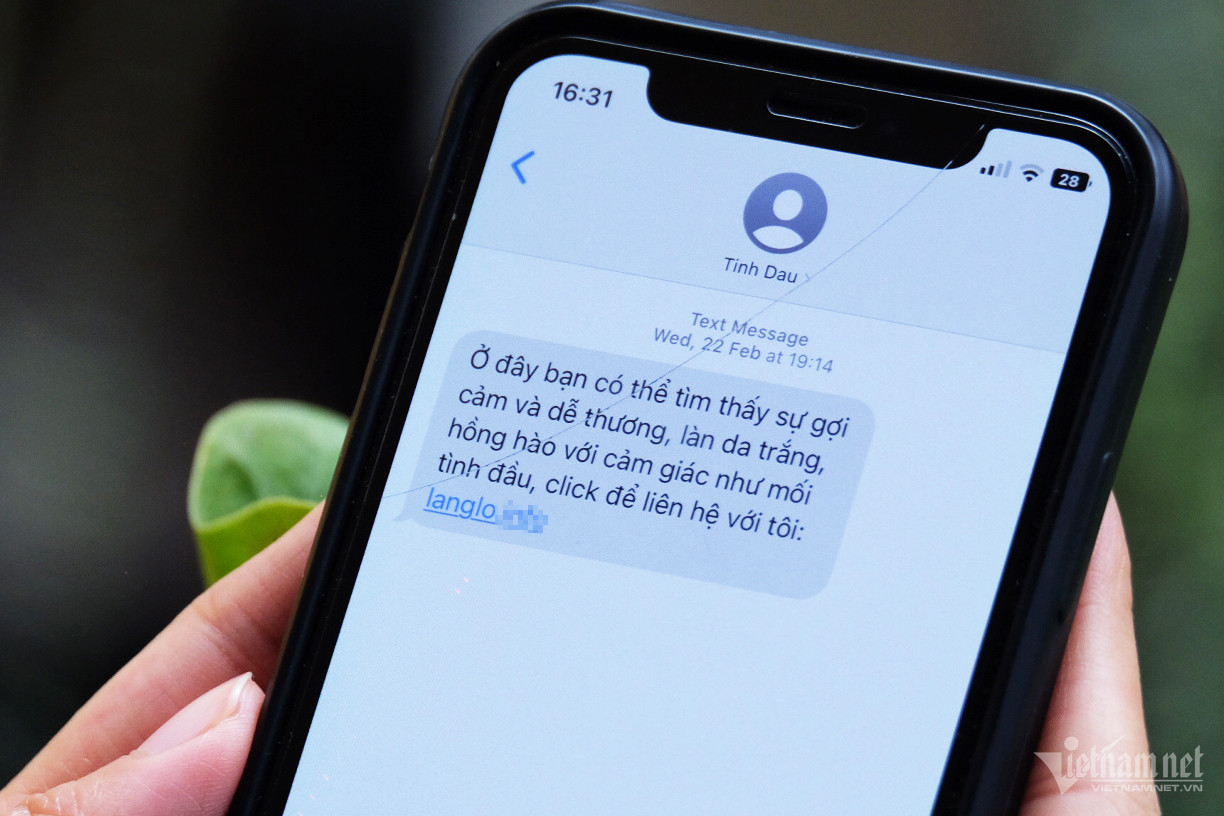
According to the Inspectorate of the Ministry of Information and Communications, spam calls and messages are made for various purposes. Spam messages can be used to advertise and solicit content services.
The person who makes missed calls may do so with the intention of getting users to call or text back the numbers providing content services for profit or advertising purposes.
Spam calls and messages can also be used as a channel to solicit real estate sales, insurance, travel, stock market investments, loans, illegal lending, advertising gambling games, and even impersonating authorities to commit fraud, seize assets, collect debts, threaten and extort money, etc.
In response to this situation, to address the problem of spam messages, spam calls, and fraudulent calls, the Inspectorate of the Ministry of Information and Communications has coordinated with telecommunications companies to review and improve the capacity of their systems for blocking spam messages, spam calls, and fraudulent calls, and to develop and deploy blocking systems using artificial intelligence and big data technologies.
Simultaneously, the Ministry of Information and Communications has also strengthened inspection and supervision work on combating spam messages and calls, and the registration, storage, and use of mobile subscriber information, especially with organizations and individuals registering a large number of SIM cards, showing signs of unusually large numbers, unclear purposes of use, or use that does not match actual needs.
Source: https://vietnamnet.vn/nhieu-phan-anh-ve-cuoc-goi-rac-tin-nhan-rac-doi-no-lam-phien-2345569.html

![[Photo] First session of the 14th Congress of the Vietnam Trade Union](https://vphoto.vietnam.vn/thumb/1200x675/vietnam/resource/IMAGE/2026/06/03/1780465947883_ndo_br_img-3852-jpg.webp)

![[Photo] General Secretary and President To Lam presides over a meeting with the Central Organizing Committee.](https://vphoto.vietnam.vn/thumb/1200x675/vietnam/resource/IMAGE/2026/06/03/1780482764658_a1-bnd-4741-3342-jpg.webp)
![[Photo] Secretary of the National Assembly Party Committee, Chairman of the National Assembly presides over the meeting of the Standing Committee and Executive Committee of the National Assembly Party Committee.](https://vphoto.vietnam.vn/thumb/1200x675/vietnam/resource/IMAGE/2026/06/03/1780480353201_ndo_br_bnd-2585-jpg.webp)





















































![[Video] Sunset at Lap An Lagoon – Where the sun sets over the fishing nets](https://vphoto.vietnam.vn/thumb/1200x675/vietnam/resource/IMAGE/2026/05/31/1780192137701_beach-landscape-sea-water-nature-grass-745871-pxhere-com.jpeg)































Comment (0)