

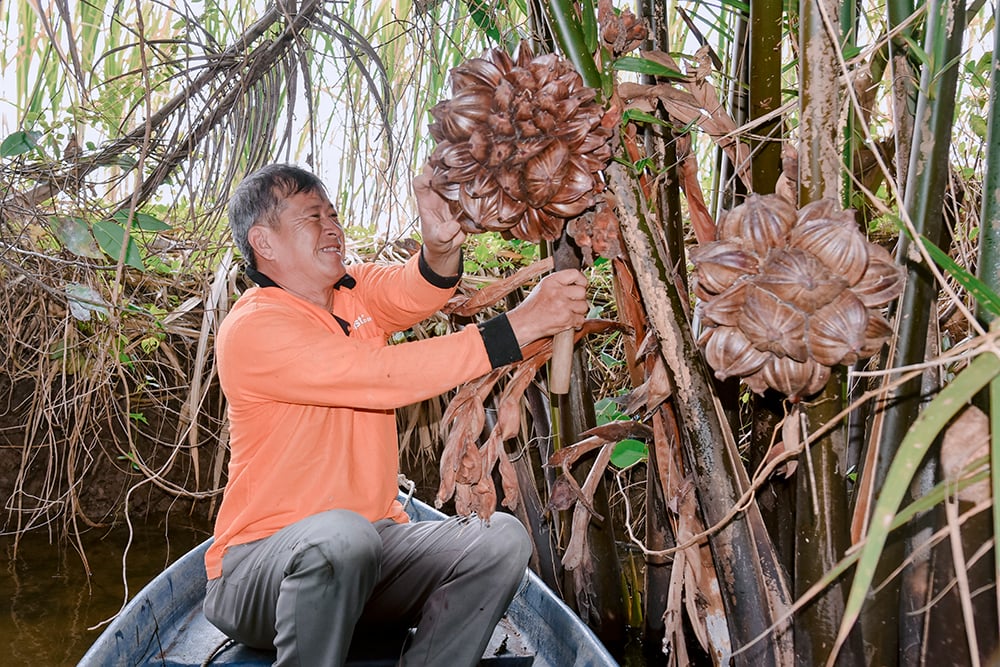
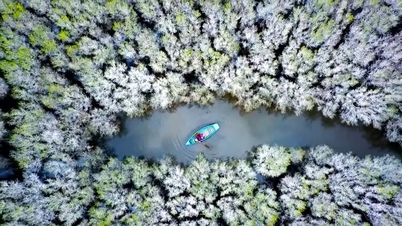
Nipa palms grow abundantly along the Cai Lon River. However, recently, many sections of the river have been used as mooring points for boats, so the nipa palms are gradually being cut down. As a result, locals have to paddle canoes into smaller canals and waterways to collect them.
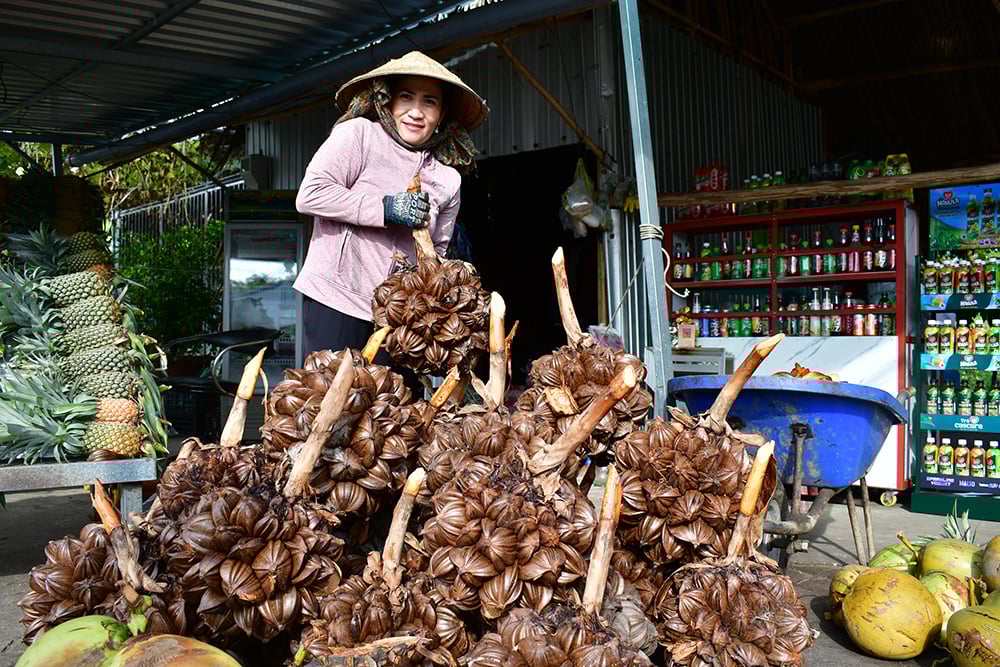
Having been involved in this profession for over 10 years, Ms. Nguyen Phuong Dung, residing in Xeo Ro hamlet, An Bien commune, said: "The coconuts contain sap and are small, so cutting them is quite difficult and the knife can easily slip. The flesh inside also needs to be scraped out skillfully to avoid breaking."
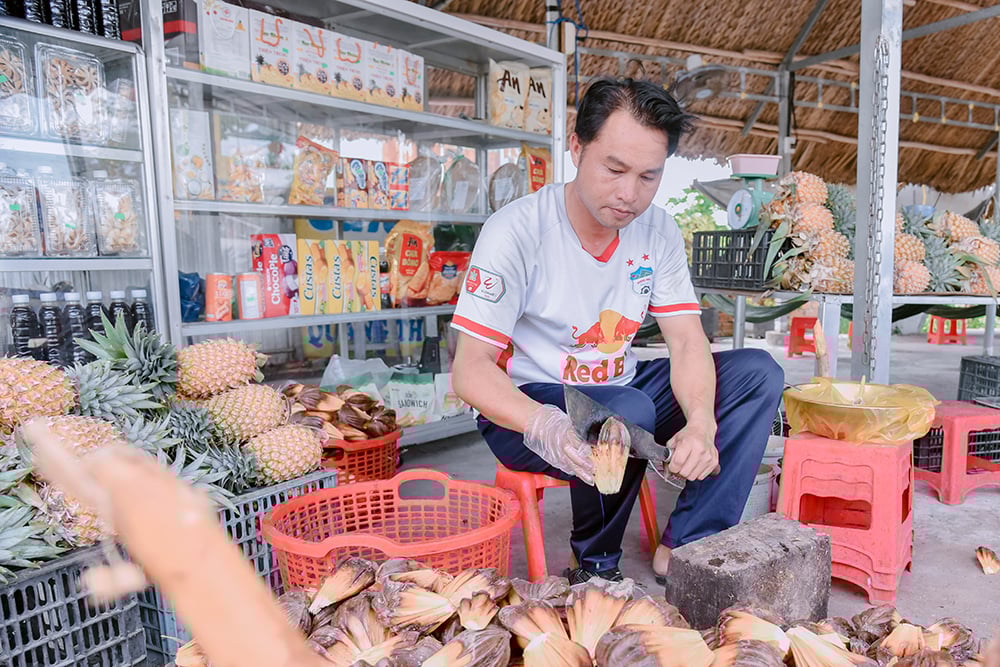
Coconut stalls are often set up to attract customers. Most people only buy the coconut flesh to eat immediately or use in cooking. Therefore, vendors have to meticulously separate the flesh inside.
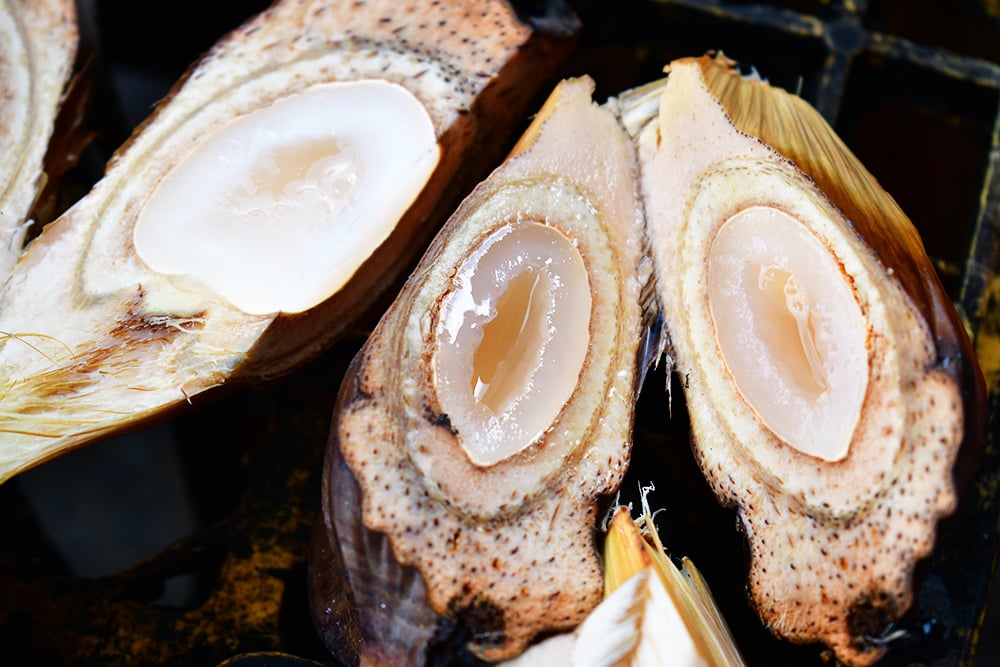
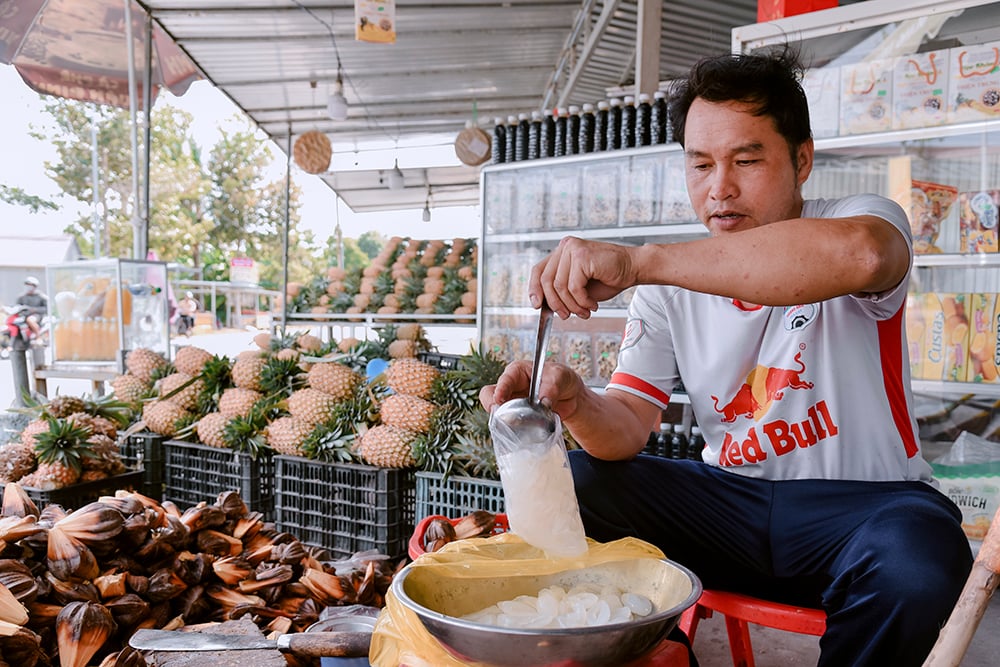
After being grated, the coconut flesh is washed, drained, and then chilled to maintain its freshness. On average, a 0.5kg bag of coconut water costs around 40,000 VND. This is a popular and familiar refreshing drink in the Mekong Delta region.
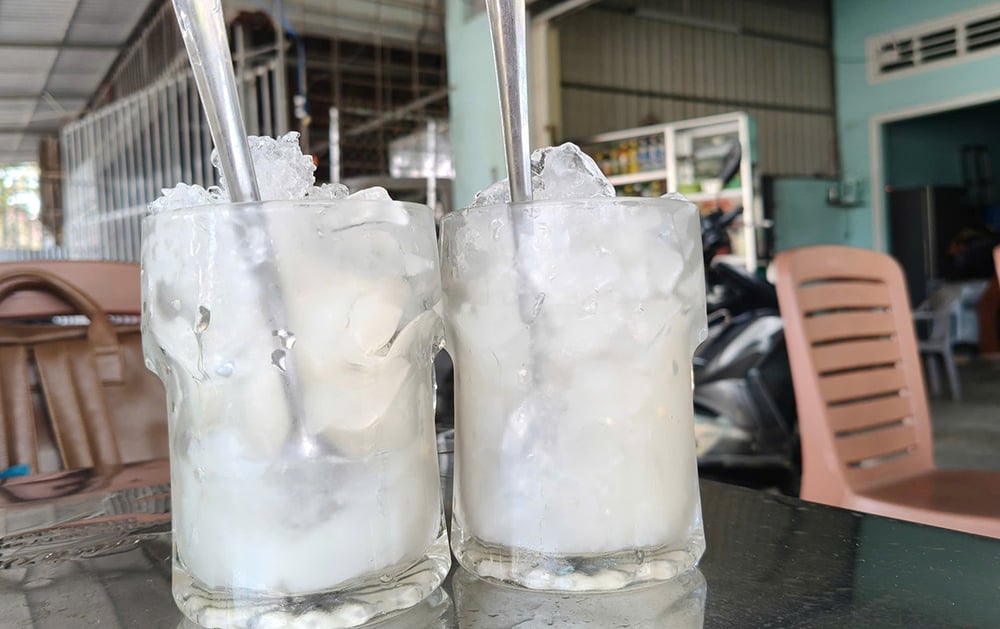
The refreshing coconut water, served chilled with added sugar and ice, is sold for 15,000-20,000 VND per glass. Having sold coconut water and pineapples at the foot of Cai Lon Bridge for over a year, Ms. Vo Thi Kieu Diem, a resident of Dong Hoa commune, said: “Because there are many sellers, the competition is high. On average, I sell 4-5 kg of coconut water per day, which is enough to live on.”
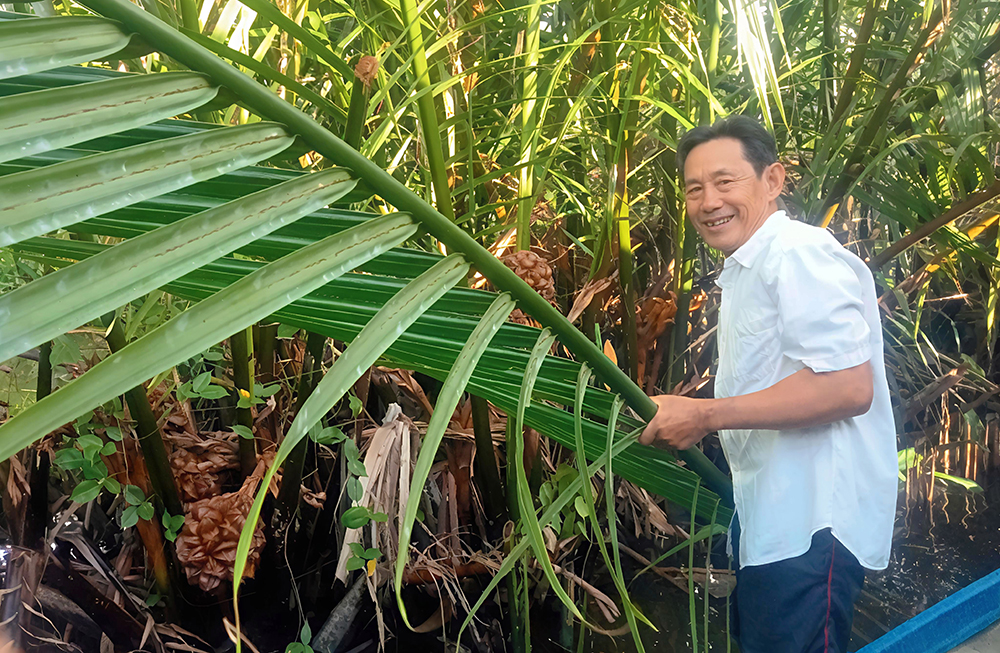
Besides selling the fruit, the leaves of the nipa palm are used for roofing, and the roots help retain soil and prevent erosion.
| According to Nguyen Huu Loi, Party Secretary and Head of Xeo Ro Hamlet, An Bien Commune , Xeo Ro Hamlet has more than 30 households involved in selling coconut water, pineapples, and other fruits. Although this work is arduous, it provides a stable income for many households in the area. |
Source: https://baoangiang.com.vn/nhoc-nhan-phia-sau-mon-giai-khat-dan-da-a424743.html
![[Photo] Prime Minister Pham Minh Chinh receives the Chinese Ambassador to Vietnam](https://vphoto.vietnam.vn/thumb/1200x675/vietnam/resource/IMAGE/2026/04/05/1775397481797_ndo_br_dsc-5512-jpg.webp)















































Comment (0)