

I remember the days when we ate yam and taro.
Fifty years have passed since the country was reunified and freed from enemy forces. The young men and women who volunteered and enthusiastically served in the Central Committee Office of the Southern Region (Base R) are now elderly men and women with gray hair.
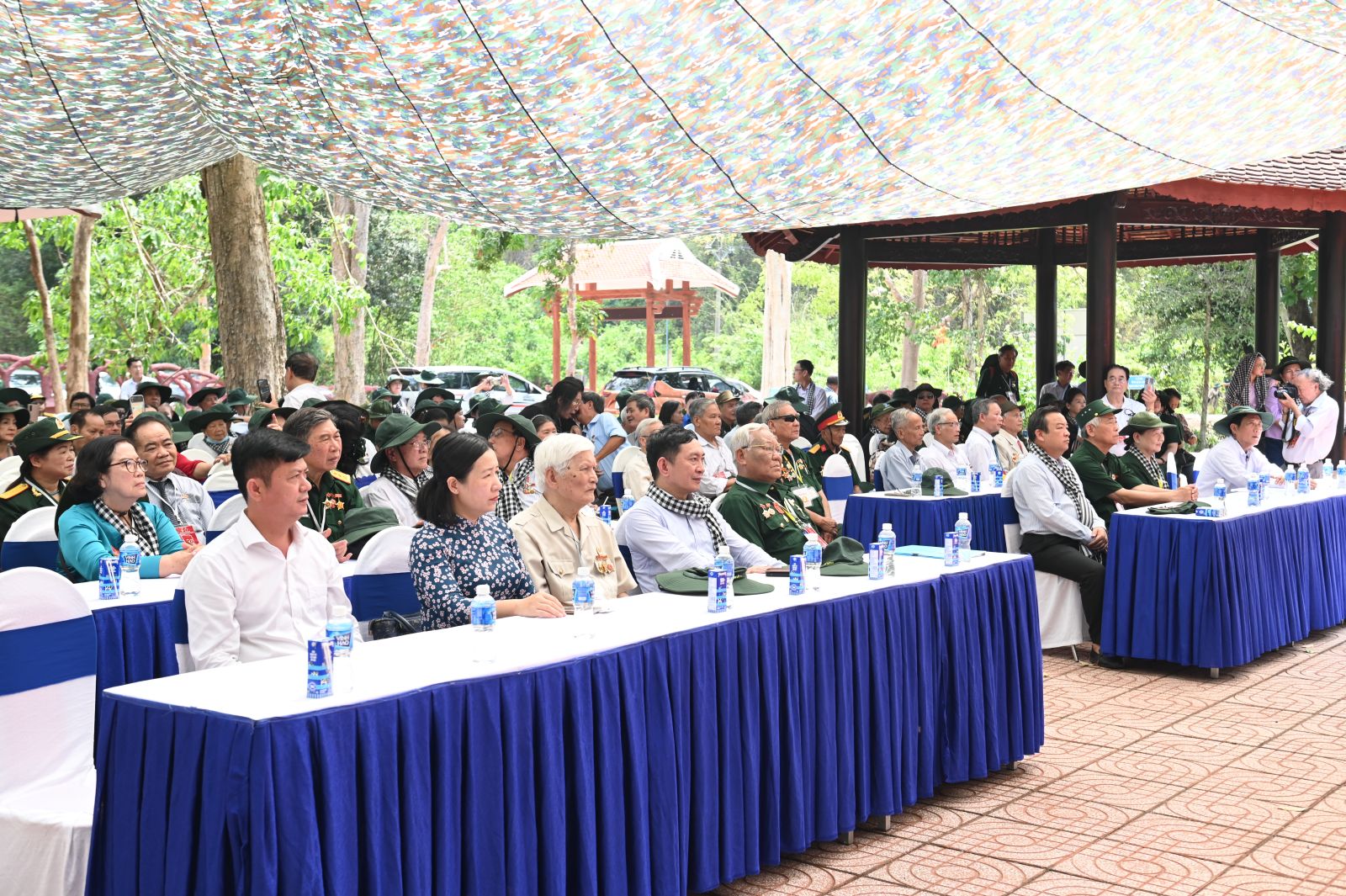
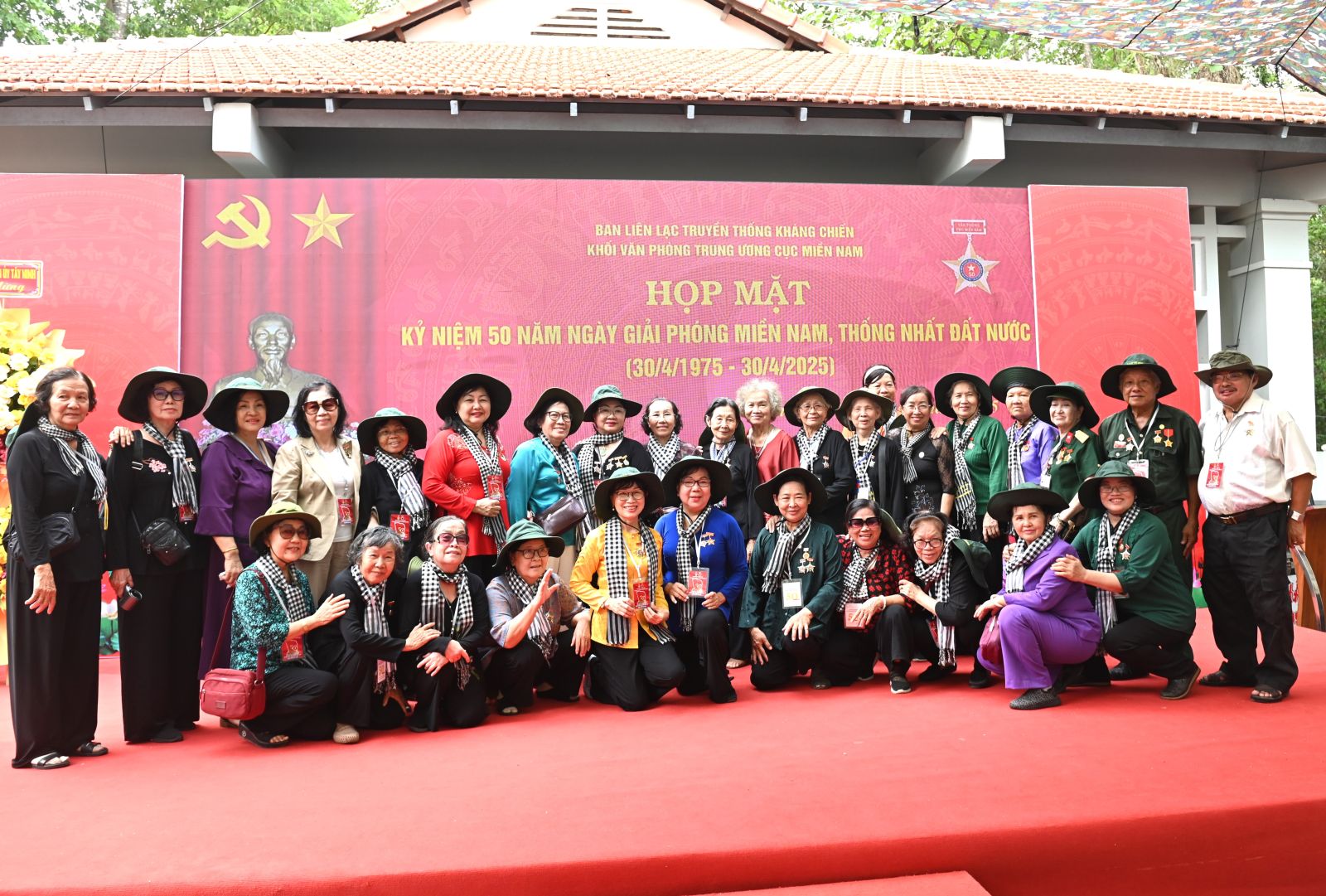
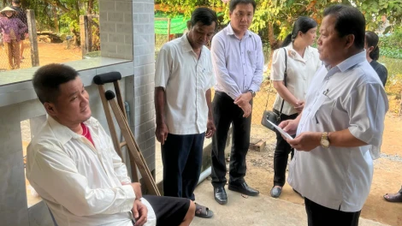
To date, more than 409 officers, soldiers, and workers have passed away. Those who remain returned to attend the 50th anniversary reunion of the liberation of Southern Vietnam at the old battlefield, limping or needing canes, and having difficulty walking.
During the reunion, warm hugs, clasped hands, and stories of a time of hard work and heroism under the rain of bombs and bullets were recounted by the veterans, evoking feelings of nostalgia and emotion in both the storytellers and the listeners.
Mr. Huynh Thanh Xuan, Deputy Head of the Standing Committee of the Traditional Resistance Liaison Committee of the Central Committee Office in the South, fondly recalled those difficult days. At that time, the cadres and soldiers of the Central Committee Office in the South faced numerous hardships. They frequently ate wild yams and other tubers, and only half a bowl of porridge with salt that crunched loudly – jokingly called "tiger meat" – and wild forest vegetables.
Deep in the jungle, they moved without a trace, cooked without smoke, spoke silently, and even the chickens couldn't crow. They had to wear "golden hoops," and they suffered from illness, malaria, and lacked medicine. But the brothers and sisters always remained optimistic, cheerful, and proud of their ability to confront B52 bombers, trample on venomous snakes, and brave cicadas and leeches. Everyone contributed to digging secret tunnels, communication trenches, and underground "earthen mountain" tunnels to protect the Central Committee and the Central Committee's meeting and working offices.
Mr. Xuan confided that it would be remiss to talk about the Central Committee Office without mentioning the close-knit affection and care among the staff, and among the staff for the Central Committee leaders. This included everything from steam baths and bowls of porridge to scraping cloths and bitter herbal remedies from the forest to maintain the health of the leaders; always serving the superiors plain white rice without potatoes or cassava, and occasionally supplementing their diet with pieces of wild game meat, replacing the watery porridge with wild vegetables.
On several occasions, B52 bombers hit the TWC Base. Comrade Hai Van (Phan Van Dang) suffered from a high fever and couldn't go down to the bunker. A soldier named Trung Ngan carried him through the rain of bombs and fallen trees to safety in the shelter. In another instance, when the boat carrying Comrade Pham Hung was crossing the river, three enemy helicopters continuously bombarded the area. To protect their superior, Comrades Ngoc Minh, Tam Be, and Truong helped him across the sandbank to safety. Once, while on a mission, they were spotted by the enemy, and enemy aircraft fired at them. Bodyguards Sau Quang, Tu Nam, and Ba Be helped Comrade Nguyen Van Linh hide behind a large tree, embracing him to avoid the helicopter's bullets.
In another instance, a delegation accompanying Comrade Vo Van Kiet on a mission to the Western region was unexpectedly ambushed by the enemy. To avoid the enemy, Comrade Huynh Minh Muong assigned the comrade in charge of liaison work to lead the delegation in a different direction while he stayed behind, fighting the enemy alone with his rifle. The delegation arrived safely, but Comrade Huynh Minh Muong was killed in action.
The camaraderie between the commanders and their colleagues was equally strong. Whenever any of the staff fell seriously ill, such as with malaria, snake bites, or other accidents, the leaders of the Office and the Central Committee would visit and care for them. This affectionate care from the leaders warmed the hearts of not only those who were ill, but all the officers and soldiers in the remote, mountainous base.
The story still weighs heavily on my heart.
Mr. Nguyen Cong Khanh, a member of the Liaison Committee for the Traditional Resistance Movement of the Central Committee's Office in the South, recounted that he was from the North and volunteered to go to the South in 1967. In 1968, he worked in the Cryptography branch of the Central Committee's Office. The Cryptography branch's task was to immediately prepare a workplace wherever the unit marched. Living and eating conditions were very difficult. Almost everyone suffered from malaria, some with severe cases, even urinating blood. In some units, a quarter of the personnel were treated at the hospital.
In late 1968, B52 bombers heavily bombed the TWC Base. Two comrades, Nam Canh and Ba Xuya, were killed in action in his unit. What saddened him and his comrades most was that these two were husband and wife, having just celebrated their wedding the day before. “That day, a bomb hit their happy home. It was so cruel! So brutal! Five of us were assigned the task of searching for and burying them. It wasn’t until nearly midnight that we dug and found two pieces of scalp, some bones, and skin. We divided them into two small packages, one with long hair and one with short hair, and placed them on Canh’s desk for the ceremony and burial,” Mr. Khanh recalled, his voice choked with emotion.
Mr. Khanh continued, saying that in 1969, Mr. Ba Quang and two or three others returned to the bombed area to search for the bodies and light incense for their fallen comrades, but they have still not found them. Mr. Khanh said sadly, "Even now, every time I think of my two comrades, I still feel great pain."
Ms. Phan Thu Nguyet, a member of the Liaison Committee for the Traditional Resistance Movement of the Central Committee's Office in the South, also recalled memories from more than half a century ago.
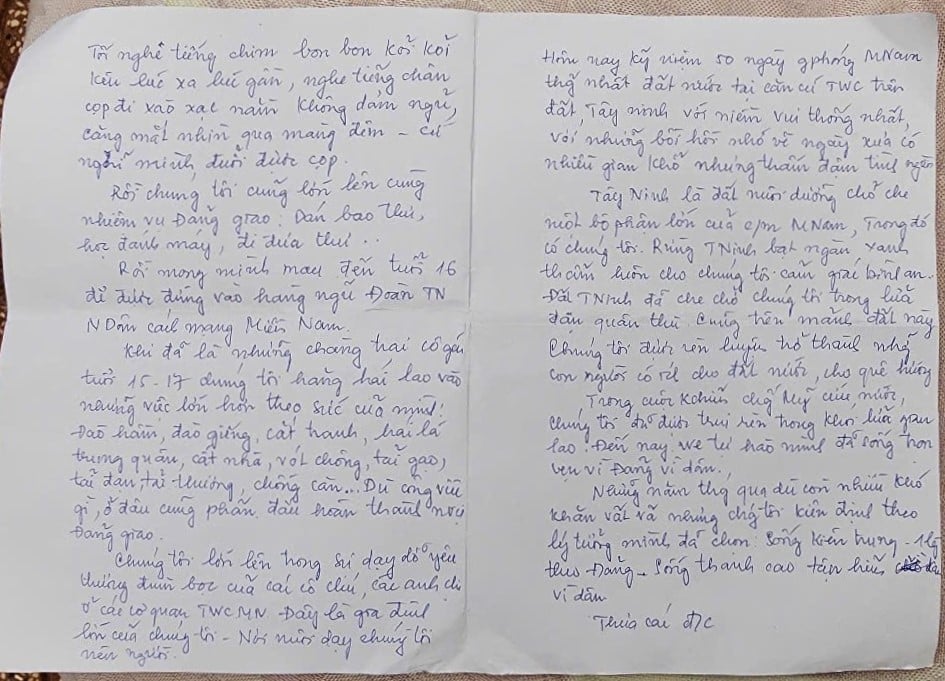
"In early 1960, I joined the Central Committee Office, still a naive child. Looking at the crape myrtle tree, I mistook it for a guava tree—so much bigger! Hearing the rustling sound of tigers' footsteps, I couldn't sleep, straining my eyes through the night, imagining I could chase them away. Then we grew up with the tasks the Party assigned: sealing envelopes, learning to type, delivering letters... I longed to turn 16 so I could join the ranks of the Southern Revolutionary People's Youth Union."
"When we were 17 years old, my friends and I eagerly threw ourselves into bigger tasks, such as digging tunnels, digging wells, cutting thatch, gathering Trung Quan leaves, building houses, sharpening stakes, transporting rice, ammunition, the wounded, and fighting against enemy raids. Whatever the job, wherever we were, we strived to complete the tasks assigned by the Party. During those years, despite many difficulties and hardships, we remained steadfast in our chosen ideals, living loyally, wholeheartedly following the Party, living nobly, and serving the people with utmost devotion," Mrs. Nguyet clearly stated.
After listening to touching stories from the wartime era, Nguyen Thi Cuc, Secretary of the Tan Bien District Youth Union and representative of the youth of Tay Ninh, expressed: "Today's young generation is fortunate to be born and raised in a time of peace and reunification. Although we did not live through the war, we have been taught and understood that to achieve the final victory in the struggle for national liberation and reunification, countless generations of our ancestors dedicated their youth and lives to the revolutionary cause, leading to the victory on April 30, 1975, completely liberating the South and reunifying the country."
"We pledge to engrave this in our hearts and always remember to remind ourselves to cherish the past, to cherish peace, to choose for ourselves a beautiful ideal and way of life, to constantly learn, train, and strive from the smallest things, to be worthy of what the previous generations have dedicated and sacrificed."
Ocean
Source: https://baotayninh.vn/nhung-cau-chuyen-cam-dong-thoi-or--a189399.html













![[Photo] Prime Minister Pham Minh Chinh attends the Conference on the Implementation of Tasks for 2026 of the Industry and Trade Sector](/_next/image?url=https%3A%2F%2Fvphoto.vietnam.vn%2Fthumb%2F1200x675%2Fvietnam%2Fresource%2FIMAGE%2F2025%2F12%2F19%2F1766159500458_ndo_br_shared31-jpg.webp&w=3840&q=75)








































Comment (0)