

At the Vietnam Marketing and Consumer Forum held on September 11th in Hanoi , Mr. Vo Tri Thanh, Director of the Institute for Brand Strategy and Competition Research, stated that consumption today is not only linked to income or growth, but also reflects the life, lifestyle, and habits of each individual.
"In this new context, consumer trends must be both 'fast' and 'green,' with increasing concern for safety, cleanliness, and sustainability. Otherwise, the road to the hospital will be longer than the road to saving money. The Vietnamese market, especially with the purchasing power of the middle class and the younger generation, remains extremely attractive," Mr. Thanh said.
Ms. Vu Kim Hanh, President of the Association of High-Quality Vietnamese Goods Businesses, shared that, in addition to quality, consumers today also demand that businesses demonstrate social responsibility and environmental protection. A survey on green consumption conducted by the association revealed a noteworthy fact: "Many people affirm their support for green products, but they don't buy them because of the high price."
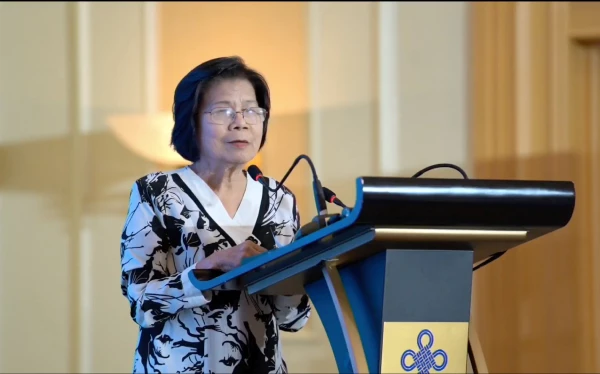
Ms. Vu Kim Hanh - President of the Association of High-Quality Vietnamese Goods Businesses.
"This presents a challenge but also motivates businesses to strive to enhance the competitiveness of green products and spread sustainable consumption habits. Stronger support is needed for green manufacturers in Vietnam so that the quality of Vietnamese goods increasingly approaches international standards," stated the Chairman of the Association of High-Quality Vietnamese Goods Businesses.
Sharing the same perspective, Ms. Tran Thi Hong Minh, Director of the Institute for Policy and Strategy Research, observes that the current integration context, with approximately 67 free trade agreements, imposes a mandatory requirement: products wishing to enter the global market must be green and produced according to green standards. This is essentially the "entry ticket" for businesses.
In the domestic market, the trend towards green consumption is also becoming increasingly evident. Consumers, especially the younger generation and the middle class, are willing to pay higher prices for green products, as long as it is reasonable. Social awareness has changed: consuming environmentally harmful products is no longer acceptable, putting pressure on businesses to switch to green production.
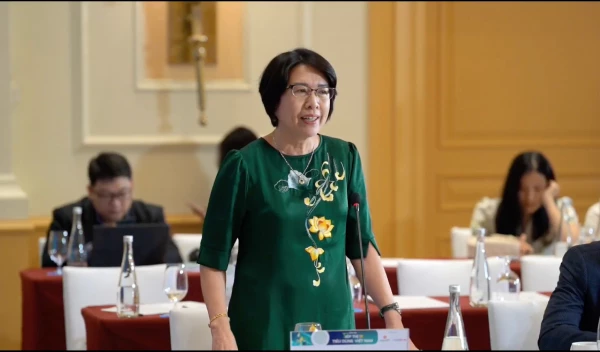
Ms. Tran Thi Hong Minh - Director of the Institute for Policy and Strategy Research.
"Faced with the new demands of the market, businesses need to see this as a great opportunity and prepare thoroughly. First, they need to build a green development strategy in the short, medium, and long term; optimize production processes to reduce costs; and develop competitive green products. Simultaneously, businesses must strengthen marketing, communication, and customer engagement to enhance brand value," Ms. Minh recommended.
According to the Director of the Institute for Policy and Strategy Research, the role of the Government is also crucial in creating a legal framework and policies to encourage: from classifying green businesses, green credit, green bonds, to testing mechanisms (sandbox) for circular models.
Furthermore, the circular economy needs to be combined with innovation to increase product value – for example, incorporating cultural and artistic elements into traditional handicrafts. Innovation is limitless and will help businesses both increase added value and meet the requirements of sustainable development.
Thu An
Source: https://doanhnghiepvn.vn/kinh-te/doanh-nghiep-can-chien-luoc-bai-ban-truoc-lan-song-tieu-dung-xanh/20250912084734936
![[Live] 2025 Community Action Awards Gala](/_next/image?url=https%3A%2F%2Fvphoto.vietnam.vn%2Fthumb%2F1200x675%2Fvietnam%2Fresource%2FIMAGE%2F2025%2F12%2F16%2F1765899631650_ndo_tr_z7334013144784-9f9fe10a6d63584c85aff40f2957c250-jpg.webp&w=3840&q=75)

![[Photo] Prime Minister Pham Minh Chinh receives the Governor of Tochigi Province (Japan)](/_next/image?url=https%3A%2F%2Fvphoto.vietnam.vn%2Fthumb%2F1200x675%2Fvietnam%2Fresource%2FIMAGE%2F2025%2F12%2F16%2F1765892133176_dsc-8082-6425-jpg.webp&w=3840&q=75)
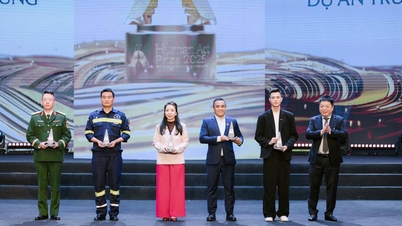
![[Image] Leaked images ahead of the 2025 Community Action Awards gala.](/_next/image?url=https%3A%2F%2Fvphoto.vietnam.vn%2Fthumb%2F1200x675%2Fvietnam%2Fresource%2FIMAGE%2F2025%2F12%2F16%2F1765882828720_ndo_br_thiet-ke-chua-co-ten-45-png.webp&w=3840&q=75)

![[Photo] Prime Minister Pham Minh Chinh receives Lao Minister of Education and Sports Thongsalith Mangnormek](/_next/image?url=https%3A%2F%2Fvphoto.vietnam.vn%2Fthumb%2F1200x675%2Fvietnam%2Fresource%2FIMAGE%2F2025%2F12%2F16%2F1765876834721_dsc-7519-jpg.webp&w=3840&q=75)






























































Comment (0)