

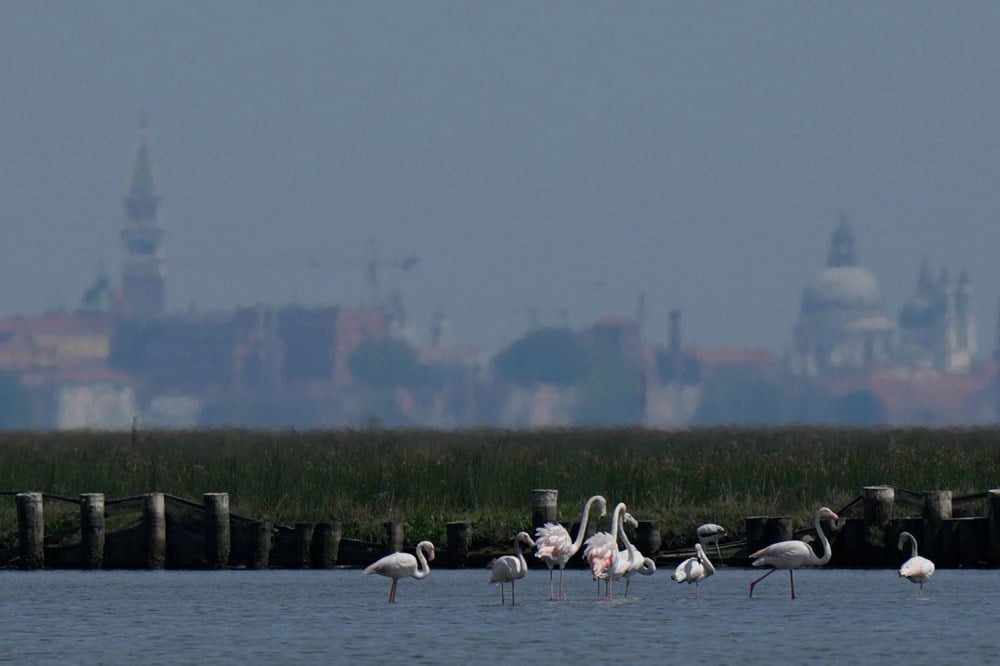
Flamingos began appearing in Venice's vast lagoon in the early 2000s. Initially, they were mainly concentrated in fish ponds and mudflats located in the most remote areas of the lagoon, while sightings of them in Venice's historic center with its famous canal system, which attracts many international tourists, remained quite rare.
Now, the ever-growing flamingo population is transforming the Venice lagoon into one of the most important habitats for this species in Europe.
The Venice lagoon has become an unexpected "paradise" for flamingos.
Environmentalists say the appearance of flamingos in Venice is a sign that the Venice lagoon ecosystem is in good condition and suitable to be a feeding ground for them.
In 2025, the Venice lagoon recorded nearly 24,000 flamingos coming to overwinter, the highest number ever and about 8,000 more than the previous year. Ornithologist Alessandro Sartori believes Venice has become one of the most important overwintering spots for flamingos in their entire habitat.
Every week, Alessandro Sartori surveys the lagoon by boat looking for signs of flamingo nesting and has observed the formation of a self-sustaining flamingo colony in Venice.
However, no further signs have been recorded since the two flamingo nesting events in the fish ponds north of the lagoon in 2008 and 2013. These breeding seasons were severely affected by adverse factors, including intense hailstorms that killed dozens of individuals.
Over 90% of the flamingos recorded in last year's survey were concentrated in the northern lagoon area, which has large areas of salt flats and natural wetlands.
These birds are also attracted to traditional fish ponds. These are semi-natural, diked wetlands that provide an abundant food source. However, living there can also impact human activities.
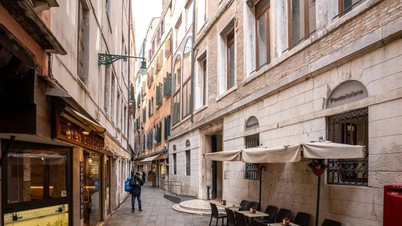
Venice's new "pink residents" could attract tourists .
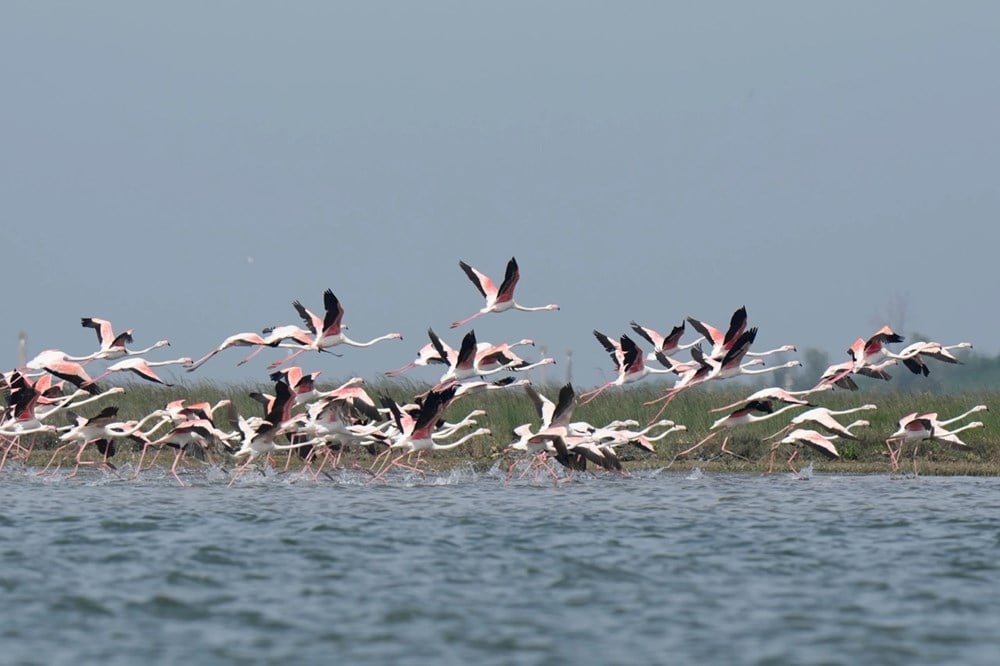
The project to restore the saltwater wetlands in the southern part of the lagoon is opening up prospects for attracting a large number of flamingos. This project creates new habitats in the lagoon area, which has suffered particularly severe wetland erosion.
The Venice lagoon, covering approximately 550 km², was once nearly half its area covered by salt marshes. However, this area is now only about 7%. According to Jane da Mosto, CEO of We Are Here Venice, about half of the current salt marsh area is the result of restoration projects.
Ms. Da Mosto stated that her organization is a local partner in the WaterLANDS project, a five-year program with a budget of €23.6 million (approximately $27.5 million) funded by the European Union to restore wetlands across Europe.
The degradation is particularly severe in the central and southern areas of the Venice lagoon, primarily due to a combination of natural erosion and dredging of shipping lanes to access the industrial port of Porto Marghera in the 1960s.
"Erosion and sediment loss from the lagoon are occurring on an increasingly large scale, to the point that Venice is now in danger of gradually turning into a bay," said Jane da Mosto.
Restoring saltwater wetlands increases the lagoon's capacity to absorb carbon dioxide (CO₂), while mitigating the impact of rising sea levels.
However, Jane da Mosto argues that restoring much larger areas of wetlands is necessary to yield significant climate benefits. Therefore, the goal of the EU-funded project is to develop a model for saltwater wetland restoration that can be scaled up.
Flamingos also benefit from the increased biodiversity in the area.
Da Mosto's research team is currently seeking solutions to enhance biodiversity in restored wetlands, including planting plant species that can limit erosion and help wetlands become more sustainable and resilient to environmental impacts.
Notably, the presence of flamingos in the lagoon not only highlights the importance of Venice's ecosystem but also offers visitors a new perspective when exploring the canal city and surrounding islands.
Instead of viewing Venice solely for its historical and artistic value, visitors can also appreciate the unique ecological and environmental significance of this lagoon area.
Flamingos typically inhabit shallow, remote, and inaccessible areas of lagoons, where safe navigation requires careful monitoring of tides and currents.
Even when observed from a distance, they are very sensitive to the presence of humans and are ready to take flight if they feel disturbed.
Ornithologist Alessandro Sartori predicts that flamingo sightings in Venice will become increasingly common as their numbers continue to grow.
Nowadays, visitors can observe these birds from the shores of small islands in the lagoon such as Murano and Burano, although sightings in Venice's historic center are still quite rare.
Source: https://baovanhoa.vn/doi-song/nhung-cu-dan-mau-hong-danh-thuc-he-sinh-thai-venice-233071.html


![[Photo] Solemn bathing ceremony and Buddha procession in Hue](https://vphoto.vietnam.vn/thumb/1200x675/vietnam/resource/IMAGE/2026/05/31/1780228263543_1-jpg.webp)
![[Photo] Admire the coral "masterpiece" amidst the million-year-old heritage of Dak Lak province.](https://vphoto.vietnam.vn/thumb/1200x675/vietnam/resource/IMAGE/2026/05/31/1780221235105_anh-man-hinh-2026-05-31-luc-16-53-27.png)
















![[Video] Sunset at Lap An Lagoon – Where the sun sets over the fishing nets](https://vphoto.vietnam.vn/thumb/340x192/vietnam/resource/IMAGE/2026/05/31/1780192137701_beach-landscape-sea-water-nature-grass-745871-pxhere-com.jpeg)





































![[Photo] Admire the coral "masterpiece" amidst the million-year-old heritage of Dak Lak province.](https://vphoto.vietnam.vn/thumb/402x226/vietnam/resource/IMAGE/2026/05/31/1780221235105_anh-man-hinh-2026-05-31-luc-16-53-27.png)




































Comment (0)