

Internet banking services have become popular; however, users need to be aware of the potential risks involved in using them so they can take timely corrective action.
Transactions made through a fake website.
Criminals often create websites that look identical to the official bank websites in order to steal users' login information.
Fake websites use the bank's name, images, design, logo, colors, content, products, and services, but have almost identical domain names, causing confusion for users.
When users are unsuspecting and enter information into these fake websites, fraudsters can easily access their accounts and carry out illegal transactions.
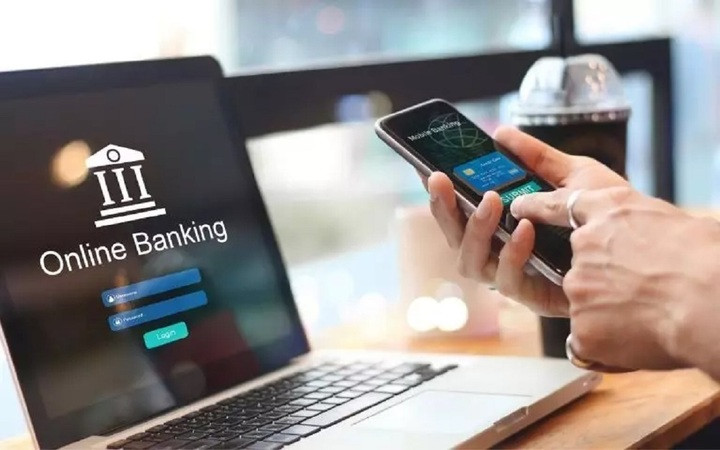
System failure
System failures can stem from various reasons such as technical errors, system overload, or cyberattacks. When the system is disrupted, user transactions cannot be completed or encounter numerous errors. For example, the bank confirms that your transfer transaction was successful and the transaction amount has been deducted from your account, but the recipient does not receive the money.
Furthermore, Internet banking relies on the bank's and customer's server systems and internet connectivity. If there is a technical problem or a loss of internet connection, the money transfer service may be interrupted or become inoperable. This can cause inconvenience and losses for users, especially when they need to conduct urgent or important transactions.
Scammed into transferring money.
Scammers often use sophisticated methods such as impersonating bank employees, police officers, court officials, relatives, or friends to persuade users to transfer money to their accounts. These situations unfold quickly, making it easy for many people to fall into the trap.
For example, scammers send fake emails from banks to inform customers that they have received funds. They then request confirmation of the transaction by clicking on a link containing malware to obtain personal information and steal money from the customer's account.
Forgot password
Users may lose or forget their passwords when using Internet Banking accounts. This can cause many inconveniences when trying to make money transfers. Your account will be almost completely disabled without a password.
At this point, users have to contact the bank to recover their password or create a new password, which is very time-consuming.
Things to note when using Internet Banking
Choose a reputable bank.
Internet banking is a service that allows customers to conduct online banking transactions via the internet. However, not all banks offer high-quality services and security.
Therefore, when using Internet Banking, users should choose reputable banks with high security to best protect their assets.
Change your password regularly and protect your personal information.
When using Internet Banking, customers should change their passwords regularly and not disclose their personal information to anyone.
Your password is the key to protecting your account, so it's advisable to choose a strong password. It should include letters, numbers, and special characters, and importantly, it shouldn't be the same as the passwords of other accounts. Customers should also change their passwords at least once every three months and avoid saving passwords on their computers or phones.
Furthermore, the most important thing to note is that you should not provide personal information to anyone, including bank employees. Your account could be exploited to steal your money based on the information you provide. You should also avoid accessing Internet Banking from public devices or insecure Wi-Fi networks, as these public spaces may be used by malicious individuals to steal your information.
Carefully check all transaction information before confirming.
When using Internet Banking, you should carefully check the transaction information before confirming it, such as the amount, account number, recipient's name, transfer details, transaction fees, OTP code, or secondary password.
It is absolutely essential to avoid making bank transfers when you are busy, tired, or stressed, and to avoid being influenced by external factors.
If any discrepancies are discovered in a transaction, customers should immediately contact the bank for assistance.
In addition, customers should also check their account balance and transaction history after completing a transaction to ensure that the transaction was performed correctly. At the same time, make sure you have accurately entered all information, from the amount to the recipient. This helps ensure that no problems occur and that you do not suffer any losses when using Internet Banking.
The equipment and network connection must be secure.
Devices and network connections are two crucial factors in ensuring secure internet banking. You should protect your device by installing antivirus and anti-malware software and updating it regularly. Lock your screen when not in use and prevent your device from being lost or accessed by others.
For added security, you can delete your browser history, cookies, cache, and other temporary data after using Internet Banking.
In addition, make sure you do not download or open files, links, or emails from untrusted sources.
Source


![[Image] Hanoi's urban life under the challenge of a "scorching hot" environment](https://vphoto.vietnam.vn/thumb/1200x675/vietnam/resource/IMAGE/2026/05/25/1779706979265_nang-nong-t5-2026-minh-duy-7-4636-jpg.webp)
![[Image] Close-up view of the interchange connecting the two expressways and Long Thanh Airport.](https://vphoto.vietnam.vn/thumb/1200x675/vietnam/resource/IMAGE/2026/05/25/1779703378210_ndo_br_z7863716673926-224453a31600126cce10622af6290afd-4549-jpg.webp)
































































































Comment (0)