

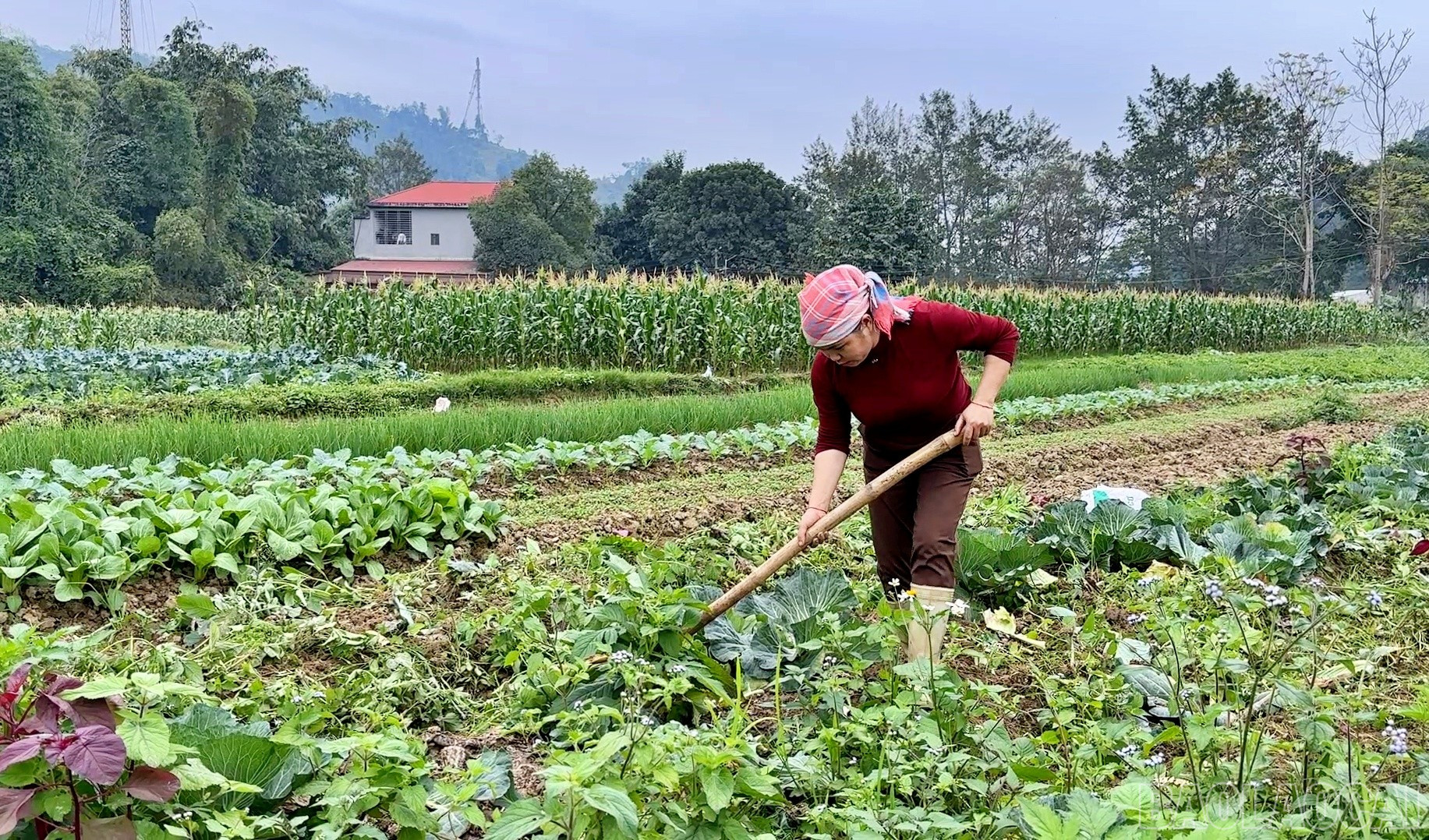
These days, when the weather is dry, Ms. Nung Thi Viet, from Lang Quang village, is busy in the fields preparing the soil and sowing seedlings for the new rice crop.
Despite being severely affected by the remnants of Typhoon No. 10 during the recent winter crop season, Ms. Viet's family still managed to maintain production on the arable land and sow about 7 kg of various vegetable seeds. This winter season, Ms. Viet estimates she will earn over 40 million VND. This is a commendable effort given that the fields have just experienced flooding.
Sharing her determination, Ms. Viet said: "Every year, my family plants two rice crops and one vegetable crop. The land here is low-lying and often flooded. If the rice crop is flooded, we have to quickly prepare the land and switch to planting vegetables or corn to compensate. As farmers, we can't give up."
It's not just Ms. Viet's family; many other households are also striving to find suitable ways to adapt to climate change.
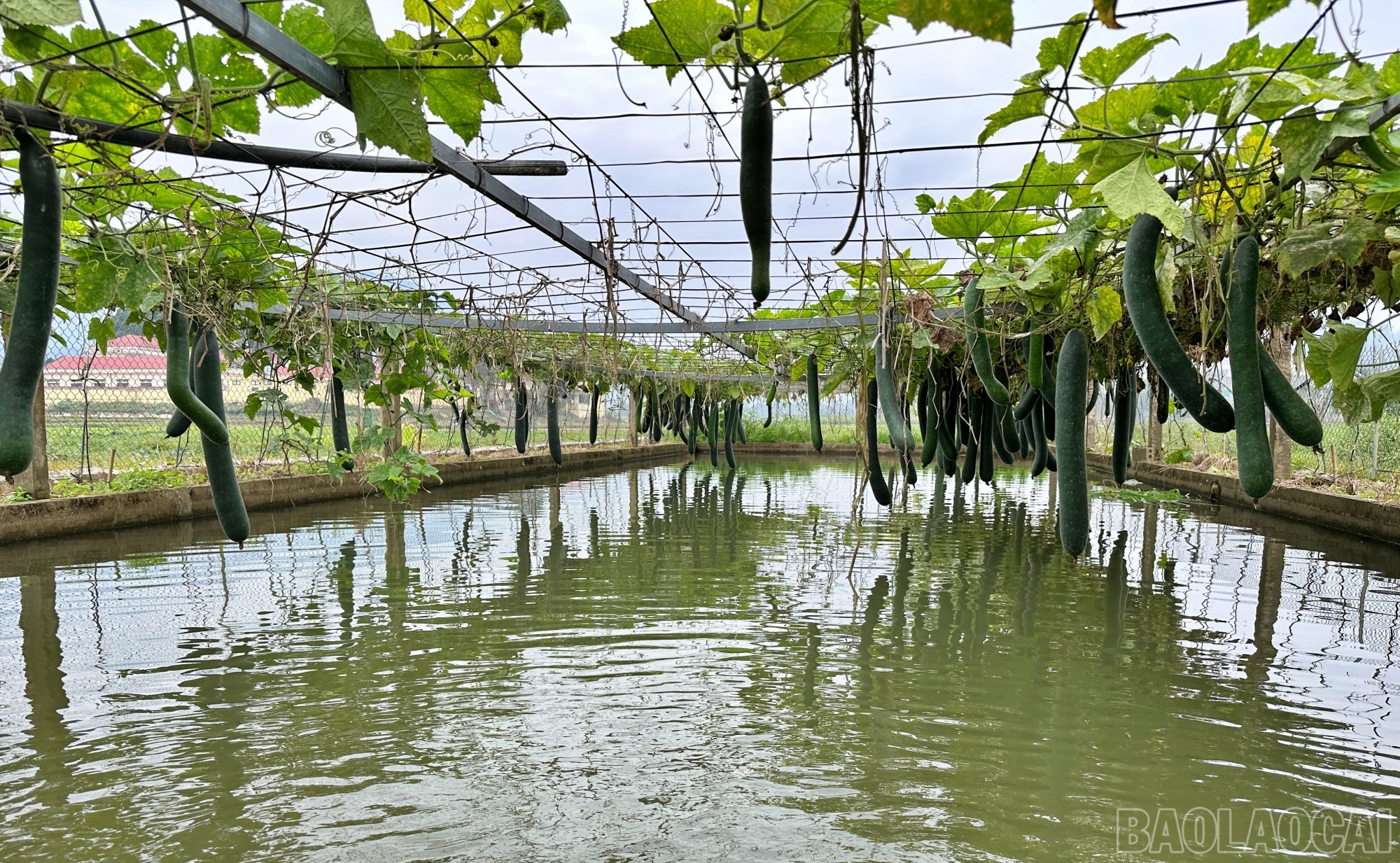
On a plot of land spanning over 1,200 square meters, the lush green winter squash vines of the family of Mr. Duong Van Tien, Head of Lang Quang Village, have yielded nearly 2 tons of fruit right from the beginning of the season.
With a total area of over 4,000 m² of rice paddies, 3,000 m² of vegetable gardens, and trellises for growing pumpkins twice a year, Mr. Tien's family earns nearly 200 million VND per year - an impressive figure for a farmer in the mountainous region.
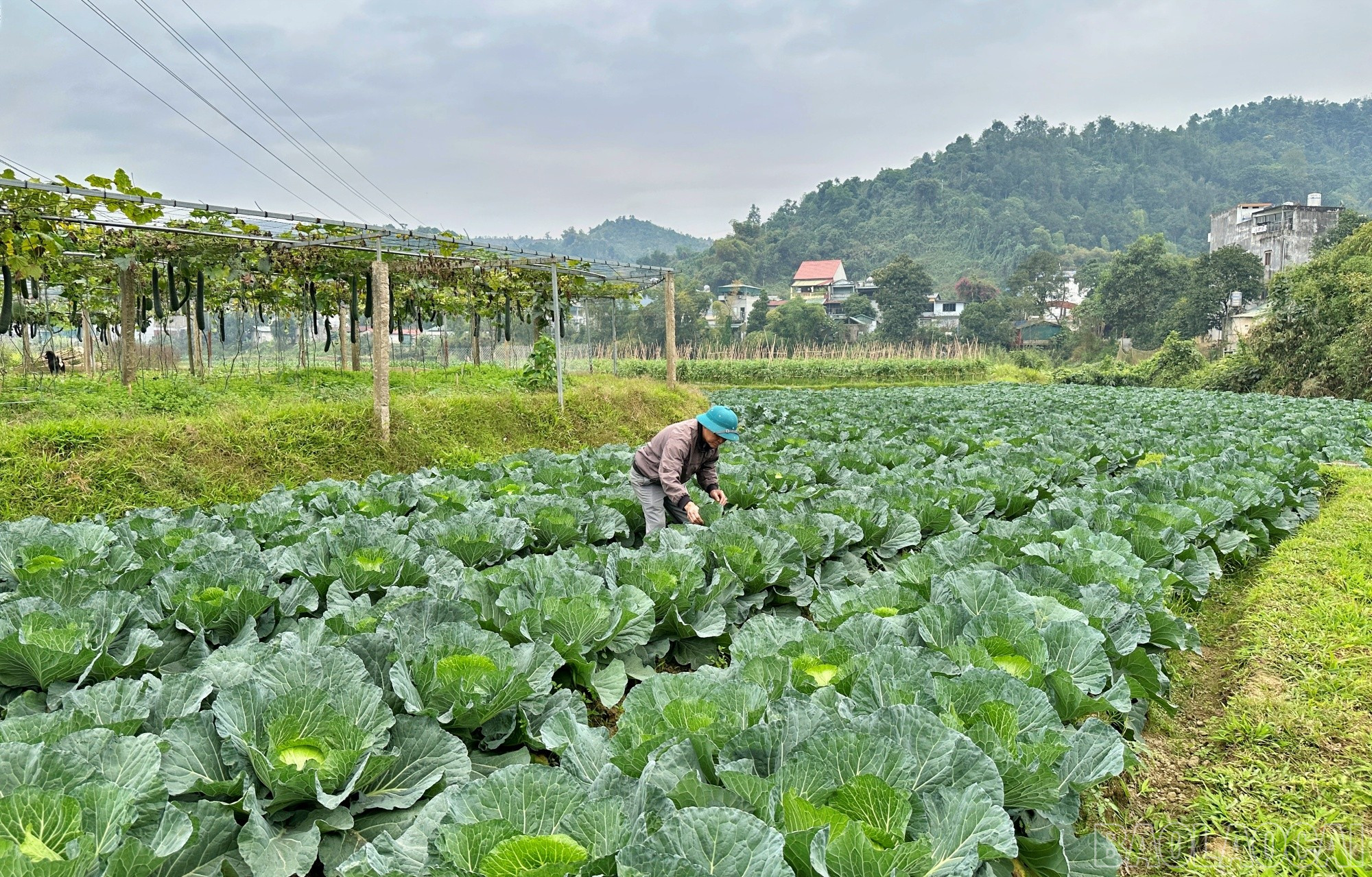
Mr. Tien shared that the most important lesson learned is choosing the right time to plant to avoid the flood season: Floods usually come in August and September, but pumpkins can be harvested by July. After the flood, a new crop can be planted. This allows for two crops a year while still avoiding losses.
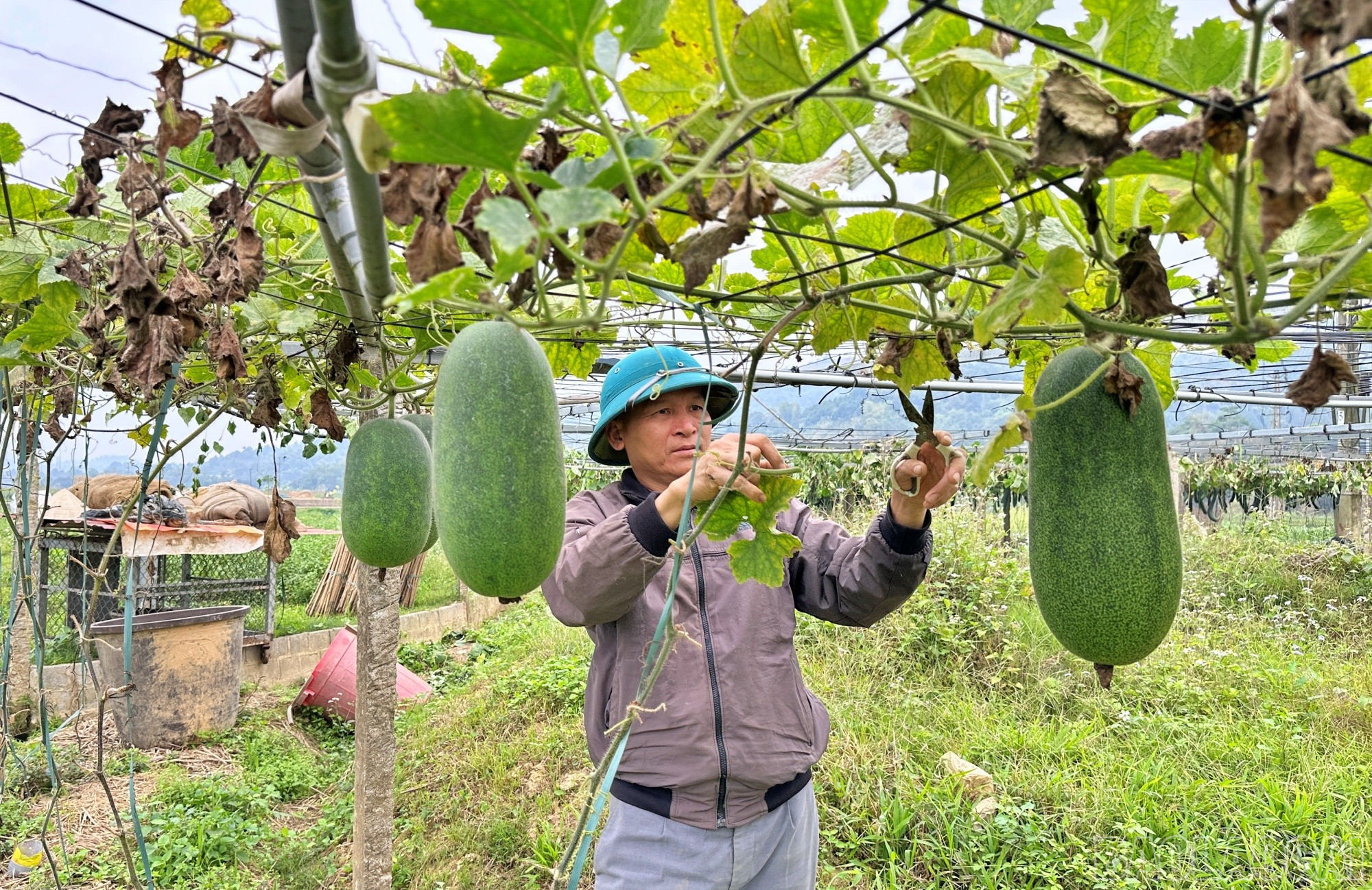
This year, Mr. Tien also boldly experimented with the Bac Kan green pumpkin variety and initially achieved high yields, opening up a new production direction for the villagers.
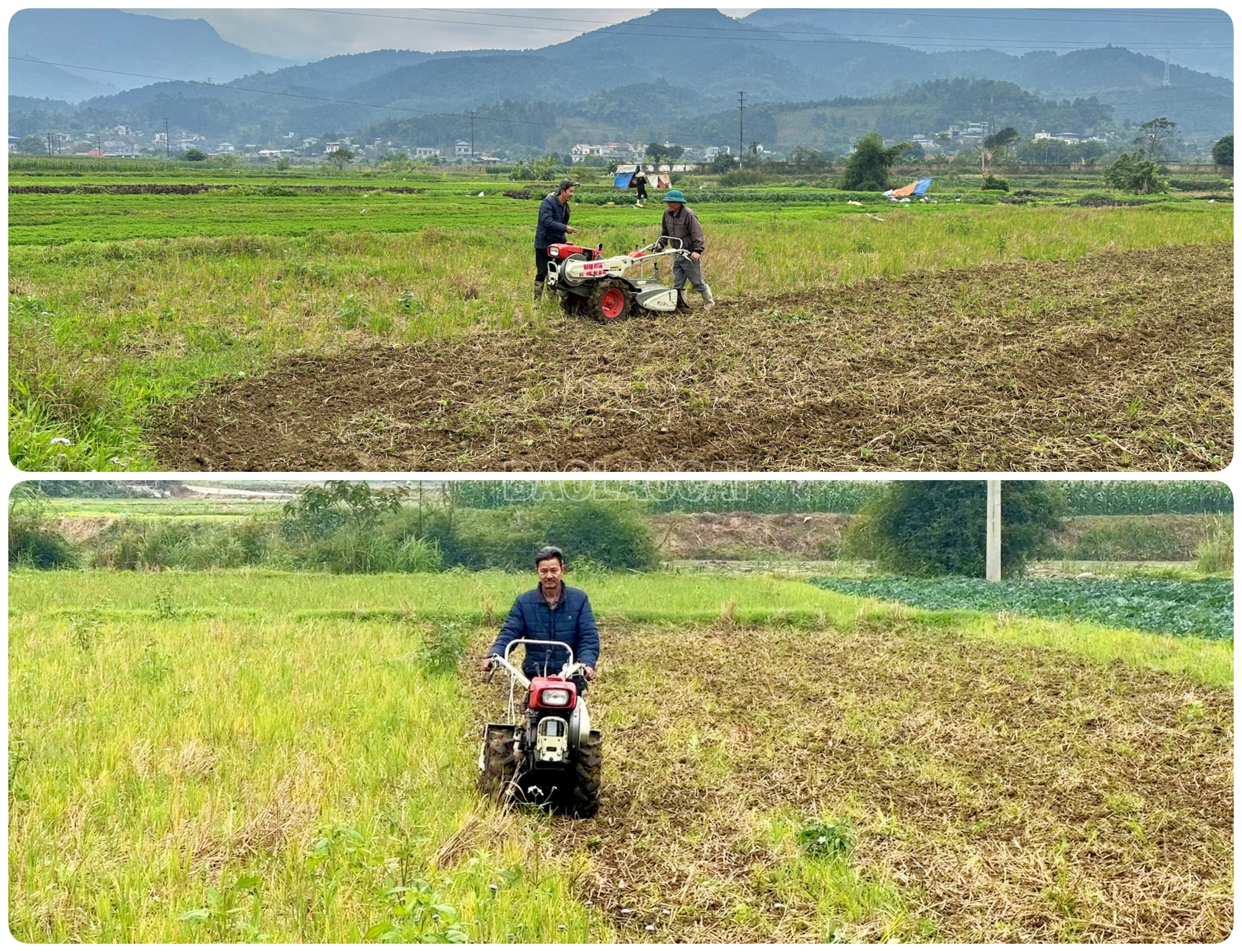
In addition to diversifying crops, the people of Quang Village are also actively applying mechanization to reduce labor and increase production efficiency.
Plows and tillage machines are increasingly appearing in the fields, gradually replacing manual farming methods that were previously time-consuming and labor-intensive.
The sight of tractors busily plowing the fields has become a familiar one in Quang Village in recent years.
According to Ms. Vu Thi Giang, Chairwoman of the Farmers' Association of Bat Xat commune, the local government has always stood by the people in the process of restoring production after natural disasters.
The commune has reviewed households affected by the remnants of typhoon No. 10, provided potato seeds, and established links for product consumption to help farmers feel secure in their production.
In addition, the government and organizations regularly visit the fields, guiding farmers in reclaiming land after flooding and selecting suitable short-term crops for the winter season. The vegetable farming model in Quang Village is considered highly effective and provides stable income.
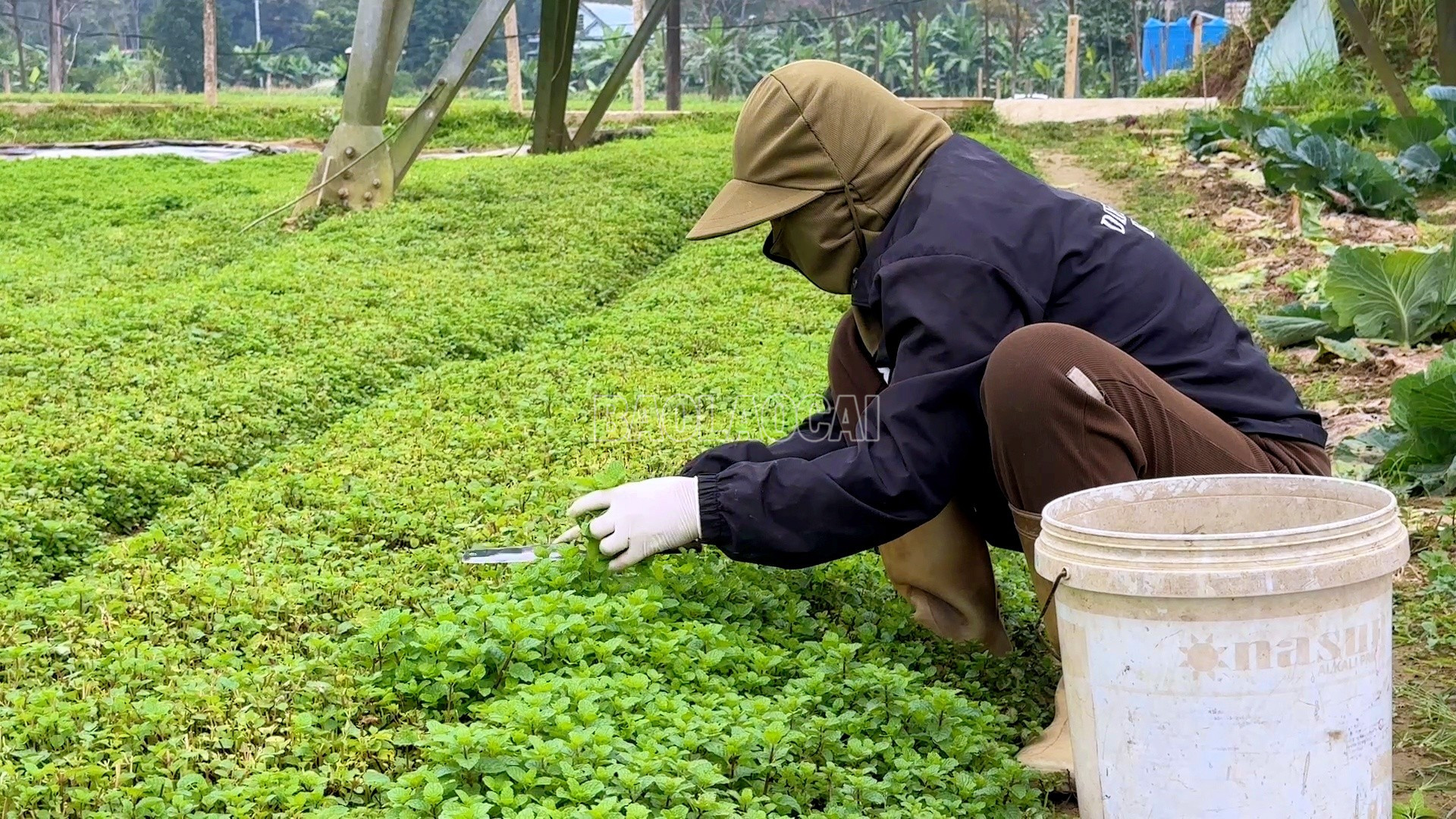
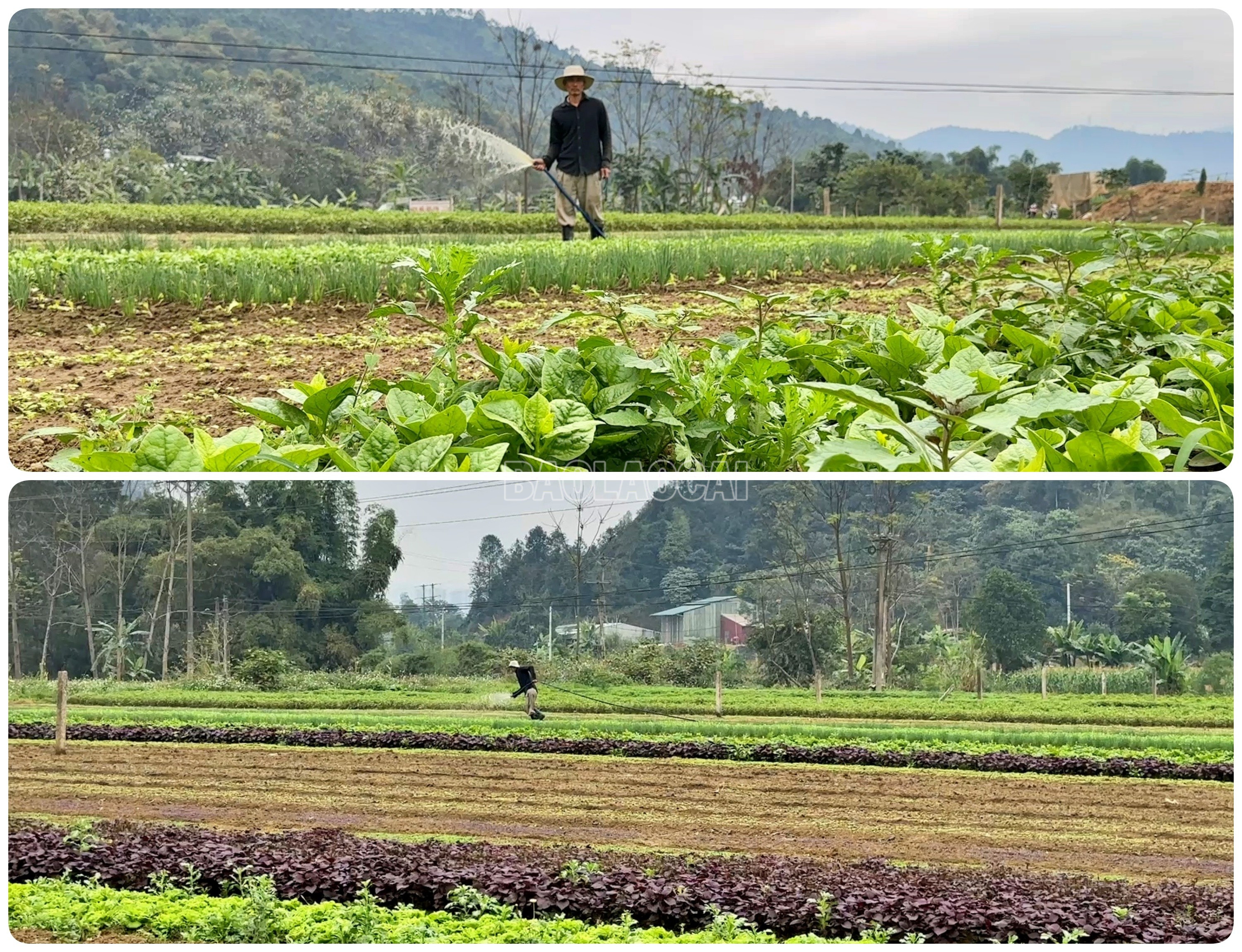
Currently, Lang Quang village has nearly 60 households, of which about 20 households cultivate vegetables on a large scale, with a total area of over 2 hectares for winter crops. Thanks to the rational restructuring of crop patterns, many households have escaped poverty and become relatively well-off. The entire village now has only 1 poor household and 2 near-poor households, a decrease of 2 households compared to 2024; the number of well-off and wealthy households is increasing steadily by about 20% each year.
These positive changes not only reflect the resilience of the farmers but also demonstrate the effectiveness of proactively adapting to natural disasters. From fields once devastated by floods, Quang Village is strongly reviving, becoming a shining example of sustainable agricultural development after natural disasters.
Source: https://baolaocai.vn/nong-dan-lang-quang-no-luc-vuot-kho-sau-mua-lu-post892661.html



![[Photo] Ba Lang An Lighthouse - the "eye of the sea" amidst the "rock museum" of Quang Ngai province.](https://vphoto.vietnam.vn/thumb/1200x675/vietnam/resource/IMAGE/2026/05/29/1780038698840_anh-man-hinh-2026-05-29-luc-14-10-42.png)
![[Image] Pleasant weather helps students enter the 10th grade entrance exam with confidence.](https://vphoto.vietnam.vn/thumb/1200x675/vietnam/resource/IMAGE/2026/05/29/1780034401612_ngay-1-thi-lop-10-minh-duy-8-5009-jpg.webp)
















































































Comment (0)