

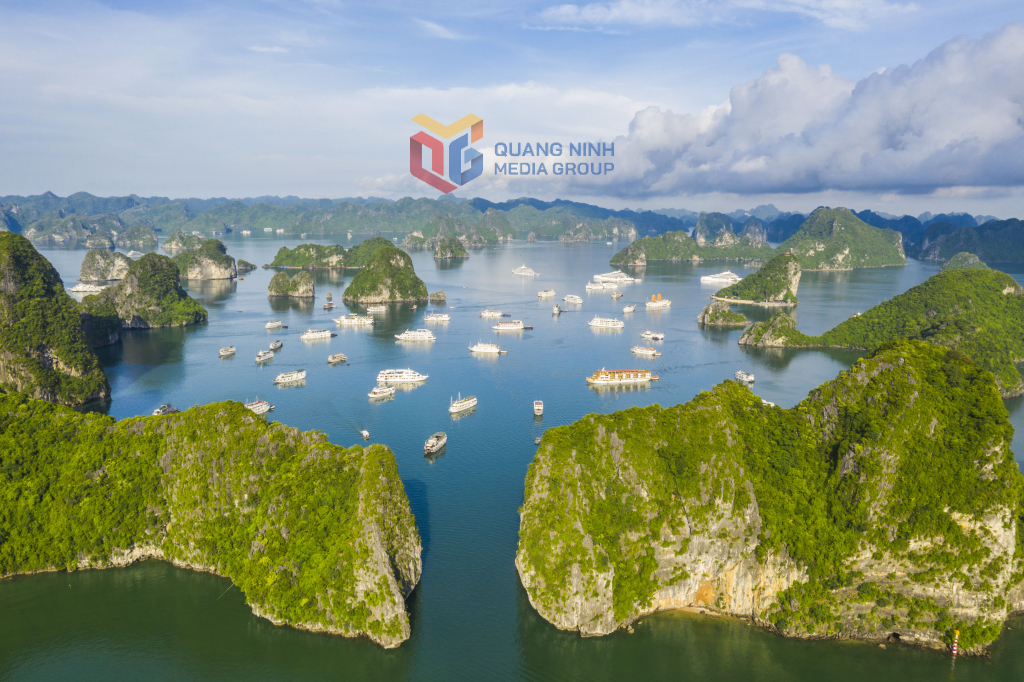
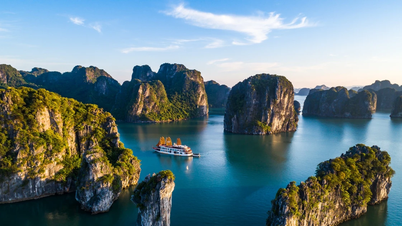
The beauty of Ha Long Bay in the sunlight. Photo: Khanh Giang
Ha Long Bay tourism currently boasts 12 key products: 4 products directly organized by the Ha Long Bay Management Board, including experiencing the aesthetic value of the landscape and geological-geomorphological features through sightseeing boats, exploratory cruises, experiencing fishing village culture, visiting historical and cultural relics, and swimming at Ti Top beach; and 8 services operated by businesses, including souvenirs, rowing boats, kayaks, speedboats, transport vessels, inshore restaurant boats, pearl farming experiences, and seafood trading and processing demonstrations. The combination of state management and private business has created a rich tourism ecosystem, but also places high demands on monitoring, coordination, and synchronization of activities across the entire heritage area.
To promote and develop tourism products in Ha Long Bay, at the end of 2020, the Provincial People's Committee issued Decision No. 4686/QD-UBND "Approving the overall plan for the management and development of marine and island tourism products in Ha Long Bay - Bai Tu Long Bay - Van Don - Co To", outlining a roadmap for tourism product development until 2030 and beyond. Based on this, relevant agencies and businesses have added high-end products such as luxury yachts, seaplanes, helicopter tours, restaurant yachts with music , and local culinary experiences. The goal is to target high-end tourists while preserving the natural and cultural identity of the heritage area.
However, numerous obstacles have hindered the progress of infrastructure development and tourism product diversification. Specifically, the planning for the preservation, restoration, and rehabilitation of scenic landscapes for the period up to 2035, with a vision to 2050, is still only at the planning stage and has not yet been approved by the Government ; it is expected to be completed only in 2027. This directly impacts projects to expand beaches, explore caves, and upgrade ports and wharves. Many existing ideas cannot be implemented due to a lack of clear legal basis.
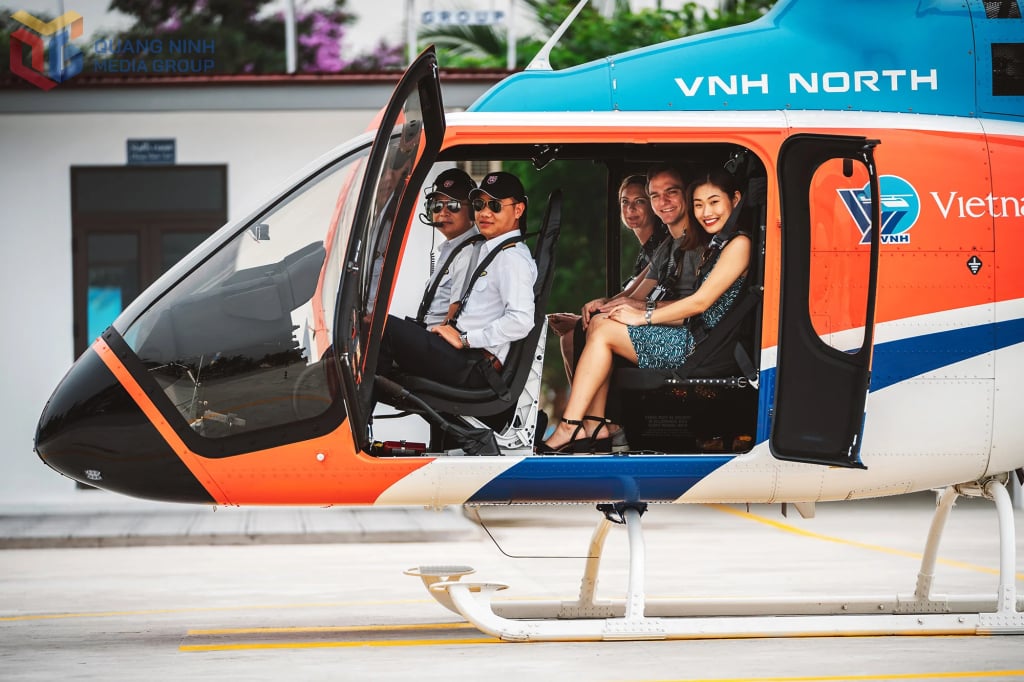
Aerial viewing of Ha Long Bay at Tuan Chau International Tourist Area, Ha Long City. Photo: Hoang Quynh
Furthermore, the distribution of tourists across the itineraries is uneven . The two itineraries VHL1 and VHL2, focusing on visiting Thien Cung Cave, Sung Sot Cave, and swimming at Ti Top Beach, are currently overloaded, causing siltation and traffic congestion at many attractions. Conversely, VHL3 and VHL4, which boast numerous beautiful sandy beaches, pristine caves, and diverse potential experiences such as Vong Vieng, Tung Sau Bay, and Dau Go Cave, receive less attention. To address this, the Ha Long Bay Management Board has invited travel businesses to survey and promote the VHL3 and VHL4 routes, proposing connections with Lan Ha Bay and Cat Ba (Hai Phong City), and creating additional inter-regional itineraries to Bai Tu Long Bay to alleviate congestion on VHL1 and VHL2 and extend the length of stay for tourists.
Many entities using the water and sea surface have not fulfilled their financial obligations, but are still providing services such as kayaking, rowing boats, and speedboats. In 2025, the Ha Long Bay Management Board will temporarily suspend signing contracts for coordinating water-based recreational services, awaiting guidance from the Department of Culture, Sports and Tourism on the process of leasing the right to exploit public assets.
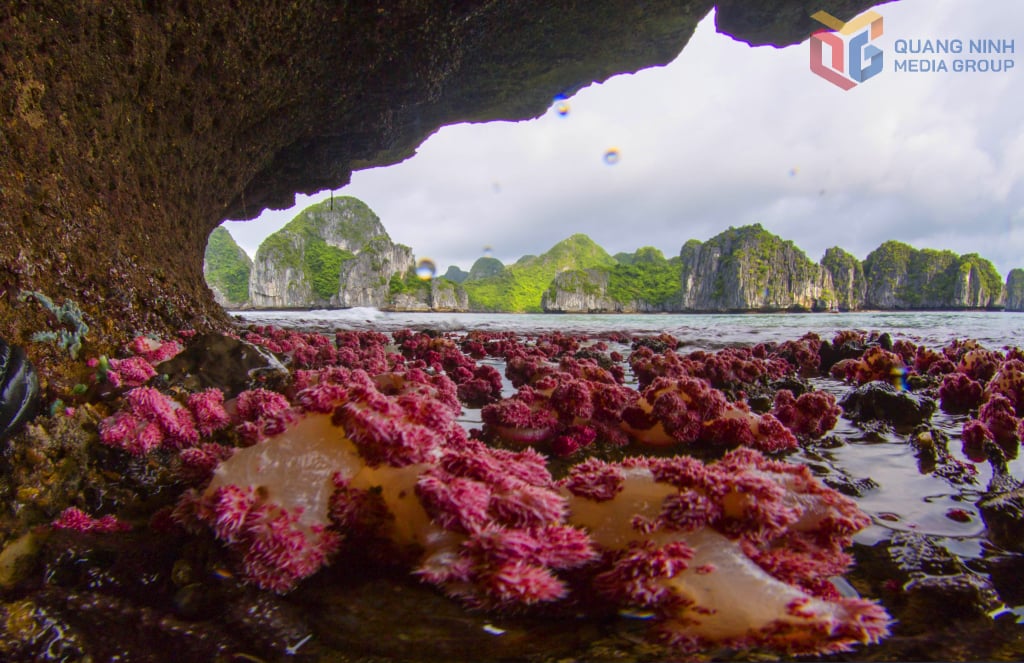
Red coral in Ha Long Bay. Photo: Khanh Giang
Land and maritime policies are also among the issues that need to be resolved. Many investment projects for tourism products along the Ha Long Bay - Bai Tu Long Bay route, the Ha Long Bay Wildlife Conservation Area on Soi Sim Island, and the exploitation of Trinh Nu Cave were approved in principle between 2011 and 2016, but are currently facing procedural obstacles such as the allocation of sea areas, leasing of forest environments, and permits for docking facilities.
In addition, infrastructure at some tourist attractions also faces difficulties, such as: the waterway in front of Thien Cung - Dau Go has not been maintained, causing congestion when the tide is low; the Tien Ong Cave and Me Cung Cave ports have not been officially designated as inland waterway ports, despite being completed in 2020; the stairs leading up and down to Co Cave are dilapidated, the electricity system is inadequate, and the pathways are narrow…
To create a solid foundation for Ha Long Bay to continue being an attractive and friendly destination, relevant authorities need to intervene promptly to remove legal, financial, and infrastructure barriers. Once these difficulties are overcome, Ha Long Bay tourism will maximize its potential, develop sustainably, and enhance the visitor experience.
Thu Nguyet
Source: https://baoquangninh.vn/phat-trien-ben-vung-du-lich-vinh-ha-long-3356848.html
![[Photo] Prime Minister Pham Minh Chinh receives the Chinese Ambassador to Vietnam](https://vphoto.vietnam.vn/thumb/1200x675/vietnam/resource/IMAGE/2026/04/05/1775397481797_ndo_br_dsc-5512-jpg.webp)



















































![[INFOGRAPHICS] Exploiting children's personal images for profit can result in fines of up to 50 million VND.](https://vphoto.vietnam.vn/thumb/402x226/vietnam/resource/IMAGE/2026/04/06/1775442200854_1775442148.webp)
















Comment (0)