


After the merger, Phu Tho province has new space and room for development, ranking 15th in area, 8th in population, and 6th in economic scale nationwide.
According to Associate Professor, Dr. Tran Dinh Thien, former Director of the Vietnam Institute of Economics, Phu Tho province has new potential and strength with its natural area, population size, and economic scale ranking among the top in the country, with much room for development. The province needs to make good use of its advantages in scale as a basis for shaping new strategic thinking that is appropriate to the new reality and context.
Phu Tho province is accelerating the implementation and completion of its master plan until 2030, with a vision to 2050, in line with the strategies linking the Northwest - Hanoi - North Central region - and the Laos-Vietnam economic corridor. In addition, the province is promoting the development of intra-regional value chains, forming a functionally stratified urban network with regional centers such as Vinh Yen - Viet Tri - Hoa Binh, connecting satellite hubs such as Phuc Yen, Thanh Thuy, Luong Son, Yen Lac, Tan Lac...
Phu Tho province is developing a development plan with the goal of becoming one of the leading industrial, service, logistics, and tourism centers in the region and the country during the period 2025-2030 and beyond, with a high economic growth rate. The province will prioritize science and technology, innovation, digital transformation, and the private sector as the main drivers and resources for economic growth. The infrastructure system will be built synchronously and modernly, becoming a center for organizing national, regional, and international events. To realize this goal, economic experts suggest several solutions, focusing on developing key economic zones and corridors, promoting regional linkages, and effectively utilizing development space. The province plans to implement these plans in three identified key economic zones.
The first dynamic zone is the Viet Tri-Phu Tho urban area (formerly), focusing on development along the Noi Bai-Lao Cai Expressway, the Tuyen Quang-Phu Tho Expressway, the Lao Cai-Hanoi-Hai Phong railway, the Ho Chi Minh Highway, National Highway 2, and the new bridge connecting Viet Tri with the IC6 interchange (Noi Bai-Lao Cai Expressway). This zone plays a crucial role in linking the development of the northwestern region of the province and connecting with Tuyen Quang and Lao Cai provinces. The province focuses on developing this zone into a center for economy, finance, industry, urban development, trade, logistics services, culture, sports, education and training, healthcare, and the development of high-quality human resources.
The second dynamic zone is the Vinh Yen-Phuc Yen urban area (formerly), which will focus on development along the Noi Bai-Lao Cai expressway, the Lao Cai-Hanoi-Hai Phong railway, Ring Road 5, and National Highway 2A. It will play a crucial role in linking the development of the northeastern region of the province and connecting with Hanoi and the provinces of Thai Nguyen and Bac Ninh. The province aims to develop this region into a national economic and financial center, a center for automobile, motorcycle, and electronics manufacturing, and to concentrate on the development of science, technology, innovation, high technology, trade, urban development, logistics services, education and training, healthcare, and the development of high-quality human resources.
The third dynamic zone is the Hoa Binh urban area (formerly), planned to be developed in the southern part of the province and connect with Hanoi and the provinces of Thanh Hoa and Son La. The province focuses on developing this area into a center for electricity industry, culture, tourism, logistics services, and satellite housing.
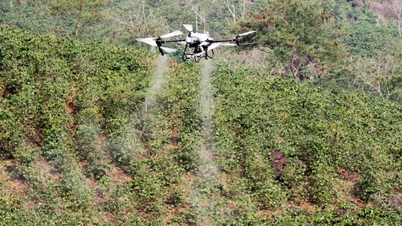
Associate Professor, Dr. Ngo Doan Vinh, former Director of the Institute for Development Strategy, analyzed that Phu Tho is a gateway for exchange between northern provinces and Hanoi and the Red River Delta region; it also has the potential to connect with the Chinese market, thus having the conditions to develop large-scale logistics. The province has agricultural and forestry areas accounting for approximately 80% of its natural area. This can also be considered a strength that needs to be exploited more effectively in the future. Based on this, Phu Tho province proposes developing four economic corridors linked to the province's dynamic regions to promote growth and spillover effects.
The northern economic corridor (part of the Lao Cai-Hanoi-Hai Phong-Quang Ninh economic corridor) is a driving economic corridor of the province, connected to major transportation routes, urban areas - industrial and service centers, the most important industrial zones of the province, and the Bac Giang-Thai Nguyen-Phu Tho industrial belt. The central economic corridor (part of the economic corridor along the Ho Chi Minh Highway and the western North-South expressway in the national master plan) is connected to the north-south axis transportation route in the provincial center and urban areas; and the transportation route connecting Viet Tri-Tam Nong-Thanh Thuy-Hoa Binh. The eastern economic corridor (connected to National Highway 2C, Ring Road 5 and the western expressway) and the southern economic corridor (part of the Dien Bien-Son La-Hoa Binh-Hanoi economic corridor in the national master plan).
Chairman of the Provincial People's Committee Tran Duy Dong said that in the coming time, Phu Tho province will conduct a systematic, scientific, and long-term review, development, and adjustment of its overall strategy and planning to open up new development opportunities and driving forces for the ancestral land and the entire Northern Midlands and Mountains region.
Source: https://nhandan.vn/phat-trien-cac-vung-dong-luc-hanh-lang-kinh-te-vung-dat-to-post892472.html


![[Photo] General Secretary and President To Lam presides over the meeting to approve the draft report on the results of the second inspection by the Politburo of the Standing Committee of the Hanoi City Party Committee.](https://vphoto.vietnam.vn/thumb/1200x675/vietnam/resource/IMAGE/2026/05/26/1779789811432_a2-bnd-4430-9620-jpg.webp)
















































Comment (0)