

Russian Defense Minister Sergei Shoigu has announced that the Russian armed forces will receive the first prototypes of the next-generation S-500 air defense missile system this year.
Shoigu's announcement, reported by state media in late April, signaled a significant advance in Russia's military capabilities. The Kremlin's top military official emphasized that the S-500 systems would be available in two different forms: a Ballistic Missile Defense [BMD] system and an Extended Range Air Defense Missile System.
The S-500, also known as the Prometheus air defense system, is being developed by the Almaz-Antey Aerospace and Defense Corporation. It is designed to neutralize a range of threats posed by current and future aerospace technologies at various altitudes and speeds.
The development of the S-500 began in 2010, following Russia's successful deployment of the S-400 Triumf system in 2007. The original Prometheus design was completed in 2011, but mass production has faced numerous delays, with the latest projected start date for mass production now set for 2025.
Despite these obstacles, the S-500 promises to be a "game changer," said to be capable of countering fifth-generation aircraft, low-orbit satellites, and a range of missile threats.
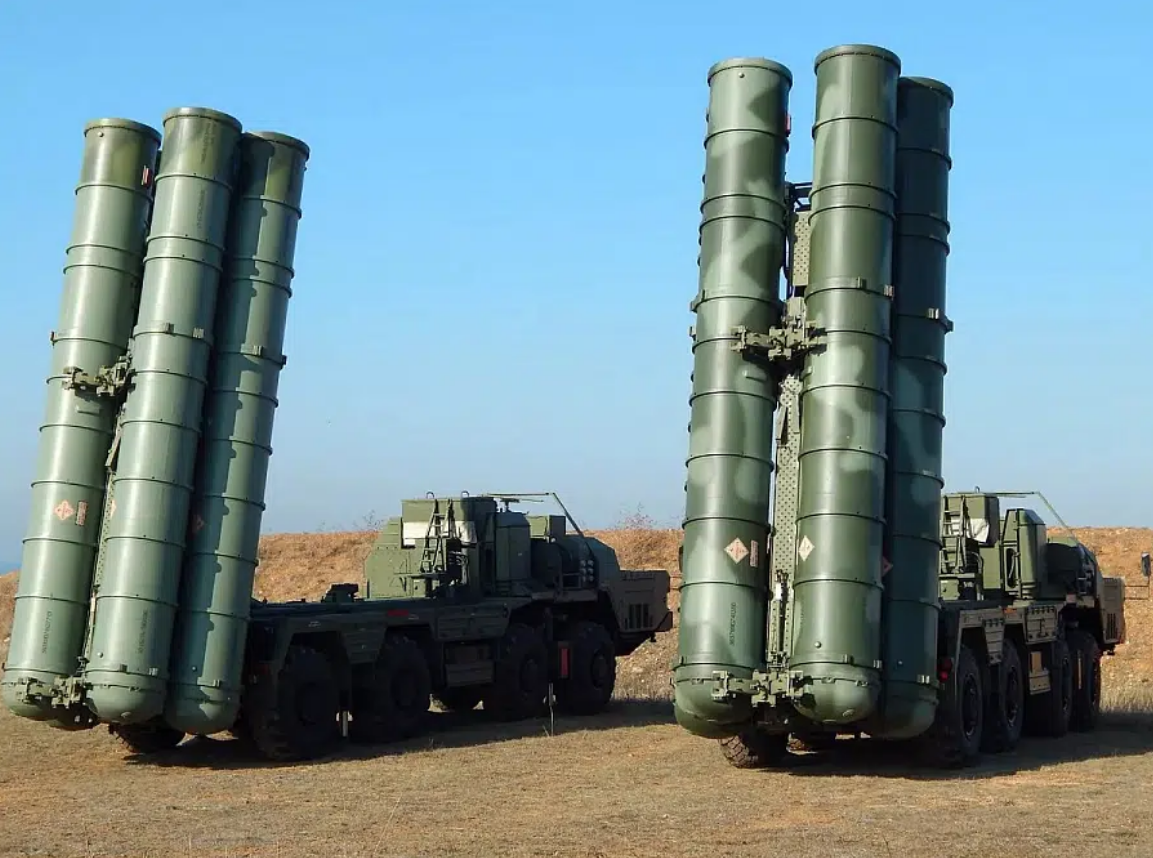
Russia touted the S-500 "super fire dragon" as an unprecedented system globally, highlighting its ability to effectively counter a range of current and future airborne threats posed by potential adversaries at various altitudes and speeds. (Image: Meta Defense)
While delays in the deployment of the S-500 have raised concerns, some experts suggest that Russia may be deliberately prolonging the production schedule of the new system to prioritize meeting current demand for the S-400 system, both domestically and internationally.
Moscow has actively promoted the export of the S-400, securing contracts with several countries around the world . Meanwhile, the S-500 has undergone rigorous testing to confirm its capabilities.
Russia has conducted the world's longest-running surface-to-air missile test, demonstrating the capabilities of the S-500 by successfully striking a target nearly 300 miles (482 km) away.
Earlier this year, media reports indicated that the S-500 had effectively tracked and intercepted hypersonic targets, highlighting its versatility and suitability in a changing security environment.
The S-500 Prometheus air defense system uses two specific types of missiles: the 77N6-N and the 77N6-N1. These advanced Russian missiles, equipped with inert warheads, are designed to destroy nuclear warheads using purely kinetic energy. The system's mission is to identify, intercept, and destroy ballistic missile warheads, hypersonic cruise missiles, and other airborne threats.
Furthermore, its high resistance to electronic jamming enhances its survivability in challenging combat situations, ensuring the system's effectiveness even when faced with complex electronic warfare tactics.
Designed to replace the aging A-135 missile systems currently in service, the S-500 is expected to complement Russia's existing S-400 systems, forming a comprehensive defense network.
The S-500 also boasts an exceptional range, and this is one of its most outstanding features: 600 km against aerodynamic targets, and 400 km against ballistic targets.
Such an extensive range allows the S-500 system to carefully monitor vast territories, providing a robust shield for key administrative and industrial centers in Russia, reinforcing the national security infrastructure against airborne threats.
Minh Duc (According to Eurasian Times, Bulgarian Military)
Source
![[Image] Hanoi's urban life under the challenge of a "scorching hot" environment](https://vphoto.vietnam.vn/thumb/1200x675/vietnam/resource/IMAGE/2026/05/25/1779706979265_nang-nong-t5-2026-minh-duy-7-4636-jpg.webp)


![[Image] Close-up view of the interchange connecting the two expressways and Long Thanh Airport.](https://vphoto.vietnam.vn/thumb/1200x675/vietnam/resource/IMAGE/2026/05/25/1779703378210_ndo_br_z7863716673926-224453a31600126cce10622af6290afd-4549-jpg.webp)






















































































Comment (0)