

We are pleased to present your article as one of the earliest pieces on the National Assembly as well as on our country's first Constitution.
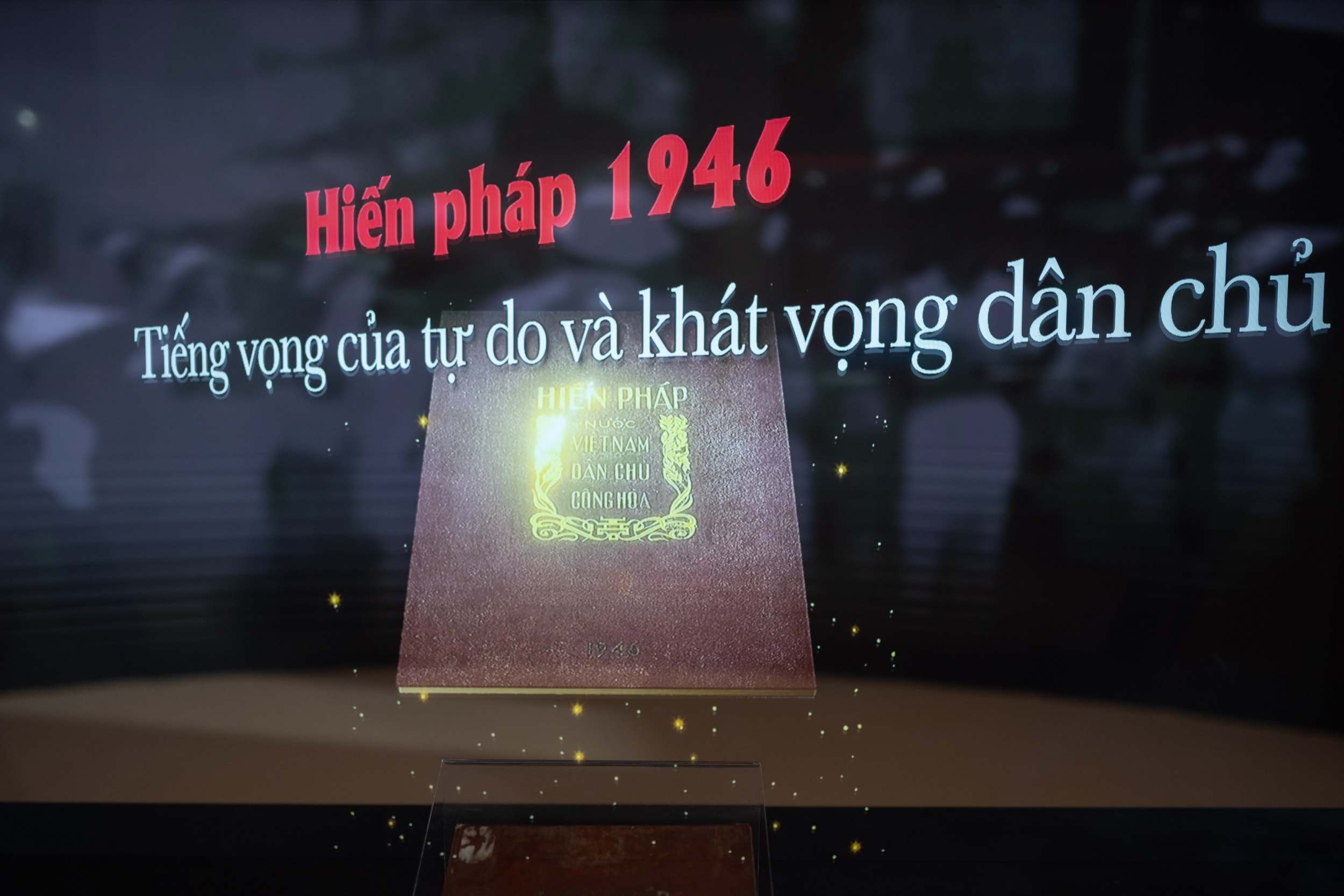
I arrived at the National Assembly with joy, if not pride. My steps on the steps were light and firm. Perhaps my friends felt the same way. The ground, which usually trembled beneath my feet, was now solid, and all the foundations upon which the castles and mansions of the capital were built stood firm as a rock, unshakeable by any force. The universe welcomed me: from the light to the breeze, to the birds, to the clusters of leaves, everything danced and sang with joy. Even inanimate objects seemed to sing as I did: We have a Constitution, a new, progressive Constitution. We have powerfully risen above the ranks of backward peoples, and in the race against nations greater than ourselves, we have a magnificent "backdrop." Oh, how joyful, how honorable! Our nation has a Constitution that governs its life.
In the air, the first democratic constitution of East Asia unfolded. How pleased I am for the Vietnamese people.
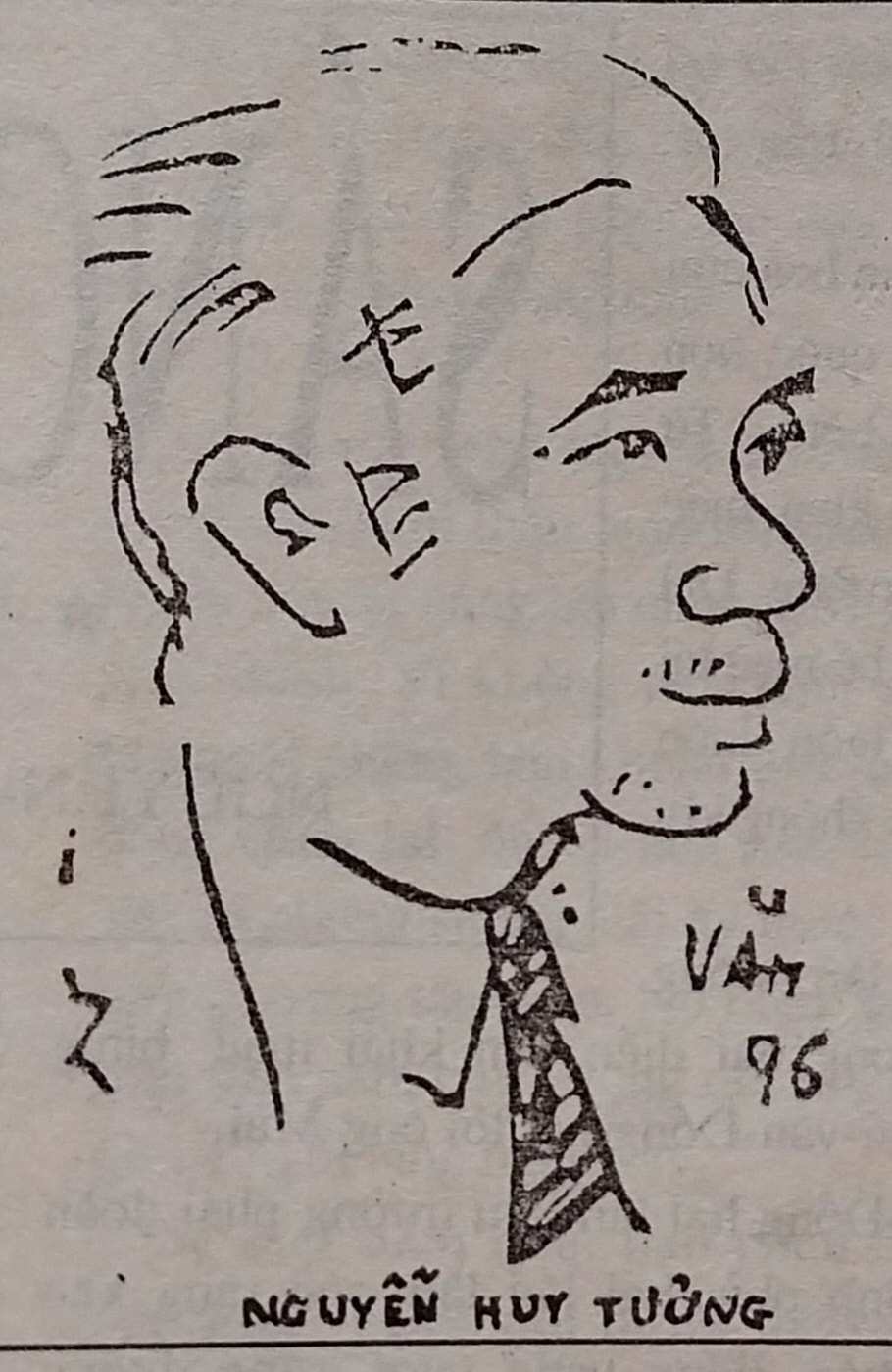
At the refreshment counter, my friends were chatting noisily. Groups of three, groups of five, some sitting around a table, others standing on the veranda, with the relaxed, leisurely demeanor of workers who had completed a magnificent architectural project. Today, I truly understood them: they bore no resemblance to the solemn, dignified parliamentarians with their stiff high hats and bulky briefcases, bound by the conventions of parliament. On the contrary, they were free in their language, free in their gestures, often disregarding the formalities that usually bind people in old, decaying societies. They were simply ordinary people from the countryside. A parliamentarian might forget the interests of the people, but the people never forget their own. To rebuild an entire society, to erect, suddenly like a solitary mountain, a Constitution, they could not be rigid, bureaucratic, enslaved, or old-fashioned souls. They may be clumsy, they may be mistaken, but above all, they must be free people, so that they can fight for the freedom of their generation, for the freedom of generations to come throughout history. Therefore, to the perplexing questions: This doesn't conform to the Russian Constitution; that provision doesn't conform to the American Constitution... they answered in a certain way:
- Why should we follow the Russian Constitution, why should we follow the American Constitution? We're making a constitution for Vietnam, not for Russia or America! That's the constitution of Vietnam.
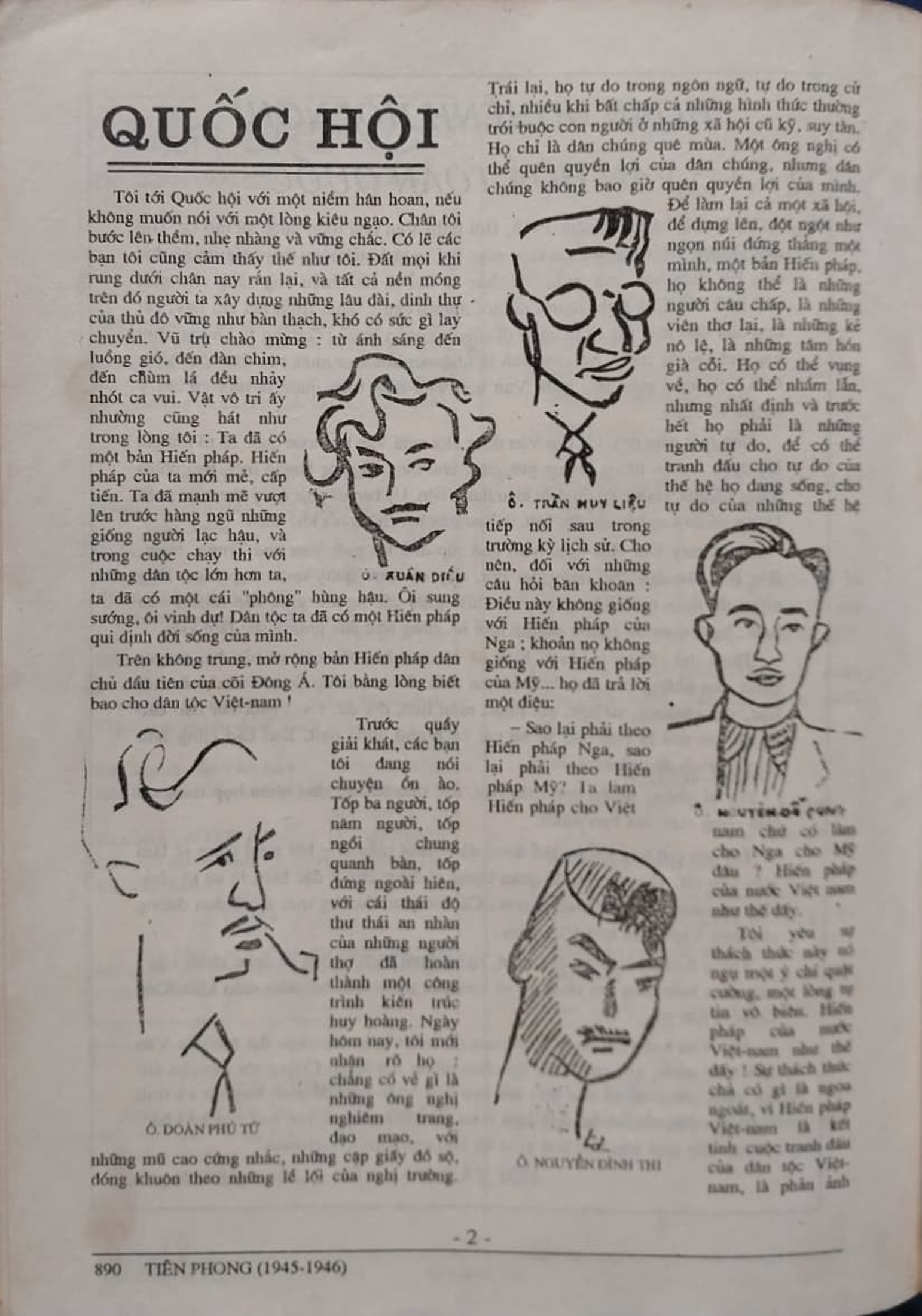
I love this challenge; it implies an indomitable will, boundless self-confidence. That's the Constitution of Vietnam! The challenge is not at all exaggerated, because the Vietnamese Constitution is the crystallization of the Vietnamese people's struggle, a reflection of the Vietnamese spirit of freedom and democracy; it is a brilliant manifesto, upholding the will for independence and unity of the Vietnamese race. The entire Vietnamese nation is there. There, a nation has affirmed before the world its vitality and its will to live.
I vividly pictured that afternoon, when they raised their hands profusely beneath the dazzling vaulted ceiling of the Grand Theatre, when they enthusiastically rose to sing the stirring national anthem. And they, and the people, stood on the upper levels, one end touching the other, one foot following the other, cascading down from the magnificent vault like glittering stalactites. I imagined those stalactites reaching high into the blue sky.
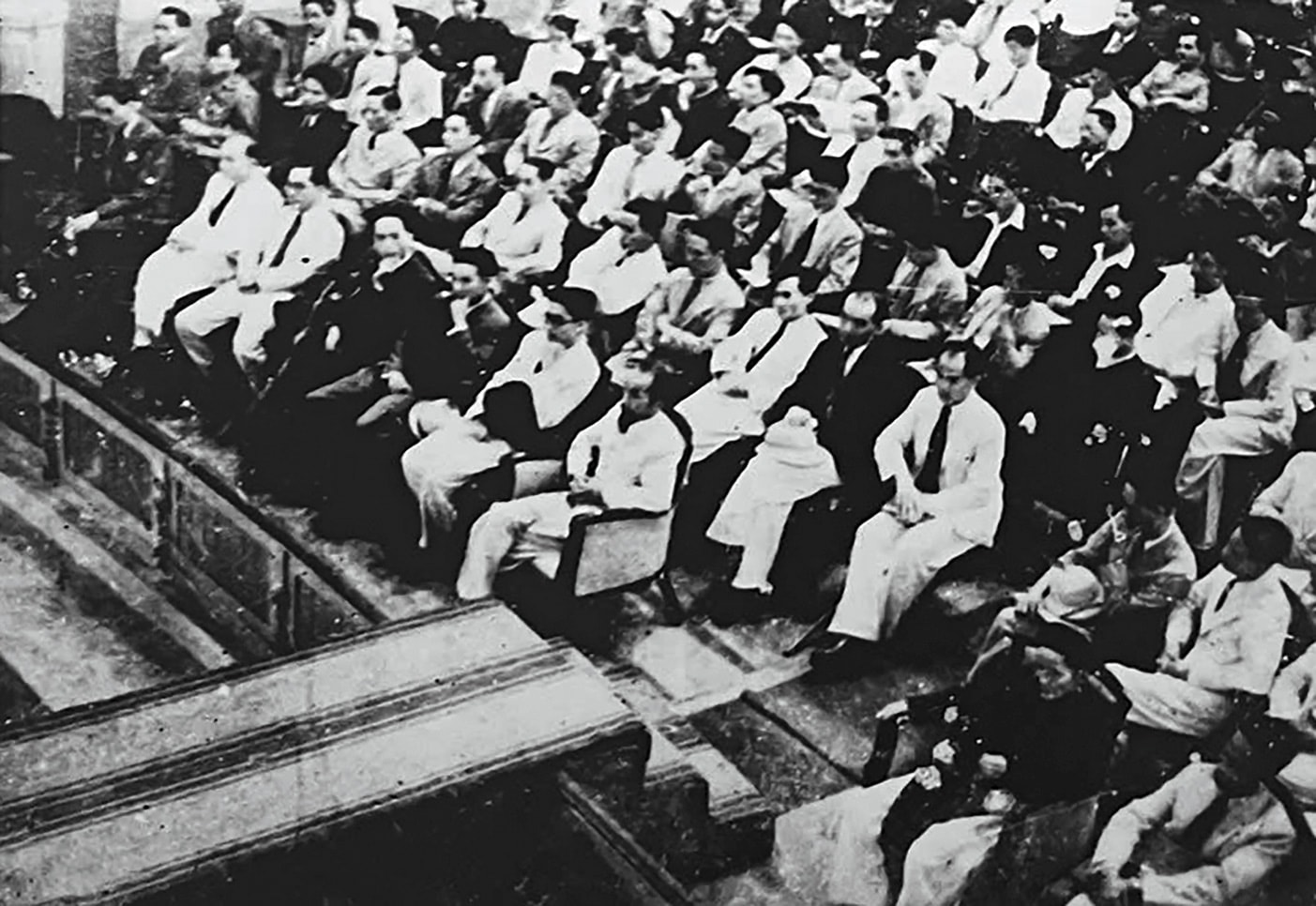
What a beautiful gesture! That innocence concealed a profound belief. They believed that the Constitution they had drafted would lead the nation to a bright future, and above all, they believed that they were not betraying the people.
.jpg)
A nation has risen up firmly. And that heroic song announces to the entire nation, to the whole world, the joyful news of the solemn birth of the Vietnamese Constitution, amidst the chaos of the world. Throughout Vietnam, songs of joy resound.
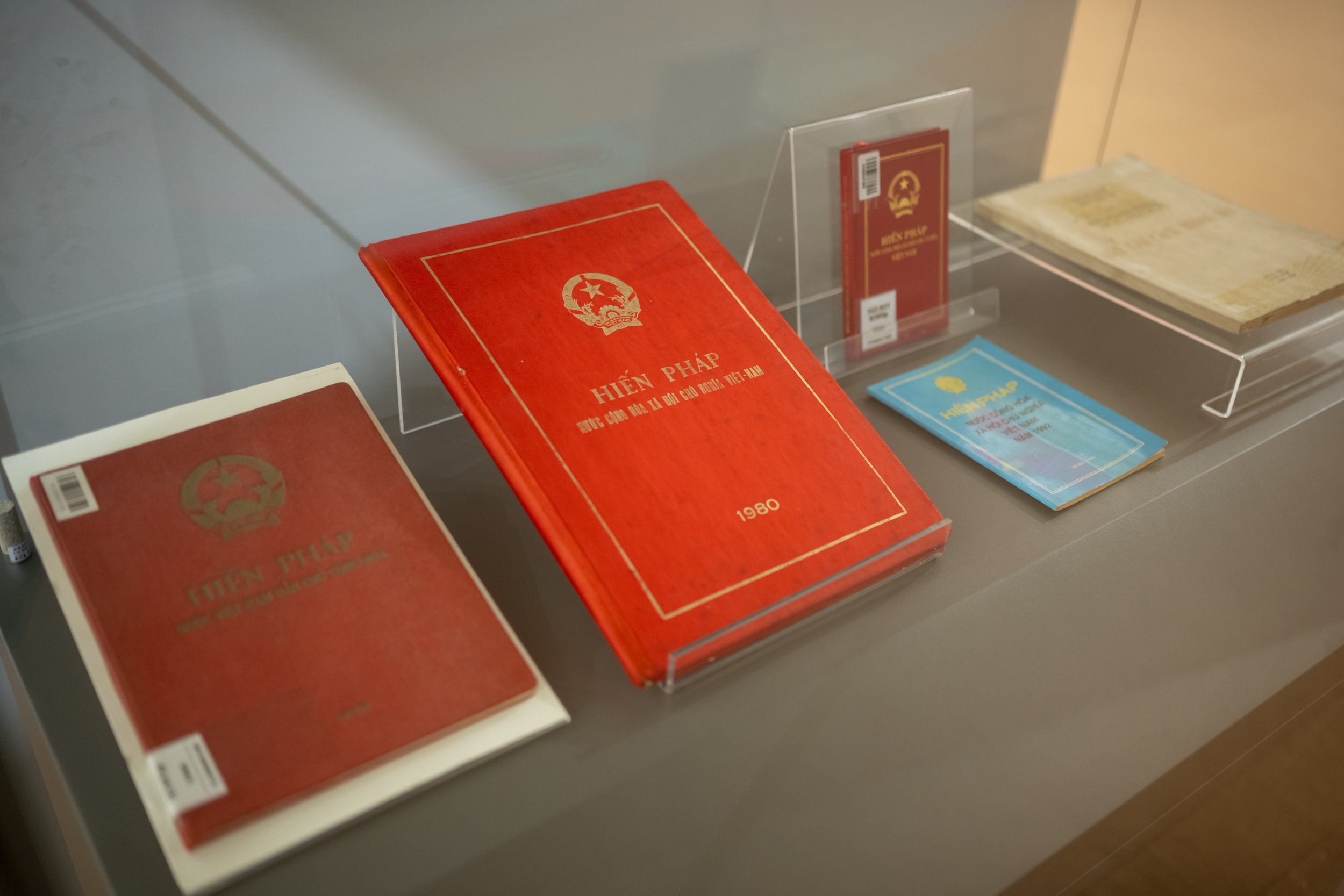
To date, Vietnam has promulgated five Constitutions (1946, 1959, 1980, 1992, and 2013). However, the first Constitution of 1946 is still highly regarded, considered "...a historical trace of the first Constitution in East Asia... That Constitution declared to the world that Vietnam had achieved independence... that the Vietnamese people had all the rights and freedoms... that Vietnamese women had been granted equal standing with men... That Constitution emphasized a spirit of close solidarity among the Vietnamese people and a spirit of integrity and fairness among the classes."
(Source: Complete collection of "Pioneers 1945-1946", Vietnam Writers Association Publishing House, 1996)
Source: https://daibieunhandan.vn/quoc-hoi-10402427.html




























































Comment (0)