

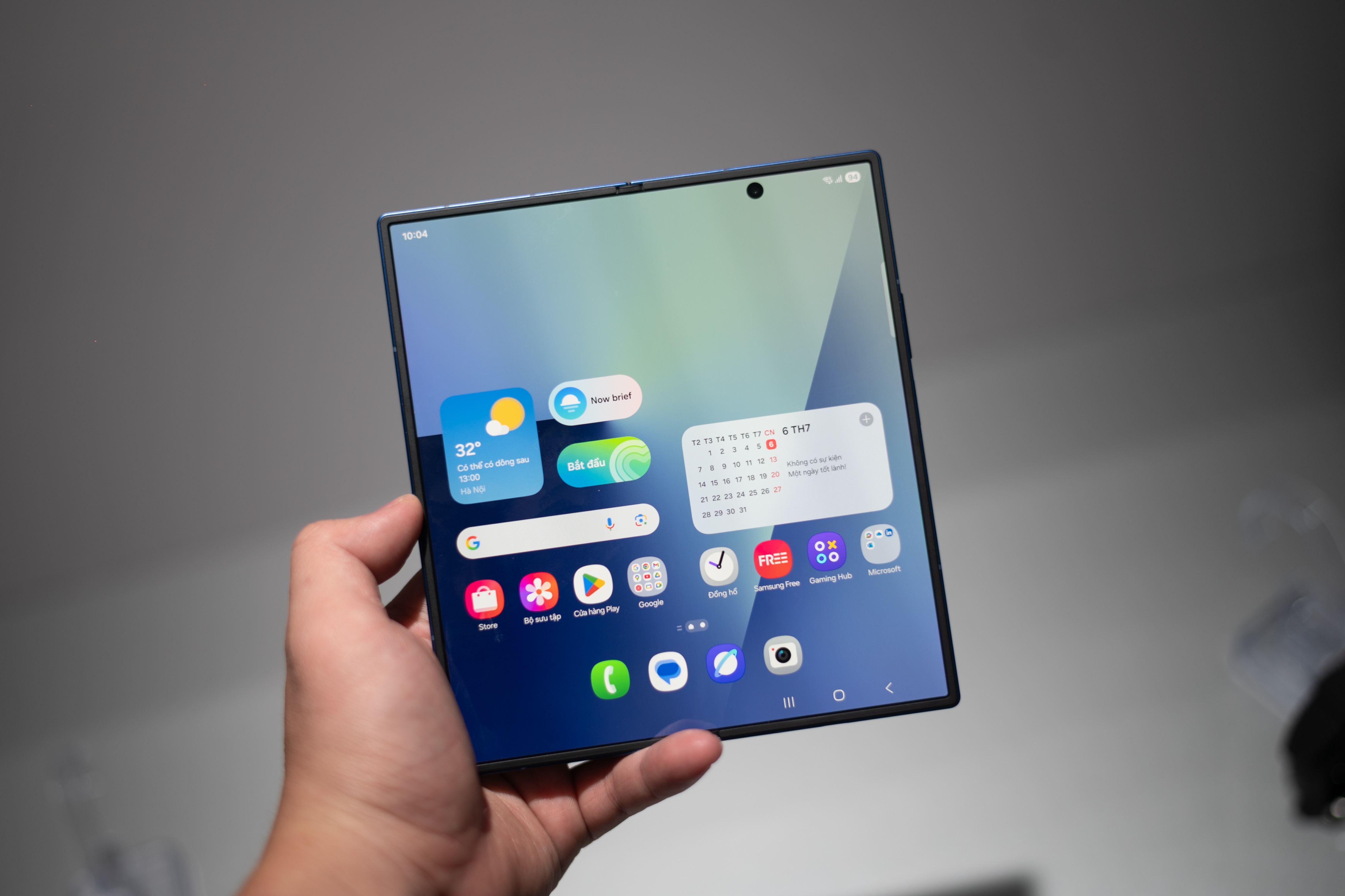
In 2019, Samsung unveiled its first Fold model. Around the same time, Huawei and Royale introduced their foldable phones. Initially, the devices from the Chinese companies were praised for their outward-folding mechanism, eliminating the need for a secondary screen, and being more modern and technologically advanced.
However, time has proven Samsung right. Chinese companies have had to change their designs, learning from the South Korean company's Fold and Flip lines in terms of layout to create a practical foldable phone.
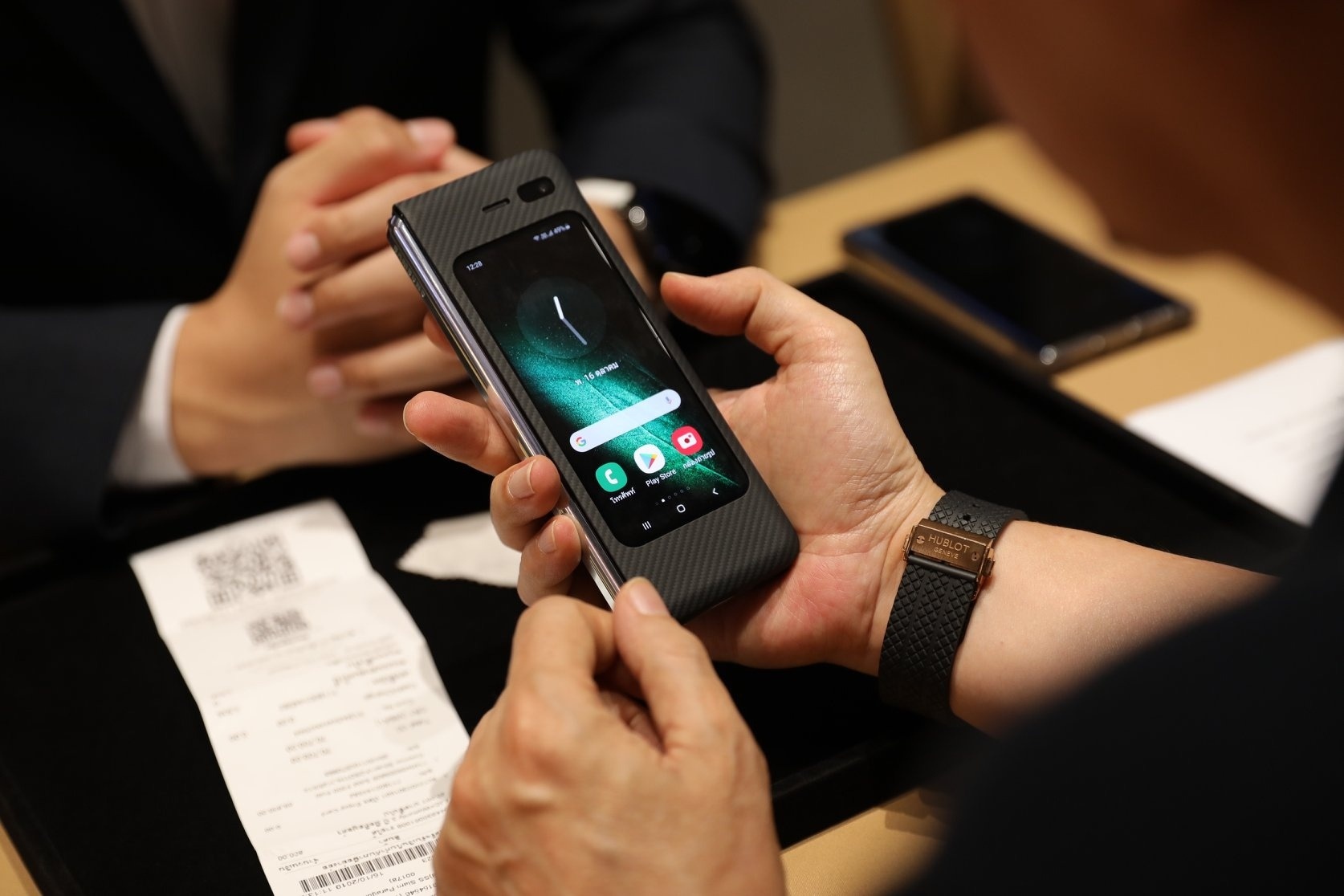 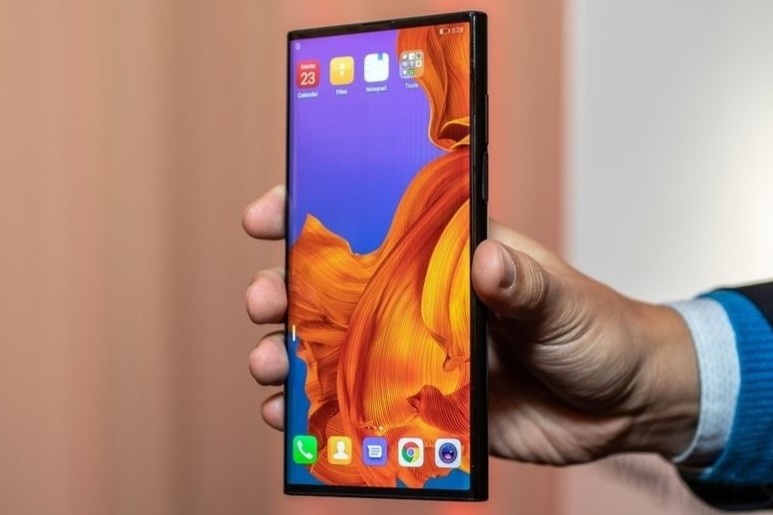 |
Samsung shows that the folding design of the Galaxy Fold (front) is more future-proof than the reverse-folding design of the Huawei Mate X (rear) from 2019. Photo: Samsung, Huawei. |
After six generations, Samsung's first-mover advantage in this market is gradually disappearing. The Z Fold7 and Z Flip7 show that they are having to catch up with competitors from the country with the world's largest population. While representing the biggest breakthrough in their product line in years, these two models have only just caught up with their rivals technologically, and haven't yet surpassed Honor, Vivo, or Oppo.
Samsung's unique selling point has been replaced by a more competitive playing field. Now, the company must compete using cameras, specifications, or AI—features that rivals can quickly copy.
From leading the way to pursuing.
Over the years, Samsung has been like "fighting the mafia alone." Chinese companies have launched and improved foldable phones at an incredible pace. While international sales are limited, the market of over a billion people is still large enough for these companies to invest and begin showcasing their features. Furthermore, Vivo, Oppo, Honor, Huawei, and Xiaomi seem to share technology. Whenever one company develops a new solution, the others are quick to adopt it as well.
From teardrop-shaped hinge designs that reduce screen creases to ultra-thin glass and silicon-carbon batteries, Chinese foldable phones are rapidly undergoing a transformation.
On Samsung's side, I don't feel the Z series is lagging behind because the company seems to have chosen its own path. The foldable phones from the South Korean manufacturer, although thick and heavy, are water-resistant, have a sturdy hinge, and maintain a narrow screen aspect ratio for easier handling. It's like a choice the company made, rather than being inferior to Chinese technology. This is similar to the company's decision to make the screen fold inward instead of outward six years ago.
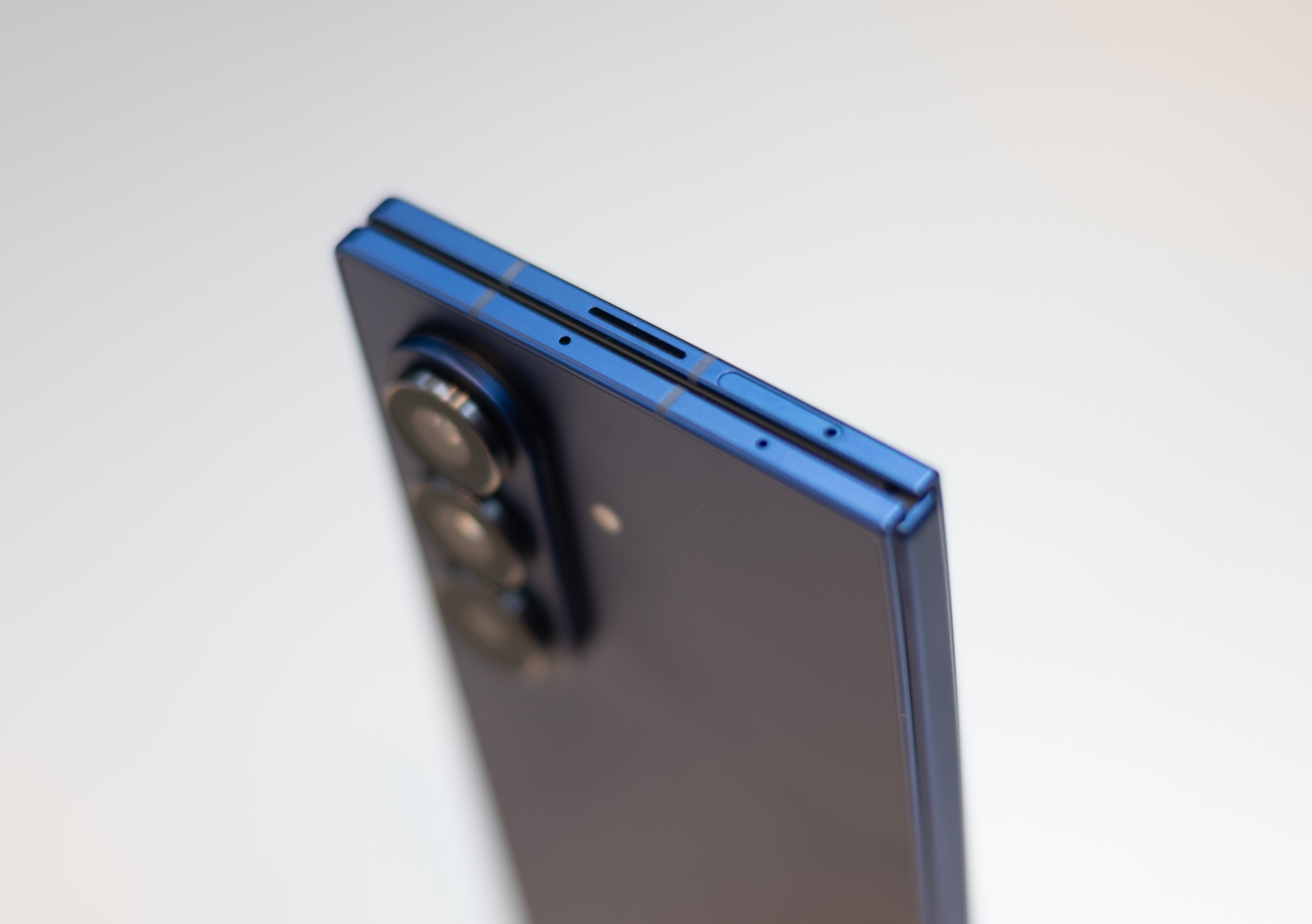 |
The Galaxy Z Fold7 is the company's biggest upgrade in years, reducing both size and weight. |
However, the aforementioned theory no longer holds true for the recently released Z Fold. This is arguably the biggest upgrade to the entire line in years, completely transforming Samsung's expensive model. The user experience may be improved, but the values pursued by previous versions are gone.
By chasing the race to reduce the thickness and weight of its devices, Samsung has put itself in a position of chasing its Chinese rivals. This is not a playing field where the company has an advantage. From 2024, Vivo, Oppo, and Honor have already had foldable smartphones that are as light as a bar, less than 1 cm thick.
These companies also "ambushed" the Korean company by launching new phones shortly before the Unpacked event. The Honor Magic V5 model is 4.1 mm thin when unfolded and 8.8 mm when folded. These figures are better than the Galaxy Z Fold7. While Samsung was trying to convince users with an extremely thin foldable phone, Honor already had an even thinner one.
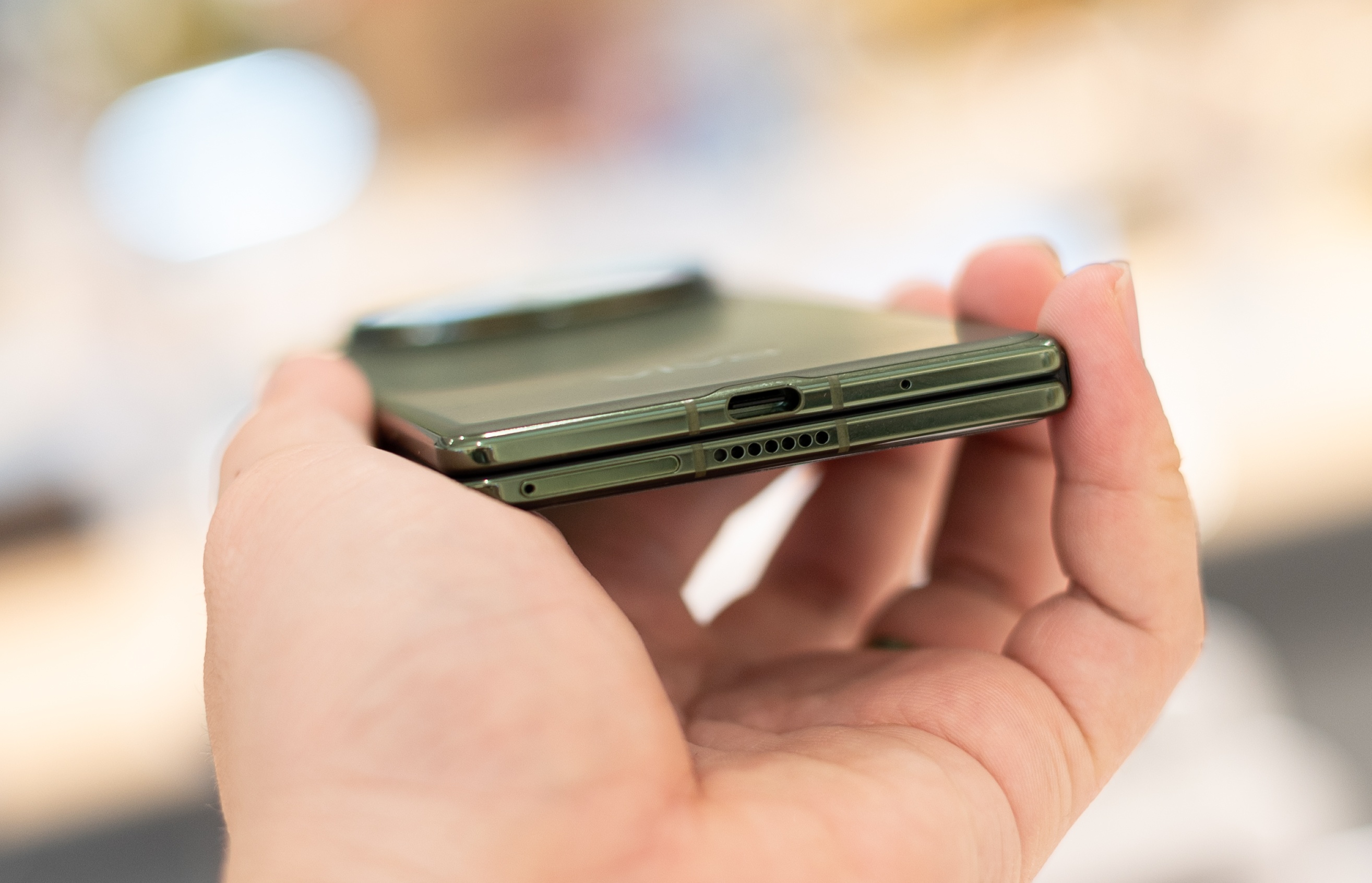 |
The Vivo X Fold5, recently released in China, has dimensions similar to the Fold7. |
The company also abandoned the S Pen, a proprietary feature that could have differentiated its Z Fold line.
The same thing happened with the Z Flip7. This model has a secondary screen that extends to the edges, leaving only the camera visible. This change makes the device look much more high-tech and visually appealing. However, Lenovo (Motorola) and Xiaomi had already done something similar last year with their vertically folding phones.
In this race, Huawei has demonstrated its desire to lead the market. They dare to sell unconventional models like the Mate XT triple-folding phone or the Pura X hybrid.
What other weapons does Samsung have?
In an interview with Tri Thuc - ZNews , a representative from Samsung Vietnam stated that they believe their product's strengths lie not only in its slim and lightweight design. The inclusion of a high-resolution camera, intelligent AI capabilities, optimized software, and a powerful processor will give the device an advantage over competitors.
The points the manufacturer has made are all correct. However, even when taken out of the context of the Z series, the aforementioned strengths could still apply to any Samsung flagship.
Configuration, performance, and AI all lack the unique element that plays a crucial role in attracting customers. The S Pen on the Galaxy Note or iOS on the iPhone are examples of such components. Honor and Oppo haven't yet optimized their software or lower-resolution cameras. However, catching up or surpassing them in these aspects isn't difficult in the mobile market.
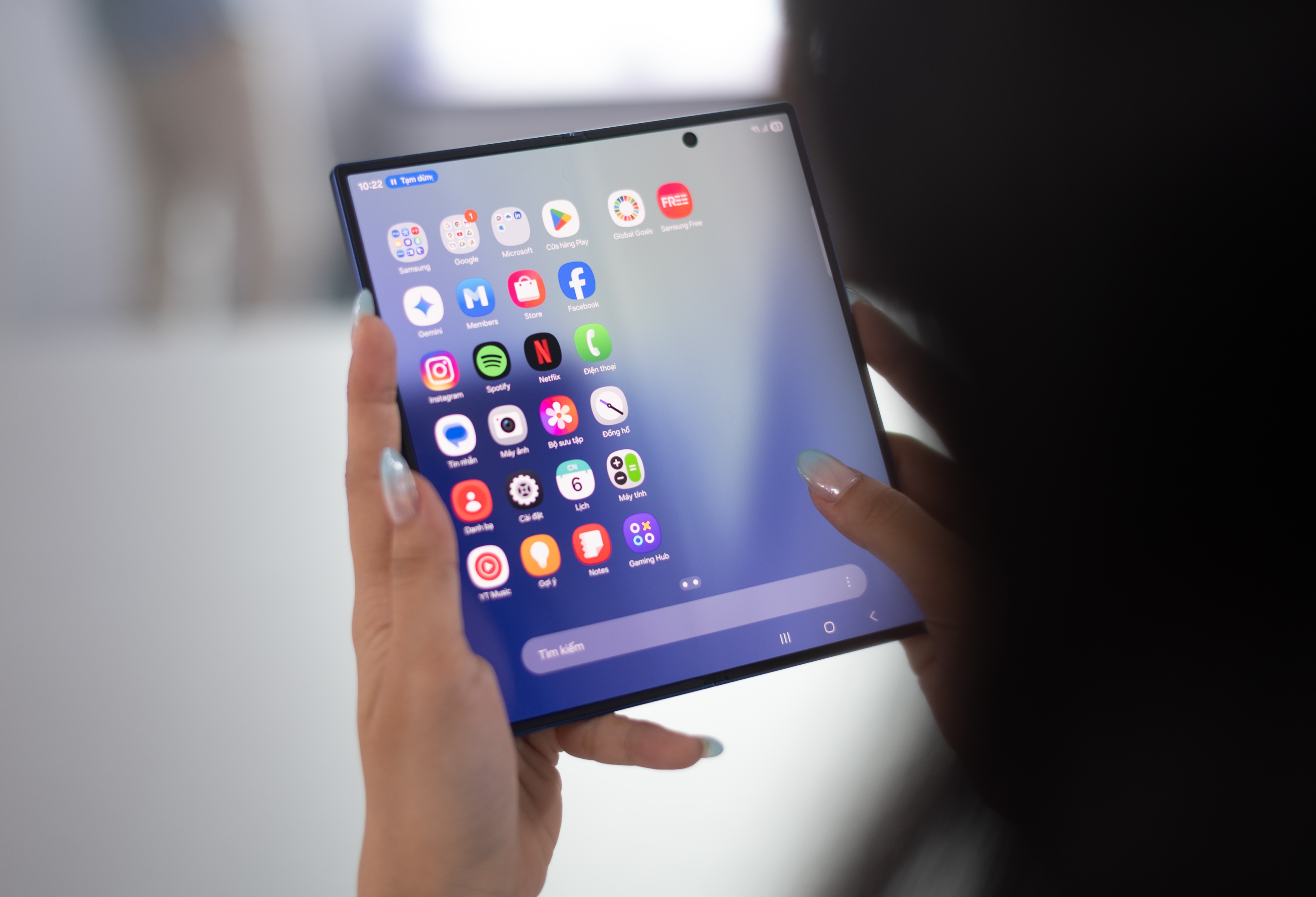 |
Samsung phones still have AI, powerful cameras, and chips, but these aren't their exclusive strengths. |
The Magic V5 and Find N5 both have top-of-the-line Snapdragon processors. They don't have the full suite of features like Galaxy AI, but they do have Gemini and tools to assist with translation, transcription, image processing, object removal, etc.
Samsung's unique selling point in the Z series was its foldable screen mechanism. However, they have been caught up in this area. It's no longer their exclusive advantage. With the basic elements leveled out, the foldable phone race is no different from the flat-screen phone race. Manufacturers are now competing on specifications, expanding screen sizes, adding cameras, fast charging, and so on.
Samsung Display has previously unveiled numerous prototypes of rollable, tri-fold, or oddly shaped phones. However, these remain only on paper.
According to a report by Counterpoint Research, Samsung's foldable phone market share has fallen from 56% to 41% over the past year. Sales volume has dropped by as much as 24%. This is an alarming figure for a product line once expected to help them surpass Apple. The significant upgrades in this year's product are a positive sign that Samsung has changed. However, they need to do more to truly excel as this technology gradually reaches saturation point.
Source: https://znews.vn/ra-mat-z-fold7-samsung-vao-the-bam-duoi-doi-thu-trung-quoc-post1567183.html

![[Image] Close-up view of the interchange connecting the two expressways and Long Thanh Airport.](https://vphoto.vietnam.vn/thumb/1200x675/vietnam/resource/IMAGE/2026/05/25/1779703378210_ndo_br_z7863716673926-224453a31600126cce10622af6290afd-4549-jpg.webp)
![[Image] Hanoi's urban life under the challenge of a "scorching hot" environment](https://vphoto.vietnam.vn/thumb/1200x675/vietnam/resource/IMAGE/2026/05/25/1779706979265_nang-nong-t5-2026-minh-duy-7-4636-jpg.webp)


























































































Comment (0)