

 |
For the past two years, global users have become accustomed to using AI chatbots without spending a dime. However, behind that convenience lie enormous bills and operating costs that investors are no longer willing to pay unconditionally.
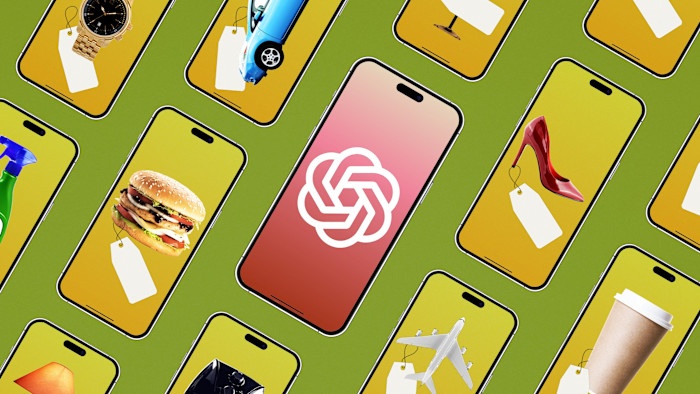
The shift from a purely tool-based model to a commercial platform is an inevitable step. Major technology corporations like Microsoft, Google, and even OpenAI are aggressively seeking ways to turn chatbot responses into a new advertising "gold mine," similar to what Google has done for the past two decades.
Cost burden
Despite having hundreds of millions of users, AI companies are facing a harsh reality: the cost per AI response is many times higher than a traditional search. Operating data centers with tens of thousands of expensive processing chips is costing millions of dollars per day.
Sam Altman, CEO of OpenAI, once frankly admitted in an interview: "The operating costs of these models are extremely high; they are astonishing every time we look at the billing statements."
 |
Walmart's stock price surged last year after the company announced an agreement with ChatGPT, allowing customers to purchase goods directly from "conversations." Photo: Michael Nagle/Bloomberg. |
According to sources who spoke to the Financial Times , OpenAI is setting an ambitious goal of generating billions of dollars in revenue this year, requiring advertisers to commit to a minimum spending of $200,000 to appear in search results. For comparison, Netflix has reported advertising revenue of approximately $1.5 billion by 2025.
Dentsu, a Japanese advertising group and one of OpenAI's early partners, predicts that by the end of 2027, more than half of customers will find brands through AI-generated summaries.
I absolutely hate advertising. It would be the last resort in our business model.
OpenAI CEO Sam Altman
"The search engines that defined the previous generation of advertising are gradually being replaced by conversational AI and live response tools," said Kate Scott-Dawkins, global president of business metrics at WPP Media.
Financial experts believe that the subscription model is only a temporary solution and unlikely to help AI achieve billion-dollar profit margins. To sustain growth, chatbots must turn to advertising – the most stable and abundant source of income on the internet.
"The combination of paid and advertising models will work best with AI applications, just like every other media model has ever done," said Mark Read, former CEO of WPP. This marks the end of the "honeymoon" period when companies were willing to incur losses to gain market share.
When AI becomes a "salesperson"
AI-powered advertising will not appear in the form of conventional banners, but will be subtly integrated into the chatbot's responses. For example, when someone asks about skincare, the AI could suggest a specific skincare product from a partner, along with a purchase link.
Experts believe this form of advertising is far more effective than traditional banners. Dentsu, a Japanese advertising group and one of OpenAI's early partners, predicts that by the end of 2027, more than half of customers will find brands through AI-generated summaries.
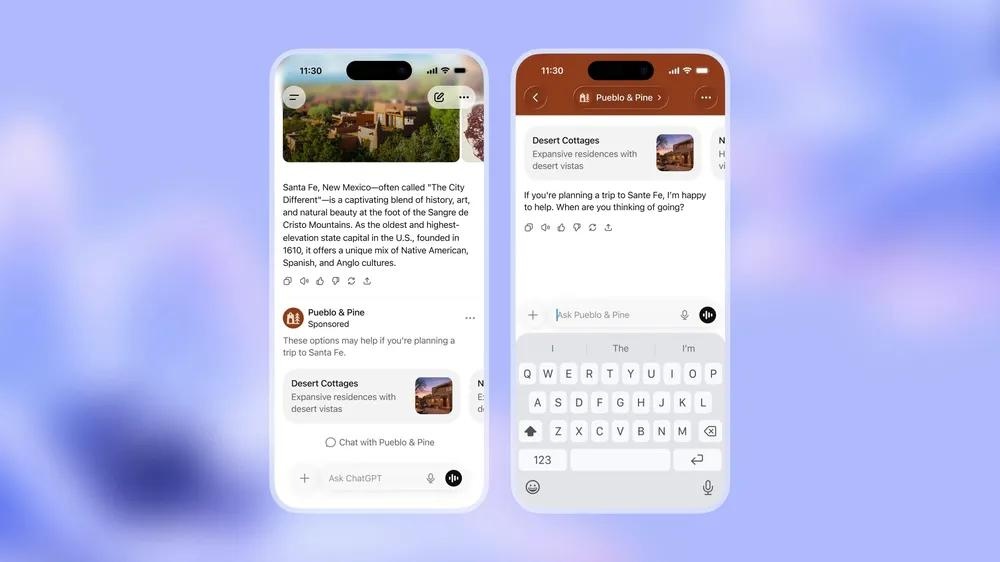 |
Two chatbot conversations about travel included advertisements. Photo: OpenAI. |
"Search engines—once a goldmine for advertising—are gradually being replaced by conversational AI and live response tools," said Kate Scott-Dawkins, Global President of Business Intelligence at WPP Media.
According to some sources, OpenAI has started offering a price of $60 per 1,000 impressions (CPM) – an exorbitant price.
James Denton-Clark, Director of Growth at Stagwell Europe, emphasized that this is not just a new advertising format, but a serious effort to commercialize "AI assistants" capable of answering questions, planning, and shopping on behalf of users.
However, OpenAI is being quite cautious. Currently, ads are only being tested with free users in the US. The ads are displayed separately from ChatGPT's responses, below relevant conversations, with a clear message stating that the chatbot's responses are not affected by the ads.
"Erosion of trust"
One of the biggest hurdles in integrating advertising into AI is the issue of trust. AI chatbots are trusted because of their ability to synthesize objective data. If one day the AI's advice is manipulated by the highest payers, the core value of this technology will be diminished. Users may feel betrayed when they realize their virtual assistant is trying to "manipulate" them.
"Many users will become more wary of chatting with ChatGPT because they don't want their personal information used for targeted advertising. If users are afraid to share personal context, AI will become less useful, making the product worse," warned Professor David Rand from Cornell University.
 |
Furthermore, the user experience will become distinctly polarized. Satya Nadella, CEO of Microsoft, once suggested a multi-tiered future: "There will be different service models. Some people will choose to pay for a private experience, while others will use ad-supported services for free."
Advertising could make AI less useful.
Professor David Rand
Ultimately, the era of free AI will turn into a race where user data becomes the most valuable currency. As artist Richard Serra once put it: "If you don't pay for the product, then you are the product," and AI is no exception to this harsh rule.
Furthermore, the user experience is also at risk of being disrupted if conversations are infiltrated with too much marketing content. AI developers face a difficult balancing act: How to insert enough ads to generate profit without driving users away.
Source: https://znews.vn/sap-het-thoi-ai-mien-phi-post1628275.html

















































![[Image] Close-up view of the 10-lane road connecting to Long Thanh Airport](https://vphoto.vietnam.vn/thumb/402x226/vietnam/resource/IMAGE/2026/04/04/1775291871988_ndo_br_1-resize-5690-jpg.webp)



























Comment (0)