

The Nation newspaper reported that the Thai cabinet decided on October 31 to approve a proposal from the Ministry of Commerce to add sugar to the list of goods subject to price controls. The decision, announced by Thai Prime Minister Srettha Thavisin after a cabinet meeting that same day, will take effect on November 1.
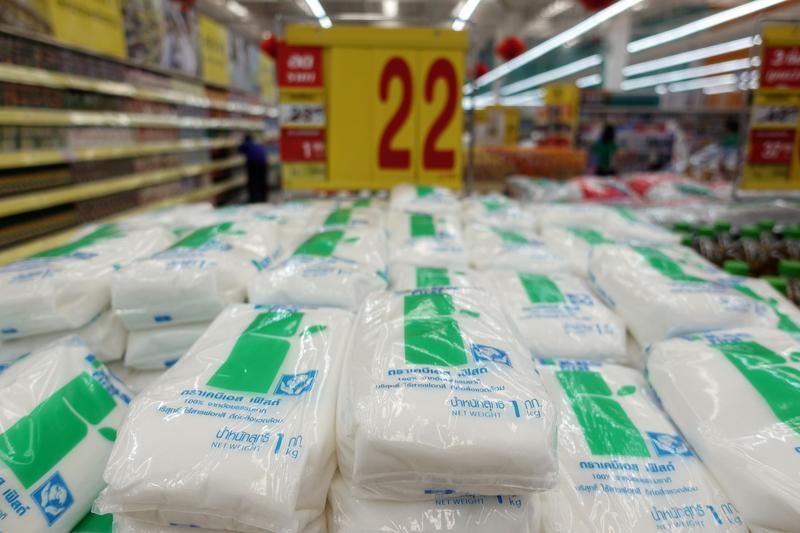
Granulated sugar sold at supermarkets in Bangkok.
The Central Committee on Prices of Goods and Services, chaired by Commerce Minister Phumtham Wechayachai, previously agreed to manage sugar prices to mitigate the impact on consumers. This action was taken after the Thai Sugar Council announced last week that it would increase the ex-factory price of sugar by 4 baht (approximately 2,700 VND) per kilogram. This announcement caused consumers to rush to buy sugar due to concerns about rising prices.
Authorities announced that the ex-factory prices for granulated and refined sugar will be maintained at 19 and 20 baht per kilogram, respectively. Retail prices will be 24 and 25 baht for each type.
Besides keeping prices unchanged, authorities will also control sugar exports. Any company wishing to export more than one ton of sugar must obtain permission from the regulatory agency. Mr. Phumtham said that the government's decision would not affect sugarcane farmers because they would continue to receive government subsidies.
Prior to Thailand, India announced plans to ban sugar exports during the harvest season beginning in October, the first such ban in seven years. On October 18, PTI reported that the Indian government had extended the sugar export ban beyond October and until further notice. The decision was made to meet domestic demand during the festive season.
India is the world's largest producer and second-largest exporter of sugar. Sugar is a controlled commodity, and producers must obtain permission from the government if they wish to sell it abroad.
Source link





















![[Photo] Prime Minister Pham Minh Chinh holds a phone call with the CEO of Russia's Rosatom Corporation.](/_next/image?url=https%3A%2F%2Fvphoto.vietnam.vn%2Fthumb%2F1200x675%2Fvietnam%2Fresource%2FIMAGE%2F2025%2F12%2F11%2F1765464552365_dsc-5295-jpg.webp&w=3840&q=75)










































Comment (0)