

Ready to provide transportation assistance.
On the morning of July 2nd, Ms. Hong Nhu Ngoc (from the Propaganda and Mass Mobilization Department of the Ho Chi Minh City Party Committee, formerly working at the Propaganda and Mass Mobilization Department of the former Ba Ria - Vung Tau Provincial Party Committee) arrived at the first facility of the Ho Chi Minh City Party Committee's Propaganda and Mass Mobilization Department to receive her work assignment decision after the completion of the provincial-level administrative unit reorganization. Ms. Ngoc was provided with transportation from the Ho Chi Minh City Administrative Center (facility 3 in Ba Ria ward) to the city center.
Despite traveling nearly 80km, Ms. Ngoc felt comfortable because she didn't have to drive herself, and she could still handle work along the way. Ms. Ngoc also expressed her willingness to work at the Ho Chi Minh City center (Campus 1) if a suitable position was arranged. However, since her family still lives at the old location, she hopes the agency will provide transportation to and from work daily; she also wishes to be provided with accommodation and given the opportunity to purchase social housing in the Ho Chi Minh City center for greater convenience in her work.
Similarly, Mr. Le Xuan Kien (Vietnam Fatherland Front Committee of Ho Chi Minh City), whose house is in Chau Duc district (formerly Ba Ria - Vung Tau province), shared that previously, the distance from his home to his office was only a little over ten kilometers, but now, at his new office, the commute is much longer. Therefore, he hopes to receive support in providing transportation to and from work every day.
“In the long term, I also hope to receive support regarding accommodation in the center of Ho Chi Minh City so that I can work with peace of mind. Furthermore, I hope that with the special mechanism, the city will have policies to increase income for officials, civil servants, and employees,” Mr. Kien expressed.

Like Ms. Ngoc and Mr. Kien, in the initial phase of operating Ho Chi Minh City after the reorganization, the frequent movement of staff from facility 2, facility 3 to facility 1 and vice versa to carry out professional work was essential.
At the end of June, the Ho Chi Minh City Department of Construction surveyed over 1,000 officials, civil servants, and employees in the former Binh Duong province and the former Ba Ria - Vung Tau province. The results showed that 95% needed shuttle services, and 83% needed daily shuttle services for commuting between campuses 2 and 3 and campus 1 in Saigon Ward. Therefore, Ho Chi Minh City organized 12 daily shuttle trips for officials from campuses 2 and 3 to campus 1, and 12 trips in the opposite direction.
According to the Ho Chi Minh City Public Transport Management Center, initially, the center will arrange 6 daily transport trips: 3 trips to and 3 trips to and from the city center, divided into two different time slots to serve the commuting needs of officials, civil servants, and employees from the Binh Duong Administrative Center and the Ba Ria - Vung Tau Administrative Center to the Ho Chi Minh City Administrative Center. The total number of trips from these locations will be 12 round trips. After the demand stabilizes, the center will increase the number of trips to better serve the transportation needs of officials, civil servants, and employees.
This transportation plan aims to provide free shuttle services for civil servants and public employees working at Party, State, Fatherland Front , and public service units. Employees use their employee ID cards to access the service. The fleet consists of 4 buses with 45 seats and 6 buses with 16 seats. Wi-Fi is installed on each bus. The vehicles will display a sign reading "Shuttle Service for Civil Servants and Public Employees" on the windshield for easy identification.
Proposal to expand the area for allocating public housing.
Organizing centralized transportation not only demonstrates the city leaders' concern for officials, civil servants, and employees, but also contributes to ensuring social welfare, work progress, and maintaining stability in the administrative apparatus after the merger.
In Thanh An island commune, more than 20 officials and civil servants regularly travel from the mainland to the island for work every day. Despite having to brave the waves, move supplies, and catch a ferry early in the morning, they all maintain a proactive and cheerful attitude, readily integrating themselves into the lives of the island's residents.
However, in urgent work situations, relying on ferries makes transportation for officials, especially commune leaders, difficult in terms of time and timeliness. According to the leaders of Thanh An Commune People's Committee, the commune previously had a ferry and a speedboat assigned to serve in urgent situations or when city leaders visited for work. Currently, this vehicle is dilapidated and damaged, no longer ensuring regular operation. The commune is planning to propose the allocation of a new replacement vehicle and also hopes for regular maintenance and servicing to better serve the professional work of officials and civil servants on the island.

Along with transportation arrangements, following the reorganization of provincial-level administrative units, there will be cases where officials and civil servants under the management authority of Ho Chi Minh City are transferred, rotated, or seconded to work in locations far from their current residences and without housing in the area where they are assigned. Many officials and civil servants need to rent official housing or social housing near their workplace but do not meet the eligibility criteria for official housing allocation.
Therefore, the Ho Chi Minh City People's Committee has sent a document to the Ministry of Construction proposing the allocation of public housing based on the local situation for those not yet covered by the 2023 Housing Law.
Accordingly, the Ho Chi Minh City People's Committee proposed that the Ministry of Construction review, compile, and submit to the Prime Minister for consideration and decision the expansion of the scope of eligibility for public housing to include officials, civil servants, and public employees with a position allowance coefficient below 0.7 or without a position allowance who are transferred or rotated from Ho Chi Minh City to areas in the former Binh Duong province or the former Ba Ria - Vung Tau province and vice versa; and to supplement the standards for area and interior equipment quotas as a basis for allocating public housing.
This is to implement the policy of providing public housing for officials, civil servants, and employees of Ho Chi Minh City who are transferred, rotated, or seconded to other places of work due to the reorganization of provincial-level administrative units.
Ho Chi Minh City deploys 22 officials and civil servants to reinforce grassroots levels.
The Ho Chi Minh City People's Committee has just issued a decision to transfer 22 leading and managerial officials and civil servants to work in wards, communes, towns, and special zones for a period of 3 years to strengthen grassroots levels and effectively implement the urban government model.
Among the officials reassigned, Ms. Tran Thi Tuyet Hong, former Deputy Chief of the Office of the Delegation of National Assembly Deputies and People's Council of Ho Chi Minh City, received a new assignment at the People's Council of Vuon Lai Ward. Speaking to a reporter from SGGP newspaper, Ms. Tran Thi Tuyet Hong expressed her honor and excitement at being entrusted by the city leadership with this new "journey" at the grassroots level. According to Ms. Hong, the deployment of 22 officials and civil servants to the grassroots level provides an opportunity for each person to be closer to the people, listen to them more, and thus develop comprehensive solutions to improve the quality of their work.
In recent days, officials assigned to grassroots work have proactively approached their assigned areas to participate in the pilot operation of the two-tiered government system. "As an official working at the provincial level, being assigned to the grassroots with a completely new organizational model is a challenge, but also an opportunity for us to train, continue to contribute, and become more mature," Ms. Hong expressed.
Source: https://www.sggp.org.vn/tao-dieu-kien-de-can-bo-yen-tam-cong-tac-post802210.html

![[Photo] Secretary of the National Assembly Party Committee, Chairman of the National Assembly presides over the meeting of the Standing Committee and Executive Committee of the National Assembly Party Committee.](https://vphoto.vietnam.vn/thumb/1200x675/vietnam/resource/IMAGE/2026/06/03/1780480353201_ndo_br_bnd-2585-jpg.webp)
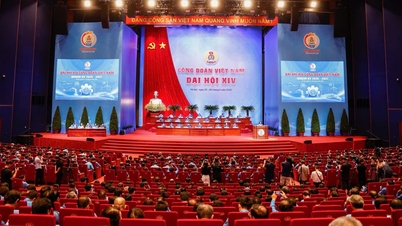
![[Photo] First session of the 14th Congress of the Vietnam Trade Union](https://vphoto.vietnam.vn/thumb/1200x675/vietnam/resource/IMAGE/2026/06/03/1780465947883_ndo_br_img-3852-jpg.webp)

![[Photo] General Secretary and President To Lam presides over a meeting with the Central Organizing Committee.](https://vphoto.vietnam.vn/thumb/1200x675/vietnam/resource/IMAGE/2026/06/03/1780482764658_a1-bnd-4741-3342-jpg.webp)








































![[Video] Sunset at Lap An Lagoon – Where the sun sets over the fishing nets](https://vphoto.vietnam.vn/thumb/1200x675/vietnam/resource/IMAGE/2026/05/31/1780192137701_beach-landscape-sea-water-nature-grass-745871-pxhere-com.jpeg)


























Comment (0)