

(NLĐO) - According to SciTech Daily, a new study led by Dr. Eloy Peña-Asensio from Politecnico di Milano University (Italy) suggests that NASA's 2022 binary asteroid deflection experiment (DART) could trigger a new meteor shower for Earth.
DART is a "suicide" spacecraft tasked with crashing into the asteroid Dimorphos, the "moon" of a larger asteroid called Didymos.
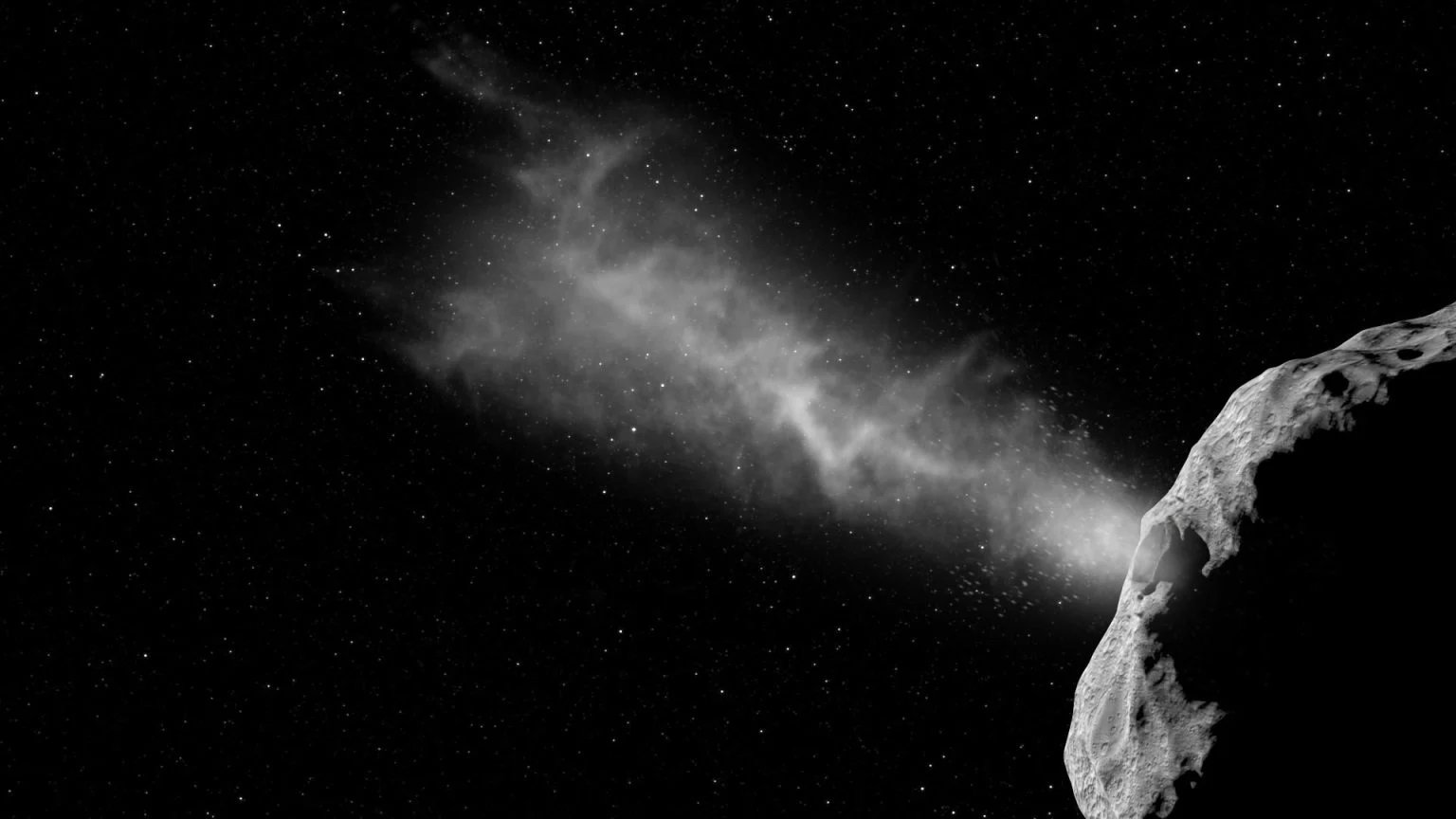
DART shattered after a test of Earth's defense, while the asteroid it struck also broke apart, scattering debris into space - Graphic: ESA
This mission aims to deflect Dimorphos, as a kind of Earth defense exercise: If an asteroid were to hurtle toward Earth in the future, a spacecraft similar to DART would deflect it.
The impact caused the half-ton spacecraft to shatter, while Dimorphos also broke apart and was diverted.
In their new study, Dr. Peña-Asensio and colleagues examined the chaotic debris field created by the collision, as well as the factors that may have influenced that debris field.
Based on the collision model, they found that many fragments likely had the gravitational pull of Mars for 13 years at launch velocities of approximately 450 meters per second.
Meanwhile, some of the most powerfully ejected debris is hurtling through space at speeds of 770 meters per second, potentially reaching the Earth-Moon system in a similar amount of time.
“In the coming decades, asteroid observation campaigns will play a crucial role in determining whether fragments of Dimorphos resulting from the DART impact will reach our planet,” said Dr. Peña-Asensio.
The likelihood of these debris reaching Earth is quite high, but according to the authors, we don't need to worry too much.
The debris from this collision is quite small and is expected to only cause a meteor shower-like spectacle in the Earth's sky, as individual pieces burn up and dissipate in the atmosphere.
According to Dr. Peña-Asensio, if this happens, we will witness the first man-made meteor shower.
NASA is still exploring the potential ripple effects of the 2022 mission.
In addition, the agency will collaborate with the European Space Agency (ESA) to conduct a firsthand assessment of the impacts.
ESA's Hera spacecraft will be launched this October, with a mission to approach Dimorphos and conduct a "field investigation".
Source: https://nld.com.vn/tau-nasa-va-cham-manh-vo-co-the-do-mua-xuong-trai-dat-196240924095644495.htm


![[Photo] Two flights successfully landed and took off at Long Thanh Airport.](/_next/image?url=https%3A%2F%2Fvphoto.vietnam.vn%2Fthumb%2F1200x675%2Fvietnam%2Fresource%2FIMAGE%2F2025%2F12%2F15%2F1765808718882_ndo_br_img-8897-resize-5807-jpg.webp&w=3840&q=75)































































































Comment (0)