


 |
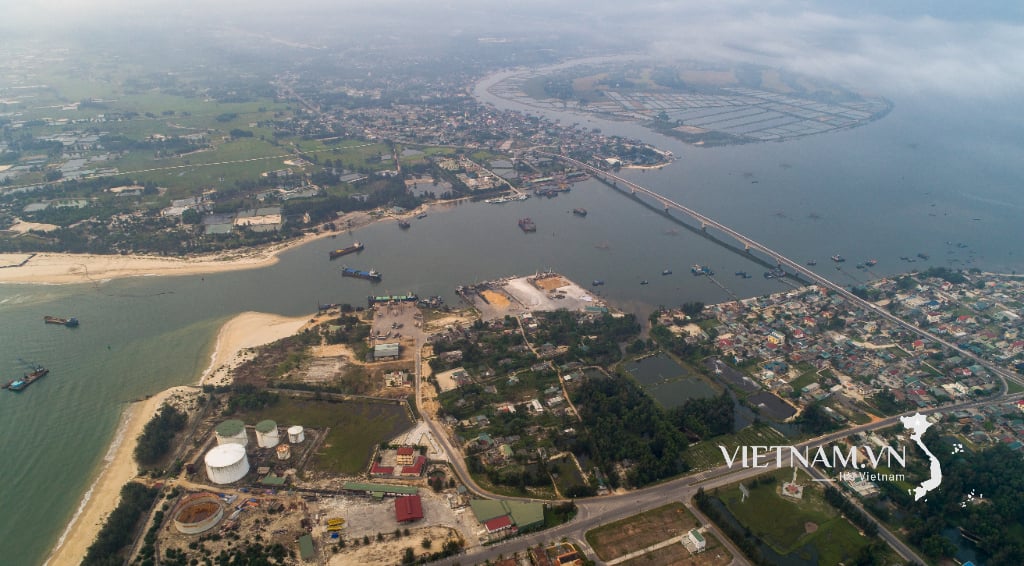
| Photo: Illustration |
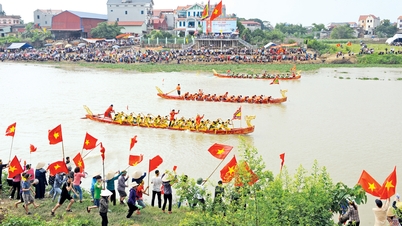
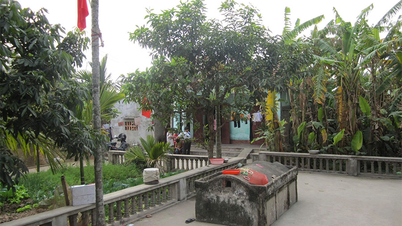
"Revolution," in my mind at the time, was truly impressive. The adults explained to me that the red half of the sacred flag symbolized the North, which had gained independence; the blue half represented the South, which was temporarily occupied by the enemy; and the five-pointed golden star represented the five classes: intellectuals, farmers, workers, merchants, and soldiers, united in their fight to defend the country. From the moment the revolutionary flag was hoisted on the roof, I no longer had to jump at the sound of gunfire at night, nor did I have to run to the bomb shelter whenever there was shelling. My small village near the mountains then enjoyed peaceful sleep. Immediately after the country was reunified, even though the 1974-1975 school year was still unfinished, we children didn't return to school right away. In the evenings, there were often collective activities in the village; adults studied to learn about the revolution, while the children participated in cultural and artistic activities in their respective hamlets. In Hamlet 1, there was a very large yard belonging to Mr. Lam Quang Lac, where dozens of us children would gather. I fondly remember those lively nights of singing and dancing, always accompanied by the song "As if Uncle Ho were present on the day of the great victory" by composer Pham Tuyen. We children would play until late at night before heading home to sleep. Therefore, the revolution, in my perception, wasn't as frightening as I had previously heard.
Back then, very few houses had televisions, and cassette players were rare. In my vivid memory, at 5 a.m. and 6 p.m., loudspeakers mounted on tall poles along the main road of the village, at the entrance to each hamlet (in An Hiep village where I lived, the roads were laid out in a grid pattern). I absolutely loved the sweet, expressive voice of the female announcer – People's Artist Tuyet Mai: "This is the Voice of Vietnam, broadcasting from Hanoi…". Besides current news, people also heard information about science , how to increase crop yields, and listened to stories being read aloud. I really enjoyed listening to revolutionary songs like "Uncle Ho is Marching with Us" (Huy Thuc), "The Sound of the Pestle in Bom Bo Village" (Xuan Hong), "The Girls of the Mekong Delta" (Huynh Tho), "The Girl Sharpening Bamboo Stakes" (Hoang Hiep)... Actually, at that time I didn't remember the names of the composers; I only felt the melody and lyrics, and it was as if I was inspired by those songs. In my mind, revolution was the image of heroic soldiers marching to battle; it was the people of the whole country, including our ethnic minority brothers and sisters, who contributed their blood, bones, and efforts to the struggle for the independence and freedom of the Fatherland. In my youth, I couldn't fully imagine the difficulties, hardships, sacrifices, and losses that our army and people had to endure to achieve the Great Victory of Spring 1975...
I gradually learned more about the revolution from my school lessons. I admired Kim Dong and Luom, who served as messengers at a very young age; and Vo Thi Sau, the heroic female martyr from the Red Land region. Reading Tran Dinh Van's story "Living Like Him" stirred my heart, filled with sorrow for the heroic electrician Nguyen Van Troi, and made me understand that, for the independence and freedom of the Fatherland, for the great cause of national reunification, many people sacrificed their youth, love, family happiness, and even their lives. Reading Vo Quang's story "Homeland" stirred in my soul – a sixth-grade girl – a multitude of emotions about love for my homeland.
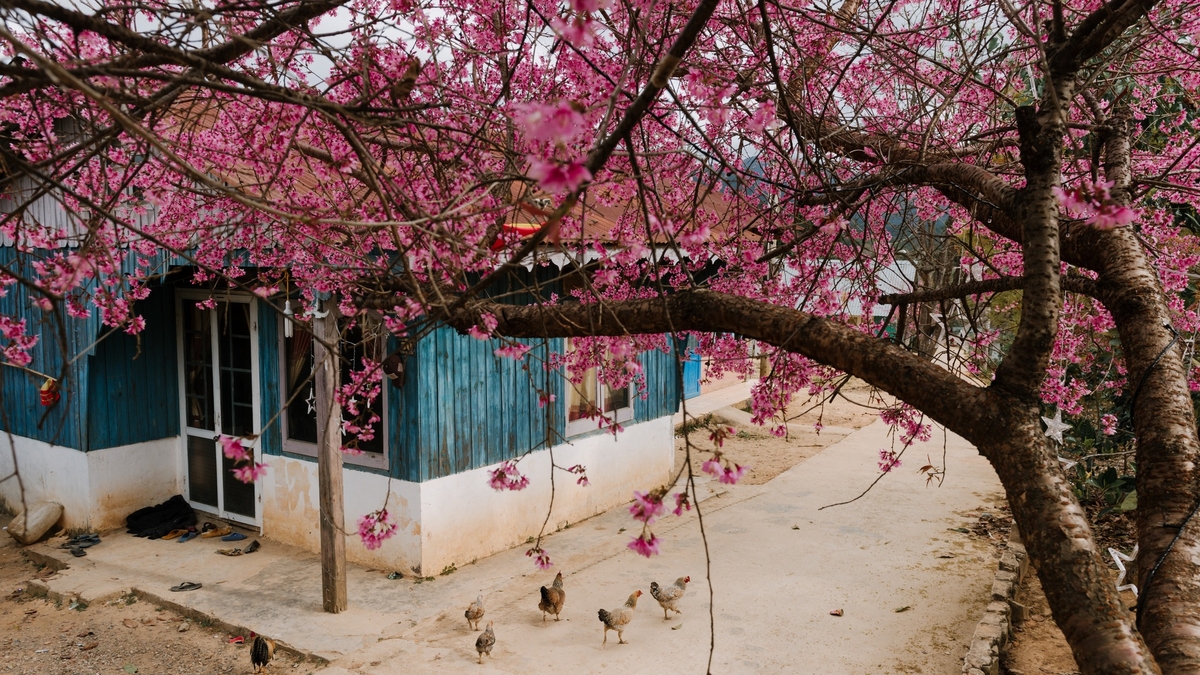
My homeland, in my heart, holds flocks of storks soaring over the lush green rice fields of Duc Trong; it holds the sound of the Lien Khuong waterfall roaring day and night against the rocky shore. My homeland holds the image of my hardworking parents toiling in the fields, their clothes soaked with sweat under the scorching sun of the highlands in the afternoons. I deeply cherish the small village school, combining primary and secondary levels, with only eight classrooms. Therefore, the school had to utilize the village's assembly hall, with two classes facing each other without partitions… From April 1975, my homeland also had broadcasts from the Voice of Vietnam , military programs, and Lam Dong Provincial Radio, sometimes early in the morning, sometimes late in the afternoon, from the loudspeakers at the village entrance. Those sounds echoed along the country roads, across the fields, ensuring bountiful harvests, and under the moonlight as couples met amidst the faint scent of coffee blossoms covering the hills.
Thanks to the historic month of April, the spiritual lives of the people in my village have become even richer. There was a time when the district's mobile film screening team would come to show films in the schoolyard. They would come five or seven times a month. On those days, from the afternoon onwards, the villagers would be bustling with activity, everyone rushing to eat and drink early so they could go watch the film screening. The schoolyard was always crowded. We children would watch the films and play around, it was so much fun. Thanks to those mobile film screenings, I learned a great deal about our nation's painful but heroic struggle, and understood the patriotic spirit and the yearning for peace and independence of the Vietnamese people. During my childhood, I watched Soviet films from the Great Patriotic War era such as "When the Cranes Fly Over," "And Here the Dawn Is Quiet," "The Soldier's Song," and "They Fought for Their Fatherland"... Through these classic films, we children understood the heinous crimes of the Nazi Germans, hated evil, and realized how much blood and tears humanity had paid for a peaceful life.
Over the years, I became a literature teacher; the beautiful memories of that historic April in my small village nestled in the mountains have made my lessons even more passionate. I believe that love for one's homeland doesn't come naturally; moreover, that sacred feeling will nurture the soul and make life truly worthwhile. At a time when our entire nation is excitedly celebrating the 50th anniversary of national reunification, the memories of that historic April stir up a flood of emotions within me. Thank you for giving us April 1975, when the national flag was a vibrant red! Living in a peaceful and happy country, we cannot help but feel a lump in our throats when we think of the boundless sacrifices of countless generations of Vietnamese people to regain independence and freedom, to build the precious values we have today…
Source: https://baolamdong.vn/van-hoa-nghe-thuat/202505/thang-tu-trong-mien-nho-a2721fd/






































Comment (0)