Removing bottlenecks to develop sustainable energy.
(GLO) - The National Assembly's issuance of Resolution No. 253/2025/QH15 dated December 11, 2025, on mechanisms and policies for national energy development in the period 2026-2030 is considered a timely and strategically significant step.
Báo Gia Lai•30/01/2026
With Vietnam aiming for GDP growth exceeding 10% during the 2026-2030 period, the demand for energy to support production is projected to increase sharply.
Regarding this matter, reporters from Gia Lai Newspaper and Radio & Television had a discussion with Mr. Tran Thuc Kham - Deputy Director of the Department of Industry and Trade.
▪ Sir, why is the issuance of Resolution No. 253/2025/QH15 considered very necessary at this time?
Mr. Tran Thuc Kham. Photo: Provided by the interviewee.
- Vietnam is entering a new phase of development with the goal of achieving very high growth, aiming to become a modern industrialized, upper-middle-income country by 2030.
This has led to a rapid and continuous increase in energy consumption, especially electricity.
Meanwhile, the current legal framework has not kept pace with reality, especially with new energy models such as offshore wind power, direct power purchase agreements (DPPA), or post-investment electricity pricing bidding mechanisms.
Resolution No. 253/2025/QH15, effective from March 1, 2026, has created a clear and stable policy framework, helping to remove institutional bottlenecks, ensure safe and sustainable electricity supply, and maintain national energy security in the context of rapidly increasing demand.
▪ In your opinion, which aspects of this resolution are considered the most important highlights?
- Resolution No. 253/2025/QH15 has updated and refined many strategic mechanisms and policies. A notable point is that it allows for the adjustment and updating of power development plans and power supply network development plans within provincial planning according to practical requirements, but without changing the major goals and orientations, and without increasing the total capacity according to the approved source structure.
In addition, the Resolution is significant in promoting the development of renewable energy, especially offshore wind power; expanding new forms of power trading; perfecting the post-bidding electricity pricing mechanism; and creating a more transparent and stable investment environment for both domestic and international investors.
In particular, investment projects for power grid business included in the power development plan do not require investment policy approval procedures, thereby significantly shortening implementation time.
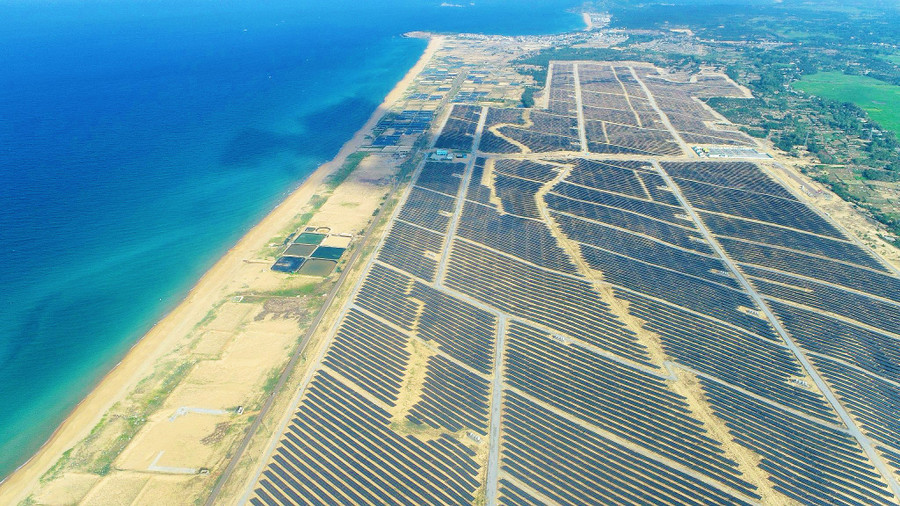
The solar power project of Phu My Clean Energy Vision Development Joint Stock Company in Phu My Dong commune. Photo: Hai Yen
▪ What breakthroughs does this resolution bring about in terms of energy development thinking, sir?
- This is the first time the National Assembly has issued a thematic resolution on mechanisms and policies for energy development for a medium-term period.
This reflects a significant shift in thinking, moving from administrative management to development-oriented approaches, viewing energy as the foundational infrastructure for growth and national security.
The resolution also shifts the focus from “ensuring sufficient electricity” to developing sustainable, diversified, and modern energy sources linked to green transition and international commitments.
The policy space for new energy models has been expanded, creating a legal framework for areas that previously lacked a legal basis. This is a crucial step to anticipate and capitalize on global energy market trends.
▪ Given that Gia Lai province has significant renewable energy potential, how will Resolution No. 253/2025/QH15 be applied, sir?
- After Resolution No. 253/2025/QH15 comes into effect, the province will flexibly apply it in adjusting and updating some contents of the power development plan and the power supply network development plan in the provincial plan, ensuring compliance with the Constitution and laws, in line with the Party's guidelines, ensuring energy security, power system safety, and the requirements of energy transition.
We place particular emphasis on the principles of openness and transparency, strict control of power, prevention of corruption and waste, and the elimination of any system of favoritism or corruption.
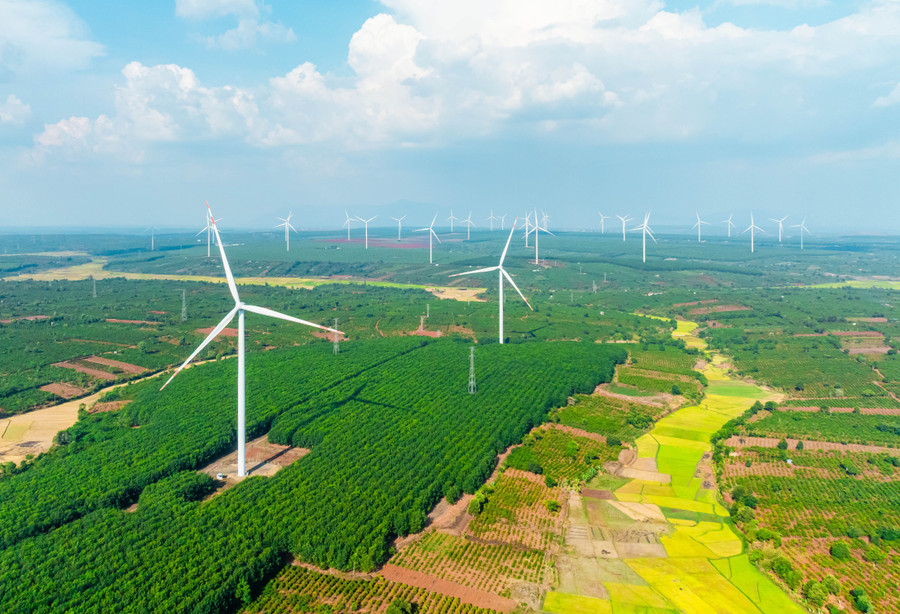
Wind farm in Ia Bang commune. Photo: Pham Quy
▪ Could you please tell us how the implementation of the revised Power Development Plan VIII is currently progressing in your locality?
- The Department of Industry and Trade has advised the Provincial People's Committee to report to the Ministry of Industry and Trade on the implementation status of power generation and transmission projects in the revised Power Plan VIII; and provided information and data to finalize the revised National Power Plan for the period 2021-2030, with a vision to 2050.
The province also reported on the implementation of Government Resolution No. 233/NQ-CP on removing difficulties for renewable energy projects, with 3 projects with a total capacity of 132 MW put into operation; 2 projects with a capacity of 250.5 MW are awaiting assessment and licensing by the Electricity Department (Ministry of Industry and Trade) and will continue to operate in the coming time; a preliminary review of 5 years of implementing Resolution No. 55-NQ/TW of the Politburo; a review of the installation of wind measurement towers in the western area of the province; and the registration of investment and progress of grid-connected wind and solar power projects.
Based on that, the Provincial People's Committee's advisory body recommended that the Government and the Ministry of Industry and Trade include the province's power generation and transmission projects in the revised Power Development Plan VIII, and simultaneously issue a plan for selecting investors for renewable energy projects.




![[Photo] Ba Lang An Lighthouse - the "eye of the sea" amidst the "rock museum" of Quang Ngai province.](https://vphoto.vietnam.vn/thumb/1200x675/vietnam/resource/IMAGE/2026/05/29/1780038698840_anh-man-hinh-2026-05-29-luc-14-10-42.png)

![[Image] Pleasant weather helps students enter the 10th grade entrance exam with confidence.](https://vphoto.vietnam.vn/thumb/1200x675/vietnam/resource/IMAGE/2026/05/29/1780034401612_ngay-1-thi-lop-10-minh-duy-8-5009-jpg.webp)



























































































Comment (0)