

 |
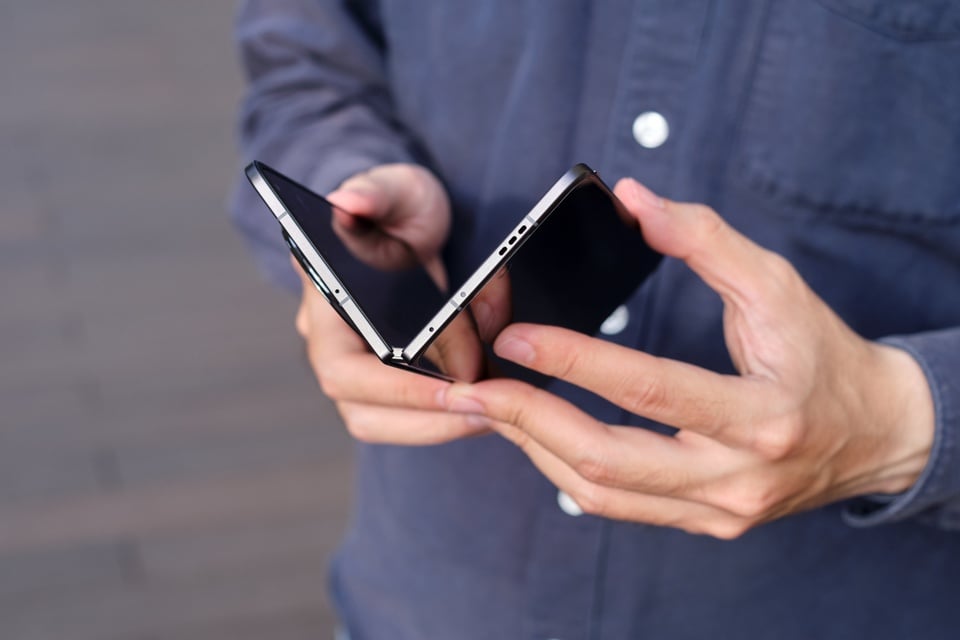
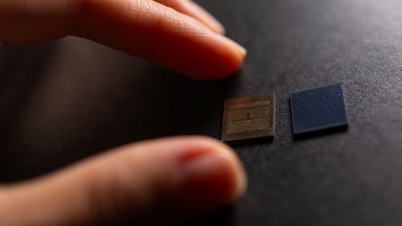
For the first time in years, manufacturers are prioritizing ultra-thin designs. Photo: Tuan Anh . |
Smartphones have been around long enough that, for many, their design seems to have reached a saturation point. Most people are holding rectangular, box-shaped devices around 6 inches in their hands, with the exception of foldable devices.
However, the maturity and popularity of the smartphone market has led to cyclical trends, similar to the fashion industry. For example, in the past few years, most phone models have had flat edges, like the iPhone 4 released in 2010. Five years ago, almost all phone models had curved edges. Flat edges aren't a new invention; it's simply a trend making a comeback.
But this year, the change is coming from an unexpected aspect. For the first time in a long time, major phone manufacturers are prioritizing the slimness of their devices.
Samsung and Apple kick off the race to return to slim designs.
Samsung kicked off 2025 with the Galaxy S25 series, which includes an ultra-thin version, the Galaxy S25 Edge. According to Bloomberg writer Mark Gurman, Apple is planning to launch an ultra-thin iPhone model in 2025, reportedly with only one camera. Smaller brands like Tecno also showcased impressively thin phones at MWC last month.
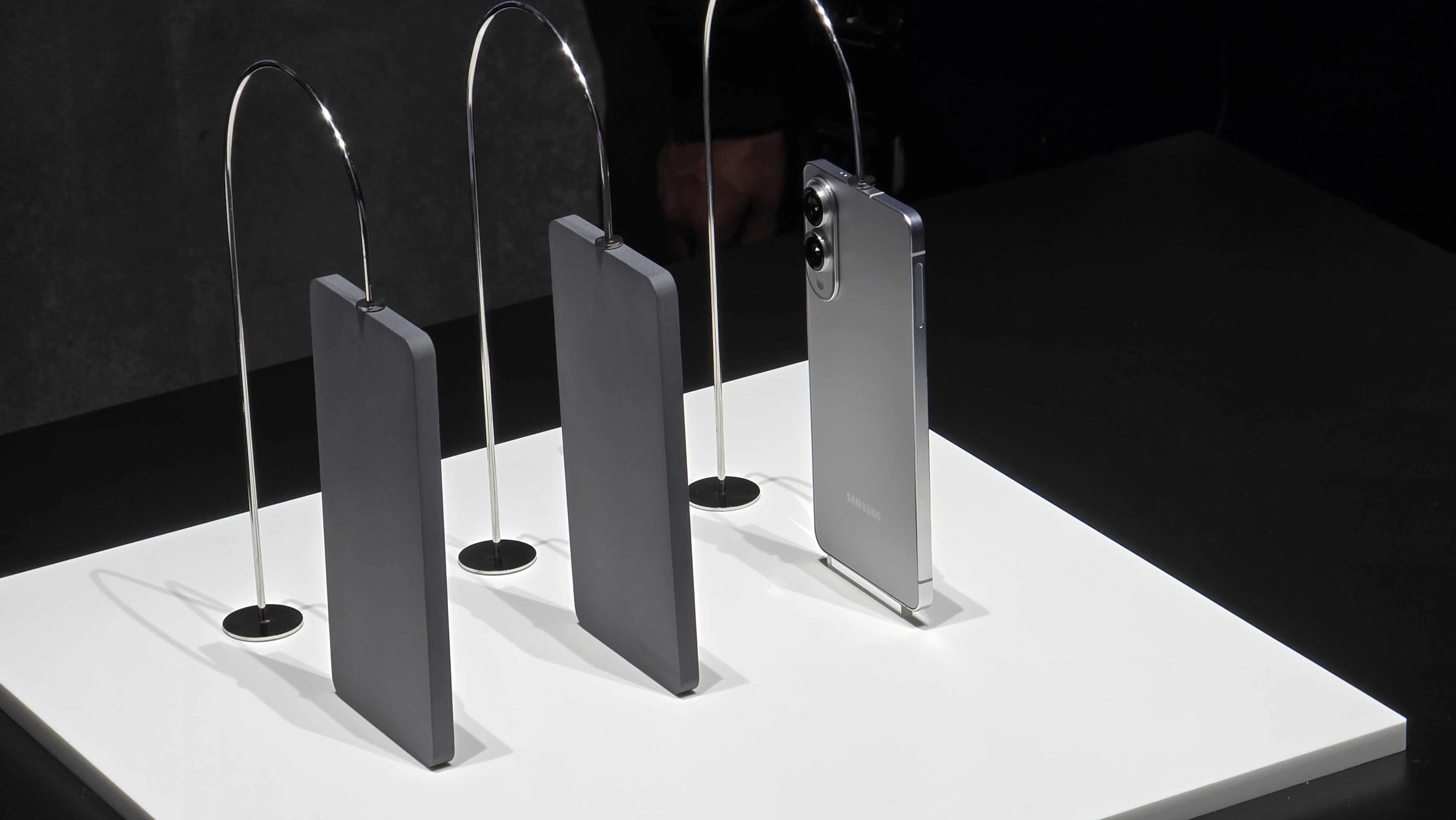 |
The Samsung Galaxy S25 Edge is shown alongside the Samsung Galaxy S23 and Samsung Galaxy S24 at the Galaxy Unpacked event in San Jose, January 2025. Photo: Future. |
About a decade ago, boasting about the thinness of a phone was the trend. “This is the real magic,” declared Apple’s Phil Schiller when introducing the larger screen on the iPhone 6 in 2014. The device was just 6.9 mm thick. “Thinner than any phone we’ve ever made, and that’s an incredible engineering achievement,” the company stated. A few months later, Oppo launched the R5 with a record-breaking thinness of 4.85 mm.
At the time, it seemed like phones would continue to get even thinner. But then something unexpected happened. The iPhone 6S was released with an increased thickness of 7.1 mm and using a stronger aluminum alloy. This was supposedly to address the problem of the iPhone 6 being prone to bending.
No one complained about the durability of the iPhone 6S, but subsequent iPhones continued to get thicker, reaching 8.3 mm on the current iPhone 16 Pro. This isn't a major issue for most users, as battery life is no longer as much of a concern as it once was. The increasingly large camera module also makes it difficult for the device to become thinner.
Therefore, Fast Company predicts that a series of ultra-thin phone models will appear in 2025 as a turning point. Why are manufacturers all moving towards this trend?
Break free from the loop to create the next breakthrough.
The main reason may stem from technology. While it's unclear what type of battery Samsung or Apple will use in their upcoming devices, silicon-carbon batteries have been common in Chinese Android phones for the past year. Integrating silicon into the battery's chemical composition can help increase capacity without expanding the size.
The latest Oppo Find N5 foldable phone is only 4.2 mm thick when unfolded. It's so thin that it's barely thicker than a USB-C port. However, its 5,600 mAh silicon-carbide battery boasts 17% higher capacity than its predecessor, the Find N3, even though the Find N3 was 38% thicker. Other brands like Xiaomi and Vivo are also adopting this technology to achieve similar results.
Beyond technical factors, another reason manufacturers are returning to ultra-thin phones is more subjective. How long has it been since you saw a phone that truly impressed you? A thinner device will inevitably come with trade-offs. Battery life and performance may not match those of thicker flagships.
But if you still have more than half your battery life left each day before needing to recharge, or if you rarely use the telephoto lens on your camera, a slim, compact phone might be a worthwhile option.
As battery technology improves and most users no longer need top-tier performance, a slim yet powerful phone becomes a sensible choice. Companies have good reason to dedicate a portion of their product portfolio to devices focused on design. Samsung is always willing to experiment.
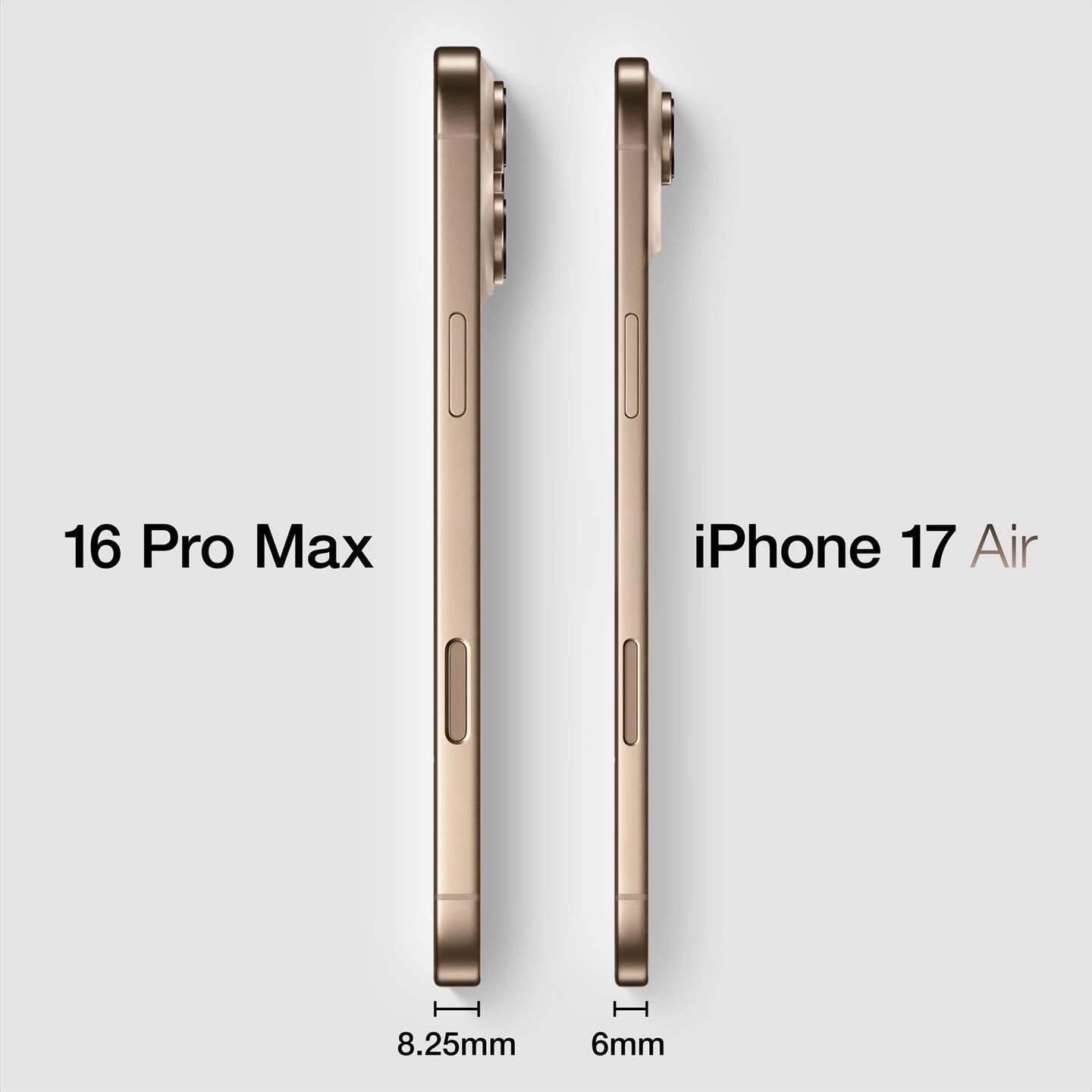 |
Image showing a comparison of the thickness of the iPhone 16 Pro Max and the ultra-thin iPhone 17. Photo: iDB. |
Apple, while more conservative, is reportedly dissatisfied with the sales of its iPhone Plus line (the non-Pro version). So why not try something different, something that falls between the basic and premium segments?
The question now is whether the new designs are groundbreaking enough. Samsung has not yet announced the specifications of the Galaxy S25 Edge, nor has it allowed the press to experience the product. According to Mark Gurman of Bloomberg , the upcoming ultra-thin iPhone will be "about 2 mm thinner than the iPhone 16 Pro," meaning around 6.3 mm, more similar to the iPhone 6 than the current thicker iPhone models.
Perhaps it's a fair trade-off. The goal here is to create a phone that's like the MacBook Air in the laptop world . That is, impressive design but with specifications that are just good enough for most users. The Pro models will still be for those who really need them, according to Fast Company .
Source: https://znews.vn/thoi-cua-dien-thoai-sieu-mong-da-tro-lai-post1541450.html



![[Photo] General Secretary and President To Lam presides over the meeting to approve the draft report on the results of the second inspection by the Politburo of the Standing Committee of the Hanoi City Party Committee.](https://vphoto.vietnam.vn/thumb/1200x675/vietnam/resource/IMAGE/2026/05/26/1779789811432_a2-bnd-4430-9620-jpg.webp)





























































































Comment (0)