

For many, a trip to Northwest Vietnam is incomplete without visiting Muong Lo, lacking the majestic beauty of the mountains. However, a visit to Muong Lo without savoring the culinary delights of the Thai people is like not having truly touched the soul of this land.
Muong Lo cuisine is not simply food, but an art form – a delicate symphony between man and nature; a vibrant chronicle preserving memories from the time of the Thai people's birth in the basin.
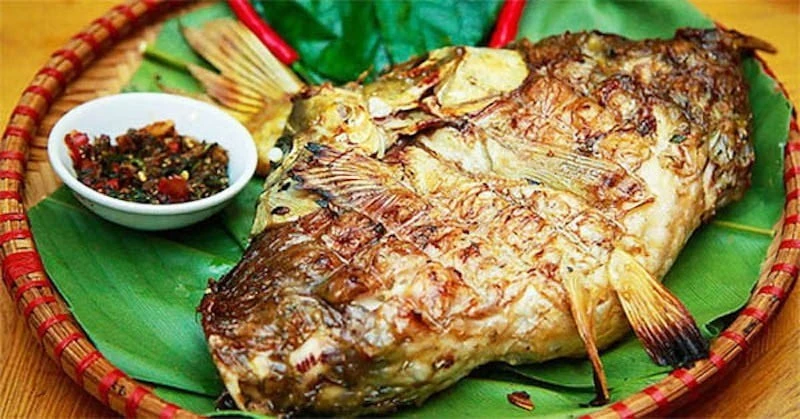
If one had to choose a symbol of the meticulousness and sophistication in the soul of the Thai people of Muong Lo, it would undoubtedly be Pa Pinh Top (grilled folded fish). This is not just a dish, but a measure of the hospitality and skill of Thai women.
For the Thai people of Muong Lo, Pa Pinh Top is likened to "a love song of fire and water." To prepare this dish, the ingredients must be fresh carp or catfish, caught from the crystal-clear streams of the Muong Lo region.
Skilled chefs don't gut the fish in the usual way, but instead cut along the backbone so that when folded, the fish's body completely encloses the spices. The essence of Pa Pỉnh Tộp lies in the "soul" of its distinctive spices.
It's a delicate blend of mắc khén – the "black gold" of the mountains and forests with its characteristic pungent aroma; hạt dổi with its mild spiciness and fragrant scent like the breath of the wilderness; along with ginger, garlic, lemongrass, scallions, and especially the young shoots of the sa nhân plant… All these unique spices are marinated into the fish according to the Thái people's own "secret" ratio.
Once the fish is thoroughly marinated, it's clamped onto a fresh bamboo stick and grilled over glowing charcoal. The fire must be low so that the fish fat melts and seeps back into the flesh, making the outer skin golden brown and crispy, while the inside remains sweet, tender, and juicy.
When savored, the sweetness of the fish, the spiciness of the chili, and the pungent aroma of mắc khén, dổi, onion, and sa nhân create a slightly tingling sensation on the tongue, a sweet aftertaste in the throat, and a lingering, deep flavor that transports diners to a dreamlike realm amidst the scent of the forest and mountain breeze.
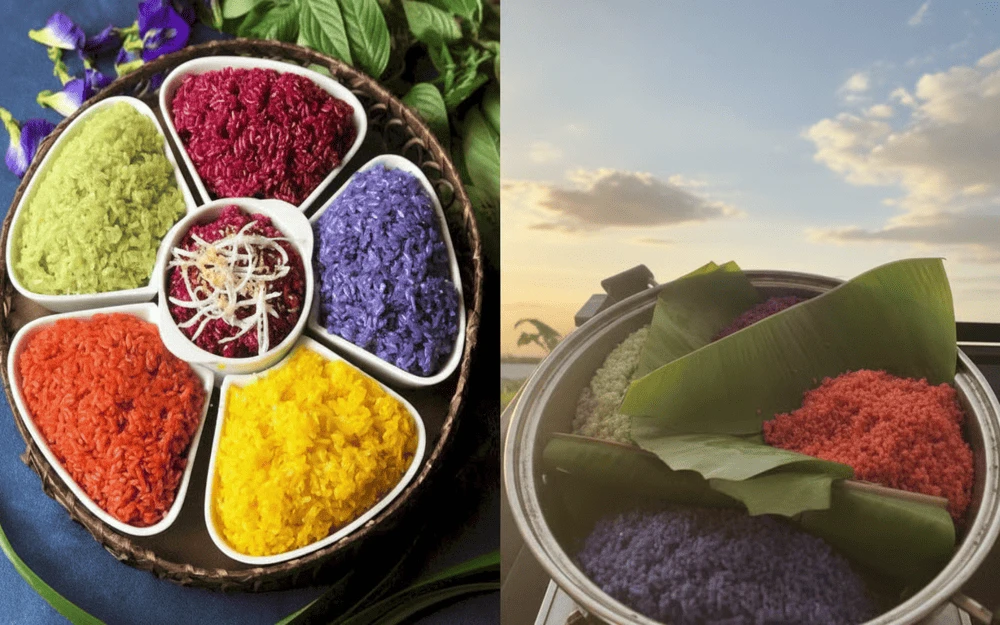
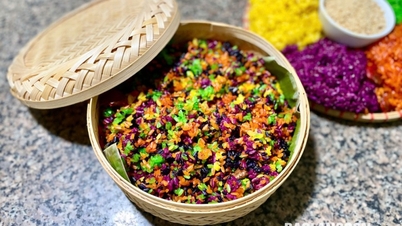
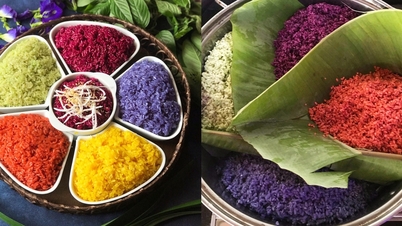
Another highlight of Muong Lo cuisine is five-colored sticky rice – a dish that symbolizes the colors of the earth and sky and represents the loyalty of the people.
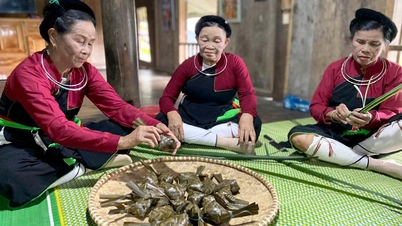
Beneath the stilt houses, the lingering evening smoke rises, and the fragrant aroma of sticky rice fills the air like a heartfelt invitation. The Thai people of Muong Lo have a saying: "Eat sticky rice, sleep in a stilt house, sing throughout the Thai culture." Five-colored sticky rice is not only a delicious dish, but also a symbol of the philosophy of the five elements, representing the harmony between humanity and the universe.
To make this dish truly exceptional, the glutinous rice must be grown in the Muong Lo basin or the famous glutinous rice from Tu Le. The water used for steaming the rice must be spring water taken from a high mountain peak.
It's called five-colored sticky rice because the rice has five natural colors, extracted entirely from plants and flowers in the garden. These are: red from red sticky rice leaves, symbolizing aspiration and love; purple from black sticky rice leaves, symbolizing fidelity and unwavering devotion; yellow from turmeric or pandan flowers, symbolizing abundance and prosperity; green from ginger or pandan leaves, reminiscent of sprouting and growth; and white, the original color of Tú Lệ sticky rice grains – the famous fragrant and chewy "heavenly pearl" rice…
Sticky rice grains are soaked in herbal-colored water overnight, then steamed in a wooden steamer (khẩu đồ). The hot steam seeps through the rice, releasing the delicate aroma of forest leaves. Each grain swells, becoming glossy, sticky but not clumpy, arranged side by side to create a vibrant tapestry on the ceremonial platter…
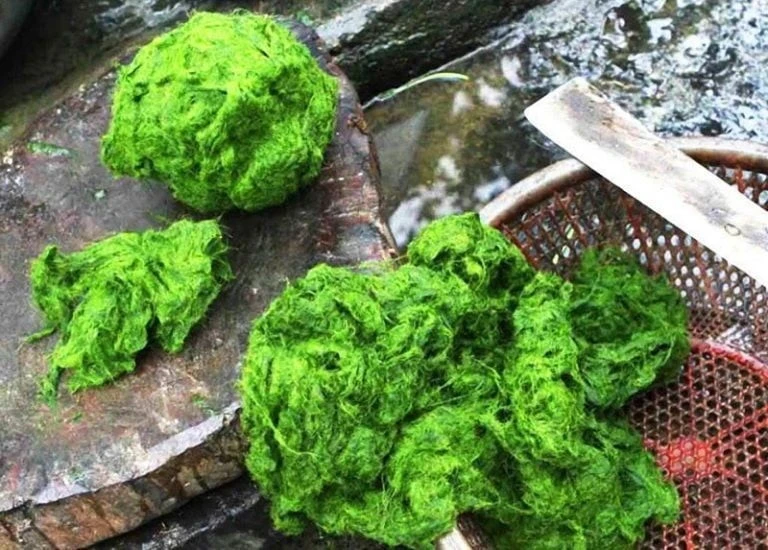
Many people may visit Muong Lo, but few are lucky enough to "encounter" and taste the dish made from rock moss.
This dish is so special that it's considered a precious gift from nature, bestowed by the cold streams. Stone moss is a dish whose name evokes the humility and perseverance of the Thai people.
Not all moss is edible. Only the moss that grows on rocks beneath the rushing waters of the Thia stream is considered top-quality. Harvesting moss is also an art. Thai women must immerse themselves in the cold water, skillfully plucking each clump of lush green moss, then pounding it on flat stones to remove sand, grit, and impurities.
Moss can be prepared in many ways, but the most exquisite is grilled moss (Khẩu bọc). The moss is mixed with lemongrass, ginger, bamboo shoots, mắc khén seeds, and a little local pork fat, then wrapped in green dong leaves and buried in hot ash. When the dong leaves are charred, a strangely delicate aroma is released—that's when the moss is cooked.
When enjoying grilled moss, one can easily sense the sweet, refreshing taste of spring water, the earthy flavor of the soil, and the distinctive aroma of the ancient forest. It is a cooling dish and a precious medicinal remedy that nature has bestowed upon the people of the mountains.
Although this is a long-standing dish of the Thai people of Muong Lo, you have to be very lucky to get to enjoy it, because rock moss is hard to find and not always readily available like buying vegetables at the market.
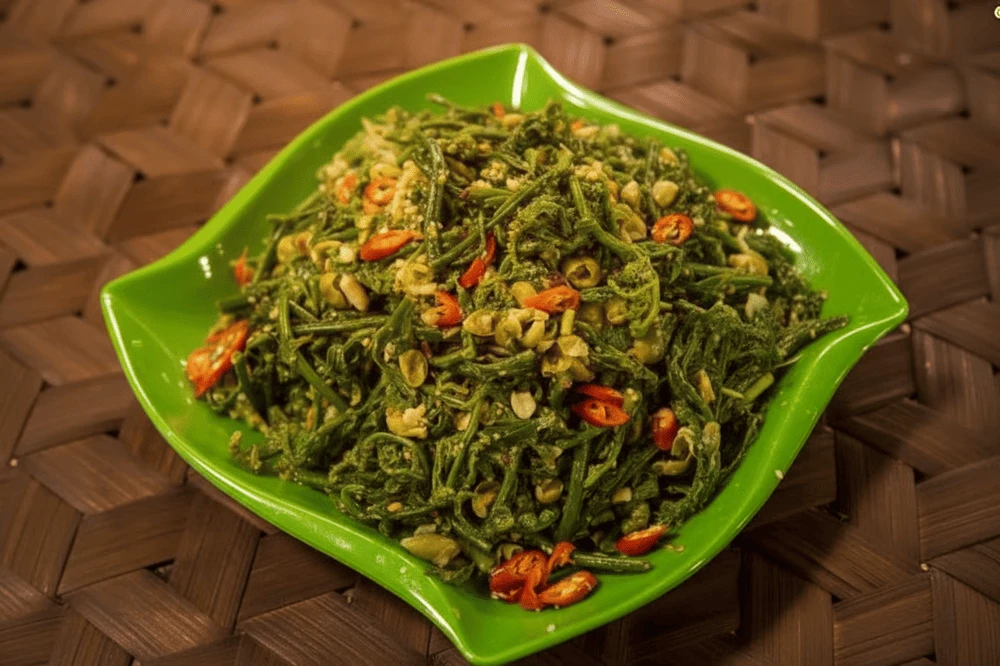
When enjoying Muong Lo cuisine, one cannot fail to mention the fern salad. This dish is known as the "refined wildness" of the Northwest mountainous region.
Ferns, also known as "rau dớn," are a type of fern that only grows in damp places along streams, under dense forest canopies. For the Thai people of Muong Lo, ferns are the "king" of all wild vegetables.
Fern salad (Phắc dớn nộm) isn't overly complicated, but it requires finesse in preparation. The fern shoots must be tender, succulent, and curved like elephant trunks. The secret is to steam them instead of boiling them, preserving their vibrant green color and crunchy texture without becoming slimy.
After cooking, the vegetables are mixed with crushed roasted peanuts, chili peppers, garlic, lime, and characteristic spices. The subtly astringent taste on the tip of the tongue quickly transforms into a sweet aftertaste, blending with the nutty flavor of the peanuts and the aroma of wild herbs. This dish is like a refreshing breeze amidst a protein-rich meal, awakening all the senses of the diner…
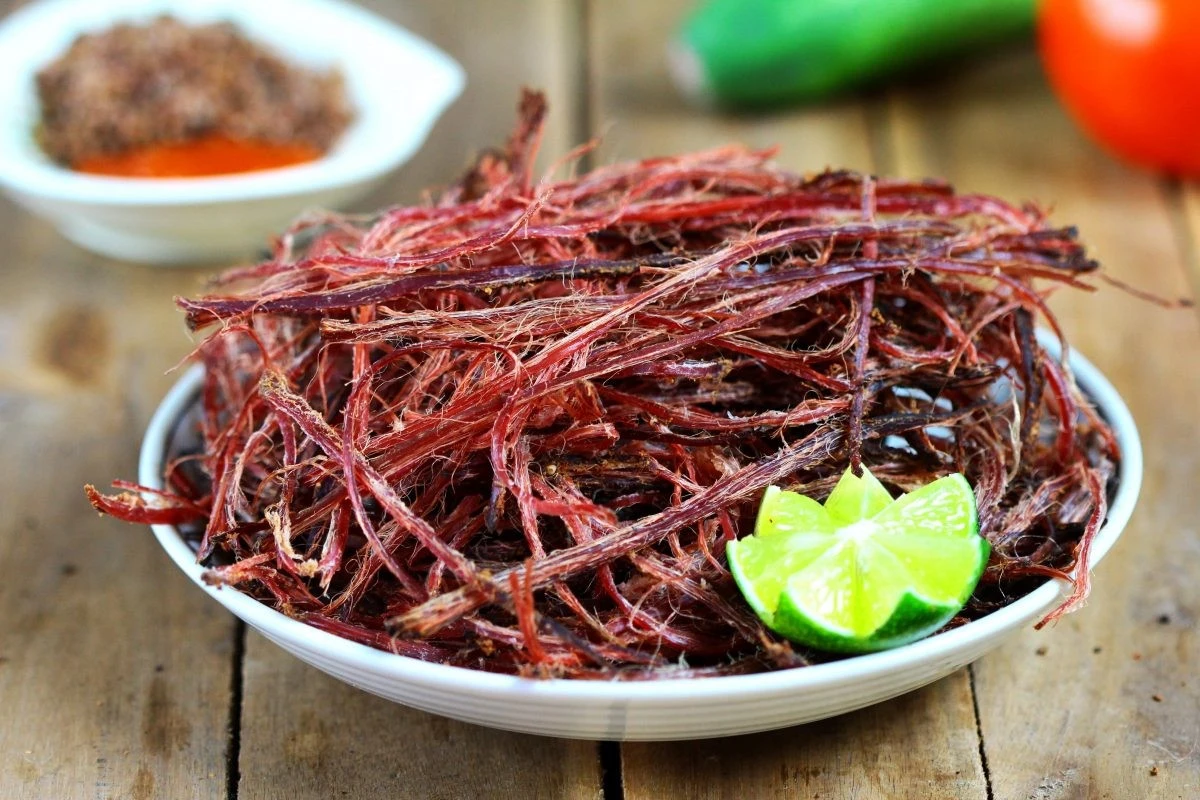
Besides the signature dishes mentioned above, the Thai people of Muong Lo also possess many other "specialties" in their feasts. The culinary landscape of Muong Lo would be incomplete without mentioning smoked meat – strips of dark red buffalo and pork, infused with smoky flavor, chewy yet sweeter the more you chew; along with bamboo shoots and bitter bamboo shoots, with their characteristic bitter taste of the mountains and forests, reminiscent of the difficult, arduous but proud times of their ancestors when they first settled this land. In addition, at each feast, there is fermented rice wine – a drink brewed from forest leaves, intoxicating not only because of its alcohol content but also because of the warm hospitality of the host…
Muong Lo cuisine is not just about cooking; it's a source of cultural pride for the Thai people. Each dish tells a story of adaptation, reverence for nature, and human emotion. In the setting of a stilt house, amidst the sunset over the Muong Lo fields, savoring fermented rice wine and Pa Pinh Top, one can deeply feel the Thai people's connection to this land.
That flavor is an invisible thread that binds travelers, a poignant longing for those far from home. Muong Lo is not only known for its "white rice and clear water," not only for its captivating Xoe dance, but also for its treasure trove of exquisite cuisine, waiting for kindred spirits to discover and share. One visit, one taste, and you'll carry the flavors of the mountains in your heart for a lifetime.
Source: https://baolaocai.vn/tinh-hoa-am-thuc-muong-lo-post897597.html



![[Image] Nearly 125,000 Hanoi students completed the Literature exam for the 10th grade entrance exam.](https://vphoto.vietnam.vn/thumb/1200x675/vietnam/resource/IMAGE/2026/05/30/1780117233041_ndo_br_thiet-ke-chua-co-ten-2-png.webp)














































































Comment (0)