

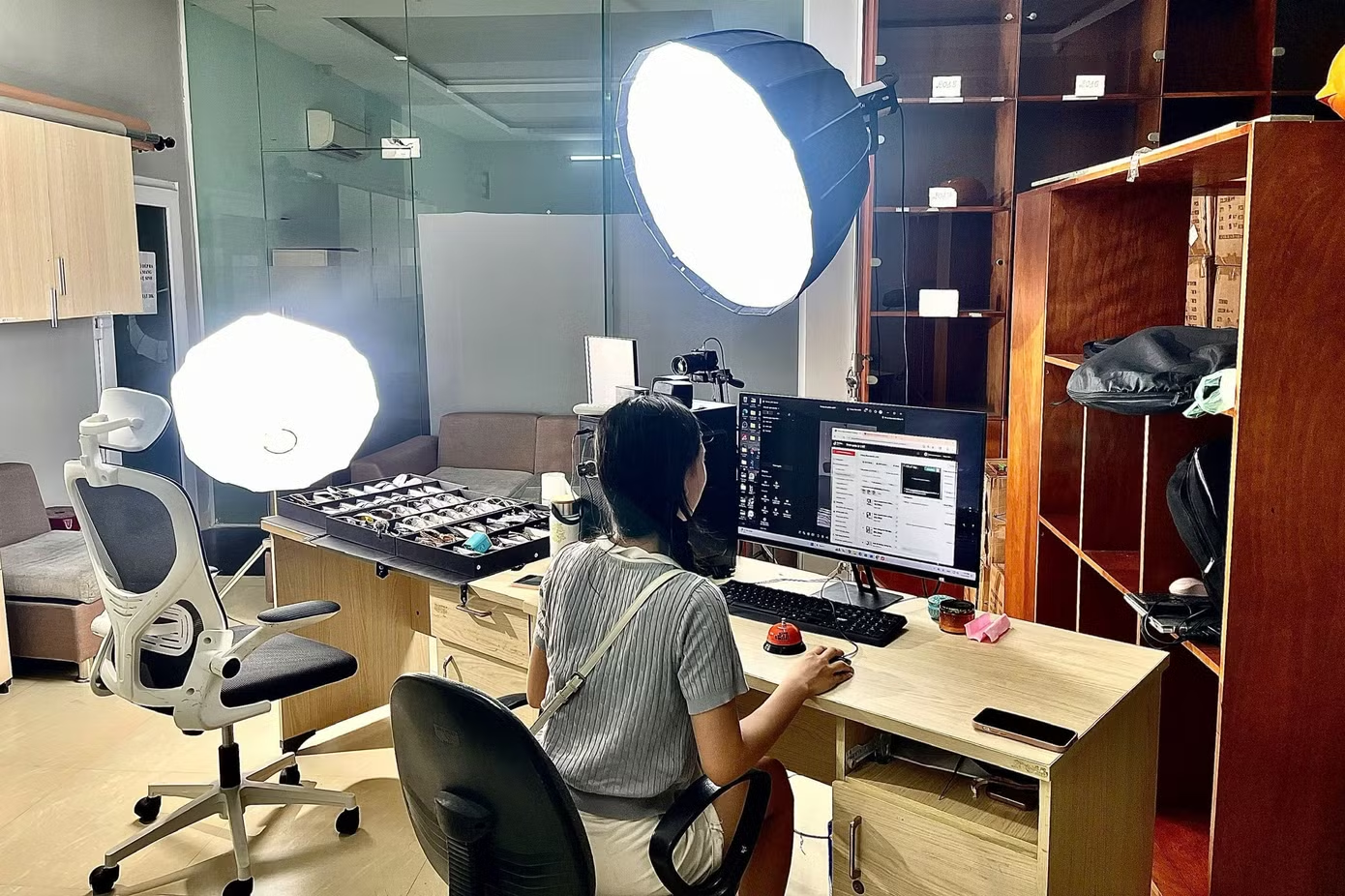
Behind the livestream lights
People often think this job is "easy." They believe that all you need to do is dress nicely, sit in an air-conditioned office, and speak for a few hours to earn millions. But only those in the profession understand that behind that seemingly glittering facade lies sales pressure, irregular meals, and the need to always smile, even when exhausted.
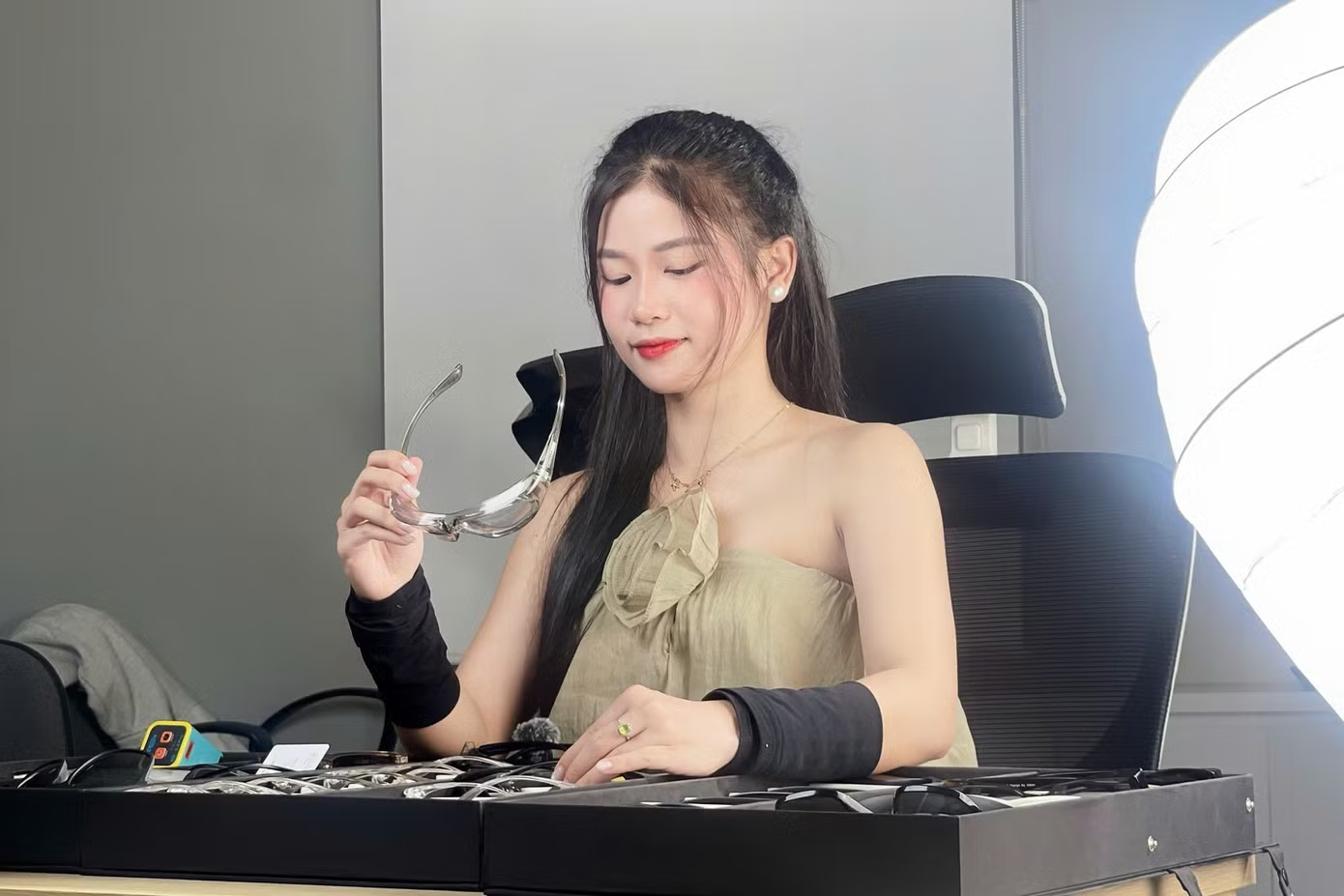
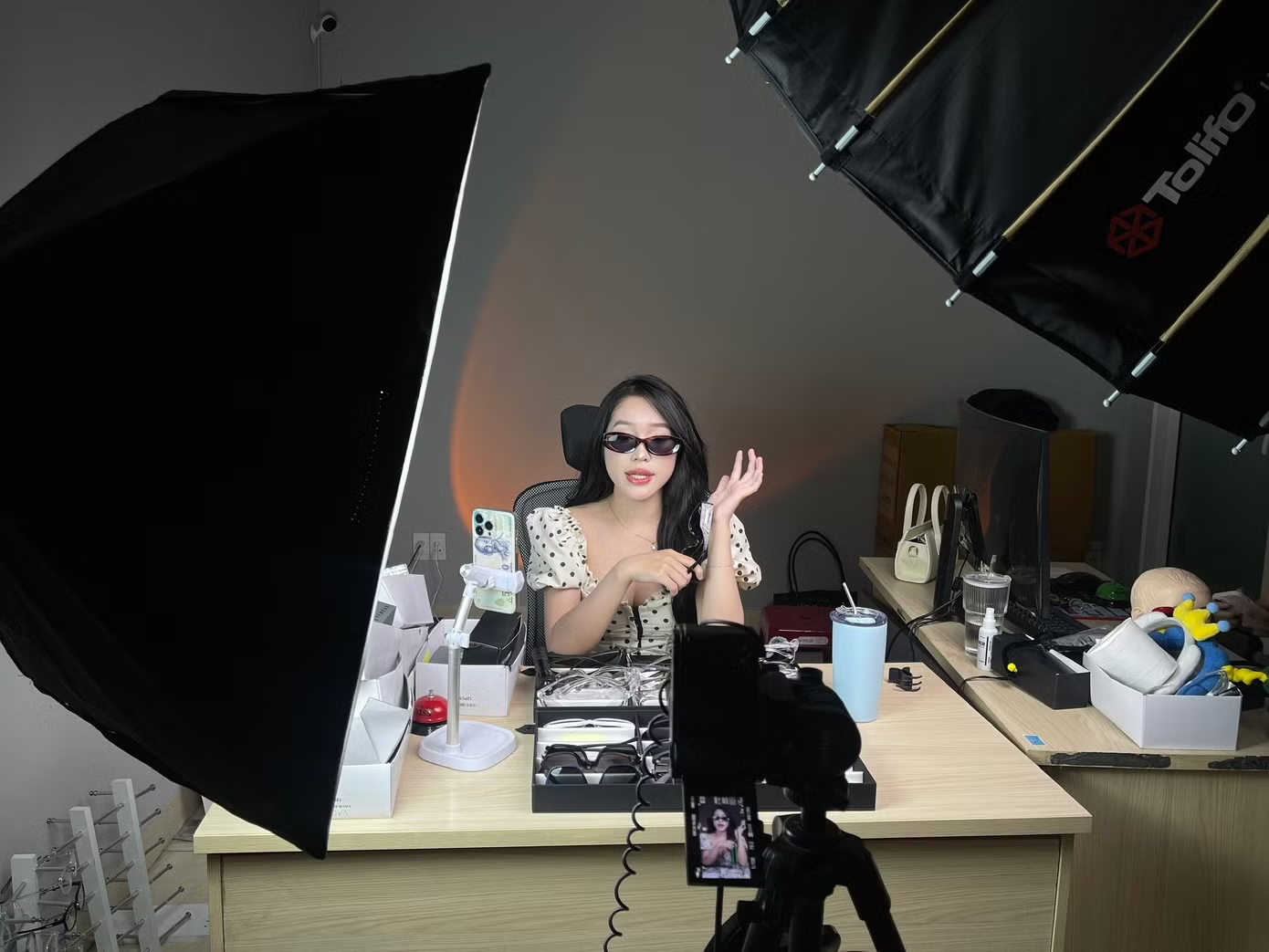
“First, I lost my voice,” said Ngo Thi Diem Quynh, a final-year biotechnology student at the University of Technology – Da Nang University, when talking about her livestreaming career. “Try speaking continuously for just 15 minutes and you’ll understand. Meanwhile, I have to speak for 2-3 hours, and sometimes I work multiple shifts in a row. Even though I’m tired, I still have to be cheerful because if viewers see I’m lacking energy during the live stream, they’ll leave immediately.”
Quynh recounted that there were days when her throat hurt so much she lost her voice, and her stomach ached so much she couldn't stand, but she still had to try to complete her live stream. "This is my job; I can't just take a break whenever I want." People in our profession practically live against the clock. When customers are resting or shopping on their phones, that's when the live streams begin.
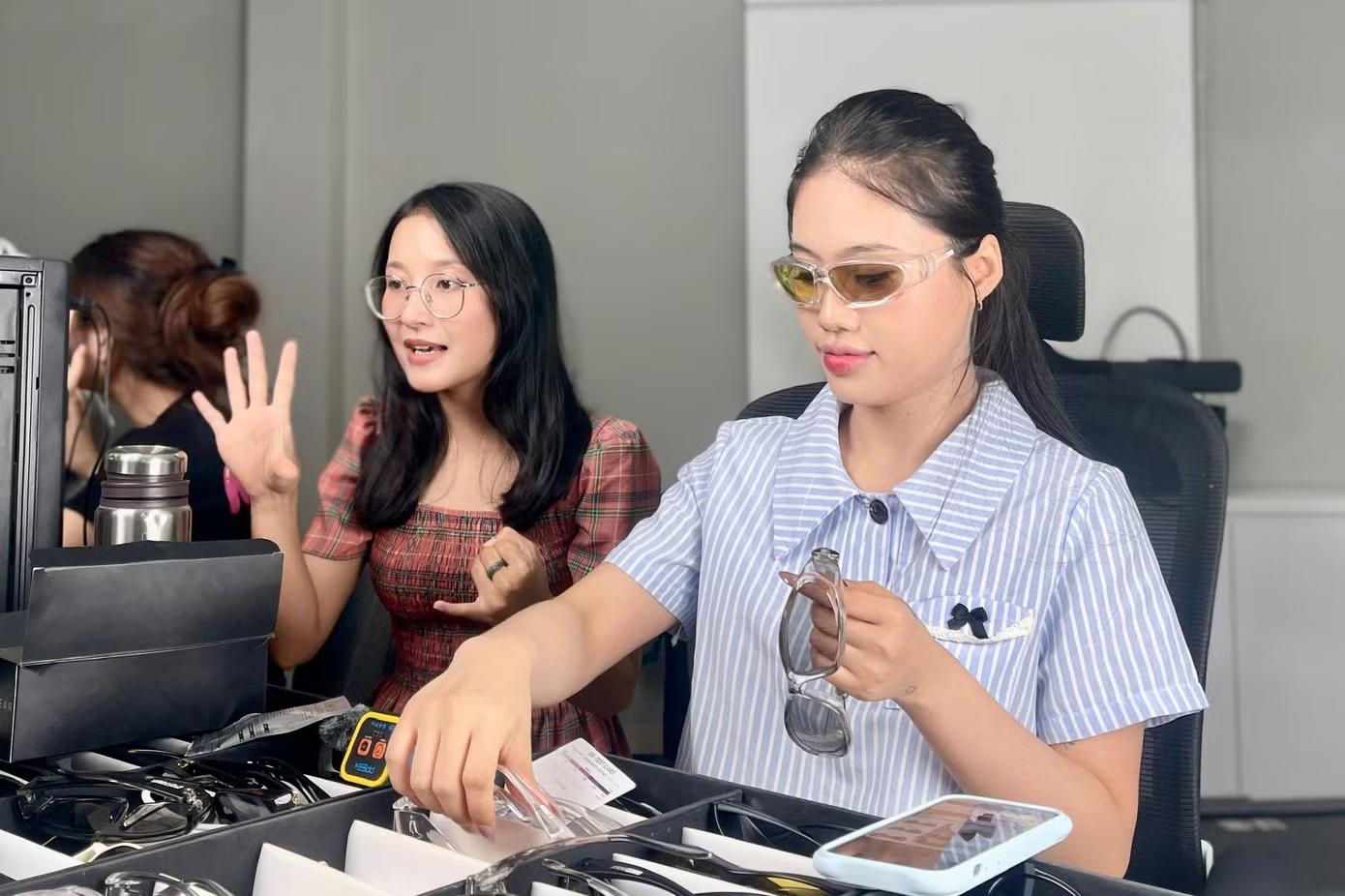
As a journalism student, I used to think of livestreaming as simply a flexible part-time job to keep up with my studies and the demands of constantly working on projects. But the more I did it, the more I realized that behind a live session lies a wealth of communication skills that can only be learned through real-world experience.
Doing many large live streams, with some generating tens of millions of VND in revenue, is a familiar experience for someone like me who's been live streaming for years. But there have been nights when I burst into tears right after finishing my shift because the live stream had "zero orders." Failing to meet KPIs means a livestreamer can be replaced at any time, and then they feel guilty, thinking they weren't good enough, not skilled enough.
I still remember my first time standing in front of a livestream camera. When the shop owner started broadcasting, I confidently thought I had good speaking skills and would be fine. But just a few minutes later, my hands and feet were shaking, I couldn't even identify the color of the shirt I was holding, and my voice was so shaky that even I found it funny. After that live session, I thought I wasn't suited for this job.
But day by day, I learned how to speak in front of the camera, how to read comments quickly, and how to maintain my energy for hours on end. Livestreaming sales has never been just about knowing how to talk.
Nguyen Thuy Linh, a third-year Digital Marketing student at Duy Tan University, currently livestreaming for two different shops simultaneously, shared: “I apply knowledge learned in school such as the AIDA formula, the FOMO effect, and customer insight analysis to effectively lead the live sessions.” According to Linh, behind a successful livestream session is a whole process of content preparation, customer research, and knowing how to handle situations.
Live performances come at the cost of health.
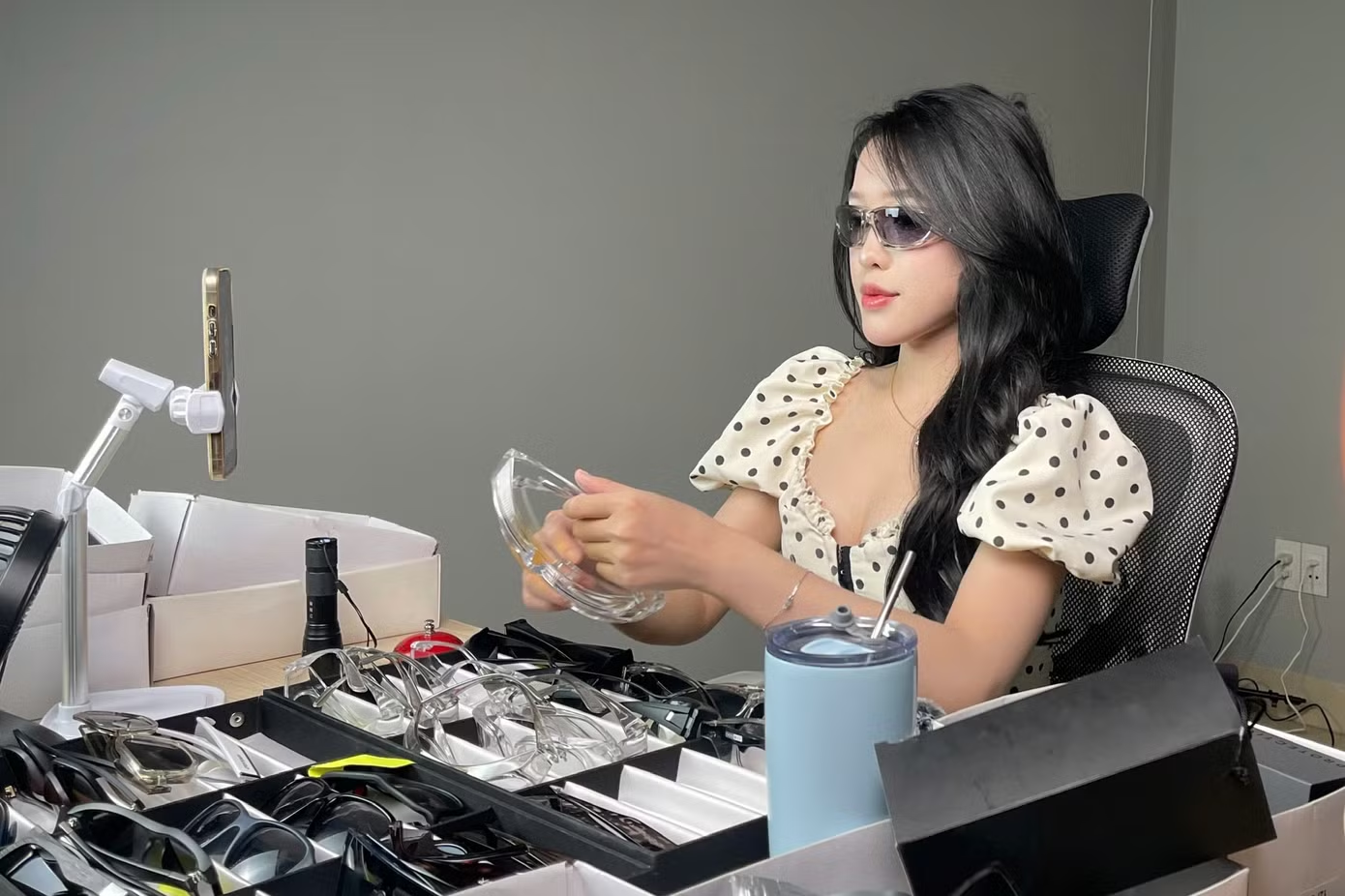
Photo: Luu Huong
"There were days when I only slept three or four hours because I had to balance studying with two or three live streaming sessions. Some days I had to be there at 5 a.m. and didn't get home until 1 or 2 a.m.," Linh confided. Her irregular eating habits caused her to suffer from persistent stomach pain and sore throat.
That's exactly my daily life.
There was a time when I was live streaming for three different brands in a single day. I'd be speaking continuously for 4-6 hours each day, earning nearly a million VND in salary, including KPI bonuses. But after all that, I realized that health isn't something you can sacrifice forever.
"Livestreaming is a very physically demanding job," Quỳnh admitted. "My skin darkens from the studio lights, my eyesight gets worse from constantly looking at the screen, and my health deteriorates noticeably. This is not a job I can do for a lifetime."
Even though the hectic pace of livestreaming consumed our busy schedules, my colleagues and I always reminded each other not to neglect our studies. During exam periods, we proactively reduced our work shifts and changed our livestream schedules to focus on studying. Between days spent chasing KPIs and staying up late to complete assignments, I still maintained my title as an Outstanding Student and received an academic achievement scholarship for two consecutive semesters. For me, that's worth more than any high-revenue livestream sessions.
Sharing the same life ideals as me, Linh also shared that despite working intensely, she has consistently maintained excellent academic performance for many years.
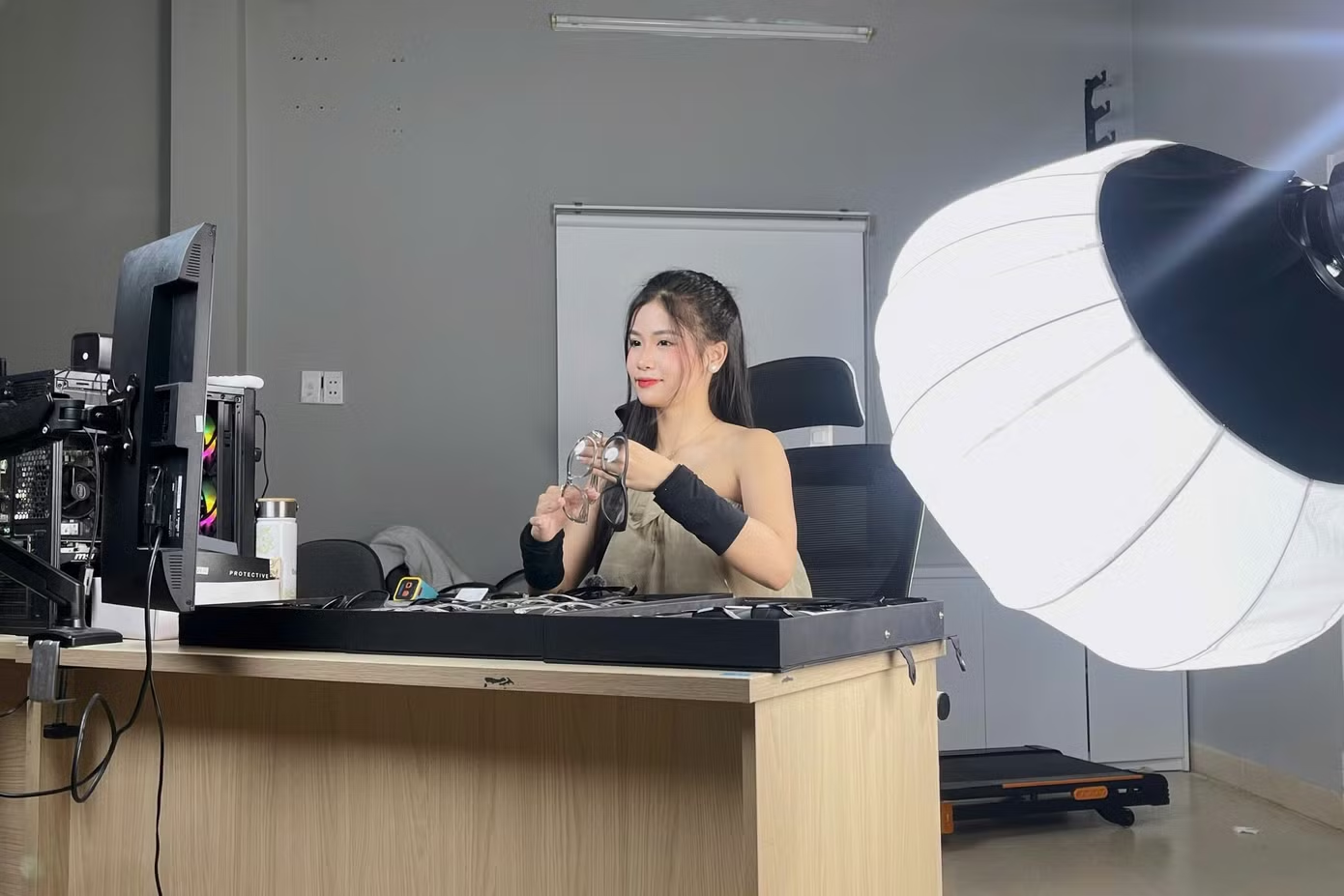
Photo: Luu Huong
Growing through livestream sessions.
Without this job, I would probably still be a student struggling to make ends meet. Livestreaming allows me to buy things I like, cover part of my living expenses, and even give my parents money as a New Year's gift.
I still remember those days rushing home from school, my motorbike laden with all sorts of food I'd bought for my parents. The gas station attendant looked at me and asked, "Where are you going with all that food?" I told him I was buying it for my parents to eat together. He looked at me for a moment and then said, "You're so young, yet you care so much about your parents. They must be so proud." That comment gave me extra motivation to keep trying.
I realized that, although this job often left me exhausted and stressed, it helped me grow every day. From a shy girl who was afraid of crowds, I can now confidently stand in front of thousands of viewers. From a student who always had to ask my parents for money, I gradually learned to be independent and appreciate the money I earned myself.
From a teaching perspective, Ms. Pham Thi Huong, a lecturer in Journalism (University of Education - Da Nang University), believes that students participating in livestream sales is a popular trend in the digital media age. This work helps students hone their communication skills, problem-solving abilities, and public speaking reflexes.
However, she also believes that students need to balance their studies and part-time work. "Livestreaming helps them mature faster, but if they get caught up in the pressure of making money and neglect their studies, it will have a long-term impact on their future," she shared.
According to her, the most important thing is professional ethics and honesty when doing media work. "Attracting customers doesn't mean exaggerating the truth."
Perhaps in a few years I won't be standing in front of the camera every night anymore. Perhaps my voice won't be strong enough to continue this profession. But I believe that the days I spent livestreaming will forever be the most special time of my youth. Because there, I learned perseverance, how to withstand pressure, and most importantly, how to grow and mature through my own hard work.
Source: https://tienphong.vn/toi-la-sinh-vien-ban-hang-online-post1847031.tpo
![[Image] Pleasant weather helps students enter the 10th grade entrance exam with confidence.](https://vphoto.vietnam.vn/thumb/1200x675/vietnam/resource/IMAGE/2026/05/29/1780034401612_ngay-1-thi-lop-10-minh-duy-8-5009-jpg.webp)


![[Photo] Ba Lang An Lighthouse - the "eye of the sea" amidst the "rock museum" of Quang Ngai province.](https://vphoto.vietnam.vn/thumb/1200x675/vietnam/resource/IMAGE/2026/05/29/1780038698840_anh-man-hinh-2026-05-29-luc-14-10-42.png)



















































































Comment (0)