


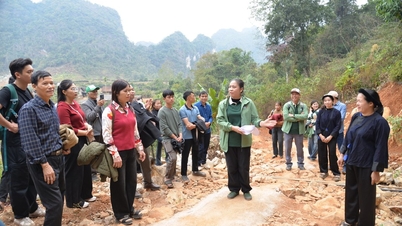
Large photo: Residents of Na Duong town, Loc Binh district, voluntarily demolish structures that violate the protected area of the irrigation system.
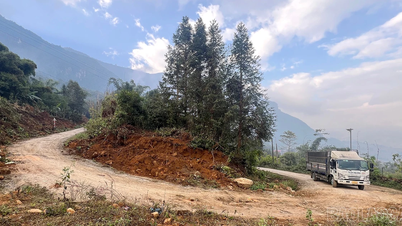
Thumbnail image: Scene of the violation of irrigation works at Na Cay Lake area, Loc Binh district.
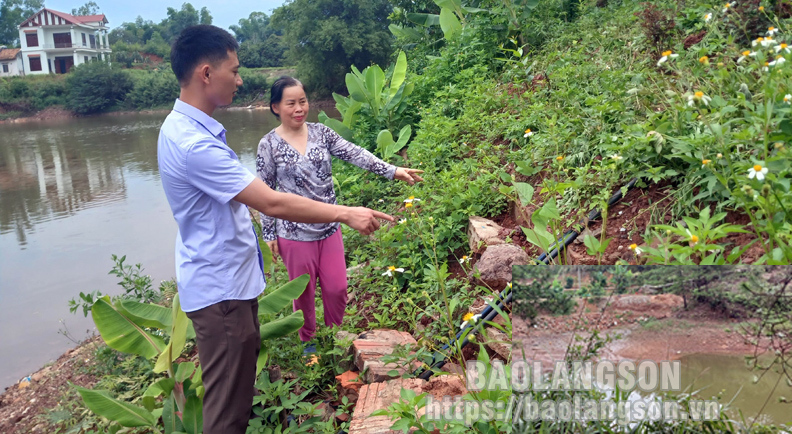
Through inspections, reviews, and situation assessments, authorities have documented and processed numerous violations within the protected areas of irrigation works. However, the number of violations remains quite high.
The number of violations remains high.
Mr. Nguyen Viet Quyen, Director of Loc Binh Irrigation Works Exploitation Enterprise, said: In 2020, the unit recorded 7 violations, in 2021 there were 5 violations, in 2022 there were 13 violations, and in the first 6 months of 2023 there were 7 violations. Among these, there were cases of repeated violations, with the unit recording violations 2-3 times.
Not only in Loc Binh, but the number of violations within the protected areas of irrigation works in several districts and cities is also on the rise. Currently, the province has 161 reservoirs, 1,494 weirs and dams, and 165 pumping stations. According to data from relevant agencies, while there were 34 violations in 2020 and 135 in 2021, from 2022 to the present, authorities have detected 297 violations within the protected areas of irrigation works. This shows that the number of violations continues to increase sharply.
Mr. Lieu Van Thong, Deputy General Director of the Irrigation Works Exploitation Company Limited (the unit managing 123 reservoirs, 206 diversion dams, and 80 electric pumping stations), said: Through on-site inspections of irrigation works under the unit's management, the main violations within the protected area of irrigation works include discharging waste soil into the reservoir, encroaching on the irrigation canal corridor, and constructing permanent structures within the reservoir, dam, and canal areas…
The aforementioned violations directly affect dam safety, especially during the current rainy and stormy season; impact the supply of water for domestic use and irrigation for production; and affect the environment…
The number of violations within the protected areas of irrigation works is on the rise, while handling these violations is proving difficult.
| Article 40 of the 2017 Irrigation Law stipulates: The scope of protection for irrigation works includes the works themselves and their surrounding areas. Within the protected area, activities must ensure that they do not hinder the operation and safety of the works; there must be access roads and land for maintenance and handling in case of incidents. The surrounding area of a reservoir includes the area surrounding the dam and the area surrounding the reservoir basin, as defined below: The area surrounding the dam extends from the base of the dam outwards. For special-grade dams, the minimum is 300 m; for grade I dams, it is 200 m; for grade II dams, it is 100 m; for grade III dams, it is 50 m; and for grade IV dams, it is 20 m. The area surrounding the reservoir basin extends from the boundary line with an elevation equal to the crest elevation of the dam downwards towards the reservoir basin. In addition, violations will be subject to administrative penalties as detailed in Articles 19 to 26 of Chapter III of Government Decree No. 03/2022/ND-CP on administrative penalties in the fields of disaster prevention and control; irrigation; and dykes. |
Difficult to handle
According to the above data, from 2022 to the present, there have been 297 violations of the protected areas of irrigation works in the province. Of these, only 172 cases have been processed. The large number of violations, coupled with various reasons, has made processing difficult.
Ms. Vu Thi Thu Hoai, Deputy Director in charge of the Irrigation Works Exploitation Enterprise of Cao Loc district, said: From 2022 to the present, the unit has recorded 48 violations within the protected area of irrigation works, of which only 2 have been processed. The reason for the high number of recorded violations but low number of processed cases is due to the lack of boundary markers and protection corridors for irrigation works; the issuance of land use right certificates to some households overlapping the protected area of the works; and some areas of land for irrigation canals being donated by people...
Along with Cao Loc district, handling violations of the protected areas of irrigation works in several other districts and cities is also facing difficulties. Mr. Chu Van Hai, Head of the Irrigation Sub-Department - Department of Agriculture and Rural Development, said: The main reason for the difficulty in handling violations is that the irrigation system lacks boundary markers defining the scope of the works.
In addition, several other factors contribute to the difficulty in handling violations within the protected area of reservoirs and dams, such as the fact that most structures are small-scale, located far from residential areas, and situated in complex terrain, making management difficult; some households live and cultivate land along the main structures and irrigation canals; and the coordination between agencies and local authorities is not close enough, leading to untimely management, inspection, and handling of violations.
Faced with such difficulties, the Department of Agriculture and Rural Development has proposed to the Ministry of Agriculture and Rural Development to study and consider appropriate mechanisms and allocate funds for marking the boundaries of irrigation works protection areas in the province; continue to coordinate with relevant agencies to strengthen propaganda work to raise people's awareness of irrigation works protection; and coordinate more closely in inspecting, reviewing, detecting, documenting, and decisively handling cases of violations... Thereby, contributing to ensuring the safety of irrigation works to serve production, daily life, regulate and drain floods, and ensure the safety of lives and property for the people.
Source link


![[Photo] The 14th Party Congress discusses the Congress documents in the assembly hall.](/_next/image?url=https%3A%2F%2Fvphoto.vietnam.vn%2Fthumb%2F1200x675%2Fvietnam%2Fresource%2FIMAGE%2F2026%2F01%2F21%2F1768970813473_image.jpeg&w=3840&q=75)












































![[Image] Ho Chi Minh City simultaneously commences construction and breaks ground on 4 key projects.](https://vphoto.vietnam.vn/thumb/1200x675/vietnam/resource/IMAGE/2026/01/15/1768472922847_image.jpeg)





























Comment (0)