

Because they wear suits, and more importantly, because of the ingrained fear of electricity shortages, many people have treated this particularly important energy source with great indifference.
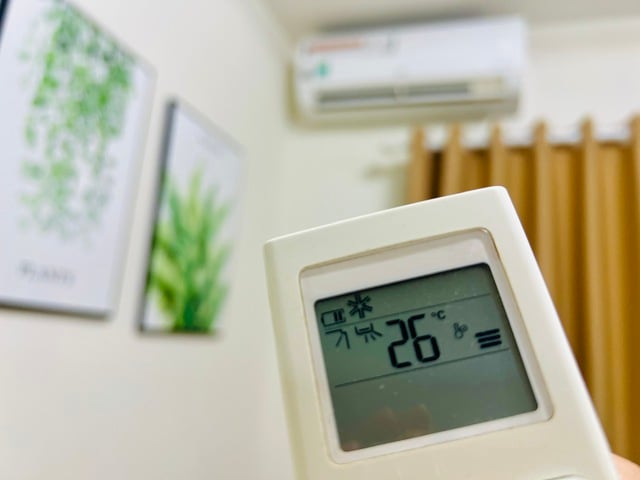
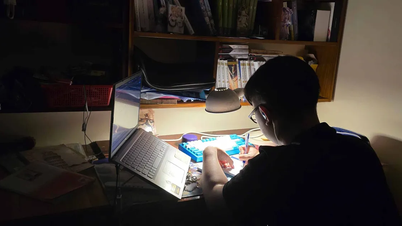
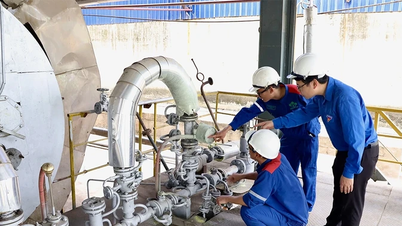
(Illustrative image. Source: Internet)
Recently, there has been a lot of buzz on social media about the Ho Chi Minh City People's Committee sending a document to departments, agencies, districts, and communes regarding promoting electricity conservation and ensuring safe and stable electricity supply in the city, which includes a request for officials to limit wearing suits and formal attire when working or attending meetings.
There are both supportive and critical opinions. This is not surprising, as sensitive events, issues, or decisions usually attract public attention. However, this is a very practical issue in the current context; instead of ridiculing it, it should be encouraged and supported. Elegant attire is necessary, but electricity is even more important. Just imagine what would happen if this vital resource were insufficient to supply daily life and production? Even a single hour of reduced electricity quality leads to numerous complaints. A single hour of power outage causes even more frustration and production to grind to a halt. Yet, when solutions are proposed to help save electricity and improve its quality, there are dissenting and dismissive opinions.
Many customers often place themselves in the role of "gods" and assume the right to judge, saying whatever they want without considering their responsibilities or obligations. This means that if they find anything the service provider or responsible agency says unsatisfactory or unacceptable, they can react, sometimes very strongly.
It's only the beginning of summer, but the power supply is already unstable, with many areas experiencing overload. This is partly due to the fact that electrical equipment in many offices is working overtime to serve events and staff, including those wearing suits and thick clothing.
Wearing a suit on a hot day consumes more electricity—this is just a figure of speech, intended to encourage people to change their mindset and use electricity more efficiently. Currently, a large percentage of office workers often use electrical appliances at full capacity, whereas in the early morning and late afternoon when temperatures aren't too hot, these appliances don't need to operate at full power. Because they wear suits, and more importantly, because of the ingrained fear of electricity shortages, many people treat this crucial energy source with a great deal of indifference. They just turn them on and on. Electrical appliances are switched on at any time, always at full power, because in their minds, the electricity bill is a distant, seemingly irrelevant issue.
Despite significant efforts, domestic electricity production still cannot meet domestic consumption needs, and we still have to import billions of kWh of electricity each year. Furthermore, the increasing cost of raw materials used in electricity production has led to a recent increase in retail electricity prices, significantly impacting consumers. The demand for electricity in 2023 is predicted to increase sharply along with rising temperatures. According to meteorological and hydrological forecasting agencies, the heatwave in 2023 will be more intense and prolonged than in 2022, meaning a much higher demand for electricity. According to the electricity supply and operation plan recently approved by the Ministry of Industry and Trade , the total electricity production and import in 2023 is projected to be 284.5 billion kWh, 16 billion kWh higher than in 2022 and over 29 billion kWh higher than in 2021.
Regarding the issue of saving electricity, since 2008, UN Secretary-General Ban Ki-moon has launched the "Cool UN" initiative, where the central building's air conditioning temperature was increased from 22.2°C to 25°C, and the General Assembly hall from 21.1°C to 23.9°C. Staff were encouraged to wear simple but polite attire, except when receiving guests or attending important meetings. This initiative was later adopted by many countries, including strong economies known for their elegant dress code, such as Japan.
With electricity demand constantly increasing and the risk of shortages becoming more alarming, threatening national energy security, the call to save electricity, which is so practical and should be welcomed and widely adopted, is instead ridiculed—which is completely unacceptable. Can this be considered an unwelcome perception and behavior?
Hanh Nhien
Source



















![[Infographics] Admission Announcement for Grade 10 at Lam Son Specialized High School for the 2026-2027 Academic Year](https://vphoto.vietnam.vn/thumb/402x226/vietnam/resource/IMAGE/2026/04/03/1775206364883_infographics-th-w1200t0-di2613d199d5153059t11358l1-tb-tschuyenls-09.webp)



















































Comment (0)